A spring ritual that dates back hundreds of years.
Dating back to the early 1700s, American shad were a major food source for the native Lenni Lenape tribes who resided in the Delaware and Lehigh Valleys. Shad populations were so prevalent that it was said that waters ran “silver” during that era and you could walk across the backs of the numerous shad migrating up the Delaware River.
It has been rumored that in the winter of 1777, George Washington’s troops – cold and on the brink of starvation in Valley Forge – were “saved” by schools of shad migrating up the Schuylkill River; that’s why one could easily argue that the American shad helped save the Revolution and defeat the British Army.
The shad population also spawned “fish factories” in the Philadelphia area in the 1800s and resulted in commercial fishing for shad. The area in Philadelphia now known as Fishtown was named as a result of all of the shad processing factories. Unfortunately, overfishing and pollution resulted in a major decline of the species. By the 1960s, environmental conditions were so bad in the Delaware River that it resulted in a “pollution block” of little to no oxygen which prevented American shad from migrating north.
The creation and passing of the 1972 Clean Water Act helped clean up the Delaware and shad once again began to pass up river to their natal spawning grounds.
At present, the shad populations are slowly rebounding, but several factors still limit the populations from growing. Ocean interception and bycatch of shad by commercial trawling fisheries, slow dam removals on tributaries of the Delaware, and warming ocean temperatures are affecting the American shad’s return to historic levels.
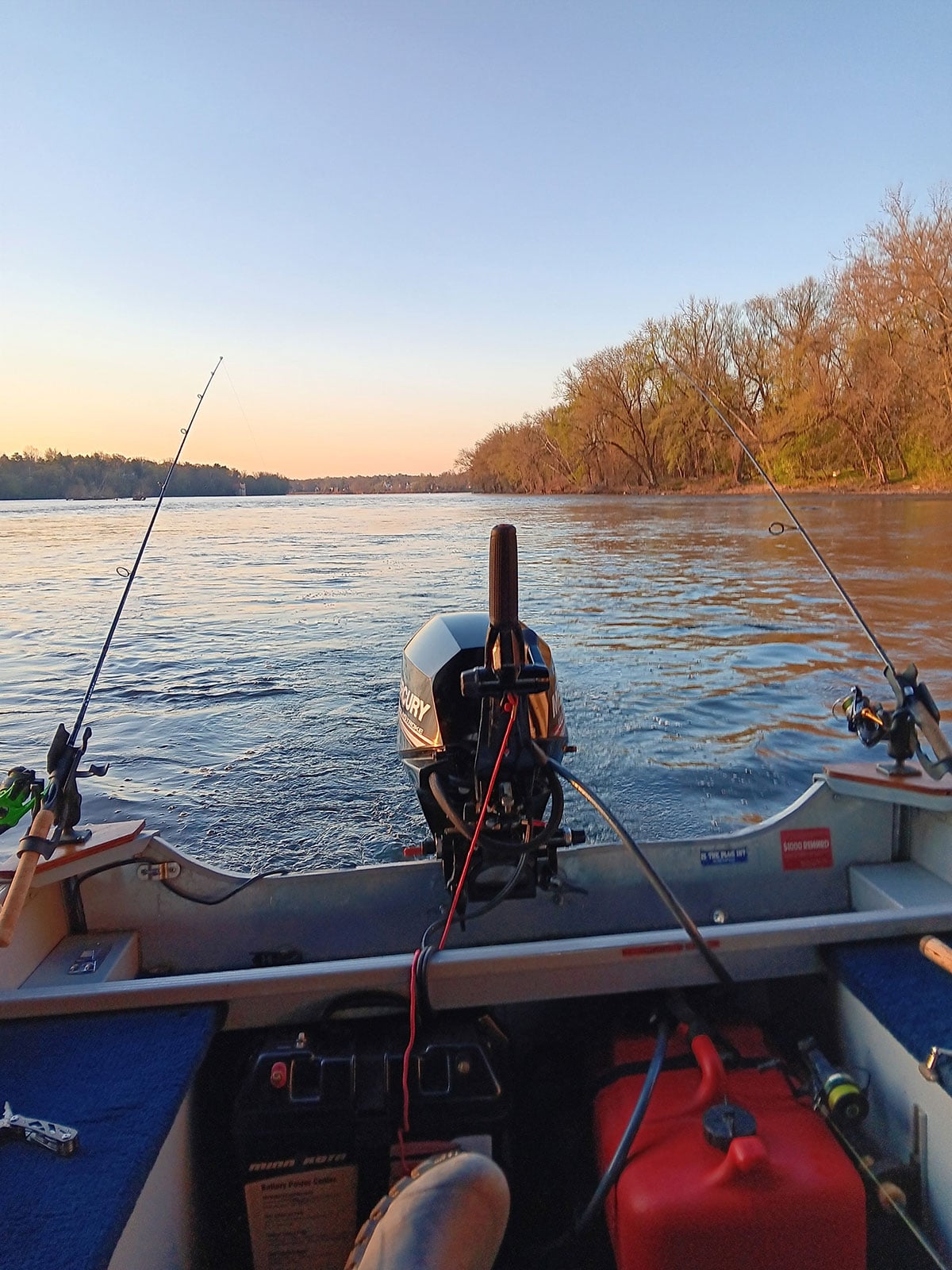
A 2025 shad analysis by the Pennsylvania Fish & Boat Commission indicate a historic spawn of juvenile shad in the Delaware at a 30-year high, however the female spawning population remains at a critical low. Currently, the fishery is at catch and keep of two shad per day, but soon could be lowered or designated as a catch and release fishery to help restore shad populations.
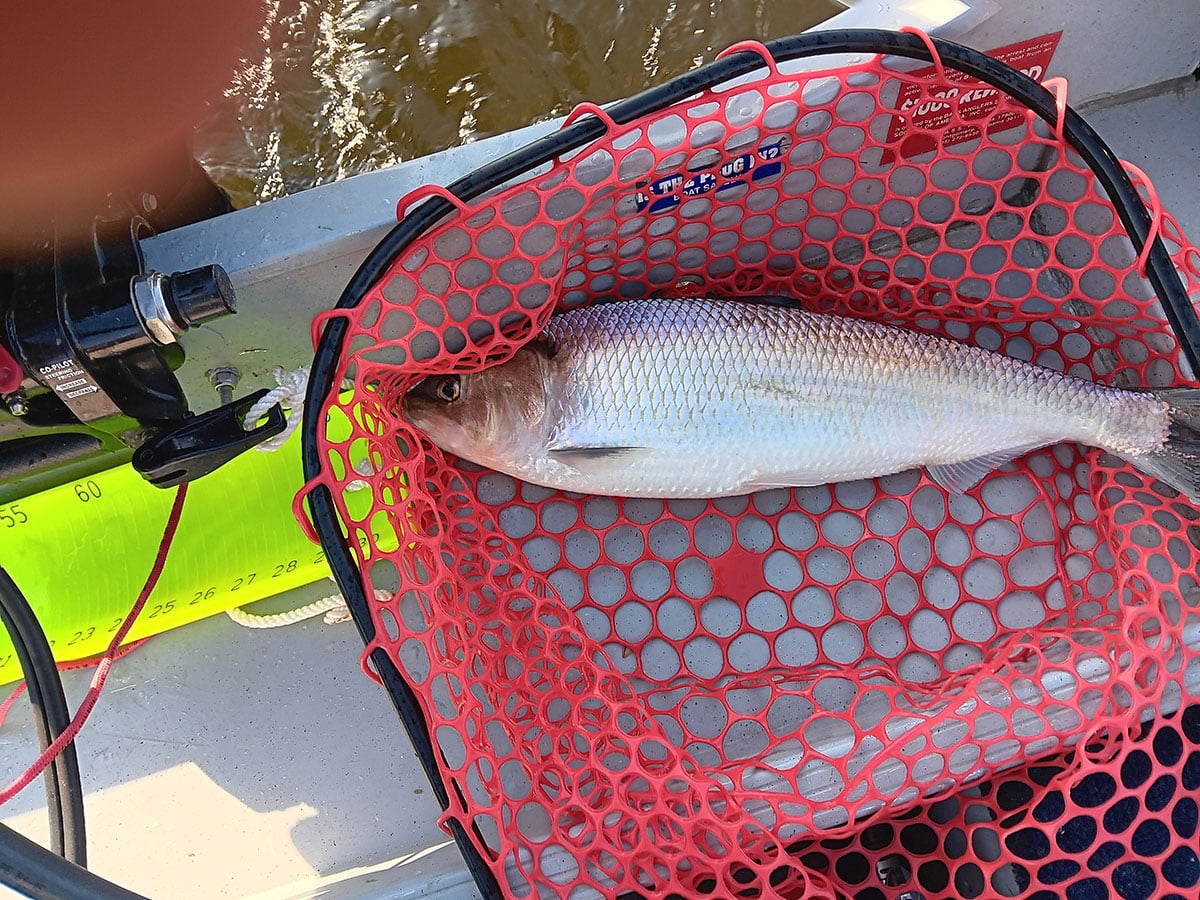
Fishing for shad – one of largest members of the herring family – begins in early spring on the Delaware River in the non-tidal areas . Water temperature is a key component during this time frame. Temperatures in the mid to high 40s and rising to the key temp of 50 degrees will result in the best opportunities to land shad. Of course, shad can be landed from shore or by boat, it all starts with the proper tackle and identifying the right location to fish during the spring run of shad.
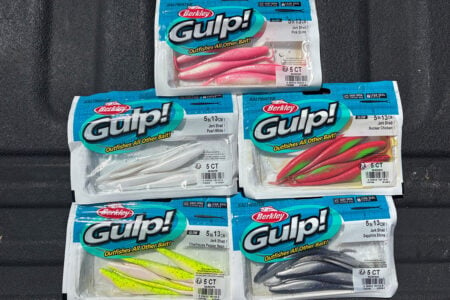
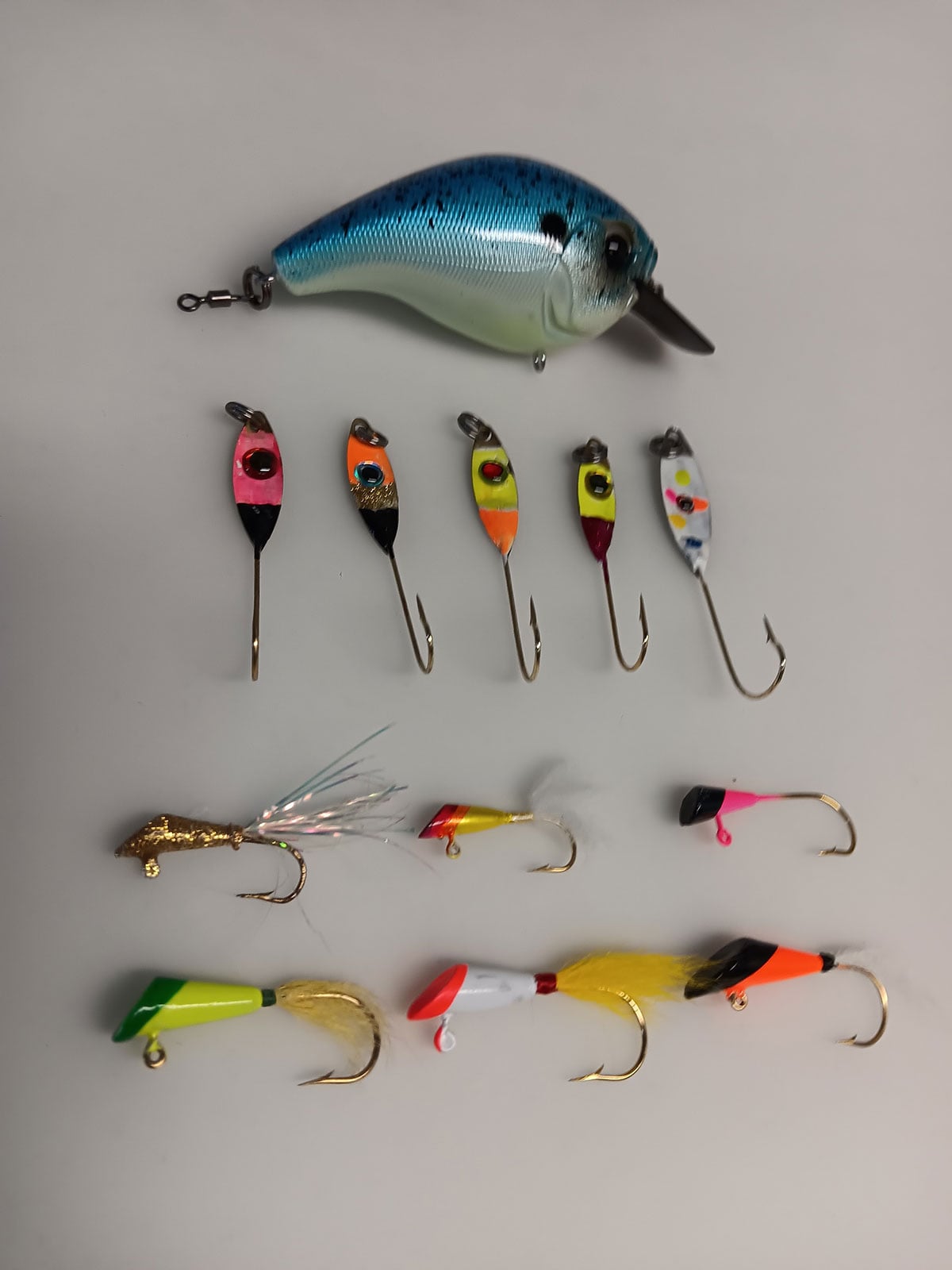
The basic tools to catch shad are a medium 6-1/2- to 7-foot spin rod with a 2500 series sized spin reel, spooled with 10-pound braid. A small swivel tied to a fluorocarbon leader of 8- to 10-pound test tied to either a shad dart or flutter spoon from your main line can help get the job done. Flutter spoons created in the early 1980s have become the lure of choice for most shad sharpies on the Delaware River.
Shad migrate up the river in schools so it can be hit or miss depending on water temperature, water clarity and river flows each spring. Locating shad and reading the water is a key component of consistent success. Fish areas where there are current seams, behind islands, channel edges and where streams enter the river that create pinch points where shad migrate.
| SHAD CELEBRATIONS |
| For tournament anglers, the Bi-State Shad Fishing Contest will run from April 23-26. A PA/NJ “big money” tradition along the Delaware, entry is $50 for adults 16 and over and $30 for youths 15 years and under. Download tournament application at shadfishingcontest.com.
For a family event celebrating the annual return of shad on the Delaware, mark your calendars for ShadFest 2026 which runs April 25 and 26 in the town of Lambertville, an annual event featuring live music, fine art, local food, and educational exhibits that sees thousands of visitors each year in the Lambertville/New Hope, PA area. For details go to lambertvillenj.org. |
Shad basically hit the lures out of aggravation. They are not “feeding” when they migrate up river as their primary focus is to mate and spawn once water temperatures reach the mid to high 60 degrees. There are several techniques for catching shad. Use of downriggers on a boat, Dipsy divers, and rattling deep diving crankbaits without any hooks to get your baits in the strike zone.
For bank or boat fisherman, the use of a flatline; using the same spinning rod set up with a swivel tied to a 30-inch leader to a dart or a flutter spoons. The key is to present your lure near the bottom. A few #2 split shots are placed above the swivel on your main line to help get your lure near the river bottom.
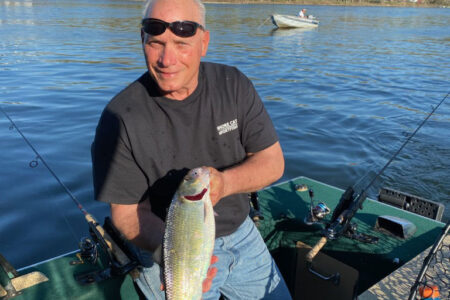
Fishing for American shad is an angling ritual of spring along the Delaware River, and it’s a truly remarkable fishery that must be experienced at least once. The annual return of our Founding Fish brings many anglers back to the flowing waters of the Delaware River chasing what’s often been referred to as the “poor man’s salmon.”
| FACTS & FIGURES |
| According to the New Jersey Division of Fish & Wildlife (NJDFW), angling for American shad on the Delaware usually begins around the end of March. As the water warms to 50 degrees , and the population migrates upstream, shad will be caught all the way up river to the New York state line and beyond through the end of May and into June.
In June of 2017, American shad were documented in the Musconetcong River in Hunterdon and Warren counties after an absence of at least a century, a return made possible by the removal of dams on the lower Musconetcong River. Other dam removal operations which have led to successful migratory returns of shad include the Columbia Lake Dam (Paulins Kill), the Weston Mill Dam in Manville (Millstone River), and the Calco Dam, Nevius Street Dam, and Roberts Street Dam (Raritan River). The dam removals were made possible by a partnership of state, federal, nonprofit and private entities and opened nearly 6 miles of the Musconetcong to migratory fish, such as shad, eels and striped bass. Productive boat and shoreline fishing spots, moving from down to upriver, include the Yardley/Scudders Falls area, Lambertville, Bulls Island Recreation Area, Byram, Phillipsburg/Easton, and finally within the Delaware Water Gap National Recreation Area. Early morning and dusk are the most productive times. NJDFW reminds anglers that timing of the “shad run” and number of shad in the river may vary year to year depending on water temperature and conditions. Having accurate, up-to-date information on the run can greatly impact on angling success and enjoyment. Learn more by visiting the Delaware River Shad Fisherman’s Association website at drsfa.org and sign up to receive updated shad reports from Steve Meserve of the Lewis Fishery in Lambertville who can be reached at LewisFishery@comcast.net. |