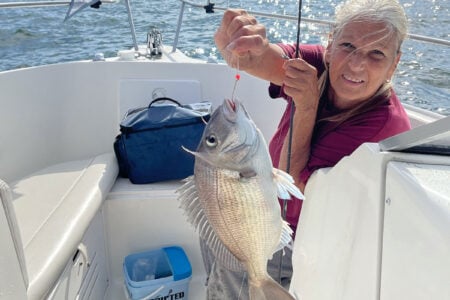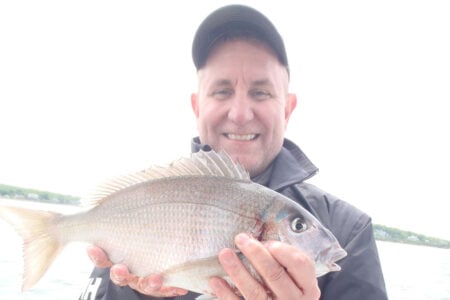
Where to find porgies, how to dial in the bite at Jessups Neck, and simple tactics to load the cooler with added cooking suggestions.
Talking about porgy fishing locally around the Sag Harbor area will almost always get you the same answer: the spring run of jumbo sea porgies in the Peconic is something you simply don’t want to miss. Year after year, as water temperatures climb and the bay system comes to life, these fish flood into the estuary in impressive numbers, offering some of the most consistent action of the season.
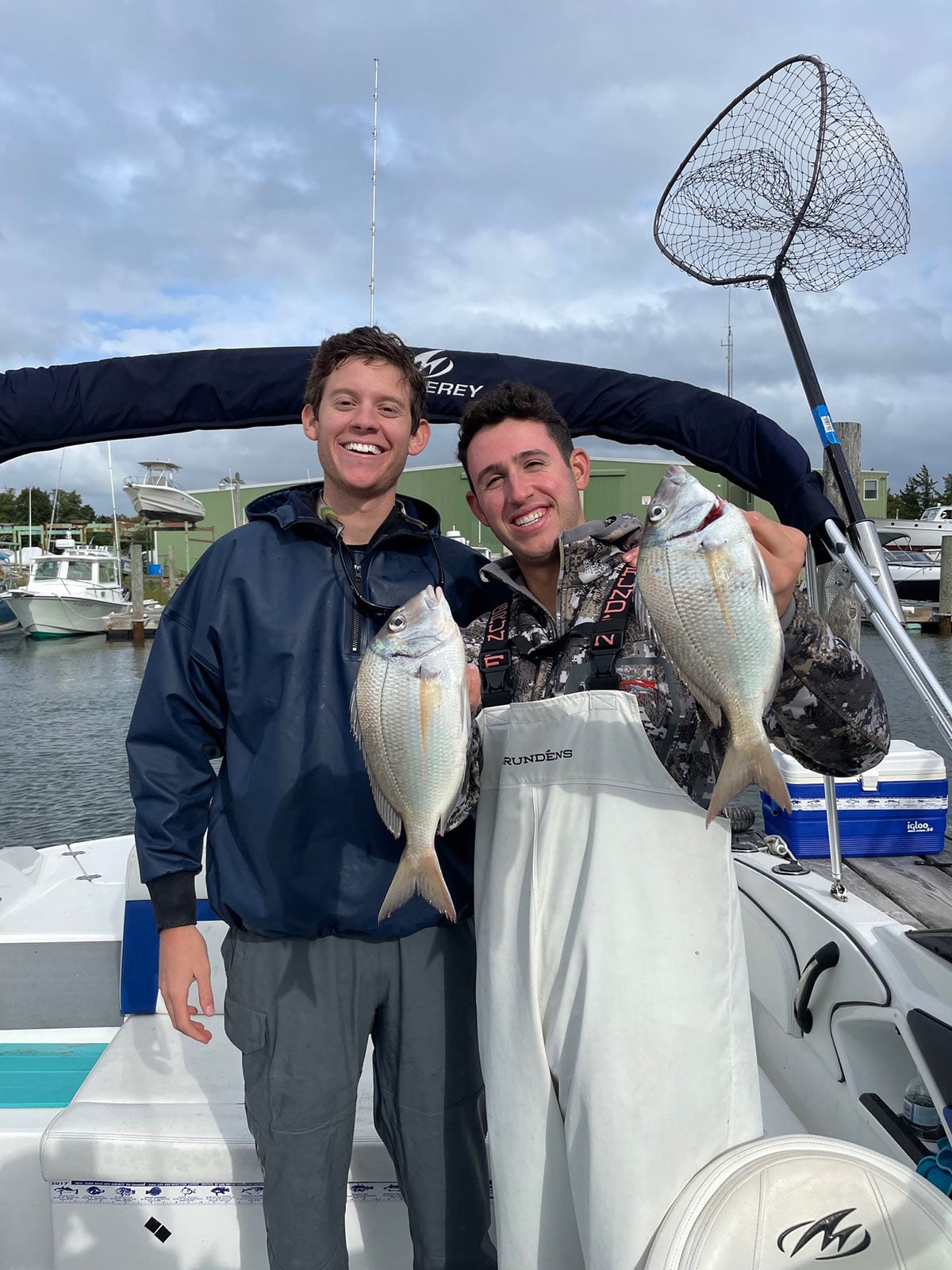
Porgy—also known as scup—are aggressive, opportunistic feeders. They’ll eat just about anything you drop in front of them, whether it’s fresh bait, soft plastics, jigs, or small metals. That willingness to bite, combined with their scrappy fight on light tackle, makes them a favorite among anglers of all skill levels. Add in the fact that they’re one of the better-tasting fish you can bring home from local waters, and it’s easy to see why they’re such a staple each spring.
Accessibility is another major factor. Whether you’re fishing from shore, a small skiff, kayak, or even a party boat, there are plenty of ways to get in on the action. For many anglers across Long Island, porgy fishing in the Peconic marks the true start of the inshore season—a reliable, productive fishery that delivers fast-paced action when you need it most.
A Proven Spring Producer
While there are countless areas throughout the Peconic system that hold fish, one location that consistently produces each spring is Jessups Neck. This stretch of water, along with the surrounding Middle Grounds to the west, offers a mix of structure, depth, and current that porgies gravitate toward during their spawning push.
Bottom depths in this area generally range from 20 to 50 feet, with a mix of sand, gravel, and scattered hard bottom. That combination creates ideal feeding conditions, allowing porgies to root around for small crustaceans, clams, and other forage. When the bite is on, these fish stack up in tight groups and stay active throughout the tide.
Anchoring properly is key here. A standard fluke-style anchor will handle most situations, especially if you’re fishing from a smaller boat or center console. You don’t need a full wreck anchor setup, but having a bit of chain helps with holding power, especially when current starts moving. If you’re not fishing with a windlass, a poly ball setup can make retrieval a whole lot easier at the end of the drift.
Each May, these fish settle into the area and feed aggressively, often holding in the same general zones for extended periods. Once you dial them in, you can expect steady action as long as conditions remain favorable.
Prospecting The Grounds
Before dropping anchor, it pays to spend some time finding the right piece of bottom. Prospecting is a critical step that often separates a slow pick from a wide-open bite.
Start by idling slowly over likely areas while watching your fish finder. Porgies typically show up as dense clusters or stacked marks close to the bottom, and they’re often easier to identify than species like fluke. Pay attention to any subtle changes in bottom contour, as small rises or transitions can hold better concentrations of fish.
Once you mark a promising area, don’t rush to anchor right away. Instead, make a couple of controlled drifts through the zone. This allows you to confirm what’s below and gives you a better sense of how the fish are positioned relative to the current.
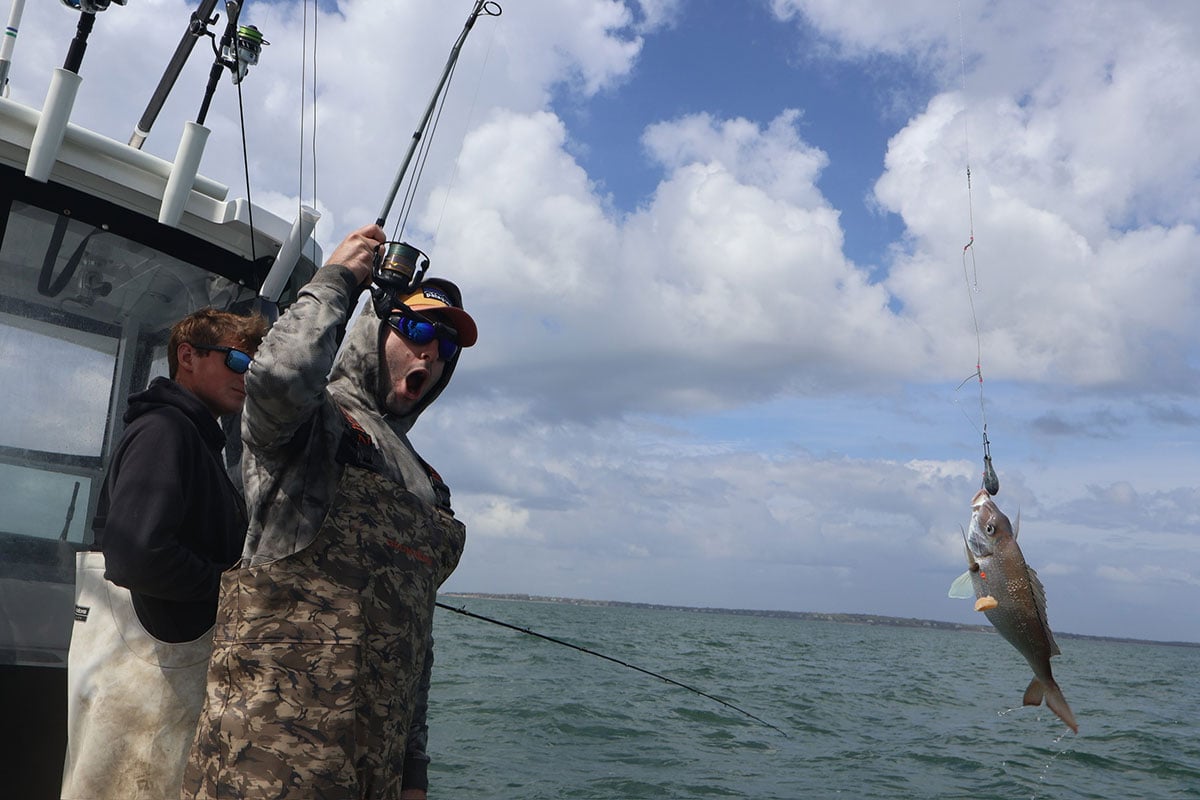
The bite itself is unmistakable. Expect a quick series of taps followed by sharp, pulsing head shakes. If you’re consistently feeling that kind of action, you’ve found the right group of fish. From there, it’s time to set up on anchor and get to work.
Dialing In The Chum Slick
Chumming is one of the biggest keys to consistent porgy action in the Peconic. While you can certainly catch fish without it, a properly set chum slick will pull fish right to your boat and keep them there.
A simple clam chum pot loaded with a frozen chum log is all you need. Once anchored, drop the pot down and let the current do the rest. As the chum breaks down, it creates a steady stream of scent and small particles that draws porgies in from the surrounding area.
Positioning is everything. Take note of how your boat is sitting on anchor and which direction the current is moving. You want your baits fishing directly in that chum line—not off to the side or behind it. If your rigs aren’t in the slick, you’re essentially feeding fish without giving them a chance to find your hooks.
When everything lines up, the result is steady, almost nonstop action. Fish move into the slick, compete for food, and become less cautious, which leads to more aggressive bites and better hook-up ratios.
Tackle & Setup
One of the best parts about porgy fishing is how simple the gear can be. You don’t need anything fancy to get the job done, and in many cases, lighter tackle actually makes the experience more enjoyable.
For boat and kayak anglers, a rod in the 6-1/2 to 7-1/2 foot range is ideal. Something with a moderate action and enough backbone to lift fish off the bottom will handle the job just fine. Shore anglers may benefit from a longer rod—typically 8 to 9 feet—to help cast lighter rigs and maintain control in current or wind.
Reel choice is equally straightforward. A conventional or baitcasting setup spooled with 20-pound braid is a solid all-around option, while spinning gear with 10-pound braid works great for lighter presentations. The key is sensitivity—you want to feel every tap and react quickly.
Rigs, Weights & Baits
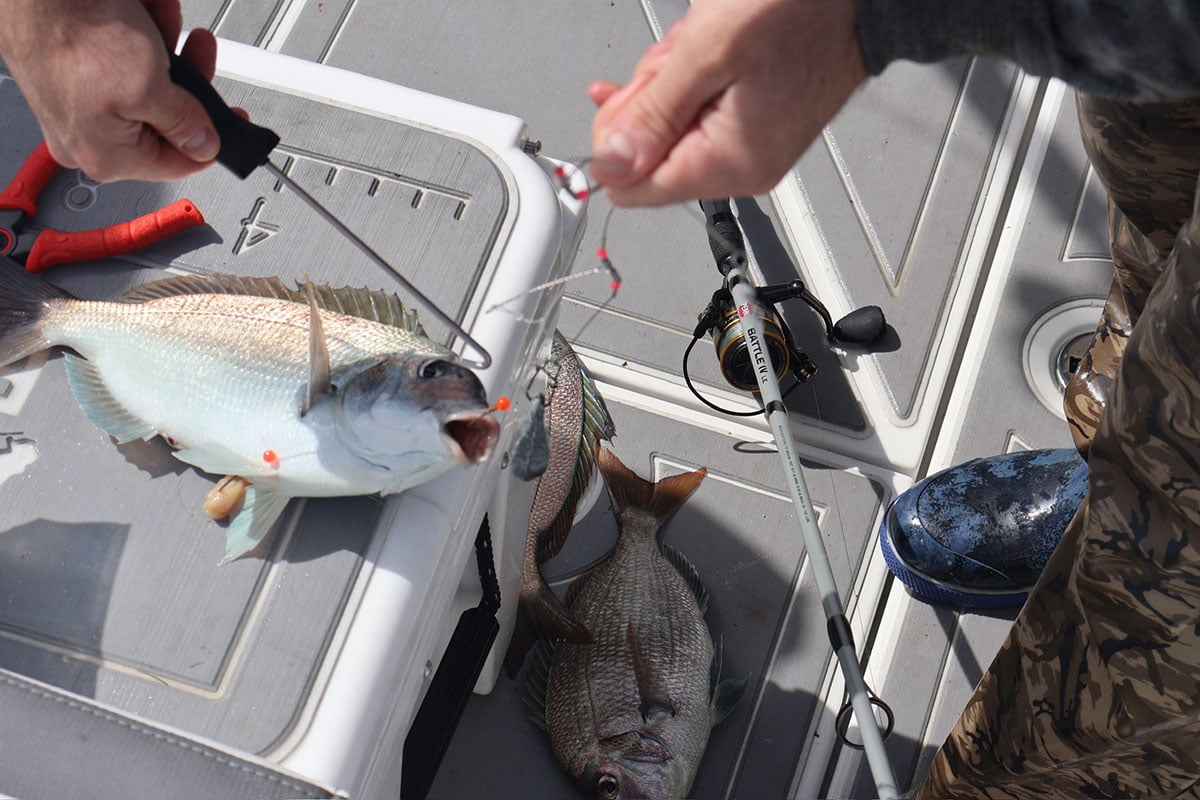
When it comes to terminal tackle, the classic hi-lo rig remains the top choice for porgies. It’s simple, effective, and perfectly suited for dealing with their notorious bait-stealing tendencies.
Running two hooks gives you double the opportunity to hook fish, and during a strong bite, it’s common to land a pair at once. Whether you’re tying your own or using store-bought rigs, adding a small red bead above the hook can make a noticeable difference in attracting bites.
Expect to lose some gear. The bottom around Jessups Neck can be unforgiving, with patches of rough structure that will claim rigs throughout the day. Come prepared with extras—hooks, rigs, and a range of sinkers.
Lead size will vary depending on depth and current, but most days you’ll be fishing somewhere between 2 and 6 ounces. The goal is to stay in contact with the bottom without over-weighting your setup. Lighter is always better when conditions allow, as it improves sensitivity and makes detecting bites easier.
As for bait, you can’t go wrong with clam or squid. Both are readily available and hold up well on the hook. When the bite slows, switching to sandworms can often turn things around. Artificial options like Gulp and Fishbites also produce and can be a great alternative when you’re looking to mix things up.
For a more hands-on approach, light tackle jigging is an excellent way to target porgies. Small bucktails, blackfish jigs, and even diamond jigs can all be effective, especially when tipped with bait. Pairing these with a short fluorocarbon leader helps keep the presentation natural and clean.
A Fishery For Everyone
One of the biggest draws of the Peconic porgy bite is just how accessible it is. You don’t need a large boat or specialized gear to take part. Whether you’re drifting a small skiff, anchoring up in a kayak, or hopping aboard a local party boat, there are plenty of ways to get in on the action.
This fishery also shines as an introduction to fishing for younger anglers. The bites are frequent, the fish are cooperative, and the learning curve is minimal. It’s a great way to build confidence and keep kids engaged on the water.
Even seasoned anglers can appreciate the simplicity. There’s something refreshing about a fishery where the focus shifts from grinding for a bite to simply enjoying steady action and time outdoors.
Handling Your Catch
If you plan on keeping fish, proper handling is essential. Like any species, the quality of the meat depends heavily on how it’s treated from the moment it hits the deck.
Start by bleeding your fish as soon as possible by cutting the gills. From there, get them on ice immediately. A slurry made from ice and saltwater is ideal, as it cools the fish quickly and preserves the texture of the meat.
When it comes time to fillet, take your time. Porgies do have a row of pin bones running through the center of the fillet, but with a little care, they’re easy to remove. Don’t let the reputation of being “bony” steer you away—properly cleaned, they yield a firm, clean fillet that’s well worth the effort.
If you prefer cooking them whole, simply gut and rinse the fish, then keep it chilled until you’re ready to prepare it.
From Bay To Table
Porgy is one of the most versatile fish you can cook, and there’s no shortage of ways to prepare it. Whether you’re keeping things simple or getting creative in the kitchen, it’s hard to go wrong.
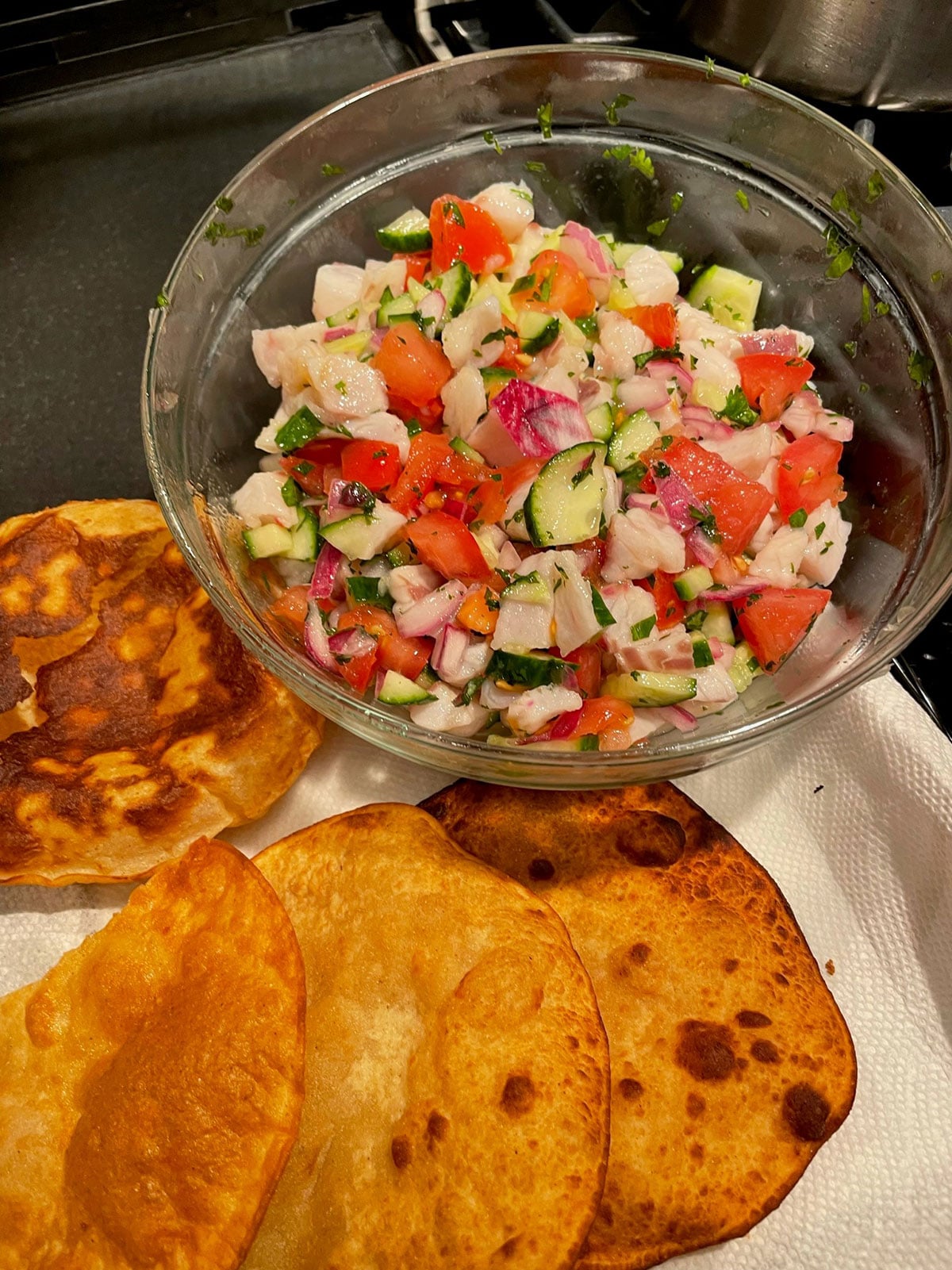
Ceviche is a great option for fresh fillets, especially when paired with citrus, vegetables, and a little heat. Fish tacos are another favorite—either blackened in a pan or cooked with peppers and onions over the grill. Add a drizzle of spicy aioli, and you’ve got a meal that’s tough to beat.
For something more classic, beer-battered porgy makes for an excellent fish fry. The firm texture holds up well, delivering that perfect balance of crisp and flaky.
Whole grilled porgy is another standout. Stuff the cavity with lemon, herbs, and a bit of olive oil, then cook it over an open flame. It’s simple, clean, and packed with flavor—especially when paired with fresh, local vegetables.
Don’t Miss The Run
At the end of the day, the spring porgy run in the Peconic is one of the most reliable and enjoyable fisheries on Long Island. It’s accessible, productive, and offers something for everyone—from first-timers to seasoned anglers.
If you’re looking to shake off the winter rust, bend a rod, and maybe even bring home a great meal, this is the fishery to focus on. Just be sure to follow local regulations and take care of your catch.
And most importantly—don’t overlook the scup bite this season. Feel free to reach out directly with any questions to my email at eastendanglers@gmail.com or send us a direct message on Instagram @eastendangelr.