Covering the tackle needed for Nymphing Techniques.
Catching trout on nymphs is one of the most universal ways of taking them. The nymph is a type of fly pattern that copies the larval stage of the aquatic insect, such as mayflies and caddisflies. They’re fished subsurface and are usually most effective when consistently presented just above the bottom of the stream. This is where the trout are used to seeing them because nymphs live along the bottom, under leaves, rocks, pebbles, and in mud and sand.
The methods for using them are usually basic. I’ll describe two of them, both of which are easy to understand, and with some practice, can have you catching fish fairly quickly.
Tackle
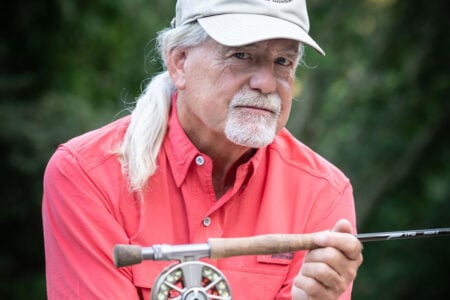
All you need is a 5 WT fly rod, which is the universal nymph and dry fly trout rod (3 to 7 WT rods will work too) armed with a 5 WT floating line. Get a reel that balances with this, and have a 9- foot tapered leader tied on ahead of that line. Buy some tippet spools of 5X, 6X, and 4X. The tippet is the thinnest part of the leader and is what you attach the nymph (fly) to. 5X will be your all around nymph (and dry fly) tippet. If you have only one spool, get 5X. When you tie a tippet on, one of 3 or 4 feet is a good length.
Split Shot
Split shot will be the weights that help keep your fly near bottom, even if you’re using a bead head fly. You’ll attach them just above the fly on the tippet, usually from 6 to 24 inches above it. Have different sizes – get size B, size BB, and some lighter too (the last for very shallow water and lighter currents). I use size B a lot.
Strike Indicators
Method #2 employs strike indicators, which are really different size floats (or they’re made of other floating materials such as yarn) that offer you the double whammy of being able to easily keep your nymph drifting at a consistent depth (usually just right along bottom) and allowing you to easily tell (by twitching, stopping, hesitating, or even suddenly submersing) when a trout (and this happens often subtly with nymphs) has taken your fly. Hence the name, it indicates the strike!
Many indicator types work well, small foam ones, yarn ones, adhesive backed foam, and air lock hollow spheres. I like the small “Trout Snack” ones which are really small hard foam
bobbers. They float, cast, fish great, and are easy to see.
Nymphs
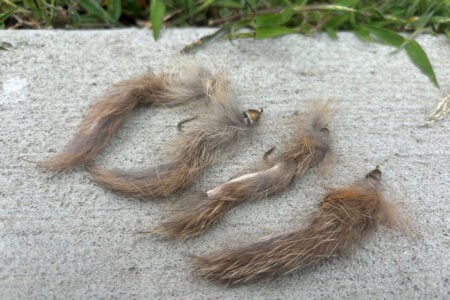
Although there are almost countless nymph patterns out there, limit yourself to only a few. Two classic and time honored patterns, the Gold Ribbed Hares Ear, and Sawyers Pheasant Tail Nymph (both in hook size #14) will catch you lots of fish. Add some Green Caddis Nymphs and Sowbugs (both #14) and a #18 Zebra Nymph to “round you out” well. Two incredibly productive “non-nymphs,” which you fish exactly like a nymph (and copy other trout delectable organisms) are the Squirmy Wormie (#14, #12) and a small Glo Bug (fish egg) pattern (#16, #14) in orange, yellow, or ocre. Trout love eating eggs, especially around spawning time. With these seven fly patterns you will not just catch a ton of fish locally, but will be able to do so all over the world.
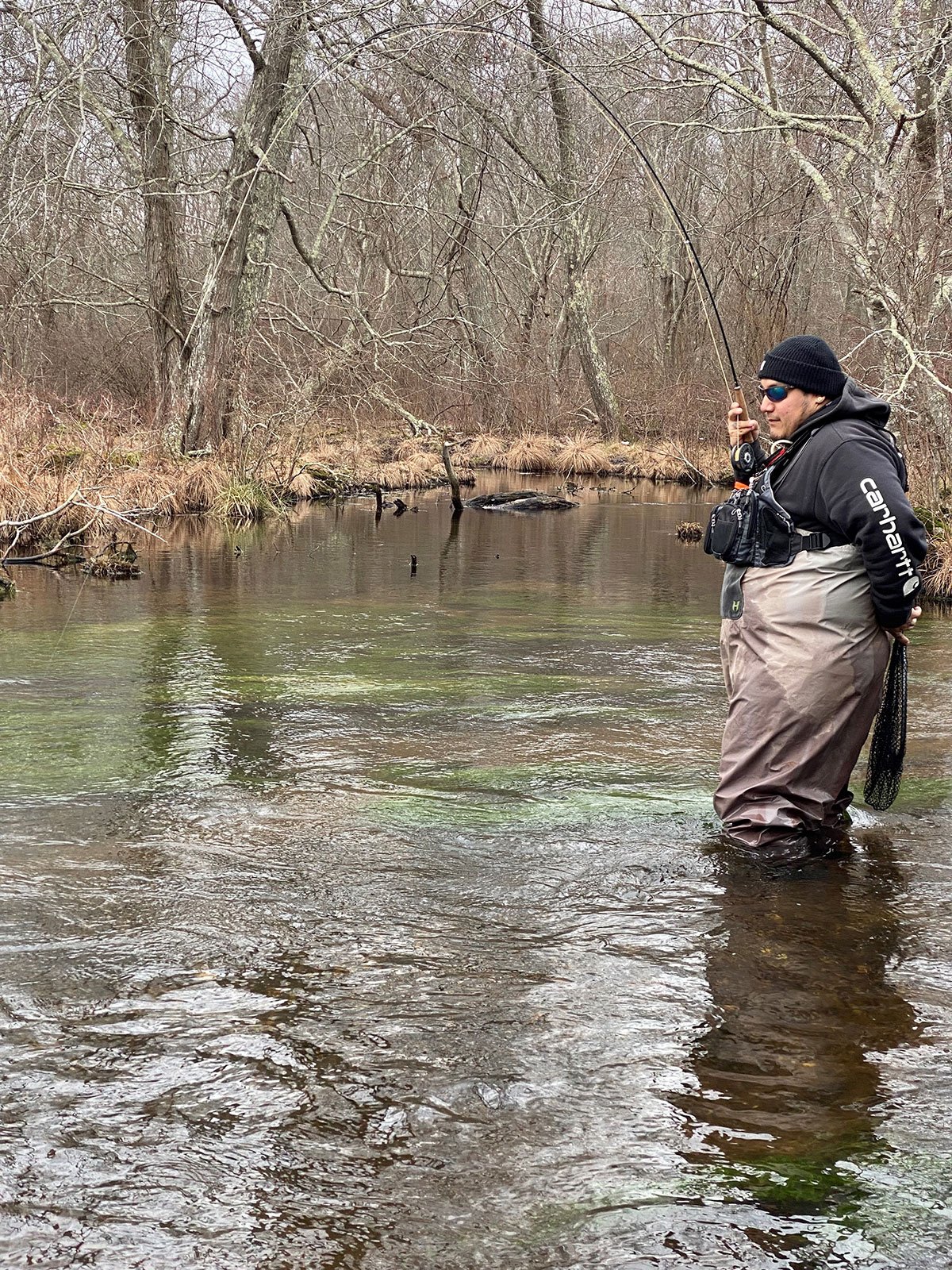
You can effectively nymph in any type water, runs, riffles, all parts of pools, including heads and tails, and do so at many stream depths, and in different types of water clarity, but you will have the easiest time nymphing in water that’s one to four feet deep. That’s because it’s actually easier to see fish at those depths (for good “sight fishing”) and much more importantly, you can control your rig better. Control is key.
You don’t have to be a good fly caster to effectively nymph. You can catch tons of fish fishing close from right next to your body, out to 30 feet away. In fact, most nymph fisherman (including me) catch most of their fish at these distances.