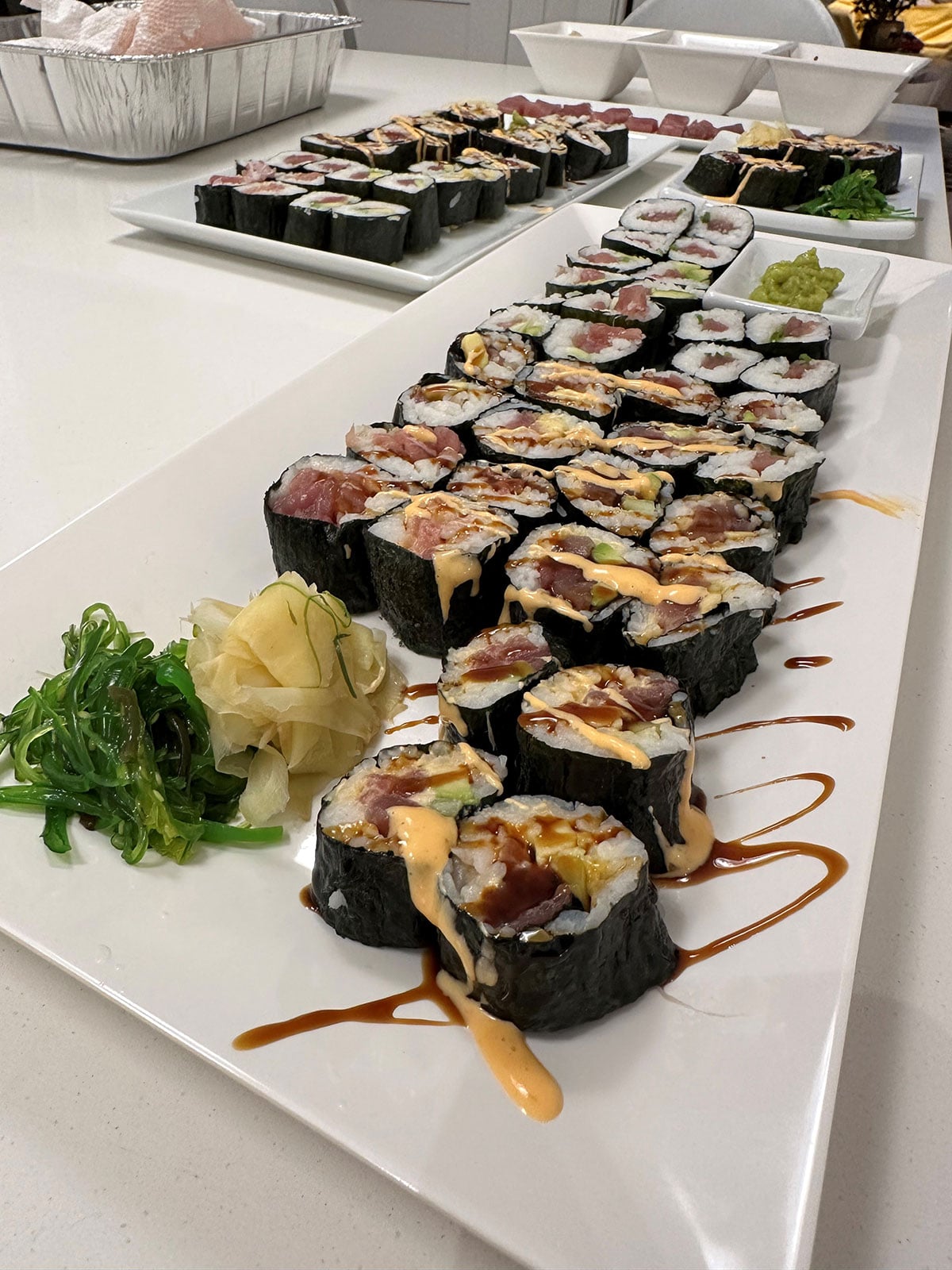
Three easy sushi variations you can make with your catch.
Summer is here, and that means tuna are moving inshore and into range for many anglers around the Northeast. Once you or your crew put a tuna on the deck, the next question becomes: now what? Fresh tuna sushi is one of the best ways to enjoy your catch, whether you’re hosting family and friends or simply treating yourself after a successful trip offshore.
Don’t let the elaborate rolls at your local sushi restaurant intimidate you. Making sushi at home is surprisingly simple, and once you master the basics, you can expand your skills as much as you’d like.
Ingredients
- Fresh tuna (bluefin, yellowfin, or bigeye)
- Sushi rice
- Rice wine vinegar
- Nori (seaweed sheets)
- Wasabi
- Pickled ginger
- Soy sauce
- Japanese mayonnaise
- Sriracha
- Avocado
- Cucumber
- White or black sesame seeds
Besides fresh tuna, great sushi starts with great rice. I prefer using a rice cooker because it makes the process simple and consistent. Traditional sushi rice combines rice, water, rice wine vinegar, and often a touch of sugar and salt. There are countless recipes online, so find one that suits your taste.
If making sushi rice isn’t your specialty, there’s an easy shortcut. Many sushi restaurants and grocery stores will sell prepared sushi rice by the container. It’s a huge time saver, especially after spending a long day offshore when you have plenty of fish to clean and guests arriving soon.
Once your rice is ready, your sushi platter can feature three classic styles: sashimi, nigiri, and makizushi (rolled sushi).
Sashimi
Sashimi is the easiest place to start. Using a very sharp knife, slice your tuna across the grain into pieces about 1/4 to 1/3 inch thick with one smooth motion. Avoid sawing back and forth, which can tear the flesh. Arrange the slices neatly on a serving platter alongside soy sauce, wasabi, and pickled ginger. Simple, elegant, and absolutely delicious.
Nigiri
Nigiri is just as straightforward. Wet your hands so the rice won’t stick, then gently form small, airy ovals of seasoned sushi rice. Place a tiny dab of wasabi on top of each rice mound before laying a slice of tuna over it. Lightly press the fish onto the rice so it stays together while maintaining a delicate texture.
Makizushi (Rolled Sushi)
Rolled sushi takes a little more practice but is still very manageable. You’ll need a bamboo sushi mat, which can be found online or at most grocery stores.
Lay a sheet of nori shiny-side down on the bamboo mat. With wet hands, spread an even layer of sushi rice over the nori, leaving about an inch uncovered along the top edge.
Arrange strips or chunks of tuna horizontally across the center of the rice. Add your favorite fillings, although I prefer keeping it simple with sliced avocado or cucumber. Lift the bamboo mat and roll everything tightly over the filling, tucking the ingredients in as you go. Continue rolling until you reach the uncovered edge. Moisten that edge with a little water to seal the roll, then gently shape it into a firm cylinder using the bamboo mat.
With a damp, sharp knife, slice the roll into six to eight equal pieces, wiping the blade clean between cuts for the neatest presentation.
A few simple habits will make your sushi look and taste much better.
Keep your hands damp whenever handling sushi rice to prevent sticking. Always use an extremely sharp knife, not only for cleaner cuts but also because a sharp knife is actually safer than a dull one. Wipe the blade clean with a damp towel between slices to maintain smooth, professional-looking cuts.
When building rolls, resist the temptation to overfill them. Too many ingredients make rolls difficult to seal and much harder to slice cleanly. Often, the simplest combinations let the quality of fresh tuna shine.
Once you’ve mastered the basics, you can begin experimenting. Mix Japanese mayonnaise with Sriracha to make a quick spicy mayo, sprinkle sesame seeds over your rolls, or branch out into hand rolls, crispy rice, or your own signature creations.
Fresh tuna is one of the finest rewards of a successful offshore trip, and turning that catch into homemade sushi makes the experience even more memorable. Start with these simple techniques, focus on quality ingredients, and you’ll be surprised how quickly you can create a sushi spread that rivals your favorite restaurant.
As always, feel free to reach out with any questions by emailing eastendanglers@gmail.com or sending a message on Instagram @eastendangler. Happy fishing—and enjoy your sushi feast!