It’s the best thing about a cold winter like ’26!
January is often when we see first signs of fishable ice, as seasoned ice anglers are already loading their gear in the truck and heading out to begin fishing in the New Year. And the 2026 season has already proven that! But for those new or just getting into ice fishing, understanding what gear they really need can be a challenge.
Seasoned ice anglers always carry a few crucial items when they venture out on the ice, especially early ice. When we use the term “fishable ice” we mean a solid 4 inches of ice to be considered the minimum safe thickness to support an angler. To check this may anglers use a spud bar to probe the ice as they walk out on the frozen lake. A spud bar is a long steel rod about 5 feet long with a point at one end. These are often found a larger hardware or garden stores as a pry bar; it’s your best first defense against getting caught out on thin ice.
As you walk out from the shoreline, use the spud bar to poke the ice a few times every few steps. If the bar pokes through the ice, stop and move back to shore. With 4 inches of ice you should not be able to poke through, plan to fish another day. A pair of ice safety picks is also critical. If you ever should fall through, these spikes will help you get a grip on the ice to help pull yourself up and out of the water. A pair of ice cleats for your shoes is also an obvious piece of equipment to bring along.
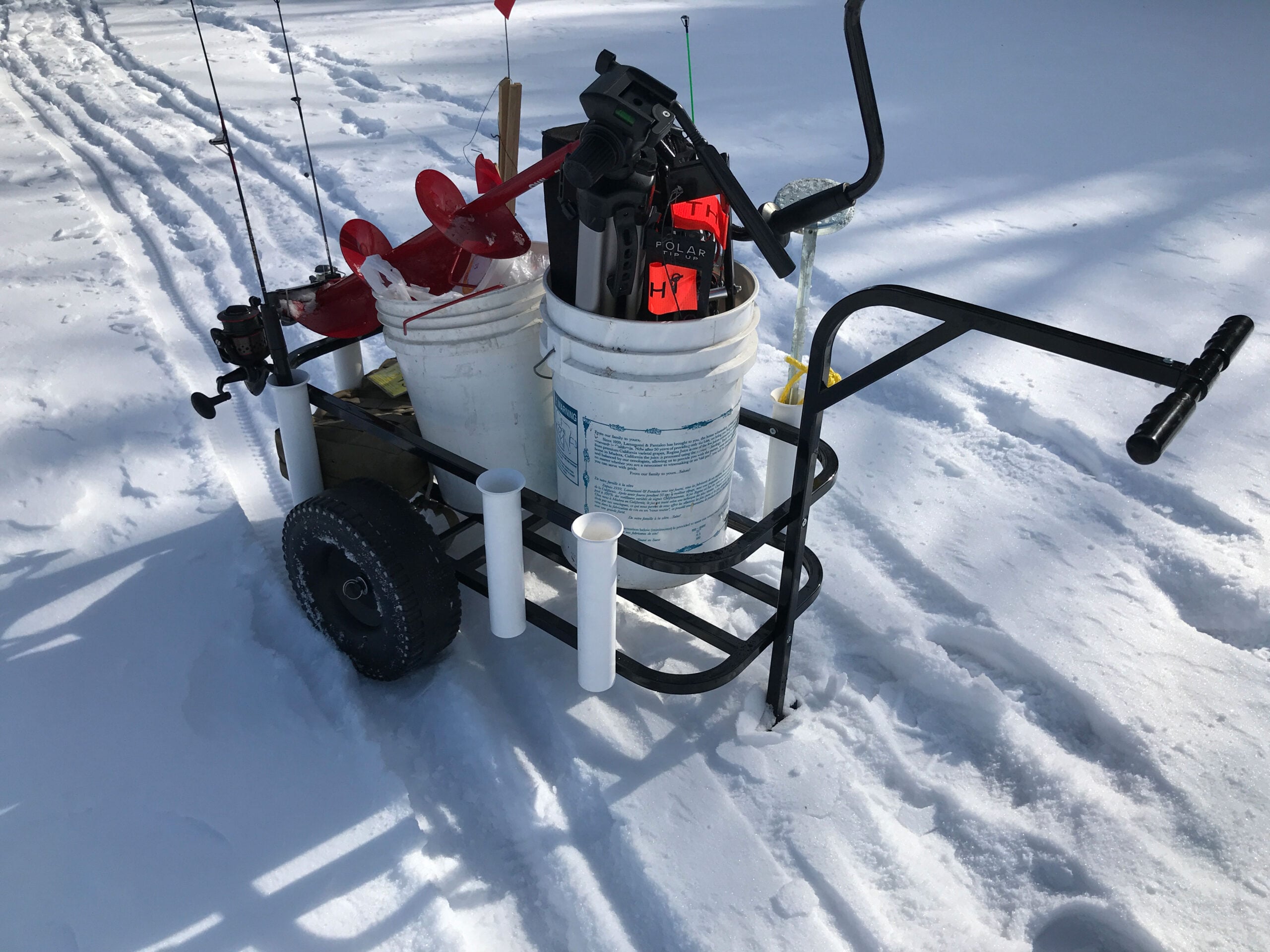
A surf cart or sled can be a good investment to help bring all the gear needed for a day on the ice. There is usually more gear them you realize, and trying to walk out will probably need more than one trip without something to drag or pull behind. This will also free up an arm to use the spud bar while heading out.


What’s Next?
Once out, drilling a hole is usually done with an ice auger. If you are just starting out, a manual auger is recommended. There are many gas or electric models on the market, but be sure ice fishing is really for you before spending big money on a power auger. Drilling several holes in a pattern covering different depths will help define an area fish are generally hitting. We can drill more holes at that depth or structure one we see where fish are biting best.
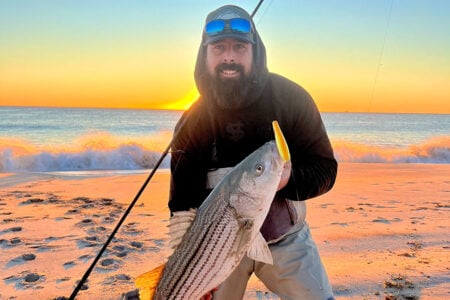
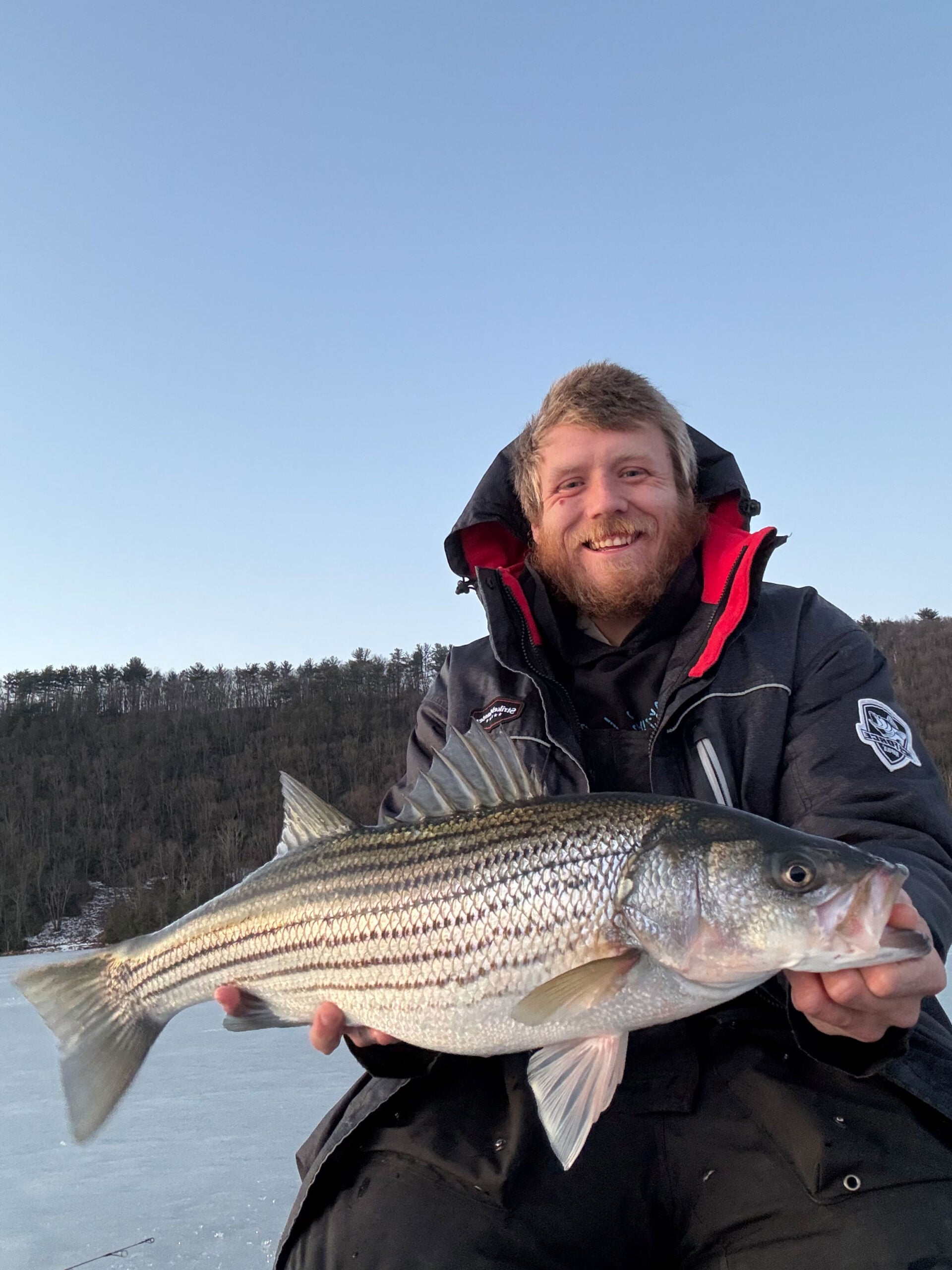
In terms of your actual weapon of choice, “tip-ups” are most commonly used when fishing through the ice. A tip-up is a device that puts a spool of line in the hole and can trip a flag of some sort once you get a strike. A tip-up is basically a hand line that lets us know a fish has taken a bait. Models of tip-ups can range from just s couple dollars for an entry level to high end models that can cost up to $50 or more. Tip-ups are used with live bait like shiners or flathead minnows, while other large baitfish like suckers or even cut bait can be used for larger targets including musky, pike, or striped bass like we find on my home lake at Beltzville in the Poconos.
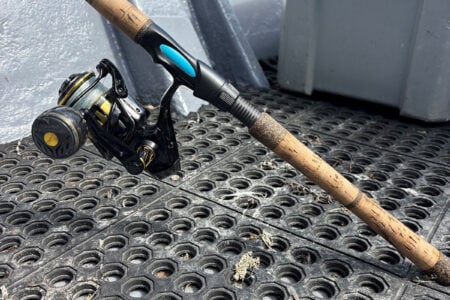
Jigging rods made just for the ice are perfect when presenting a lure rather that live bait. That said, even a lure can be tipped with a wax worm or minnow head for extra scent and realism. Ultra-light rods are ideal when targeting bluegill, perch, crappie, and bass, while heavier rods are needed to handle big game like musky or pike. Ice Jigging rods are short, so you can use them on open ice or an ice hut, an insulated tent that you can setup right on the ice. These are an ideal place to keep warm as you spend a day out on the hard water. Portable propane heaters are often used; they keep an ice hut not only warm, but they can be used to heat up a quick lunch or can of soup. No reason to be cold and hungry while out.
Ice huts have an open bottom. The absence of a floor lets you drill a hole or two inside the hut to jig or dead stick a bait. Since the hut has windows on each side, you can keep an eye on the tip-ups while staying warm and dry jigging for your favorite fish.
Location, Location, Etc
One question I am asked most is about location. In other words, where do you start to drill a hole? Every lake is different, and locations will vary. But unlike open water where you can fan cast an area to see where fish are biting, you only have one little hole to drop a bait. To be honest, any lake with a shallow flat, a few feet deep, will yield small bass, yellow perch, or chain pickerel. This is often a good place to start if you are new to ice fishing. You can build on this experience and begin to go for larger prey.
Finding larger gamefish can be more of a challenge. Locating structure, deeper drop-offs, where predatory fish hide, can be part of the fun. Having a good top map of the lake is a great start. Identify steep drop offs, points, and channels and other areas of interest. Standing timber is also an ideal place to drill a hole. It is an area that will hold bait, and if you find bait, you will most likely find an area to hold bigger fish.
If you fish a lake from boat in the warmer months, be sure to note areas of interest that hold fish in say 25 feet of water. These same areas of structure will most likely hold fish in the winter months as well. Keep in mind, once a lake turns over it warms up, around 50 to 55 degrees down deep while the surface is obviously at freezing or below. Mid-50 degrees is comfortable for almost any fish, life goes on as normal, just a bit deeper and slower. If you have an App like Navionics you can save these waypoints in the warm water season, and quickly return to them during the ice. Making easy work of locating potential spots too drill.
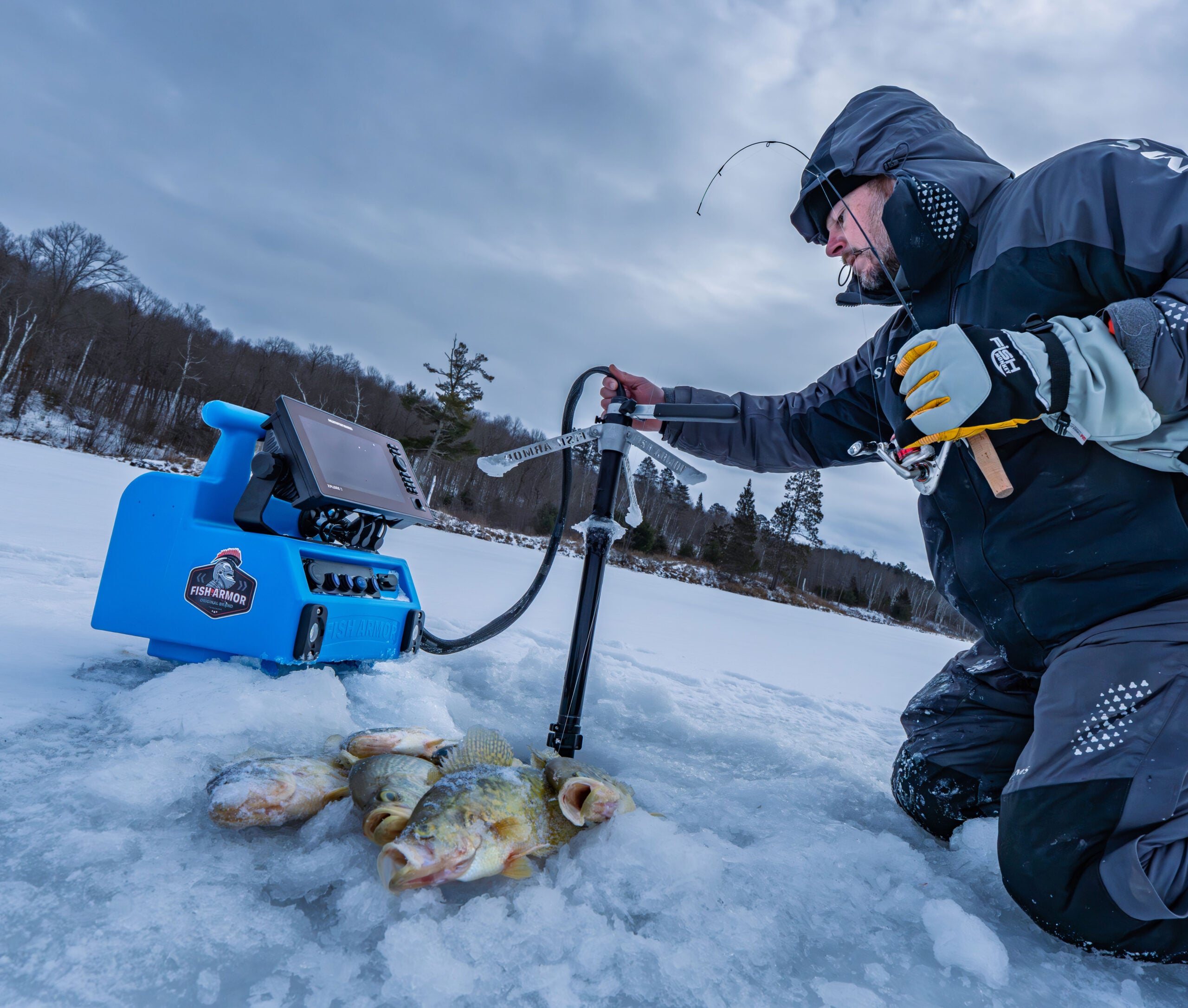
Sonar is another tool to aide in the search for ideal spots. As with most gear, options range from entry level to high end depending on your budget. Some of the small portable sonars work exceptionally well. I have used the Deeper sonar that’s less than the size of a tennis ball, offering offers CHIRP sonar clarity and target separation similar to large boat units, small enough to fit in your pocket. These small units pair with your phone and use this as a viewing screen. Even the latest live scope units are adaptable for ice fishing,
As with any method of fishing, ice fishing can be enjoyable day (or night) allowing you to fish year ‘round. Gear can add up quickly, but most will help yield greater results. As your skill level increases, you will likely begin to target larger and more elusive gamefish.
Go get on ‘em!