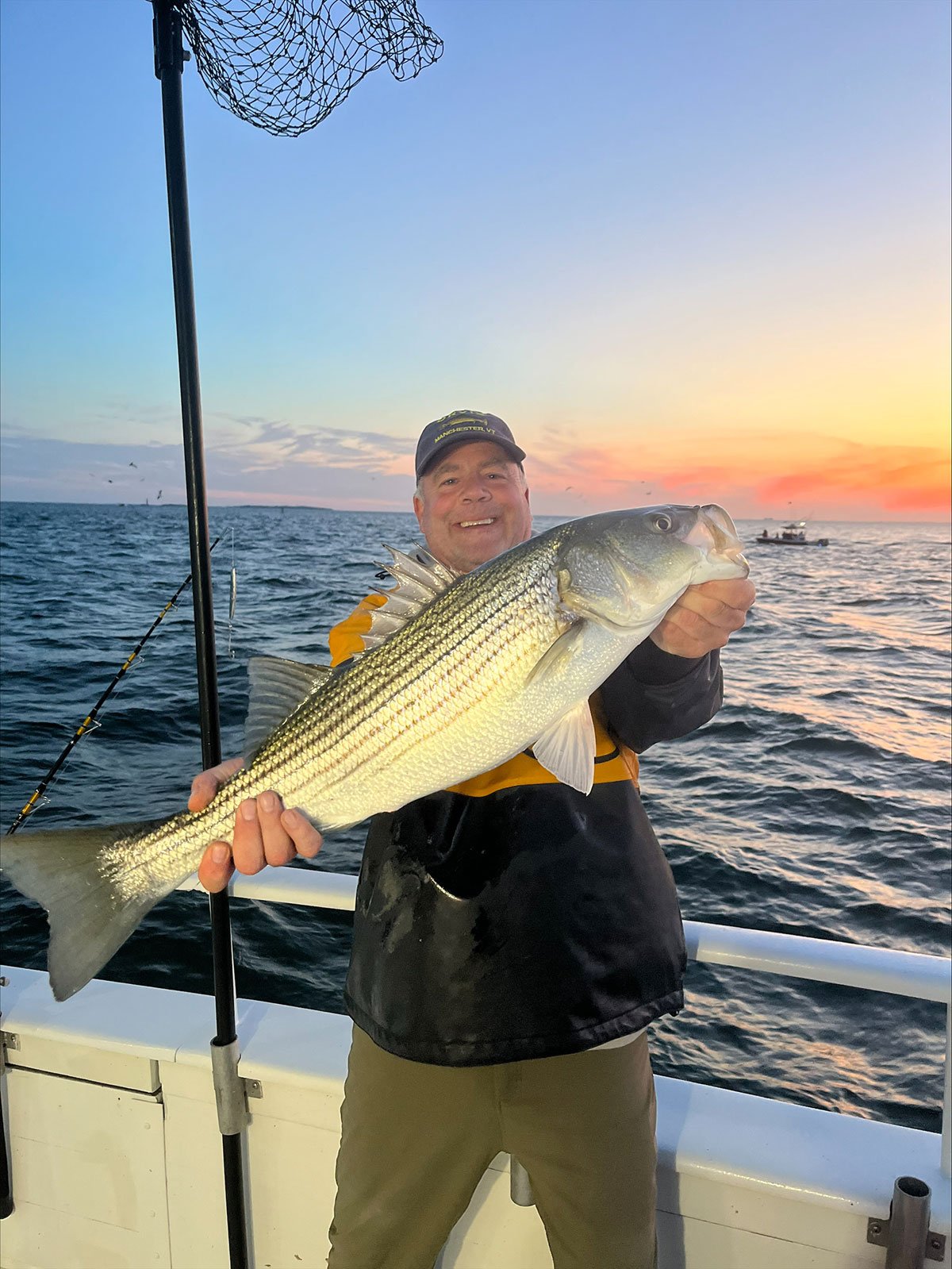
Tactics on striper fishing through the warmest months of the summer out on the east end.
When most anglers think of striped bass fishing, the cooler months of spring or autumn usually come to mind. The warming temps of spring offer a welcome reprieve from winter’s chill, while the cooling autumn breezes are a longed-for escape from the dog days of summer. But what many don’t realize is that hot summer weather can also be an excellent time to catch stripers, particularly early in the morning, at dusk, and especially after dark. One added bonus of warm-weather bassing is the likelihood of hooking into large fish, as opposed to the schoolies that dominate during other periods of the year.
Defining the Season
To define warm-weather fishing in this context, I’m referring to June through early October—essentially the period before the cool northwest winds begin to blow. The key to success during this time is choosing a location where the water remains cool enough to support active striped bass. For anglers fishing around Long Island, that means heading to places like Montauk, Block Island, or the North Fork, all of which consistently produce quality fish under the right conditions.
Two Key Tactics
There are two primary methods that excel during the warm-weather striper season: diamond jigging or bucktailing during daylight and dusk hours, followed by switching to live eels after the sun goes down. When fishing the North Fork, action is often centered in the Race—the dynamic stretch of water where Long Island Sound meets the Atlantic Ocean. Here, you’ll typically deploy either a bucktail or a diamond jig. The jigging and bucktailing portion of the trip usually takes place during the early stages of an evening run while there’s still some daylight, or during daytime outings.
Gear for Jigging & Bucktailing
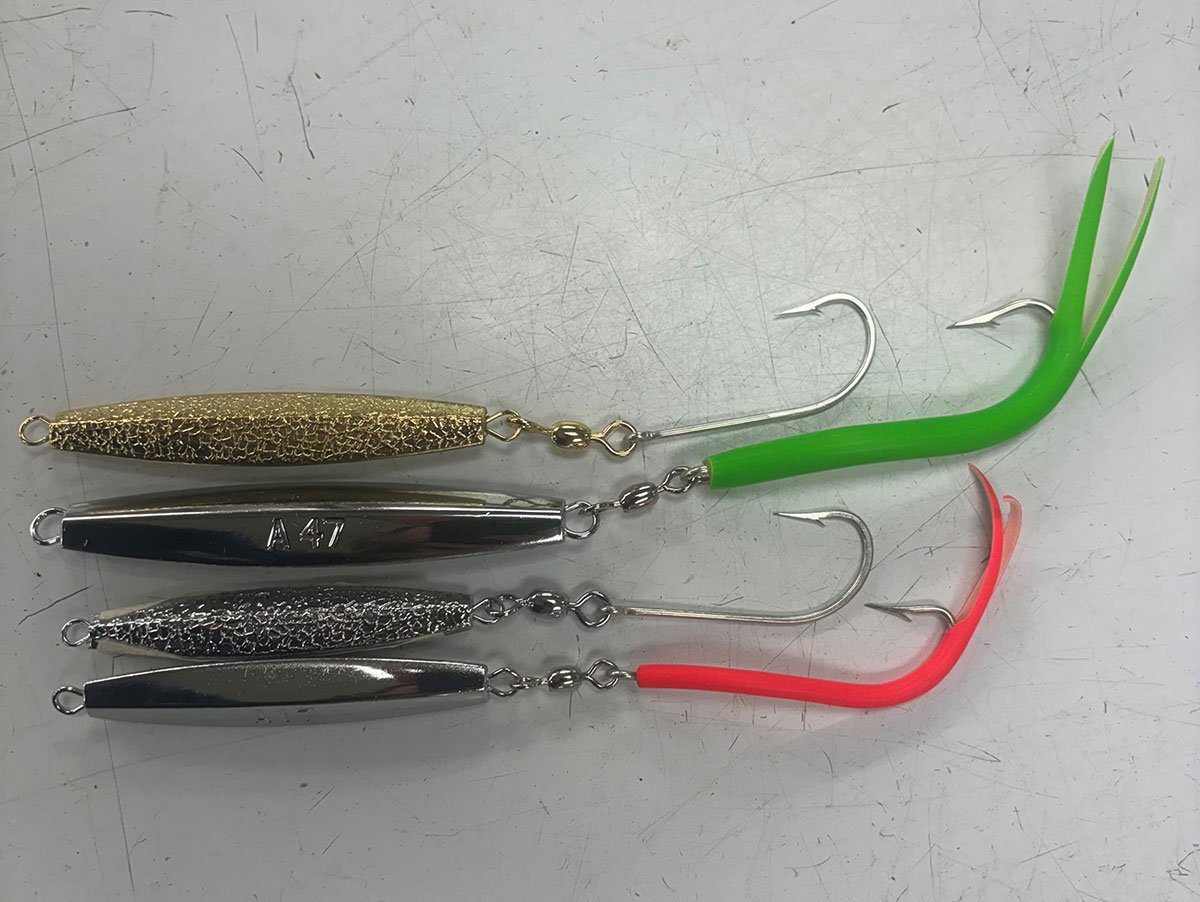
For this approach, you can use either spinning or conventional tackle, with 30- to 50-pound braided line. I like to connect an approximately 3- to 4-foot fluorocarbon leader—50-pound test—with an Albright knot for strength and reliability. When working the Race, you’ll want to position your bucktail above a sinker that’s heavy enough to reach and stay on the bottom, or use a jig in the 4- to 8-ounce range depending on depth and current. Once your rig touches bottom, crank the reel 10 to 12 times. If you don’t get a bite, freespool back down and repeat. Often the captain will instruct you to let the sinker drag across the bottom. In that case, be ready to strike the instant you feel a hit—otherwise, the bass will spit the bait before you ever get a chance to set the hook.
Jig Color, Speed & Strike Strategy
| DIALING IN THE DRIFT |
| Success during summer striper trips often hinges on how well you manage the drift. Whether you’re jigging or fishing live eels, understanding drift speed and boat positioning is critical. Too fast a drift, and your bait skips unnaturally or lifts off bottom; too slow, and you’re not covering enough water. That’s why carrying a range of sinkers—from 5 to 16 ounces—is essential. Adjust weight based on depth, current, and wind to maintain contact with the strike zone. Keep communication open with the captain or mates, who often call out adjustments. If you’re marking fish but not hooking up, try repositioning slightly uptide of the school or altering your jig cadence. Some of the best hits come just as you adjust to stay in the strike zone. In warm-weather bassing, subtle tweaks in drift management can turn a slow night into a lights-out bite. |
From my experience, gold-colored jigs tend to outperform on cloudy days, while silver jigs are best under sunny skies. Sometimes, hammered jigs will produce better than plain ones, so it pays to observe what’s working for others and experiment until you find the right combination. One of the most common mistakes anglers make is bouncing the jig too aggressively along the bottom. Stripers generally prefer a slow, steady retrieve, as this more closely resembles the natural swimming action of a sand eel. It’s also important to keep your retrieve speed moderate because larger stripers tend to be lazier feeders. Retrieve too quickly and you might only entice smaller fish.
As a reminder, the current striped bass regulations allow for one fish per day, per angler, measuring between 28 and 31 inches. Any fish smaller or larger must be returned to the water unharmed. To help ensure healthy releases, you can pinch down the barb on your jig or bucktail. This makes it much easier to remove the hook without injury—just be careful not to let your line go slack during the fight or you’ll likely lose the fish. If you plan to take a photo, do it quickly so the bass can be released promptly and safely. Last season, the jig bite off Montauk was red-hot well into July and early August, producing quality bass in good numbers.
Shifting to Live Eels
As the sun dips below the horizon, the game plan shifts from jigs to live eels. If you’re fishing aboard a charter, all the necessary gear will be provided. On a party boat, check ahead to see what’s included—some provide tackle for free, others may charge a small rental fee. The standard method for eeling is to hook the bait from the bottom of the mouth and out through the top of the head. I prefer to use a conventional setup spooled with 30- to 50-pound braid. While braid lasts a long time, it’s important to inspect it periodically and respool if there’s any sign of weakness.
My go-to reels for eeling are an Accurate Boss Extreme 400 and a Shimano TLD 10, both paired with 7-1/2-foot rods. One is a custom rod built for me by the late Kathy Kronick of Johnny’s Tackle in Montauk, and the other is a Shimano Terez—each just as effective for eeling as they are for jigging.

Building the Eel Rig
Your eel rig should include a three-way swivel, with a sinker in the 5- to 16-ounce range depending on drift speed, and a 5- to 6-foot fluorocarbon leader terminating in a 7/0 or 8/0 inline circle hook. To attach the sinker, I recommend using a 40-pound monofilament loop. That way, if the sinker gets hung up on the rocky bottom, you’ll only lose the sinker—not the whole rig. I like to pre-tie several eel rigs at home to save time if one is lost. Another useful item to bring along is a small headlamp for the nighttime portion of the trip. These are widely available at local tackle shops or online and are a smart, inexpensive investment.
Hookups, Hooksets & Circle Hooks
When fishing eels, drop your rig to the bottom and then take up a few cranks to lift it off the structure. Hold the rod tip high, and when you feel the telltale thump of a striper grabbing the eel, drop the tip until the line comes tight and simply begin reeling. Using circle hooks may take a little practice, so don’t hesitate to ask the mate for a quick tutorial if needed. The method works beautifully—most fish will be hooked right in the corner of the mouth, improving their survival rate if released. I’ve watched my longtime fishing buddy Frank Stoutenburgh use circle hooks with great success for years, even before they were required. He consistently matched or out-fished others using J-hooks.
Looking Ahead to Warm Nights
As I write this, the weather is still quite cold, making me yearn for those warm summer nights filled with the thump of stripers on the line and the hum of reels in the dark. If you’ve never experienced warm-weather bassing, I highly recommend giving it a try this season. I look forward to seeing you aboard one of my favorite party boats—chasing big fish beneath the summer stars.