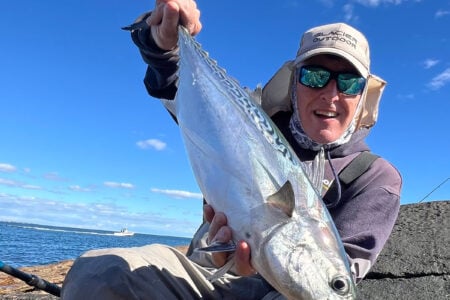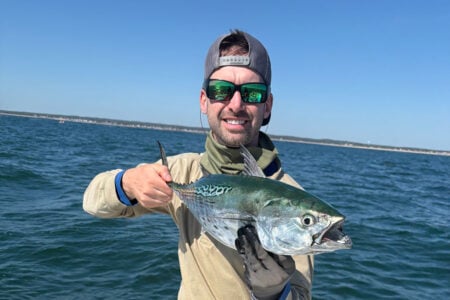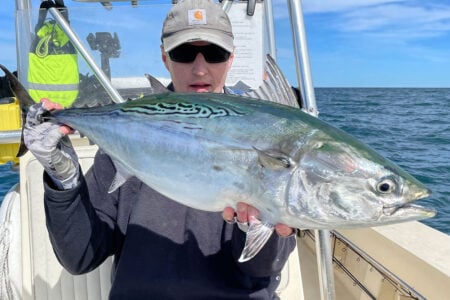
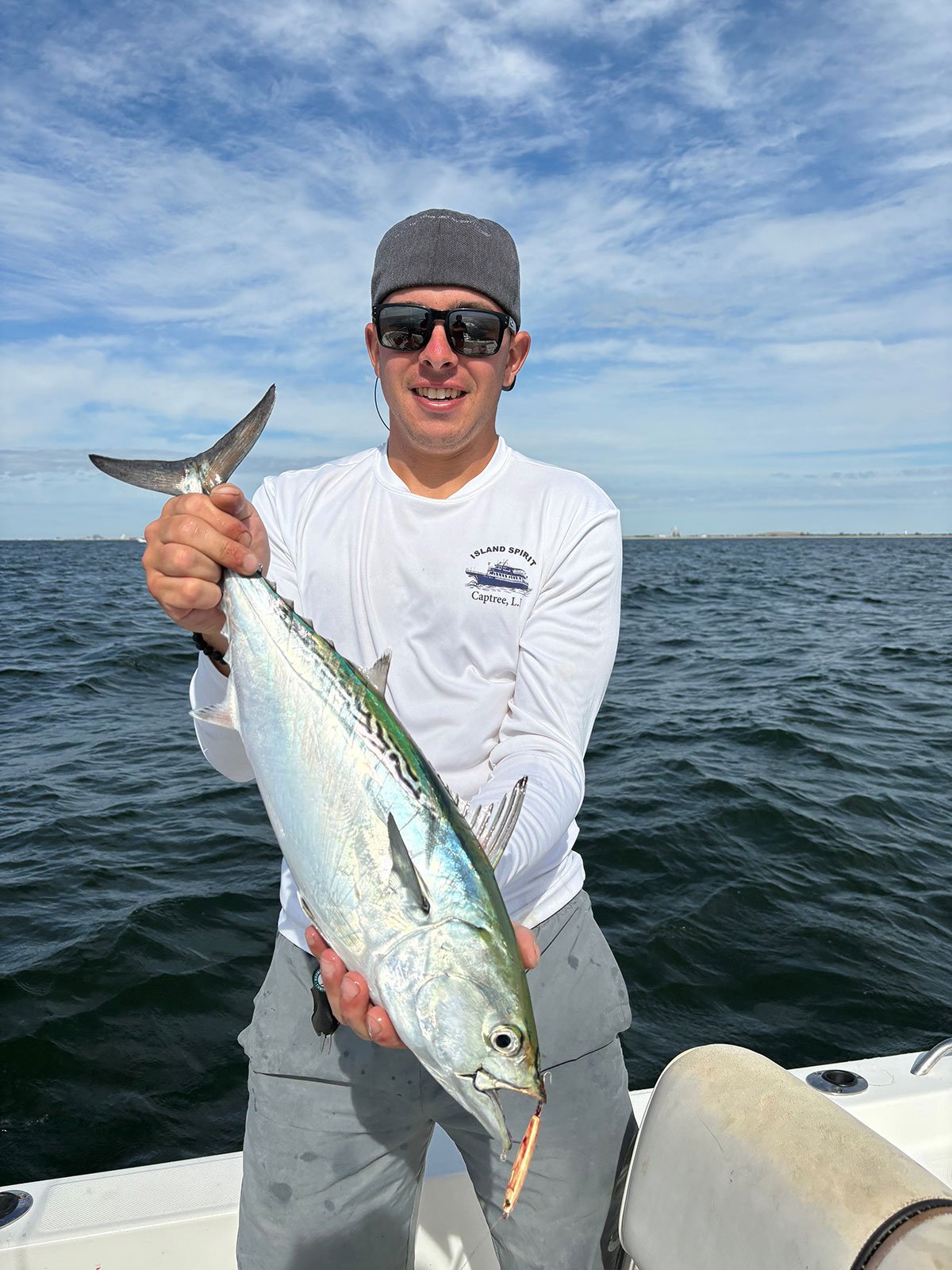
While albies may seem random, focusing in on the right structure for them will increase success.
False albacore are often described as unpredictable, but seasoned anglers know that there’s a method to the madness. These fast-moving fish thrive on structure and current, and they feed best in natural funnels where bait is concentrated. I like to call these spots “albie alleyways” — ambush zones created by rips, sand points, and inshore current seams where bait has no choice but to bunch up. Recognizing and fishing these lanes properly is the difference between chasing splashes all day and hooking up consistently.
The first step is learning to read the water. Anywhere you see moving current compressing against structure, you’ve got the makings of an albie alley. It could be a rip where tide water meets the ocean swell, a sandbar creating a break in the flow, or even the edge of a channel. Albies use these seams to their advantage, just like stripers and blues, patrolling the pinch point until bait funnels past. Instead of charging every surface feed you see, study the current lines and anticipate where bait will be pushed. More often than not, albies cycle through the same lane over and over, and the smart angler positions themselves there rather than chasing.
Casting angles matter just as much as location. Albies feed into the tide, which means placing your casts slightly ahead of the current line gives your lure the most natural presentation. A long cast across the seam allows your lure to sweep with the tide, mimicking a fleeing baitfish in trouble. Casting directly into the feed often results in tangles, spooked fish, or missed opportunities. By leading the school and letting your lure intersect their path, you stack the odds of a strike without pushing the fish down.
Lure choice in these alleyways is all about size, speed, and profile. Albies are notorious for being locked onto small forage — bay anchovies, spearing, and peanuts — so downsizing is usually the right call. Epoxy jigs and slim metals in the 1/2 to 1-ounce range cast a mile and match small bait well. Soft plastics on light jigheads are another top choice, especially when fish are corralling bait in tight quarters. Regardless of the lure, the retrieve is almost always the same: burn it. Reel as fast as you can crank. Albies respond to panic speed, and a hesitant retrieve often kills the bite. If you think you’re reeling fast enough, go faster.
One technique mistake many anglers make in an albie alley is overcasting into the heart of the blitz. When fish are driving bait into a seam, the commotion at the center is often too chaotic for your lure to stand out. Instead, focus your casts on the edges of the action. Albies will often circle the perimeter, picking off stragglers that escape the main crush. A lure zipping along the edge of the feed looks like the perfect target, and it won’t spook the school the way a lure splashing down in the middle might.
Line control is another overlooked element. Because albies strike at high speed, a belly of slack line can cost you fish. Keeping the rod tip low to the water and reeling in direct contact with the lure makes for solid hooksets and fewer pulled hooks. Braided line is a must for cutting through wind and maximizing casting distance, but a short fluorocarbon leader helps reduce visibility and withstands the abrasion of repeated strikes.
Boat positioning in these alleyways is as much about restraint as it is about strategy. Charging directly into breaking fish is the surest way to send them down. Instead, idle into position up-current, shut down quietly, and drift into the feeding lane. From the surf, the same rule applies: resist the urge to chase. Plant yourself near a seam or a rip and wait for the fish to cycle back. Albies often run the same track repeatedly, and patience pays more than racing from splash to splash.
Another effective trick is mixing up lure weights. Sometimes a heavier epoxy jig fished just under the surface will outperform a topwater burn, particularly when fish are feeding slightly deeper. Conversely, when they’re spraying bait on top, a lighter jig cast far and ripped across the surface can draw more strikes. Carrying a variety of weights lets you cover the entire water column in a single tide.
At the end of the day, fishing albie alleyways is about discipline. It’s easy to get caught up in the adrenaline of surface feeds, but the most successful anglers slow things down, study the flow of water and bait, and make calculated casts into the right lanes. Albies are chaotic by nature, but their chaos has patterns. Once you learn to recognize those patterns and work them with speed, precision, and patience, you’ll find yourself connecting far more often — and catching albies becomes less about luck and more about skill.