An experienced headboat angler offers sage advice on getting the most out of your party boat adventures.
Party boats are, for me, one of the easiest and most rewarding ways to fish saltwater. They’re affordable (depending on the trip), give you a full day on the water, offer access to good fishing spots, and the opportunity to learn from experienced captains, crew, and other anglers.
But even though party boats put you in the position to succeed, catching fish isn’t guaranteed. The anglers who do well are prepared not just with gear, but with the right attitude. I fish all over, from Connecticut to Massachusetts, on all kinds of boats and for a variety of species. I do it because I love it and with the years I’ve put into this, I’m hoping my experience can help others find the same enjoyment from party boat fishing that I do.
Planning Ahead
A successful trip begins with a solid plan and that plan has to cover the species you’ll be chasing, the gear you’ll be using, the weather, your personal comfort and smart packing of it all. Keep in mind that a winter trip for cod, pollock, haddock and cusk requires very different gear than a summer trip for fluke, sea bass and scup; and there’s a whole other set that’s needed for bass and blues.
Check the weather carefully. Wind direction and sea conditions affect both your comfort and how the boat fishes. Even if the forecast looks good, be ready for changes, as offshore weather can change quickly; dress in layers, bring quality rain gear, and pack extra clothing. This way I can stay comfortable and focused on the fishing, even if conditions turn.
Arrive early! I usually get there two hours before departure, or three hours if I’m heading to Massachusetts from Connecticut. This gives me time to choose a good spot at the rail, set up my rods, and chat with the crew. Letting the mates know you want to learn really helps. It’s also nice to not feel like you’re rushing onto the boat and taking whatever open spots are still available. Running late like that puts unnecessary stress on you and the crew, arrive early and you’ll avoid all that and you’ll have a much more enjoyable trip.

What To Bring & What To Leave Behind
You don’t need an armload of rods or a whole tackle shop’s worth of gear. Too much stuff just gets in the way. This is why I stressed the importance of pre-planning, so you can identify the items that you will need for the species and conditions and leave the rest of it at home. Limit yourself to one small tackle bag or a 5-gallon bucket. Pack it with a variety of sinker sizes along with plenty of backup rigs and extra hooks, swivels and leader material. Be sure to have both a sharp knife and a pair of reliable fishing pliers, these will come in handy in more ways that you can count.
For your personal needs and comfort, I recommend bringing a small ‘lunch box’ style cooler with enough food and drinks to last you through the entire trip. In that cooler you can store a few other essentials like motion sickness pills (if needed), sunscreen, sunglasses and whatever other small items you may feel are necessary. A larger cooler is also a must-have for bringing home your catch. Leave you big tackle boxes and other bulky gear items at home, they only get in the way.
Rods, Reels & Rigs
Your gear should fit the type of fishing you’re doing. For most bottom-fishing trips, I use a medium or medium-heavy conventional rod with a good star-drag or lever-drag reel. My main “go-to” set-ups are a Jigging World Retro Rod Medium Heavy 7-foot, 6-inch, paired with an Okuma Tesoro LDJ-2000, Jigging World Luminous Slow Pitch Rod Medium Heavy 6-foot-5, paired with a Shimano Torium Jigging Special 2000HGA reel, Jigging World MK2 Nano Carbon Rod 7-1/2-footer paired with a Jigging World Prime Reel -PR20.
Braided line helps you detect soft bites and cuts through the current, but monofilament can still be useful depending on the situation and your preference. The main thing is you don’t want to be under-gunned, that will result in you not being able to control your fish, which will affect the anglers near you on the boat. You don’t want that. If you feel like you might not have the right gear, rent a rod and reel on the boat, they will be chosen by the crew to fit the fishing you’ll be doing that day.
I always bring plenty of pre-tied rigs. I tie them at home because time spent tying rigs on the boat is time away from fishing. Typically use hi-lo rigs for sea bass and porgies, and I use single-hook rigs when the bite is picky. For tog I use a sweetheart rig, snafu rig or a single dropper loop. For cod a sand eel jig teaser assist hook with a baited teaser a foot above, diamond jig with a baited teaser positioned 12 inches above, or a simple baited hi-lo rig. If I’m going on a fluke or “bass and blues” trip or if I’m headed out for winter bottom species, I will pack bucktail jigs in various weights.
And don’t worry, if everyone ends up catching on something you don’t have, the mates will usually have them available for anyone to use. You can also buy rigs on the boat and – as I already mentioned – you can rent rods; I just prefer to bring my own, the preparation is part of the trip for me and I enjoy it.

Dressing For The Day
Personal comfort is the key to enjoying your entire trip, if you’re too cold or too hot your enjoyment will suffer. Dress in layers, even warm summer days can feel chilly on the way out, and winter trips are often much colder at sea. Regardless of the time of year, waterproof boots, a windproof jacket, and a hat with a brim can make a big difference between enjoying the day and being miserable at the hands of Mother Nature.
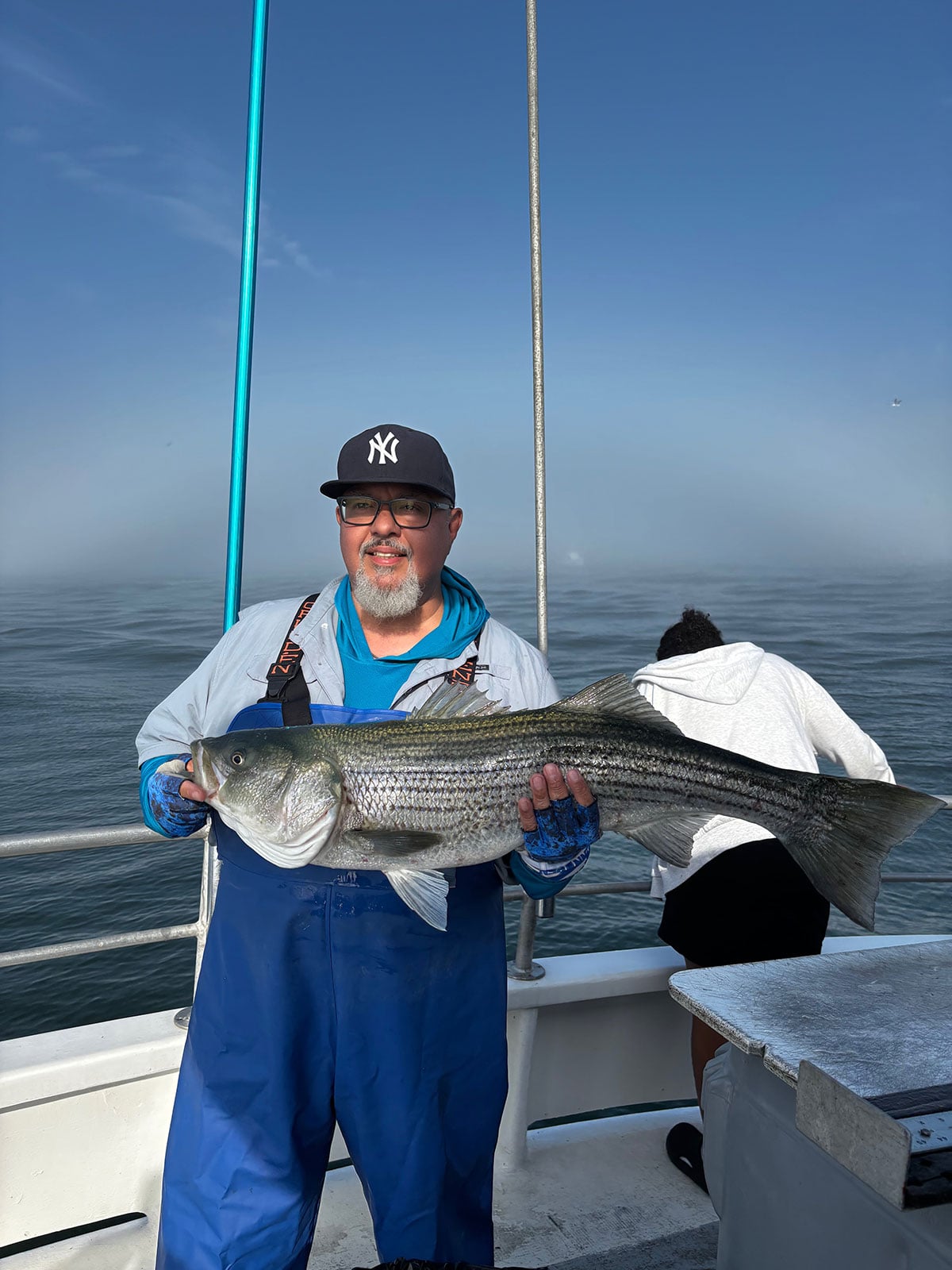
In the summer a hooded sun shirt limits how much sunscreen you’ll need as it keeps the sun off your neck and arms, while also breathing well. In the winter, insulated gloves and a warm winter hat will go a long way toward keeping you warm and comfortable. Always expect to get wet. Salt spray, bait debris, and fish slime are just part of the experience. A good pair of bibs like those made by Grundens are essential for keeping slimes, sprays (and smells) off your clothes. And with any luck, you’ll be holding a big slimy fish with both arms for a photo—so dress for the fish you hope to catch!
On The Boat, Be Aware
Being aware of what’s happening around you is key to doing well on a party boat. Watch how the boat drifts and where your line goes. Move if you need to, so you don’t cross lines with others. For example, if you notice your line slowly drifting back or you hook up on a big fish. Don’t watch your line running across the next 10 anglers! If you stay put, everyone is going to end up with tangled line. Politely tell the anglers next to you that you’re going under or over them and follow your fish until you’re in a better positon to land it.
Listen to the crew. When they tell you to reel up, drop back, or change weight, it’s for a reason; maybe the boat is drifting off the structure and the captain needs to reset the drift or he sees fish on the sonar at a different depth and wants everyone repositioned. Or it could be that he’s repositioned the boat and needs all the lines to get back to the bottom together, or the current speed changed requiring more or less weight… the bottom line is, these guys know what they’re doing and they want you to have a great time, so their advice is gospel.
Plus, the mates usually spot patterns before anyone else does, so if they suggest a change it’s probably because that’s what’s catching the most fish. When you hook up, call it out by yelling, “Fish On!” Letting nearby anglers know you’re fighting a fish helps prevent tangles, alerts the mates to assist you when it’s time to land the fish. Also, making sure that everyone knows who’s hooked up ensures that other anglers are keeping an eye on you and your fish, which helps keep the deck safe.

Fishing Smarter, Not Harder
A lot of anglers just focus on baiting hooks and dropping lines. The anglers that do best pay attention to everything, how the water moves, how others are fishing, which baits are working, and where the fish are being caught. If someone near you is catching fish and you’re not take a minute to observe. Take note of their sinker size, bait presentation and hook size. Also take note of how long they wait before reeling up to re-bait their hook. And don’t be shy about asking questions, almost all the experienced anglers are happy to help, even if they look a little grumpy at first, trust me. Most of all, be ready to adapt. Party boat fishing changes quickly, and those who adjust quickly, tend to catch more fish.
Party boats are a great way to learn, catch fish, and improve as an angler. You don’t need the best gear or years of experience; just take the steps to make sure you’re prepared, pay attention, and be open to learning. Show up ready, fish smart, and respect the crew and other anglers. You’ll catch more fish and enjoy the whole experience much more.
You might even make a new friend; I never thought I would at my age. I met my fishing buddy Larry two years ago. He’s a retired captain and an experienced and seasoned angler. Larry and I go on all kinds of fishing trips, from Connecticut to Rhode Island and Massachusetts. In the spring, summer and fall, we primarily fish on the Sunbeam out of Waterford, CT. We also like the Lucky Lady in Clinton, Middlebank in Bridgeport, and the Black Hawk in Niantic, their squid trips are a blast! In the winter, we switch our focus to the North Shore of Massachusetts, we like the Yankee Clipper out of Gloucester and the American Classic out of Lynn.
One last thing, don’t forget to tip the mates! They work hard for you, and trust me, they’ll remember you on the next drift and on the next trip, too.