A look back to over 50 years of changes in the Long Island surf scene.
When I returned to surf fishing in earnest, I expected things to remain the same from year-to-year. Boy, did I have that wrong! I joined the High Hill Striper Club in the winter of 1973-74 and was way out of touch with the surf scene after years of schooling and family obligations, but learned two things very quickly. First, I needed to improve my skills, and second, how fast things change in surf fishing.
I watched and listened to talented surf rats such as Jack Frech, Willy Young, Bob Rance, Fred Schwab, Bob Krauss and others who were perennial leaders in surf competition as well as hard workers for better management and the conservation of our precious fish species. None of them formally mentored me, but they did let me listen to their conversations and ask questions. I never got to fish with Jack, but did with the others. It didn’t take long to realize surf fishing is a complex sport with many written and unwritten rules, and if I wanted to improve, I’d have to invest a lot of time and effort. At this early stage, I was building a foundation, not racing towards a finish line. In addition, it would be the ability to adapt to major and subtle changes in the sport that would elevate my fishing.
Surprises & Adjustments
Although I was not a big success as a first-year club member, I did catch enough nice fish to garner the attention of those guys mentioned above, and they began the process of allowing me into their inner circle. That first year, bunker was scarce, instead it was lots of sand eels in spring and late fall, mullet in September, anchovies in October and early November, and herring towards the end of the season. To my surprise, the following year there was almost no mullet, anchovies were absent, sand eels were less abundant, while bunker were still in short supply. In my second year I discovered, to my chagrin, that last year’s best lures were less effective and last year’s best times and places to fish were no longer as reliable.
Needless to say, I was confused. I posed questions about this to Schwab and Krauss over a beer before a club meeting, and they were amused. They explained how changes in bait species and abundance can have profound effects on surf fishing. Adjusting my surf bag was relatively easy, but I found that the rest of it was less discreet and would take time to learn. That’s when I began a journey on a road that took me toward more discriminating decisions.
The Pieces
In recent years I’ve written a lot about robotic surf fishing. By that I mean people who fish the same places, with the same lures, with the same presentations, under the same conditions, and wonder why their success fluctuates so much. I realized early on that I didn’t want to be a robot. Therefore, in order to make rapid adjustments I needed to put a lot more mental work into making surf fishing decisions. That meant I needed to be able to use pieces of information to discriminate between what was useful and what was less useful in real time. But what were these pieces? Ultimately, I settled on the following: moon phases and their effects on currents and tides, wind speed and direction, seasonal effects, presentations, reading the beach, and bait type and abundance.
I came to understand that all the pieces affect spawning success, bait diversity and abundance, migration patterns, how fish feed, where they feed, and the connection to beach structure. There’s a lot to it, and some of it was so subtle that it was difficult for me to find a place for it in my learning curve. Slowly, a partial mastery of how these pieces interacted allowed me to get the most out of my efforts and, as the surf scene changed from year to year and decade to decade, I was better able to adjust my approaches in order to be consistently successful.
The Changing Scene
1970s
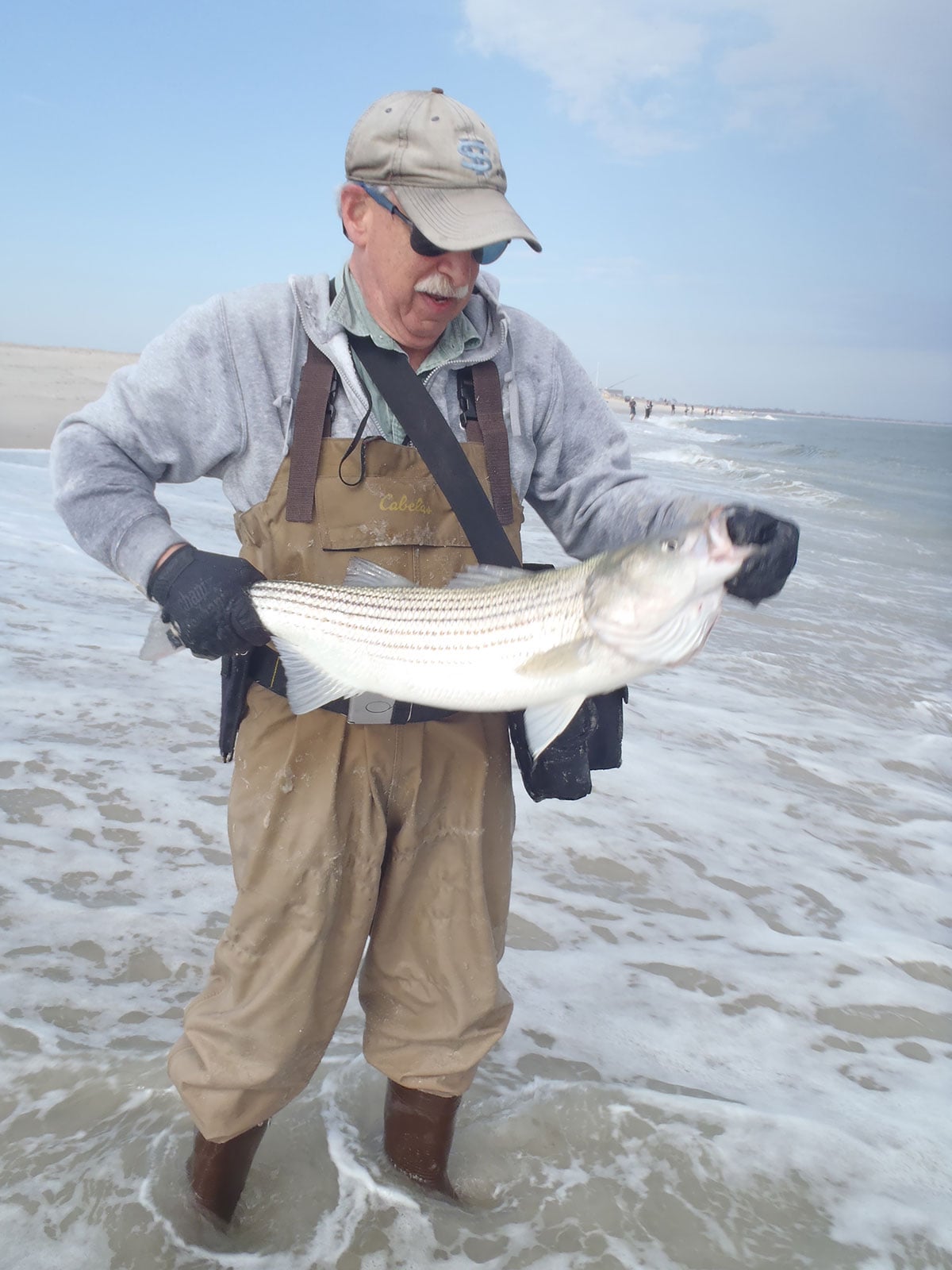
The 1970s featured a four-year period when sand eels were so abundant that they often turned the water near the beach black for miles. Sand eels were the main bait and, unlike in recent years, some schools stuck around all summer. One summer we had a terrific run of weakfish on the north shore feeding at night on sand eels in August. That reminds me of a second change from the 1970s. This was the decade dominated by weakfish. They were everywhere in spring and summer, stripers were not abundant, and although there were lots of big blues in the 70s, they made their biggest showing in the fall once most of the weakfish had headed out to the continental shelf.
Different Habits, Different Lures
There can’t be two species with such different feeding habits than blues and weakfish. Blues chase and attack, using speed and teeth to get their appetites satisfied. Weakfish usually strike off the bottom as ambush feeders. They follow bait and pick it off. They are also much more discriminating about what they eat. For example, when they feed on sand eels, they will favor lures that imitate sand eels, while big blues on the hunt will attack a variety of lures. One spring we needed to use 3-inch swimming plugs and 3-inch soft plastics on 1-1/2-ounce heads to get consistent bites. Our normal heavy gear straightened hooks. So, we switched from 11-foot rods and 20-pound test line to 7 and 9-foot rods and 10-pound test line. Of course, by the fall, bags, rods, and lines were upgraded to handle big blues.
1980s
It’s a terrible memory, but real nonetheless, the striped bass population crashed and that led to a harvesting moratorium in 1986. Weakfish had declined, and it was bluefish, bluefish, bluefish, from one end of the season to the next. Once again, we needed to change our approaches. The small weakfish lures were stored at home, replaced with large poppers, pencil poppers, darters, bottle plugs, and metal-lipped swimmers. Eleven-foot rods, big wide spool reels, and 20 to 30-pound test line became standard. In addition, since contrary to popular belief, blues don’t feed 24-7, there were long periods when the blues sulked. Huge schools often sat on the sand doing nothing. The solution to catching them was chunks of bunker, mackerel, or herring.
Cedar Chunking
The 1980s witnessed the formation of the Cedar Bar, a huge peninsula of sand, 3/4 of a mile long, that extended south from the Sore Thumb jetty and parallel to the Democrat Point jetty. Sometimes, blues coated the bottom around the sand bar, but only came to life to feed for short periods. In the 1980s adult bunker were abundant and a perfect food for the big blues. The fish alternated between gorging themselves and total inactivity. The solution was to cast chunks of real bait they couldn’t resist. So, instead of bags filled with huge lures, we carried bags of rigs and sinkers along with fresh and frozen baits for chunking. Unfortunately, that bar disappeared after an extensive inlet dredging project.
An abundance of adult bunker and late season herring also made North Fork beaches hot in the 80s, and many of us walked those soft gravel beaches frequently to catch blues that often reached twenty pounds. Big plugs and heavy tins dominated our bags.
1990s
Weakfish were no longer plentiful and blues were abundant, but beginning a decline. Happily, striped bass mounted a huge comeback. Given a few years of no harvest, the species responded enthusiastically, and it was stripers that dominated the 1990s. It was also a decade dominated by anchovies and peanut bunker that prompted huge runs of stripers in the Montauk surf that began after Labor Day and ran well into October. Bucktails and poppers were the choices by day, and swimming plugs by night.
There were often five successful spawns of bunker in the 90s, and by late August they ranged in size from 1 to 6 inches. The abundance of peanuts enhanced the spring and summer day fishing and our bags were loaded with bucktails, and soft plastics of varied sizes. A mix of large blues and stripers during the fall run stimulated a change to large plugs and large heavy tins.
2000s
The first decade of the new millennium featured good fishing for both blues and stripers, while weakfish still showed up from time to time. However, it became clear that all three species were in decline. The decline has persisted through the 2010s and 2020s, but it’s been the 2020s that have really tested the mettle of surf anglers. There are far fewer robotic anglers nowadays, because they simply don’t catch many fish and become discouraged.
The fall runs of big blues are now a distant memory, so most anglers don’t carry rigs and chunks, but we do carry poppers, pencil poppers, and bucktails by day. At night we rely on hard plastic swimming plugs along with an array of darters and bottle plugs. There are still days of good fishing along the south shore beaches in the fall, but without blues and weakfish. Fewer and smaller schools of stripers means that blitzes typically last minutes instead of hours.
New Strategies
Changing from lures to bait, small lures to big lures, fishing new spots, adapting to bait changes, etc. were fairly simple and easy to do. However, changes I’ve made in the 2020s have been a lot more subtle. Sure, I switch out lures as conditions change, but the mental part of the sport has proved more important than ever.
I’ve had to change a lot of what I do, where I go, when I go, and how I fish in the 2020s, and all based upon discriminating the combined effects of all the pieces I’ve mentioned. It’s become more of a jig-saw puzzle than a process of associating big lures with big blues, as an example.
Perhaps Better
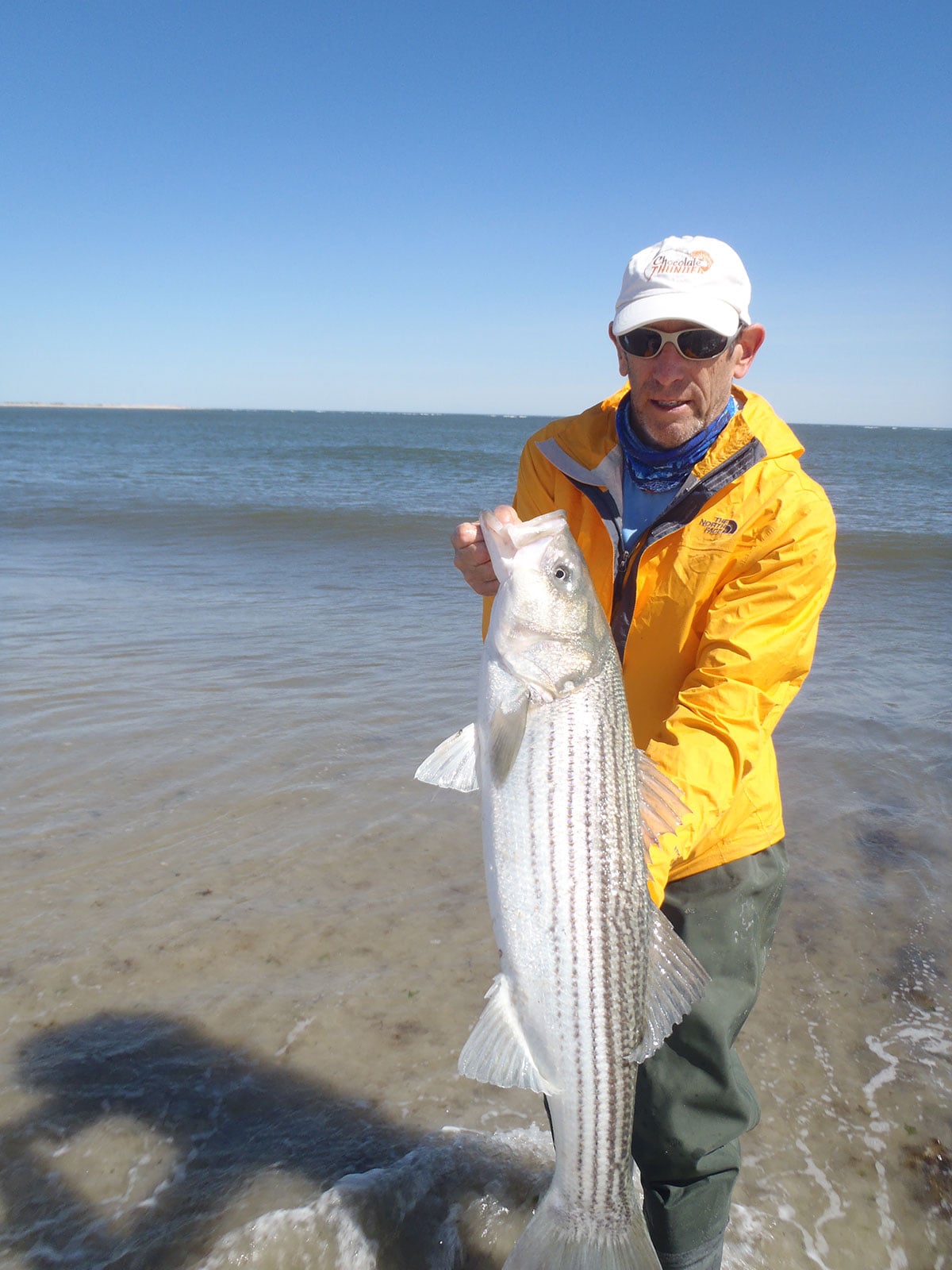
In some ways the new order of things is better. True, I don’t catch the number of fish I once did, but the challenge is greater and I do enjoy a challenge. There’s also a bit more satisfaction in success as I adapt to subtle changes. For example, I analyzed conditions and realized that sand eels disappeared overnight last fall. Knowing this, the tin and tube combo stayed home in favor of bucktails, hard plastic swimmers such as the Yo-Zuri Hydro Minnow, and poppers that found more use as peanuts became the main forage.
Yes, there were long blitzes, but they occurred a mile or more off the beach, while the trough was generally quiet. So, I keyed on subtle movements of small groups of gulls that betrayed the presence of bait and fish. I fished Robert Moses the Tuesday before Thanksgiving, there were only three anglers on the beach, and a bite (not a blitz) lasted for over three hours. The entire beach front was not involved, rather the school slid sideways in the trough in an area only about 500 feet long. A half-dozen sea gulls soared back and forth and would stop here and there, hover over a spot, and occasionally swoop down to grab a peanut bunker. I followed this subtle activity and stayed with the fish.
I also learned, unlike a number of previous years when I caught fish consistently on flat sunny days, that clouds and white water often fueled the feeding engine in 2025. To be successful, I constantly studied the conditions and made rapid adjustments that kept me in the game. We all enjoy a long blitz, but being alert to varied information, analyzing the data, and applying it to your presentations is hugely satisfying, too.