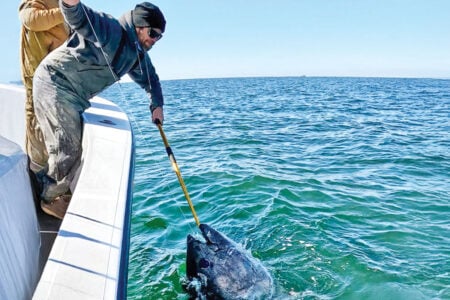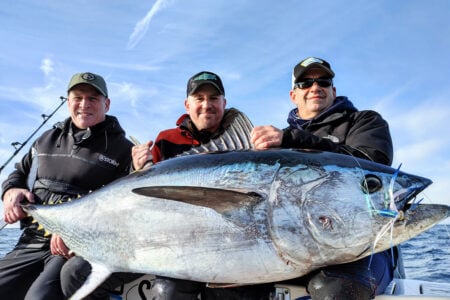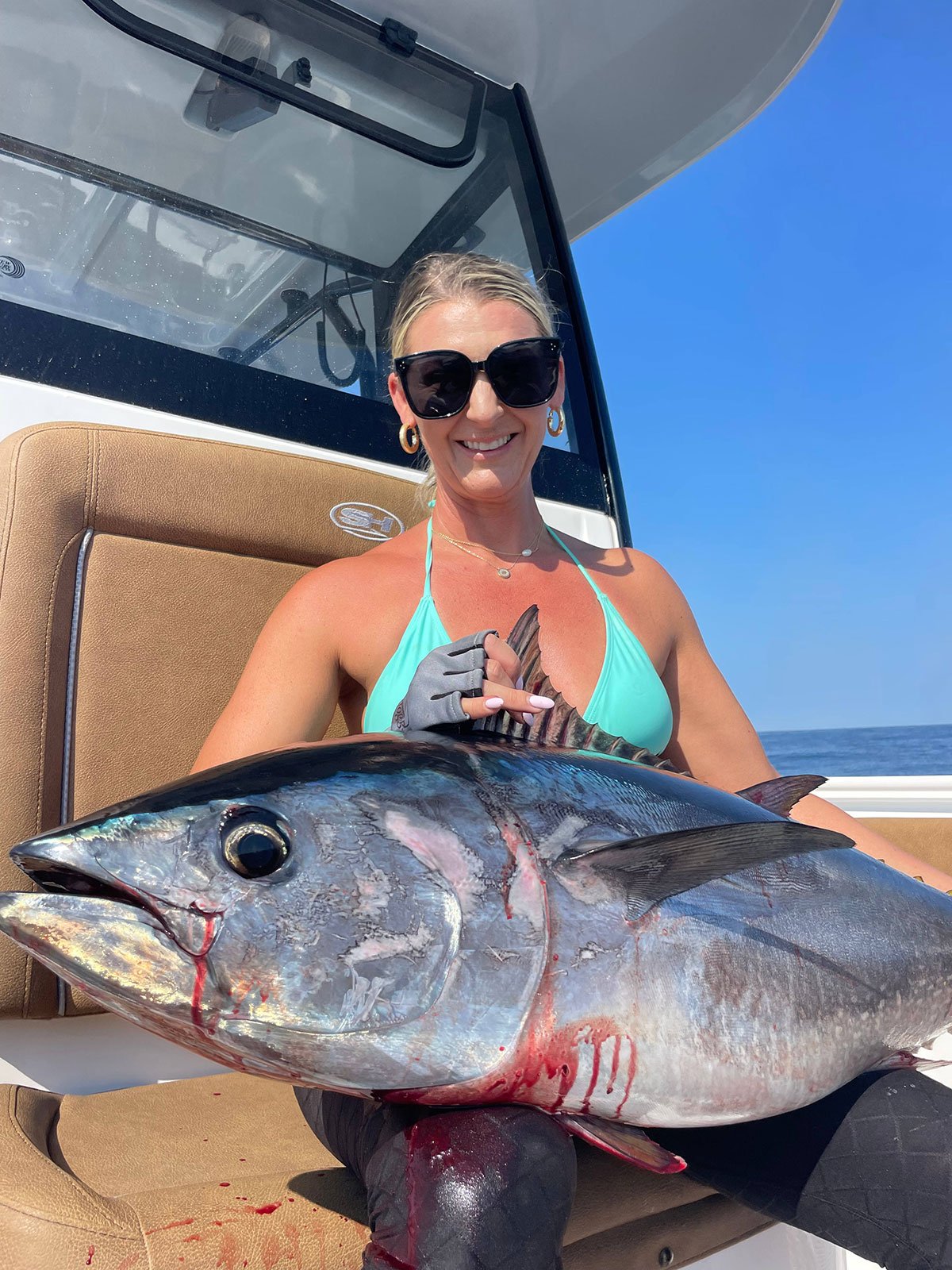
How fishing for Atlantic bluefin went from good, to bad, to entirely off-limits.
You know what they say about opinions. And when it comes to the ups and downs – and eventual bottoming out of the entire Atlantic Coast bluefin fishery – you’ve probably heard more than a few of them. Personally and professionally, I think I’ve listened to and read enough to cherry-pick some of the best analysis of the issue. And watching as the Angling/For-Hire categories went from a 47-inch upper slot size limit in June, to 73 inches in July, only to see a complete shutdown in August, I don’t have the luxury to sit back and keep my mouth shut, especially not when American fishermen are clearly getting fleeced.
The bottom line, we simply don’t have enough tuna quota to meet growing angler demand.
Our own recreational bluefin fishery dates back to the 1930s, when anglers began targeting the species on head boats in Mid-Atlantic waters. Often referred to as the “common man’s big game fishery,” bluefin launched a myriad high-end tackle innovations, and even spawned a television empire (Wicked Tuna). Yet despite rebuilding the stock through decades of sound science and responsible management, U.S. fishermen – those who’ve done the most to conserve the species – are being unfairly penalized. And as the bluefin stock thrives and availability increases, the U.S. quota has not kept pace with ever-growing participation and abundance here along the western Atlantic.
Bluefin tuna is managed internationally through the International Commission for the Conservation of Atlantic Tunas (ICCAT), a treaty organization that consists of 52 member nations who haggle and negotiate over total allowable catch (TAC) limits for tuna, allocating country-specific quotas on both sides of the Atlantic. Atlantic bluefin tuna is managed in two management units, western Atlantic and eastern Atlantic. Because bluefin travel across the entire Atlantic basin, ICCAT adopted a new management procedure in 2022 linking the eastern and western TAC under one management framework. So, in order to meet increasing recreational demand over here, the only way out of this mess is to shuffle more metric tonnage from over there.
The combined U.S. commercial and recreational fishing communities receive 49% of the western bluefin quota, but that represents just 3% of the total Atlantic wide quota. Japan, which doesn’t even have an Atlantic coastline, gets double what the U.S. gets, as do Mediterranean nations like Algeria, Libya, and Tunisia. In fact, the total number poundage awarded to eastern Atlantic nations totals 40,570 metric tons, whereas here along the western Atlantic it’s just over 2,685 metric tons.
There are some opinions – typically shared by non-government environmental organizations and their contracted mouthpieces – that the U.S. should just sit back and take it, and that anglers in particular should quit “whining” about loss of bluefin access. But when you consider that the U.S. recreational fishing community gets just 0.71% of the total Atlantic basin bluefin quota, I think most anglers would agree that an “America first” fisheries policy is more than justifiable.
On April 17, President Trump issued an executive order (Restoring American Seafood Competitiveness) to address unfair trade practices, noting specifically how “Nearly 90% of seafood on our shelves is now imported.” Think about it, eastern Atlantic nations can harvest more bluefin than we can, which in turn gets shipped back into the American seafood market. The president’s directive ordered high-level officials to assess seafood competitiveness and to develop a comprehensive seafood trade strategy, within 60 days. That time has come!
Getting more access to the Atlantic bluefin fishery means commercial and recreational fishing communities must work together, particularly as it relates to our own ICCAT delegates securing the best possible deal in overseas negotiations. Where our hope for more bluefin this season is tenuous at best, we need to look ahead to ensure that the U.S. recreational fishery is no longer forced into unnecessary closures and restrictions due to outdated international allocations.
U.S. fishermen and scientists are driving new, cutting-edge research with leading American universities to strengthen tuna assessments. Hands down, the U.S. has the best managed, best monitored fisheries in the world, yet we receive an internationally-driven allocation that fails to reflect the value of the fishery, our contributions to rebuilding, or the availability of fish in U.S. waters. A quota more aligned with stock size would not only benefit fishermen, but it would also send a clear message that responsible management and investment in science should be rewarded, not punished.
Let’s face it, this is a political issue. And no matter which side of the aisle you’re on, if you want a better recreational bluefin fishery, we need “a bull in the china shop” who is not afraid to break a few plates on the international negotiating table. From what I’ve seen and heard – and perhaps this is just opinion – the coach has already instructed his players to take the gloves off!
No more apologies.