As summer temperatures climb and more anglers head to the coastline, the Massachusetts Division of Marine Fisheries is reminding the public of strict shore-based shark fishing regulations aimed at protecting large shark species and ensuring public safety. The rules specifically target the use of heavy fishing gear from the beach, which is heavily restricted along a long stretch of the state’s most popular and fishy coastline.
From Plymouth Point extending south and east along the entire shoreline of Cape Cod Bay, the Outer Cape, Monomoy Island, Chatham Harbor, and Stage Harbor, rod and reel fishing from shore with heavy tackle is strictly prohibited. The state defines this prohibited heavy gear as using a metal or wire leader that exceeds 18 inches in length in combination with any hook that features a gap greater than 5/8 of an inch.
Anglers are permitted to utilize this specific heavy tackle setup in coastal areas outside of these designated restricted zones. However, even in authorized regions, shore-based anglers fishing with heavy gear must follow a set of strict rules. For public safety reasons, chumming from sunrise to sunset is illegal, no exceptions. Furthermore, the state has completely banned the use of mechanized propulsion and remote-controlled devices to deploy baits for any type of shore-based fishing; this includes the use of drones, bait cannons, and remote-controlled boats—all are strictly against the law regardless of location.
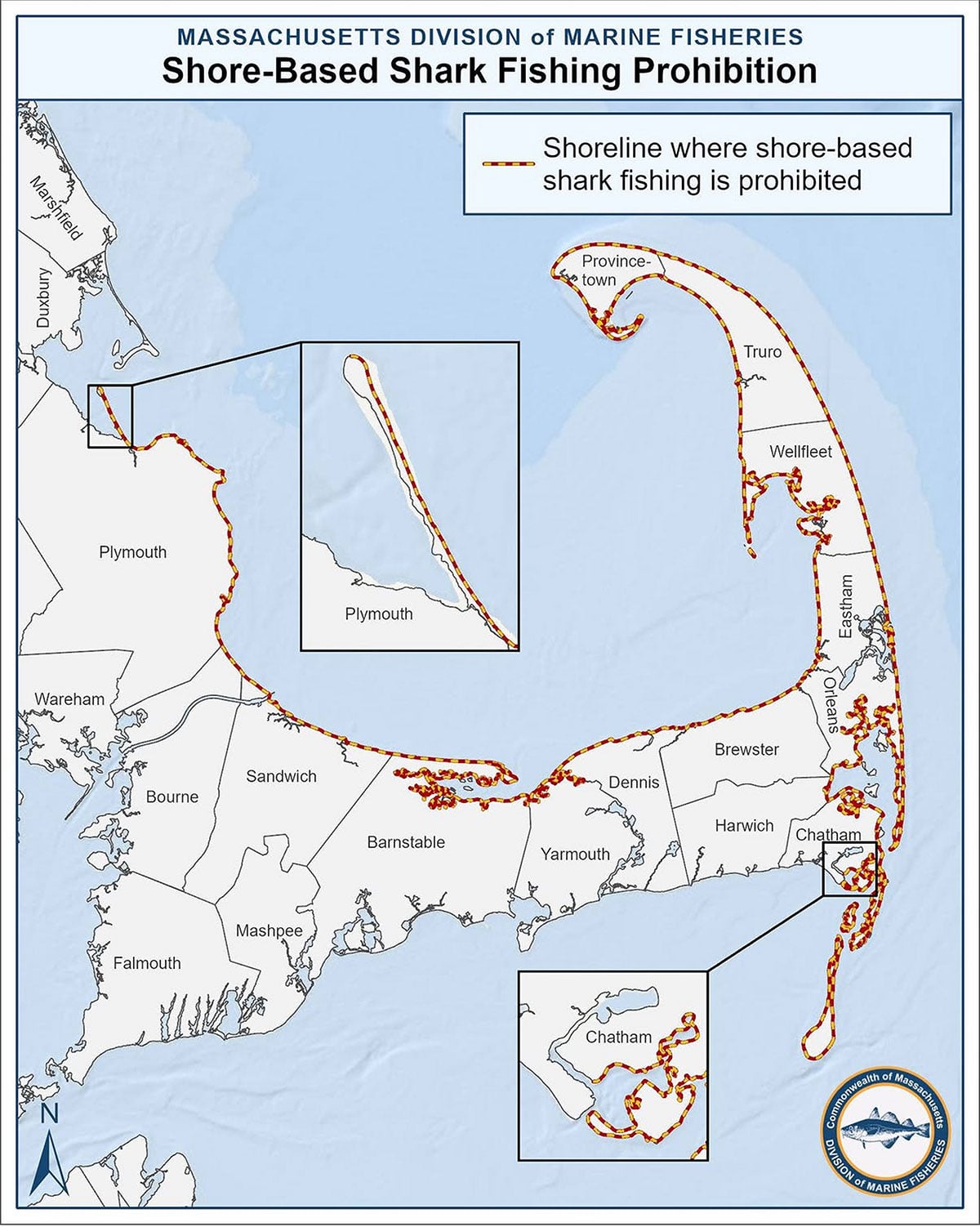
For anglers who do legally hook and land a shark from the shore, the state emphasizes the importance of following these handling guidelines to ensure a high survival rate for the fish. Sharks should be kept in the water at all times, with a specific focus on keeping their gills submerged. Care should be taken to keep handling and release times at a bare minimum, and anglers are instructed not to delay the release just to take photographs. Under no circumstances should anyone sit on the back of a shark. To facilitate a quick and safe release, fishermen should utilize long-handled dehooking devices and should carry wire or bolt cutters capable of cleanly cutting a hook or leader to speed up the process in the event a hook cannot be completely removed.
Once again, these laws and guidelines are designed to protect the public, while also allowing anglers to enjoy the sport of land-based shark fishing, while providing the guidance to do it safely and responsibly.