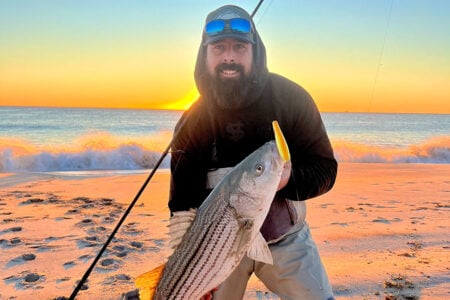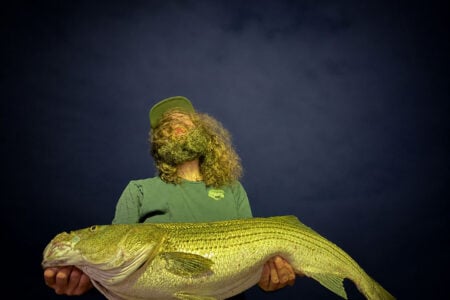
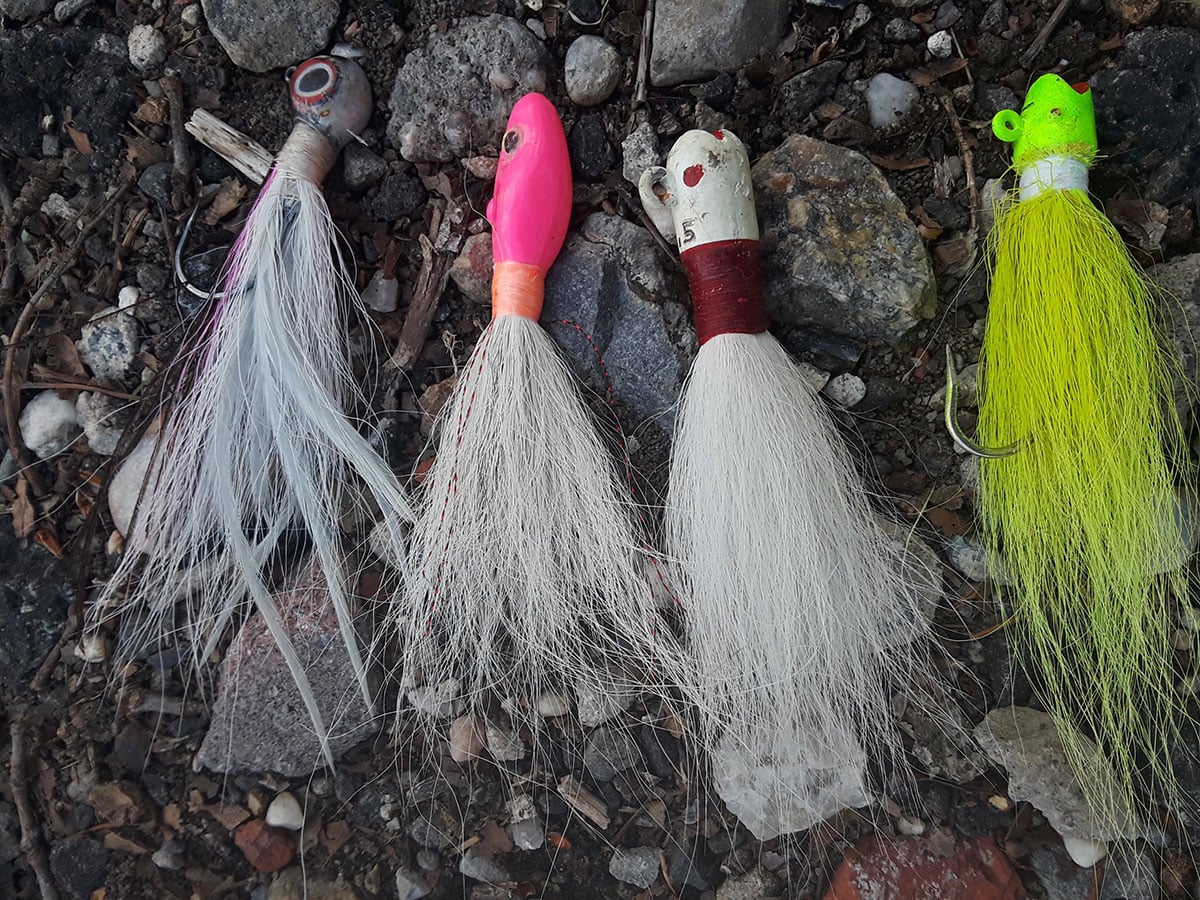
The simple bucktail has been a surf bag staple for decades along the Striper Coast.
If I were to accept a fishing challenge that stated I could only use one type of lure for an entire fishing season, I would hands-down select the bucktail jig! And I suspect that I am not alone in my thinking when arriving at that choice. It is a lure that can literally cover the full spectrum of surf angling situations by just changing up the weight, hair density, color, and presentation.
The history of the jig is one that has probably spanned hundreds of years. Studies reveal that some Native American tribes tied deer hair to crude stone or wooden hooks. The modern bucktails as we know them today were first produced in numbers by Morrie and William Upperman in the early 1940s under the Upperman brand and patented in 1943. It later went on to be included in survival kits for the U.S. Navy and Army Air Corps during WWII.
Today, the bucktail comes in many shapes and sizes, giving the angler a multitude of choices and making it easy to zero in on the style of fishing at hand. For the surfcaster, bucktails are a blessing. They can be effectively used in so many different scenarios, both day and night! They are at home in stormy surf conditions that would render many other lures unfishable. They punch into an onshore wind easily and work extraordinarily well in big, nasty water. The bucktail is the staple for casters tackling nor’easters that pound the ocean beaches and create fish-attracting whitewater heaven!
They are suited for calm surf conditions as well. Another place where they shine is in deep, fast-moving water, such as breachways, canals, and rivers. Just cast them up-current, sink them to the desired depth, and follow the drift while keeping in contact with the jig. I couldn’t even guess the number of “cow” stripers that must have succumbed to this method over the decades by bucktail enthusiasts.
Big water is not the only place these killers can be used. Calm, shallower back-bay waters and harbors are also perfect places to utilize these by selecting lighter jigs and adjusting retrieve speeds. They also are an excellent pick when fishing the base of bridges at night, letting them work the shadow line where gamefish set up shop.
With the wide range of waters where the jig can be employed, the really important part of fishing bucktails is selecting the correct weight and profile for the task in front of you. You don’t want to toss a 4-ounce jig into a shallow back-bay spot, and conversely, you won’t do much with a half-ounce jig trying to get down in a raging inlet. The trick is matching the weight to the water type while still presenting a natural-looking meal to the predator.
Also, the amount of hair on the jig will affect its sink rate and its profile. Slender, thinly tied jigs work well when sand eels and spearing are on the menu. Heavily dressed jigs with a bulky profile can imitate bunker and squid. I can recall one time when bass were feeding on baby blowfish along a jetty, and bucktails with some yellow and brown were taking significantly more fish. So, sometimes color comes into play, but the majority of the time, white is my first choice, with green coming in at number two on my list.
I have caught fish on bucktails that were not sporting any kind of trailer, and sometimes that is what they prefer, but 95% of the time I will be using a jig with some form of adornment—be it pork rind, soft plastic, or what I often use now: bucktails that have the addition of long feathers. Most are tied from saddle hackles. These feathers take the role of the aforementioned trailer and give the jig great fish-attracting action. I also strongly feel that having some type of eyes painted or glued onto the jig can make a positive difference in the number of strikes.
There are many jighead styles are on the market, such as the smiling bill design, the lima bean, the round head, and the ultra-minnow shape. They all have their time and place, and learning the ways to utilize these great, time-tested lures will definitely up your score. Seasoned casters know the value of these jigs, and they will almost always have a few in their bags—and for good reason!