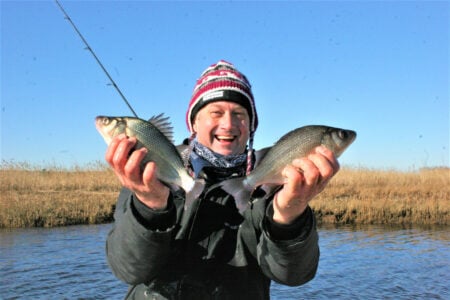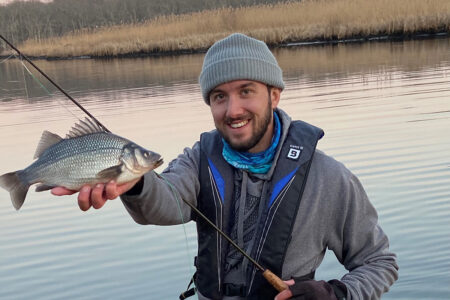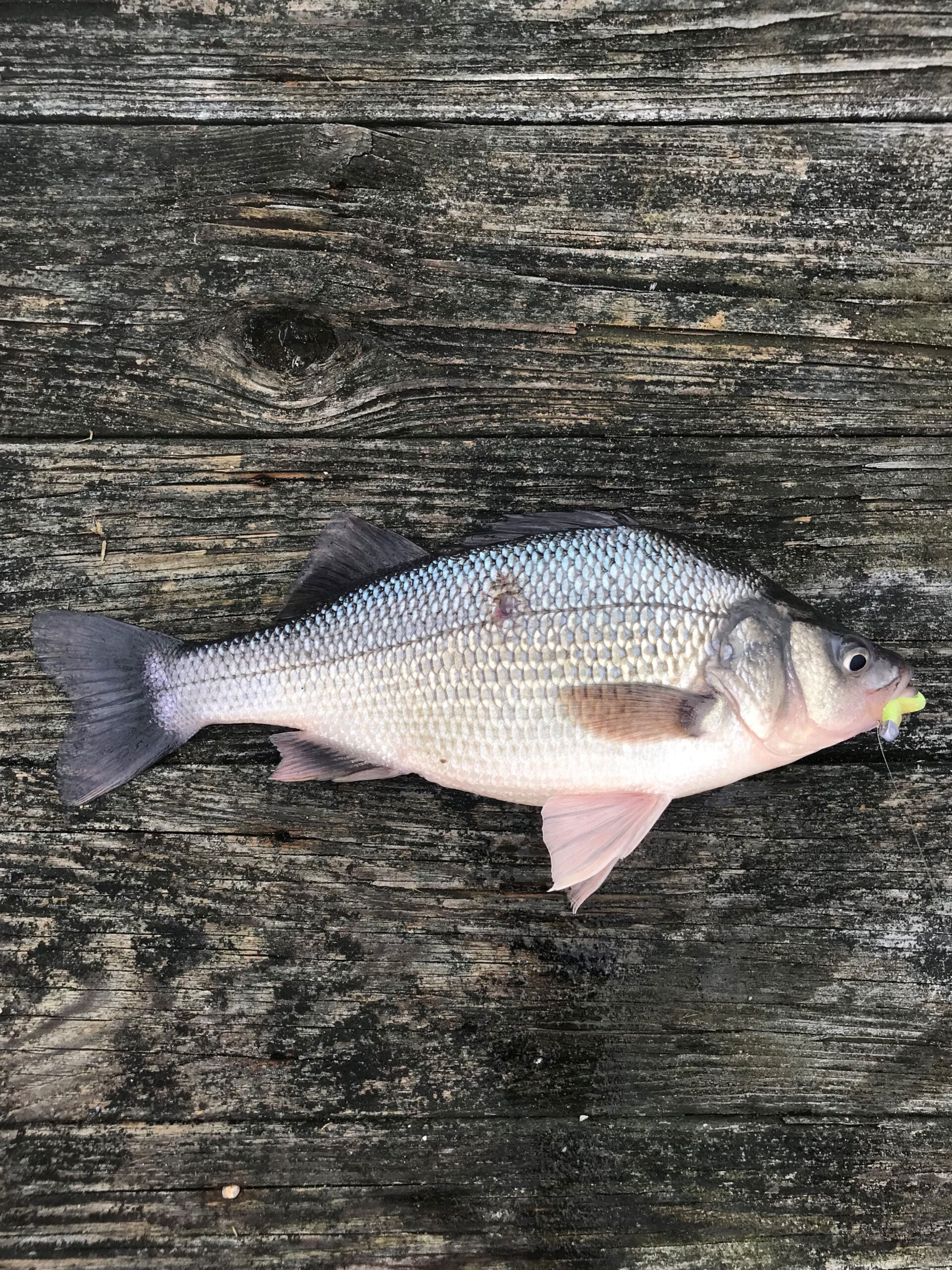
A look at how and where white perch hold in Long Island’s tidal freshwater creeks during February.
By February on Long Island, fishing pressure drops to almost nothing. Boats are shrink-wrapped, surf rods are leaning untouched in garages, and most anglers have accepted the truth—there’s no reason to force saltwater fishing right now. This is the honest winter reality. Nobody is seriously fishing the surf or the docks in February, and pretending otherwise doesn’t put fish on the bank. But fishing doesn’t stop altogether. It simply shifts inland, into quiet freshwaters that most people overlook. And in that window, one species quietly carries the entire month: white perch.
White perch don’t generate hype or headlines, but in February they offer something far more valuable than excitement—consistency. When water temperatures are at their coldest and most fisheries grind to a halt, white perch continue to feed, school tightly, and hold in predictable places. For anglers willing to slow down and fish deliberately, they provide one of the most reliable winter bites available anywhere on Long Island.
Built for Long Island Winters
White perch thrive here because Long Island’s freshwater systems suit them perfectly. Much of the island isn’t defined by large, deep lakes, but by tidal freshwater creeks, canals, backwaters, and low-flow systems that never fully lock up in winter. These waters maintain a level of stability that white perch are uniquely adapted to handle. They tolerate cold temperatures, don’t require fast-moving forage, and don’t need to travel far to survive.
Once winter sets in, white perch slide into comfortable holding areas and stay there. They aren’t roaming or searching. They’re conserving energy and feeding opportunistically, which makes them predictable at a time of year when predictability is rare. That reliability is what makes them such a valuable February target.
Why February Is Their Month
In February, white perch are rarely scattered. Instead, they bunch up into tight schools and hold close to the bottom. This behavior turns fishing into a game of location and patience rather than distance and coverage. You’re not bombing casts across open water. You’re probing specific areas where the fish want to be and letting the conditions work in your favor.
This is fishing measured in small decisions—where to stand, how fast to move, how long to pause. It’s not flashy, but it’s effective, and it’s one of the few fisheries on the island that remains dependable through the coldest weeks of winter.

The Right Kind of Water
Productive winter perch water has very little drama to it. Fast current, exposed water, and sudden depth changes are all negatives in February. The best areas are quiet, subtle, and stable.
Tidal freshwater creeks consistently top the list, especially those with slow outside bends, mild drop-offs, or slightly deeper holes formed by years of flow. These spots allow perch to hold near the bottom without expending energy. Backwater basins and dead-end stretches are also prime. They receive little pressure, warm slightly on sunny afternoons, and often feature soft bottoms and minimal current—ideal winter conditions.
Road crossings and small bridges are another overlooked option. These areas often have slightly deeper water and predictable current seams. In winter, perch typically hold just outside the main flow, positioning themselves where food drifts by without forcing constant movement. These subtle seams don’t look like much, but they quietly produce when everything else feels empty.
Timing Beats Effort
February perch fishing is not an early-morning game. Cold dawns following overnight freezes are usually lifeless, with fish glued to the bottom and unwilling to move. As the sun climbs and water temperatures bump even slightly, the bite can turn on.
Midday through late afternoon is consistently the best window, especially after a stretch of mild weather. Tide matters, but subtly. Slow incoming tides and slack water periods outperform hard outgoing flows, which often scatter fish and kill the bite. In February, moderation is key—moderate current, moderate movement, and plenty of patience.
Light Gear Wins in Cold Water
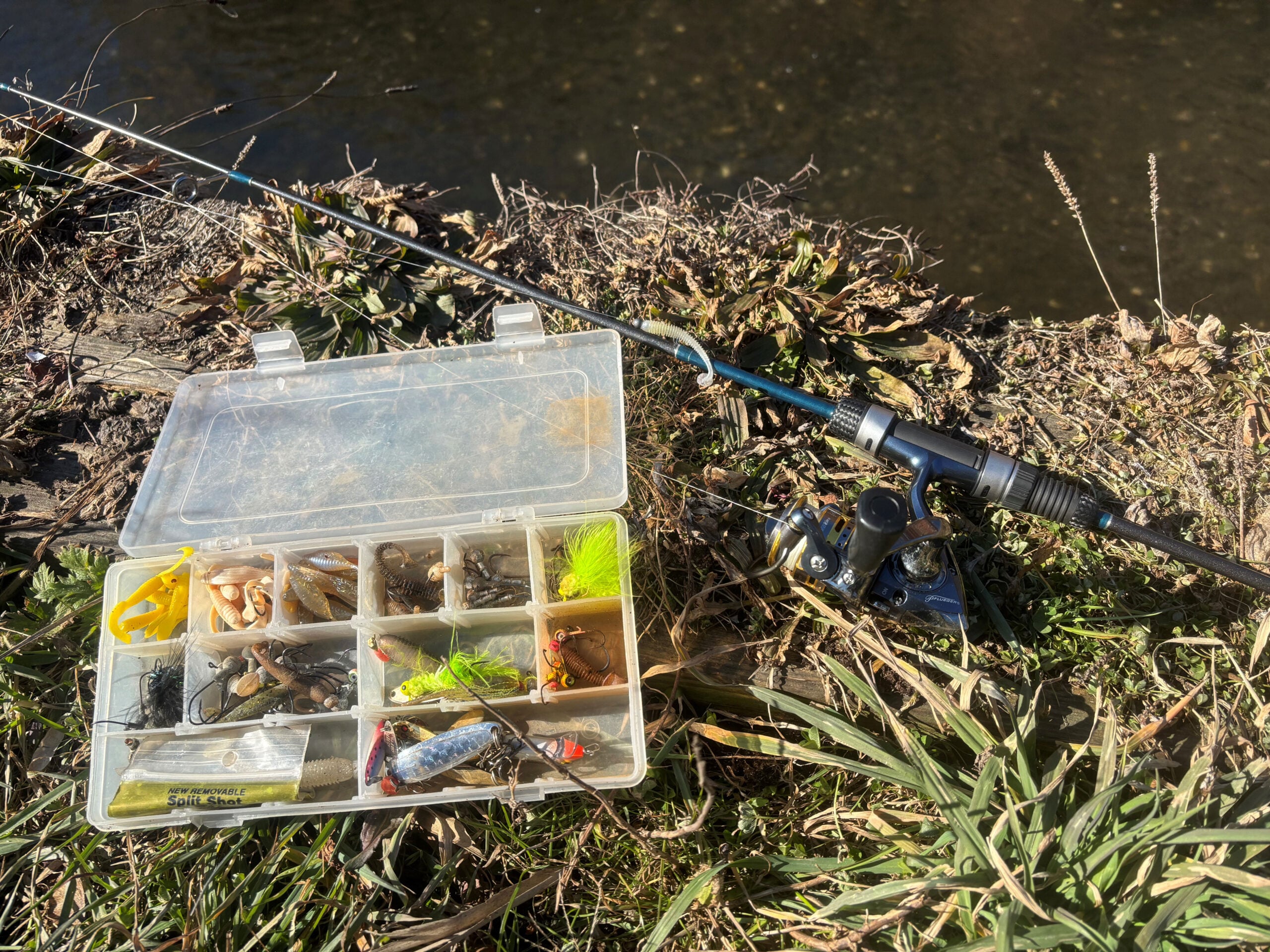
Winter white perch fishing doesn’t reward heavy tackle or aggressive presentations. Light spinning rods with soft tips are ideal, allowing anglers to detect faint taps and pressure bites that define cold-water fishing. Sensitivity matters far more than power, and smooth drags help absorb the quick headshakes perch are known for.
Line choice becomes more important in winter than many anglers realize. Heavy monofilament stiffens in cold temperatures, while thick braid can work against finesse presentations. Lighter braid at around 5-pound test with a short leader, or straight lighter-test mono coming in around 4-pound test, keeps everything manageable, supple and responsive when conditions are harsh.
Small Baits, Slower Moves
When it comes to lures, smaller is almost always better in February. Hair jigs, tiny soft plastics, and micro spoons are staples, while scaled-down metals can work when fish show a little extra activity. On slower days, bait like a nightcrawler, grass shrimp or minnow fished subtly on a small hook or jighead often saves the trip.
Retrieves should be minimal. Lift the lure gently, let it settle back to bottom, and pause. Many bites happen when the lure isn’t moving at all, registering only as extra weight when you go to lift again. Reacting too quickly often pulls the bait away from a fish that was just committing.
Once You Find Them, Don’t Rush
White perch are schooling fish, and winter schools tend to be compact. Catching one fish usually means others are nearby. This is where many anglers go wrong. Instead of slowing down, they move on too quickly.
Once you hook up, shorten your casts and work the area thoroughly. It’s common to catch multiple fish from a very small piece of water if you stay put. Pay attention to where bites occur—at the base of a drop-off, along a slow-current edge, or in a subtle depression you might otherwise ignore. These details repeat themselves across different creeks and systems and quickly become recognizable patterns.
Overlooking White Perch
White perch suffer from a perception problem. They’re not flashy, they don’t carry status, and they rarely dominate conversations. Many anglers see them as a fallback rather than a destination fish. But February isn’t about status—it’s about practicality.
This fishery remains quiet because it’s subtle and local. That’s exactly why it keeps producing when everything else shuts down. For anglers who simply want to fish and catch without forcing the season, white perch are the most sensible option available.
Skills That Carry into Spring
Winter perch fishing does more than fill time. It builds skills that translate directly into early spring success. The patience, finesse, and attention to subtle structure developed in February carry forward into other fisheries. The same creeks and backwaters that hold perch now often become early-season hotspots later, and anglers who learned them in winter start the spring ahead of the curve.
February, Done Right
February fishing on Long Island isn’t about stubbornness or pretending it’s another season. It’s about adapting to what’s actually available. Right now, freshwater and local creeks is where the action is, and white perch offer the most reliable reason to stay fishing through the toughest month of the year.
They may never be the stars of dock talk or magazine covers, but in February, white perch quietly deliver what matters most: consistent action in accessible water, and a reminder that even in the dead of winter, Long Island still fishes—if you fish it the right way.