BARTLETT REEF
The schoolie bass were busting for hours along the rip line about a mile from shore. The cloud of diving terns was tantalizing. It was midday in mid-June, sunny and calm, but everything I threw at them went ignored – and I was the only boat there. Worn out and frustrated, I motored up-tide, turned off the engine, and grabbed a sandwich and iced tea. As I munched, I drifted back through the action and gazed into the water with my polarized sunglasses. Then I saw it.
About 3 feet beneath my hull, a school of inch-long squid darted past, followed by a splash as a 26-inch schoolie trapped them against the surface. Every lure I had onboard was too big! Gulping my last bite, I rummaged through my tackle bag and discovered a box of flies – but I had no fly rod. I selected a peanut-bunker pattern similar to a squid shape, and rigged it as a dropper on 15-lb Fluorocarbon leader 18 inches in front of a large Kastmaster. On my first cast I hooked my first fish of the day, and he had grabbed the fly. I released cookie-cutter bass until the tide slacked. It was a memorable trip to Bartlett Reef.
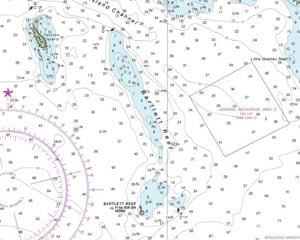
Like many reefs in Long Island Sound, Bartlett runs perpendicular to the current, thereby creating attractive water along its entirety. Bartlett gradually deepens the farther south you move, so it is best approached from that direction, and you can gradually work your way in from there. Be extremely cautious north of the reef’s midpoint, where it shallows from 4 feet to 2 feet and features a few surface-breaking rocks (at low tide) near the green can.
Small bass and bluefish frequently show along the mid and southern points of the reef, especially early and late in the day, almost always on the up-tide side of the structure. In early September, you can also expect a shot at false albacore showing anywhere along the rip.
Experts have their secret spots along the south end of the reef, where they drift live bait, cast or troll for cow bass during low light conditions and at night. Like most other places, you need to invest your time here to discover the best spots for big fish.
The south end also features a 35-foot-tall navigational aid atop a rock pile called “The Spindle” (41°16.471’ / 72°08.234’). Here you can fish for larger blues and bass, but it’s also a blackfish hotspot. I’ve had many great ‘tog trips anchored in about 25-35 feet of water on the south side of the spindle. You should fish an hour on each side of the slack, and bring plenty of heavy lead if you will continue beyond that time, as the tide smokes here.
A short run east of the spindle brings you to another green can (G C “1”), where the depth shallows to about 9 feet at low tide. You’ll often see a group of boats anchored near it pursuing porgies.
If you’re after big fish and can handle big water, about a mile south of the spindle is another marker (R “4,” Fl R 4s, 41°15.567’ / 72°08.333’). Between these two points is “Outer Bartlett,” which is a deep reef, where the water shallows from about 100 feet to about 38 feet. This rip is an excellent place to probe the bottom with live bait for bass on 3-way rigs or to speed jig with diamonds for bluefish.
Bartlett Reef offers something for everybody – from fly casters to live-bait anglers. But be cautious of the shallows and invest your time here to learn its features.