NOBSKA POINT, MA
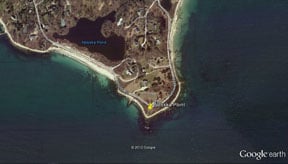
When you look at a map or a satellite image, there are some spots that just kind of reach out and punch you in the teeth—Nobska Point is one of those spots. If you know anything about the history and makeup of the Elizabeth Islands then you know that they are famous for huge stripers and that the spaces between the islands funnel some mighty rips. This is the only one of these “spaces” between the islands that you can access without boarding a boat.
One of the strangest things about Nobska is that once the sun goes down, you’ll be hard-pressed to find another caster out there. It’s baffled my mind for years! A massive amount of water moves through Woods Hole on each tide and it all has to move right by your boots. Another thing that makes this location so attractive is that there is ample parking just below the lighthouse and the path down to the water is directly across the street!
Just about any boulder that offers casting access to open water will produce but there are two spots within this stretch of shoreline that have produced best for me. The first is the big flat rock that’s just a short wade from the bottom of the trail. The rock is about the size of a minivan and can easily accommodate two anglers; it fishes best on the incoming tide. Allow your offering to swing into the boulder field to your right, and hang on. Vary the distance of your casts so that you’re covering the boulder field thoroughly. The fish will be hanging in the rocks, waiting for potential meals to drift by. I have landed countless stripers from this rock and I once hooked a very large shark here as well—what a ride!
The second spot that has produced well for me is the submerged jetty located about 300 yards to the left of the big, flat rock—heading back out toward Vineyard Sound. This spot also fishes best on the incoming and allows you to take full advantage of the sweeping tide. Be careful though, because the rocks are slippery and the water moves through the area at an impressive speed—if you were to fall in, it would not be pretty.
The best methods used here are lures that can handle the current. Darters, bucktails and soft plastics on leadheads will work very well. Off of the big rock where you’ll be swinging into different depths, loaded Red Fins and the Daiwa SP Minnow will also work very well. But if I had to choose one method, it would be drifting live eels. Bring rubber-core sinkers with you so you can get down in the current when you need to. I don’t let the eels drift too long here because of the depth of the water and speed of the current. I usually work between 30- and 60-second drifts here and then use the usual slow “eel” retrieve. You will catch some nice fish here using this method particularly in the months of May, June, September and October. As I found out the hard way, you might encounter something you can’t handle that weighs more than you do and has teeth that would make a bluefish blush. That’s what’s fun about fishing in the ocean – you never really know what you might hook.