ROBERT MOSES BACKSIDE, NY
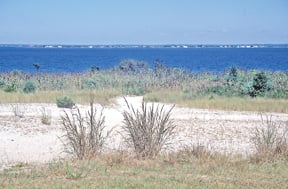
I’ve always felt that the backsides of our South Shore inlets held infinitely more promise than the oceanfront’s sand beaches over the course of the year. Most seasons see a better concentration of baitfish in the inlet and bay areas, and structure is far more prevalent than along the open beach. Fish-attracting structure might come in the form of rips, drop-offs, wrecks, piers, marsh banks, rockpiles or bridges. Most of our inlets and back bay areas have some, if not all of these.
I’ve been fishing the backside of Robert Moses since the late 60s (ouch), with the bulk of my efforts concentrated on the stretch of shoreline between the Robert Moses Bridge and Kismet. While I enjoyed many good nights west of the bridge opposite parking fields Two and Three, I always preferred the solitude of the easternmost shoreline which for many years was only accessible by hiking or biking it from Field Two, hiding your truck in the pines along the side of the road (for the record, I preferred the biking option), or by beaching a small boat. My passion for this quiet stretch of shoreline was fueled by slowly probing the area in my small outboard skiff, from which I would toss large metal lip swimmers toward the shoreline. During the last couple of hours of the incoming current, it was not uncommon to clearly see bottom in 15 feet or more of water. This led to the discovery of the remnants of several small wrecks and pier structures within casting distance of the shoreline, once you waded out on the shallow shelf that rims much of this stretch. Several good rips also fell within casting range. In addition to these appealing factors, the big stripers that rose to my plugs and the lack of other casters were more motivating factors to work this area from shore.
These days, with parking access in Field Four after Labor Day for those with State Beach Permits or Sportfishing Permits, access is much simpler and the area has attracted a loyal following of casters, so much so that a path has been worn through the stretch separating the highway from the shoreline. At the eastern end of this stretch, it’s a short walk to the north side from Parking Field Five but parking here is limited to sunrise to sunset. Some of your best opportunities will come at first light, unless you park in Field Four and are able to work night tides. As with any location, reconnoitering the area in daylight will help you locate rips and drop-offs and give you a good idea of where to concentrate your efforts once the sun sets.
This stretch of shore has produced many quality fish over the years and at one time it was not uncommon to pull a half dozen or more bass from 20 to 40 pounds on live or rigged eels in a night’s tide. In fairness, the area no longer produces with the same consistency as it once did, in large part I think to the greatly increased effort and traffic from both boat and shore.
Live eels remain a very good choice for nighttime work, but darters and Bombers will also take their share of fish when worked in the rips and along the edges of the drop-off. Work your way out on the flat so that your casts can comfortably reach the deep water that parallels the shore here. Eels are mostly fished un-weighted, but as the current picks up, consider adding a rubber core sinker to slow the sweep. Prime time is usually within an hour or so around the current changes, but we have had nights when we caught through almost the entire outgoing.
During the spring, if sand eels are abundant, you might find tailing stripers rooting out the baitfish on the shallow flat adjacent to the shoreline. Stay out of the water and feed them five- or six-inch plastic swimming plugs (Hellcats are deadly if you still have any in your arsenal) or rubber. Tsunami’s Swim Eel in the six-inch size or Bass Assassins will draw their attention in the shallows.
If you are fishing the dawn and dusk periods, it’s tough to beat pencil poppers and metal lip swimmers. While there are several stretches that hold fish on a regular basis, there is always the possibility of raising a fish anywhere from east of the Coast Guard Station to Kismet. Between the Kismet dock and the lighthouse dock lies the Kismet Reef and it’s possible to work eels or plugs over the inner edge of what is left of this structure. The reef is not as pronounced as it once was but there is still enough structure to attract bass looking to make a meal of the blackfish, bergalls and other species that inhabit the reef.
If you enjoy the quiet solitude of the back bays, this stretch of shoreline has a way of soothing the soul, and at the same time, providing a decent shot at connecting with a quality striper.