
THE CORAL BEDS, DE
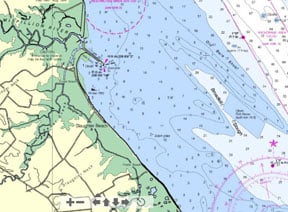
I began fishing the Coral Beds (at LAT 38 53.80 LON 75 15.80) in the 1950s with my grandfather in a wood boat we rented from a lady who had a livery right on the beach. She had no trouble dragging those boats to and from the water in spite of their weight. We just put on our 7-1/2 horsepower Elgin motor and would run out to the Coral Beds. In those days, croaker were the primary target with the occasional big trout, all on cut squid.
In the early 1970s, Paul Coffin and I went to the Coral Beds one night in June and caught a couple of big black drum. Trying to clean them and then finding the meat full of worms pretty much ended our drum fishing career.
Then came the big trout: In the late 1970s and early 1980s, you could count on the Coral Beds to produce the first big trout of the season as the shallow water there warmed up sooner than the water over Brown Shoal or around Brandywine Light.
Today, black drum have regained a considerable following in the spring, with rockfish, not trout, taken in fair numbers on clam baits. Come summer, it is croaker once again proving the unpredictable cycle of fish.
When fishing for rock and drum, most anglers will anchor and set up a chum line. Croaker are usually caught by drifting over the rough bottom and in spite of the terrain, few rigs are lost to snags.
According to University of Delaware studies, Delaware Bay’s coral beds are not related to coral at all; they are actually nodules of tubes produced by two marine worm species. Mud tubes are created by Sabelaria vulgaris, a sandbuilder worm, and Hydroides dianthus, which makes its tubes from calcium carbonate. The coral beds, built upon a rock or shell substratum, are comprised of tubes, one to three inches long, that are clustered together, forming nodules that create habitat for fish.
The Coral Beds are an easy run for any boat you can put on a trailer. Launch from the state ramp at Cedar Creek and it is a short run from the end of the jetty at Misipillion Inlet. I have fished the area in a 16-foot aluminum boat without incident. While I have not observed anyone doing so, I suspect the kayak crowd has discovered the Coral Beds are very close to Slaughter or Fowler Beach.
I am constantly amazed at the number of fishermen who will leave Misipillion Inlet and head directly for Brandywine, Brown Shoal or the Anchorage without at least making the short run to the Coral Beds and giving it a try. With today’s fuel prices, it may be a good idea to fish a little closer to the ramp where the catching can be just as good as in those far-away locations.