THE TIDAL CARMANS, NY
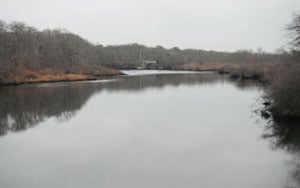
The tidal river begins approximately 2 miles north of Bellport Bay (part of Great South Bay) just below the Southaven Dam, and is primarily within the 2,400-acre Wertheim National Wildlife Refuge. Extensive and undeveloped tidal wetlands on both sides of the river provide outstanding habitat for a great diversity of fish and wildlife species. The freshwater and tidal portions support more than 40 species of fish. The Carmans River estuary is one of the most significant nursery areas for yearling striped bass in Great South Bay. Juvenile bluefish are also found in abundance. Both species may spend a year or more in tidal portions of the river before commencing coastal migration. Alewife, sea-run brown trout, and white perch spawn in the estuary, which also provides important nursery habitat for these species. Just north of the Southaven Dam is Hard’s Lake, which can be seen along the north side of Sunrise Highway. For the 200 years of its existence, the dam at Hard’s Lake prevented species such as alewives, sea run trout, eels and a myriad of other forage baitfish from spawning further north than Montauk Highway. Then in 2007, the New York State Department of Transportation (NYSDOT) unveiled Long Island’s first permanent fish ladder. The fish ladder permits fish to move upstream beyond a previously impassable barrier into Hards Lake in Southaven County Park, once again connecting two isolated parts of this important South Shore Estuary Reserve ecosystem, which now allows these species access to spawning areas above Hard’s Lake.
Although the Carmans River has more than 95 percent of its water coming from groundwater along its 11-mile stretch flowing north to south, the tidal portion, which consists of two miles of river from the Great South Bay to Sunrise Highway is home to some outstanding fishing throughout the course of the year. Beginning in January, sea run brook and brown trout will take hold in the brackish water closer to Hard’s Lake. Most years the sea runs will start moving into the river in December and stick around until March. At the same time, white perch will move in and keep the trout company anywhere from the Beaver Dam bulkhead to the Montauk Highway tunnel. Whole meal worms weighted down with a couple of split shots and a number 6 to number 10 baitsaver hook will give you a good shot at both species. April through early May is striper central along the drop-offs and edges of the wetlands. Most of the bass are schoolies, however occasionally a keeper will be taken with Rapala’s X Rap’s getting the job done in the early going. May and June see bluefish invade the river at times with a few weakfish thrown in for good measure. July sees exceptional blue claw crab action, keeping the kiddies busy. Snappers join the fray in August and stick around for a good portion of September. Late fall starts heating up as white perch and sea run trout again move in for the winter. While both sides of the tide have their moments, high water with an ebbing tide is usually most productive for all these species.
Tidal sections of these waters are open year-round, however please note that brook trout are catch-and-release only in all freshwater and tidal streams. Canoes and tin boats may be carried in and launched into the Carmans River at Beaver Dam Road and at the Fishing Access Site off Montauk Highway, which is cooperatively maintained with the New York State Department of Environmental Conservation a mile west of William Floyd Parkway. Fishing from shore is permitted between Sunrise and Montauk Highways and at the end of Beaver Dam Road. Wading while fishing is permitted from Sunrise Highway to the railroad bridge. Fishing from a boat is permitted anywhere except on the Big Fish Creek Impoundment. State regulations apply. Fishing from the refuge bridge is prohibited. For more info please visit the DEC website for the latest updates.