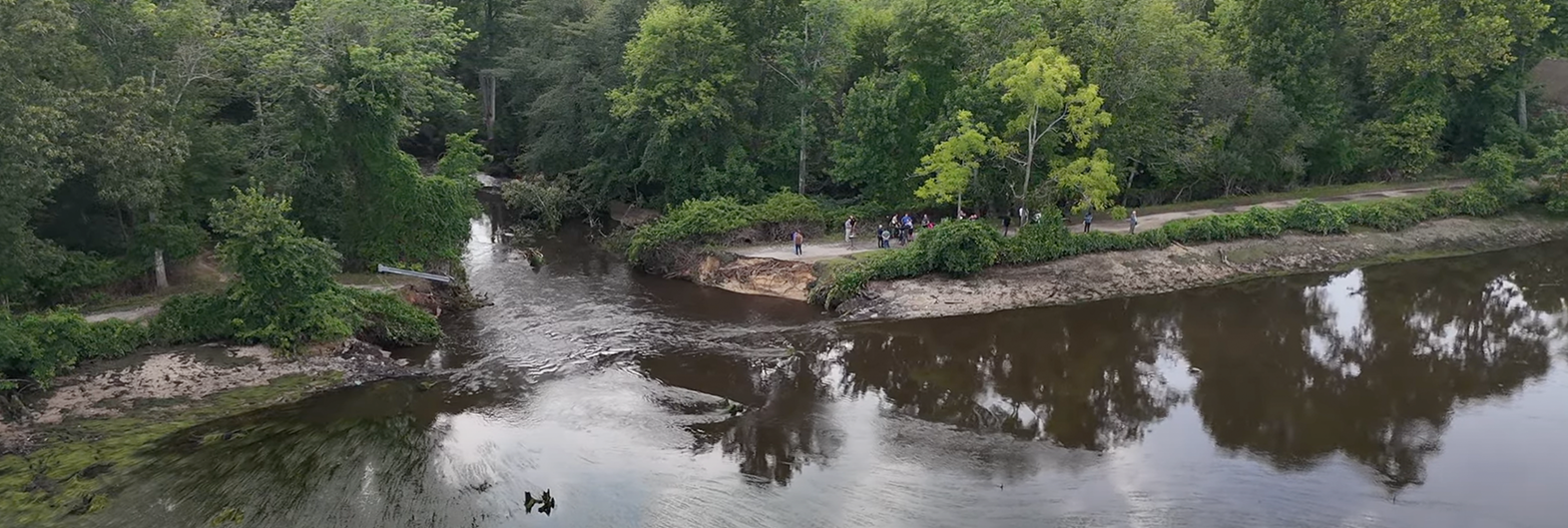
The effort to rebuild the dam at Blydenburgh County Park and restore the historic waters of Stump Pond is gaining renewed momentum, bolstered by a recent environmental review decision and growing public advocacy from local residents, outdoor recreation groups, and fishing organizations.
In a pivotal step, the Suffolk County Council on Environmental Quality voted 6–1 to issue a negative declaration under the State Environmental Quality Review Act (SEQRA) for the proposed dam reconstruction. The determination means the board found the project is not expected to result in significant adverse environmental impacts, allowing it to move forward without requiring a full environmental impact statement — a major procedural hurdle cleared for the restoration effort.
For many in the community, the vote signals progress toward bringing back a waterbody that had defined the landscape at Blydenburgh for more than two centuries before a major storm caused the dam to fail and the pond to drain. Since then, the former pond basin has remained largely dry, a visible reminder of the sudden loss of a resource that once supported fishing, paddling, wildlife viewing, and family recreation.
A broad-based coalition of residents has emerged in support of rebuilding the dam, emphasizing that Stump Pond was never a single-use resource but a shared public space valued by anglers, hikers, equestrians, kayakers, and families alike. Supporters say restoring the pond would revive not only recreation but also a long-established aquatic ecosystem that had become part of the region’s environmental fabric over generations.
Local advocates have called for transparency in the decision-making process, urging officials to clearly present long-term cost comparisons between rebuilding the dam and pursuing alternative visions for the site. They argue that proposals to leave the river free-flowing or attempt to transition the basin to a different ecological state could involve years of additional engineering, permitting, and maintenance expenses — costs that the public deserves to see fully outlined.
Outdoor recreation organizations have also weighed in. In a statement submitted to county officials, the Bass Anglers Sportsman Society (B.A.S.S.) encouraged restoration of the pond, citing its importance for youth participation in fishing, accessible outdoor recreation close to home, and the broader quality-of-life benefits tied to public water access. The group noted that restoring the basin to a pre-pond condition after more than 200 years would likely take decades and could involve significant financial and logistical challenges, including sediment management and invasive species control.
Supporters of the rebuild emphasize that a modern replacement dam would be engineered to meet today’s safety and resilience standards, offering better protection against future extreme weather events while maintaining water levels that support recreation and habitat. In that sense, they view the project not as turning back time, but as reinvesting in the long-term usability and stability of a regional park.
Community members have continued to show up at public meetings and submit petitions in favor of restoration, stressing that weekday hearings often limit participation from working families and that many supporters are expressing their views through written statements and organized outreach.
While some environmental advocacy groups have voiced concerns or support alternative outcomes, the visible local backing for rebuilding Stump Pond underscores how deeply the former pond remains tied to community identity and everyday recreation in central Suffolk County.
As the project advances toward legislative consideration, detailed design, and state permitting, supporters remain hopeful that the shoreline at Blydenburgh will once again frame open water — and that anglers casting from the banks, kayaks sliding into the water, and families gathering along the pond will return as familiar scenes in the park’s future.