Finally, Atlantic Coast anglers will see a significant improvement in black sea bass regulations starting in 2026. What that looks like in terms of season, size and bag is still to come at the state level throughout The Fisherman’s readership region, but things are already shaping up for a much-improved New Year of fishing!
During a joint meeting of the Mid-Atlantic Fishery Management Council (MAFMC) and Atlantic States Marine Fisheries Commission (ASMFC) in Washington DC from December 16-18, the two management bodies finalized specifications for black sea bass for the 2026-2027 fishing seasons, approving a 20% increase in the black sea bass harvest limit – the first time since 2012 that a liberalization has been approved for black sea bass in the mid-Atlantic.
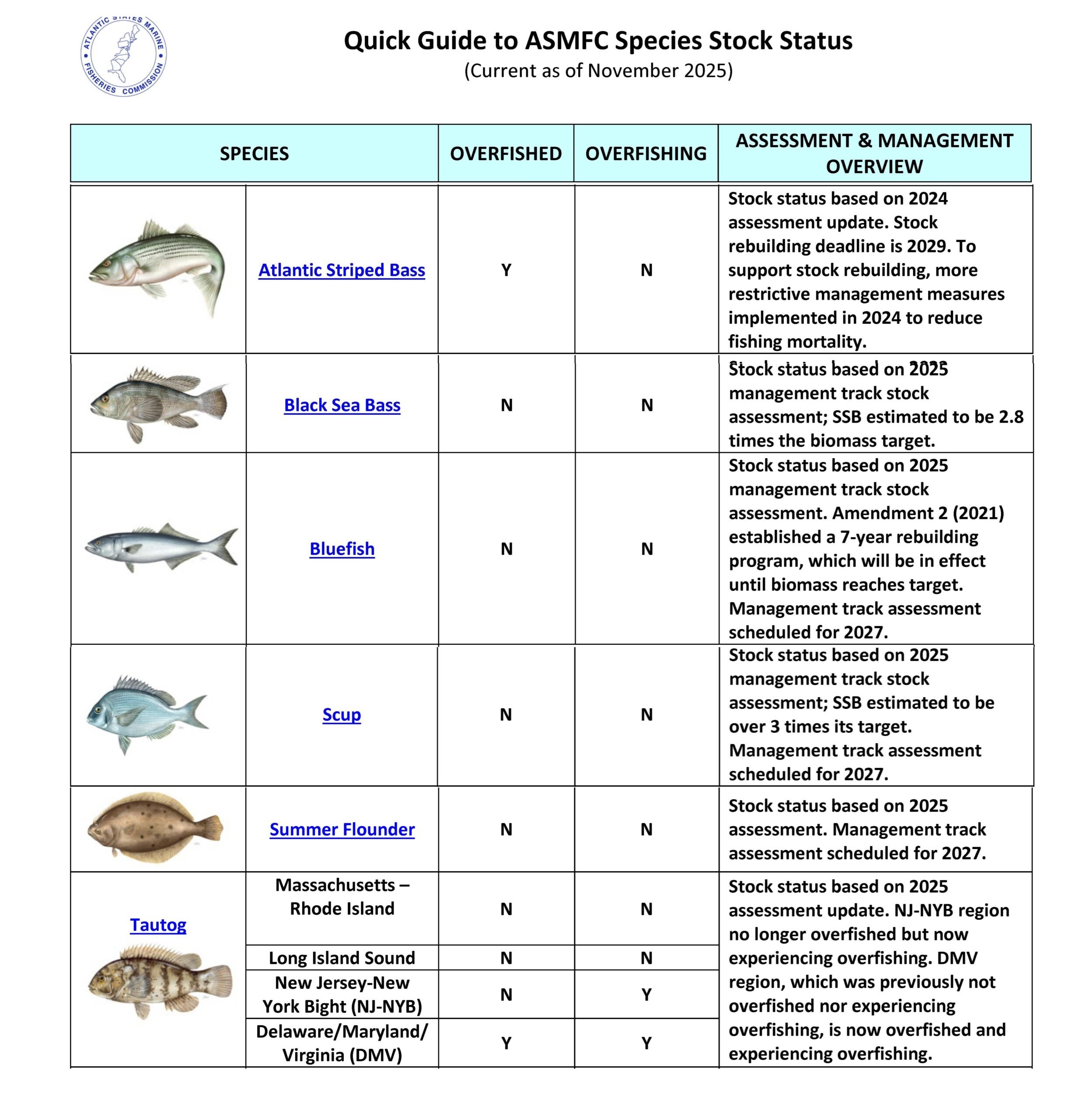
Black sea bass biomass is currently at its highest point since 1990 while continuing to trend upwards. In comparing the current spawning stock biomass (SSB) to the rebuild originally met in 2012, SSB currently stands at 2.8 times the target, which helped allow ASFMC and MAFMC to jointly determine that a 20% was justifiable heading into the 2026-2027 fishing seasons.
As for how this recreational harvest limit increase will translate to regulations on a state-by-state basis, interested anglers and stakeholders should keep an eye out for upcoming meetings of their respective state councils, advisories and management bodies (New Jersey Marine Fisheries Council, New York Marine Resources Advisory Council, et al) for a presentation of options related to season, minimum size and bag limits.
During their three-day meetings in our nation’s capital, the two management bodies also agreed to leave summer flounder (fluke) and scup (porgy) as status quo, which means saltwater anglers can reasonably expect the same regulations in 2026 as in 2025. Any variables in state regulations for fluke and porgy, as with black sea bass, would come out of state fisheries agencies and their associated councils, advisories or commissions.
Striped bass limits will also remain unchanged in 2026 following the ASMFC meeting in Dewey Beach, DE in October, when the commission’s Atlantic Striped Bass Management Board decided to not move forward with the proposed 12% reduction in fishery removals. The board did approve Addendum III to Amendment 7 to the Interstate Fishery Management Plan for Atlantic Striped Bass requiring modifications to requirements for commercial tagging programs, while implementing a standard method of measuring total length for size limit regulations, and also allowing Maryland to change its Chesapeake Bay recreational season baseline if the state so chooses.
At their August, 2025 joint meeting, ASMFC and MAFMC also adopted state and federal waters recreational measures for bluefish of a five-fish bag limit for private anglers and a seven-fish bag limit for for-hire anglers in 2026 and 2027 which will also have to be approved and implemented by individual states. Anglers and stakeholders should also expect discussions to begin in 2026 to address overfishing in the tautog fishery from NY Bight down along the DELMARVA coast.
At the international level, the United States delegation to the 2025 annual meeting of the International Commission for the Conservation of Atlantic Tunas (ICCAT) in Seville, Spain, secured what NOAA Fisheries called “the largest single-year increase in U.S. bluefin tuna quota in the history of the fishery.”
In a December 19th press release from NOAA Fisheries and its Atlantic Highly Migratory Species division, U.S. negotiators – led by NOAA’s Principal Deputy Assistant Secretary for International Fisheries Andrew Lawler – successfully advocated for an additional allocation of 231 metric tons of Atlantic bluefin tuna – a 17% increase in baseline quota and allowances for U.S. fishermen.
“This increase represents a significant step forward for the domestic fishing industry, which had been suffering under restrictive quota limits and unfair international competition for years. U.S. fishermen will see an increase in total allowable catch beginning in 2026,” NOAA Fisheries stated in its release. The recreational bluefin fishery was closed in August of 2025 due to Angling Category quotas being met, and it’s hoped that the 231-metric-ton increase for 2026 will help contribute to a greater overall quota for anglers.
All in all, things are already looking brighter in the New Year from a fisheries perspective. If you’ve been waiting to put ’25 in the rearview mirror, the time has come for more opportunities to score in ’26. Prime dates will fill up fast on your favorite for-hire boats, and perhaps it’s time to pick up that new rod and reel you’ve had your eye on, maybe a brand new boat; it’s going to be a great year!