Start planning now for the fall run, and prepare to improvise.
New Jersey surfcasters have always had to adapt to the ocean’s unpredictability. But over the last few seasons, that unpredictability has begun to feel like a complete rewrite of the rulebook. Changing water temperatures, strange weather patterns, and unusual migratory timing have left many anglers scratching their heads — seasons starting earlier than intended and extending out further than we’re used to.
Historically, surf fishing in New Jersey followed a fairly reliable seasonal rhythm. Spring brought striped bass and bluefish; summer held fluke, kingfish, and weakfish; and the fall run was the crown jewel of the year. But in recent years, these timelines often become blurred.
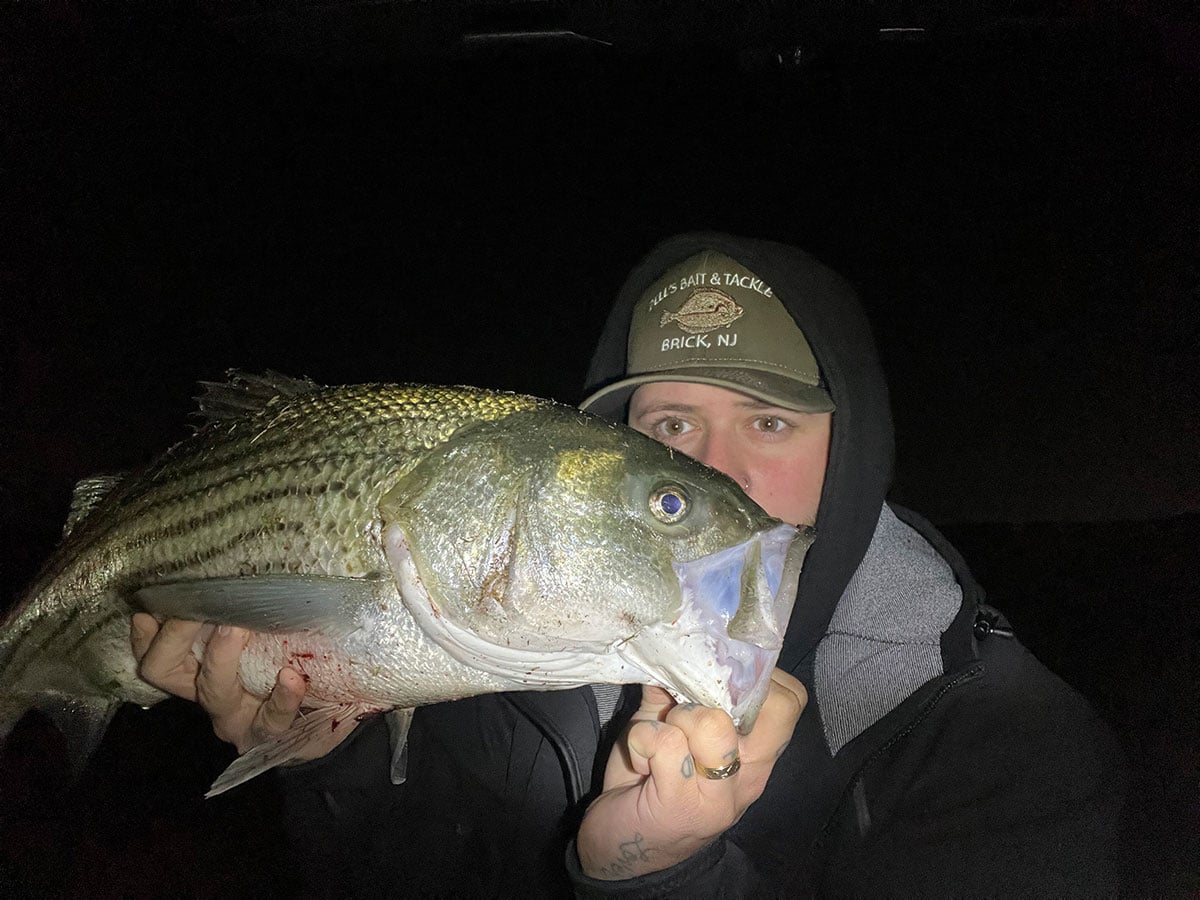
Ocean temperatures are warming earlier and staying warmer longer. Fish like striped bass, which depend on temperature cues to begin their annual spring and fall migrations, are arriving earlier, leaving earlier, or skipping familiar feeding zones entirely. We’ve even seen an increase of pelagic species joining us on the Jersey coast consistently for the last few seasons, I mean heck, we even have an incredible inshore tuna fishery now, with some fall bluefin inside the surf line.
For surfcasters who rely on shore-based access and decades of seasonal patterning, these shifts are significant. Just think, it was September 21, 1982 when Al McReynolds plucked that long-standing world record striper out of the Atlantic City surf, yet it’s hard to imagine such an impressive specimen coming that early in the fall run today.
Think Like A Fluke
If you consider the summer patterns, warmer waters obviously accelerate a summer flounder’s movement into deeper, cooler areas earlier in the summer, making them less accessible to surf anglers. And for species like weakfish, already considered unpredictable, warming trends add another layer of inconsistency that challenges both recreational and conservation efforts.
Another clear symptom of our changing climate is the increasingly erratic weather, and surfcasting is nothing if not weather-dependent. Where we used to count on relatively stable windows of productive conditions, we now face wild swings in temperature, wind direction, barometric pressure, and surf height — sometimes all within a few days. Who ever heard of tornado warnings in New Jersey 40 years ago, yet we’ve had three of them alone over the summer of 2025.
In the spring and fall, sudden cold snaps or unseasonal heat waves can throw off the bite entirely. Extended periods of rain cause freshwater runoff, which alters salinity levels and visibility, often pushing baitfish out and taking the predators with them. In the summer, stagnant, windless days can result in hypoxic conditions and a lifeless surf zone, while back-to-back tropical storms have become the new norm. These systems churn up sediment, drop water temperatures abruptly, and scatter bait that might otherwise draw gamefish into casting range—chocolate milk waters were all too familiar in recent years.
Even wind, a critical factor for surfcasting success, has become less predictable. A southwest blow in August might sometimes bring fluke tight to the beach, but it could just as easily bring warm water devoid of fishable life. The consistency that anglers once relied on is being replaced by a patchwork of inconsistent, volatile conditions.

Keeping Personal Records
In this ever-shifting environment, one of the most powerful tools a surf fisherman can have is a well-kept logbook. As nature’s patterns become less predictable, tracking your own observations — water temperatures, wind direction, tide phases, moon cycles, bait presence, and even bird activity — can help reveal micro-patterns and annual cues that broader forecasts miss.
Over time, a logbook becomes more than just a record — it becomes a playbook. You may notice, for example, that even in an off year, a particular cove sees life the first west wind after the second full moon in May, or that a sudden drop in temperature in early October always brings a short but furious blitz to your local beach. In this new era, those personal trends often tell you more than any NOAA chart, weatherman, or social media post ever could. (Check out Adam Aguiar’s Fishing Log: Logistics for Lunkers in the glossy section).
Keeping detailed records not only increases your odds of success but also strengthens your ability to adapt, because when you understand what worked in similarly abnormal seasons in the past, you’re better equipped to figure it out again.
Industrial Development
As if climate change weren’t enough of a challenge, the planned development of offshore wind farms off New Jersey’s coast has introduced a new source of concern. While the idea of clean, renewable energy is broadly positive, the reality of how these massive structures — and the testing and surveying done during their planning — may impact marine life is still very unclear.
Sonar mapping, pile driving, and seabed disturbances can confuse or displace fish during critical migratory periods. Some anglers and marine biologists fear these disruptions could permanently alter traditional migration corridors, especially for sensitive species like striped bass or bunker, which are key components of the surf ecosystem—could this be a major driver as to the indifference in seasons we’ve seen recently?
Surfcasters in New Jersey are resilient, and the community is already finding ways to adapt — relying more on real-time water temperature readings, crowd-sourced catch reports, and mobile scouting. But the bigger issue remains: we’re fishing in a changing world.
Whether you’re a weekend warrior or a diehard surfcaster fishing dawn ‘til dusk, understanding the environmental factors at play is key to preserving this sport. It’s time for surfcasters to get more involved, not just in chasing the bite, but in advocating for responsible energy development alternatives not in our waters and preserving the world-class fishery we currently have.