How to go about getting your captain’s license.
It’s mid-winter and the seasonal cold is certainly weighing heavy on the angling and boating communities. No doubt most readers of The Fisherman Magazine are already getting antsy as they await the arrival of spring. To be certain, there’s still a while to go before we’ll see warmer temperatures on a daily basis, but that could actually be a good thing if it leaves you with a little down time on your hands.
How’s that? We’ll, I’m not talking about cleaning rods, reels and tackle to get a jump on the spring bite. Nope, this is a bolder suggestion but one with a big payoff that can absolutely be achieved if you take the plunge now. So, then, how about getting your captain’s license?
Now’s The Time
“The timing will never be better,” advises Capt. Michael Vanadia, owner of Nautical School of Maritime Licensing, a long-time leader in maritime education offering a variety of in-person and on-line maritime licensing courses. “If you start now, you can take the classes, pass the tests, and file the necessary paperwork before the spring bite gets underway – and receive your official captain’s license later this summer.”
“The process isn’t as difficult as you might think if you have an experienced team of instructors and support staff to help steer you in the right direction,” explains Vanadia, whose operation offers courses throughout the Northeast. “With either scenario, you’re going to put in some hard work, but you’ll have plenty of help every step of the way,” he assures.
I can attest to that, having recently completed the Operator of Uninspected Passenger Vehicles (OUPV) course. This is the one you need to run charter fishing, sightseeing and local cruises for up to six paying passengers. Although I’ve operated various boats for over 40 years, I fully realized up front that some serious studying would be in order. Still, I must admit to being blown away by the in-depth coverage of the course material, as well as the knowledge and patience of The Nautical School instructors. The entire experience left me feeling proud of what I accomplished, and thankful for the way Nautical School staff presented the info in such an informative, organized and entertaining way.
Different Paths
“We tend to see three types of students taking our in-person or online captain’s license courses,” says Vanadia. “A lot of students are simply seeking more advanced boating knowledge and training. For these, obtaining a six-pack license is ideal. It’s an intensive 60-hour course that’s far more comprehensive than the standard eight-hour boating safety class required by most states to legally drive a boat.”
| CAPTAIN’S ORDERS |
| Testing for any Coast Guard approved captain’s license is truly comprehensive so you’ll need to really dig in and develop a deep understanding of all the course material. Still, when it comes to testing, there is one area where you’ll definitely want to spend some extra time studying.
“Having an appreciation for the “The “Rules of the Road” is first and foremost from a testing standpoint,” stresses Nautical School instructor Capt. Bob Mina. “That’s because the rules apply to all boaters – recreational and commercial – whether on a tin boat or a container ship.” Get a good handle on this part of your course, says Mina, and you’ll be off to a great start when it’s time to take you tests.” As for practical advice, Mina reminds students taking his class to “become friends with their compass. “Your compass will never fail you,” he says bluntly. “It’s reliable and its simplicity gives it amazing accuracy. Fog and darkness can restrict your vision on the water and electronics can malfunction – but your compass will always point you right if you learn how to use it.” |
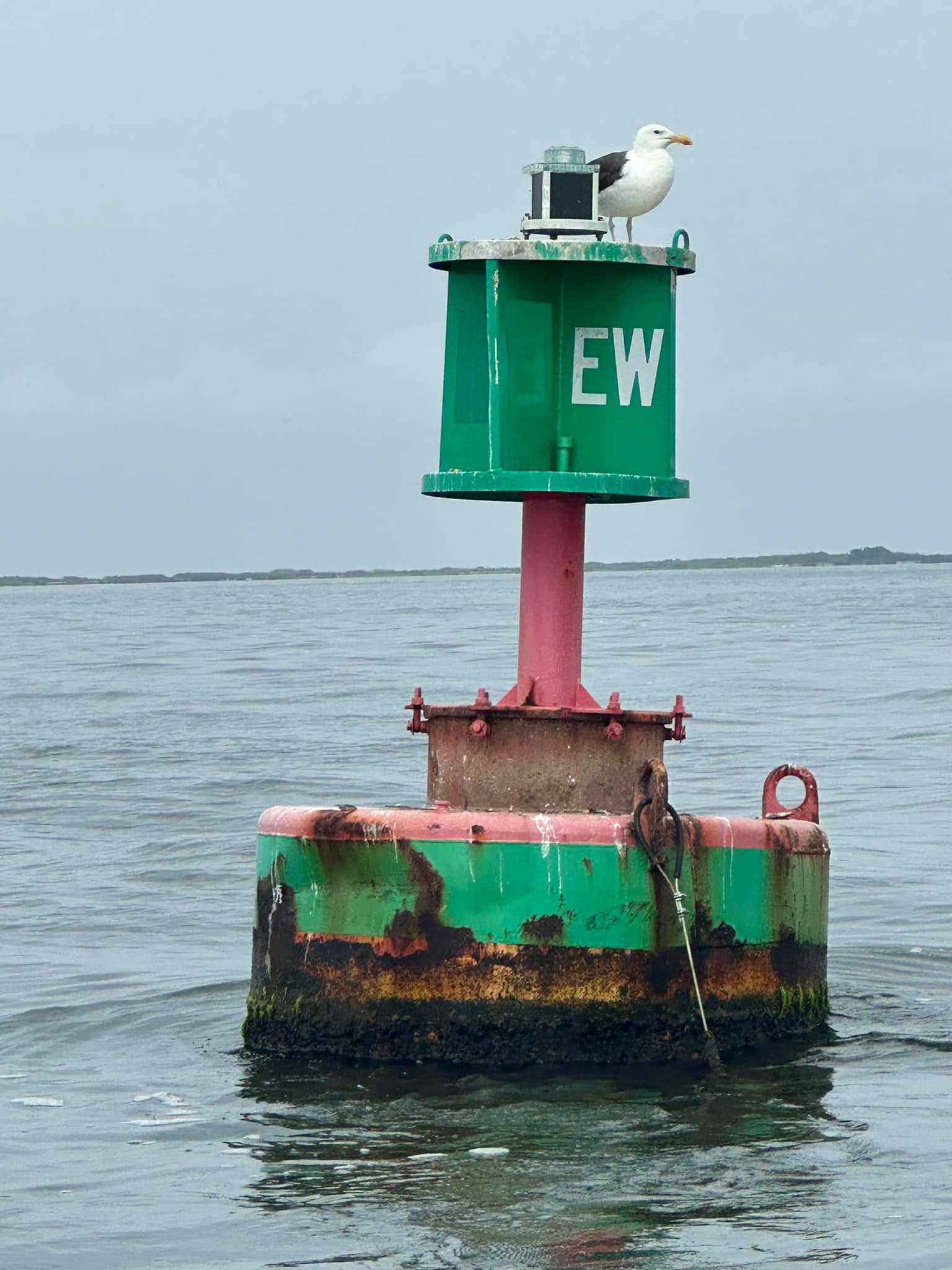
Indeed, six-pack certification covers pretty-much all you need to know for boating on both inshore and offshore waters. Topics tackled include everything from basic seamanship skills to identifying buoys and markers, chart reading, plotting courses, understanding rights of way in various situations, and much more. Passing the course allows captains to take up to six passengers for hire on uninspected (by the U.S. Coast Guard) vessels to100 gross tons up to 100 miles offshore.
“I had a student recently who took this course because he was planning to sail The Great Loop, which circles the eastern United States and includes the Great Lakes, Atlantic and Gulf Intercoastal waterways, plus the Canadian Heritage Canals,” continues Vanadia. “He wanted more knowledge about the rules of the sea and reading charts, along with the confidence that comes with understanding that information. This course was an ideal match for him.”
A second group of students Vanadia regularly sees is young adults hoping to start a career on the water. Again, acquiring a six-pack license is great for this as it’s an entry level license that opens the door to on-the-water employment. Reach this goal and you can work your way up from running smaller fishing and eco charters or work boats to higher license classifications that allow you to captain open boat fishing trips, bigger work boats, ferries, and commercial fishing boats, plus larger ships for dinner cruises, wildlife tours and events like weddings, parties, and corporate gatherings.
“These students tend to be younger, vigorous and ready to get their seafaring careers underway,” points out Vanadia. “They show up ready to learn and anxious to get started.”
Those looking at boating as a means of starting a second career or earning part-time money make up another set of students that regularly sign up for the six-pack captain’s license. They might be looking to run a small charter fishing operation on a part-time basis, drive a ferry on weekends, run a water taxi service, or to maybe catch on with an outfit like Sea Tow or BoatUS. According to Vanadia, many have recently retired, or expect to retire soon and hope to start an encore career.”
Basic Requirments
No matter which student category you fit into, the process remains the same when it comes to getting that initial six-pack license, and it’s a good idea to check out the basic requirements before signing-up for the course. For starters, you’ll need to show 360 days of experience on inland or near coastal waters – this can be on your own boat or someone else’s. Of those total days, 90 must have taken place over the past three years. You’ll also need to take a drug test, have a doctor sign off on a physical exam, and have first aid/CPR certification before applying for your captain’s license. (Note that non-US citizens may be restricted to undocumented vessels with a 5-ton limit.)
“Don’t fret over the 360-day requirement,” advises Vanadia. “The Coast Guard wants to see that you have appropriate on-the-water experience. You are not going to need anyone to sign a voucher that you sailed on their boat a decade ago as long as your submission makes sense and seems reasonable.”
Online & In-Person
Captain’s courses are available from a variety of sources these days, both in-person and online. Vanadia recommends searching for a provider that is responsive to your initial inquiries, posts a full description of each course, and provides free of charge upon enrollment all the application forms you’ll require to complete the process and apply for your license.
| THE NAUTICAL SCHOOL |
| In-person educational classes are offered by Nautical School in many of their facilities throughout the region from Essex, CT to Cape May, NJ and all throughout the Long Island, New York metro. For a full list of upcoming in-person classes as well as online course information visit nauticalschool.com. For more information call 631-226-7300. |
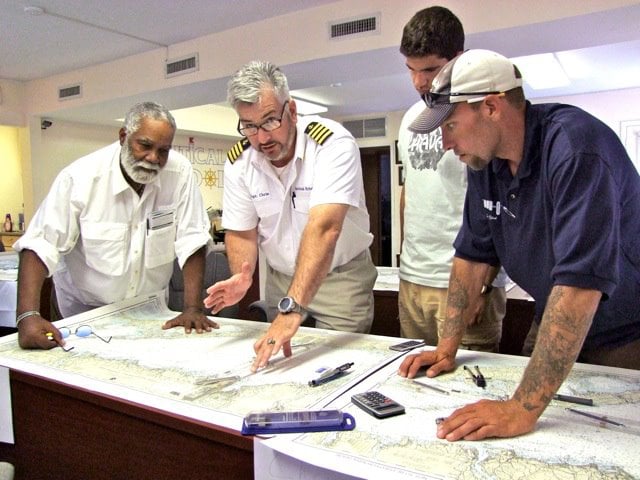
As for choosing between in-person or online courses, Vanadia strongly recommends the in-person approach if it fits your schedule. “The personal touch and immediate feedback of in-person classes is really helpful,” he states. “If you have a question you can get an answer on the spot. With chart plotting and running a course, for example, we’ll lay the charts out on a desk as the instructor goes over them with you. That kind of hands-on experience is a great way to learn – but both in-person and online courses can help you reach your goal.”
The clock is ticking if you’d like to get a captain’s license later this summer because it can take several months to complete the course, submit all the required items, and receive your Coast Guard certified approval. Sign-up now, though, and you’ll likely have it sometime this summer.