Whether cast, trolled, or jigged, artificials have become a natural fit offshore.
When trolling tuna, ballyhoo often come to mind as the standard dead bait presentation pulled behind most vessels. The results stand for themselves.
But there is a reality that not everyone wants to get involved with ballyhoo and all of the rigging and prep that comes with it. Those anglers are constantly looking for an alternative that will equal, or at least approach, the positive outcomes ballyhoo presentations bring. Enter soft plastics. “Tails,” as they are known, have become exceedingly popular on the tuna grounds. Rigged and secured on lure designed to troll ballyhoo, the tails obtain strikes without the fuss of ‘hoos.
Even those that do run ballyhoo or spreader bars may often include one or two lines with, depending on the size of their spread, a plastic tail. The variety allows for rising tuna to get a different look when they come up on the lures. If any ballyhoo spin or get washed out, the tail provides a lure that is steadfast and reliable in an otherwise compromised spread.
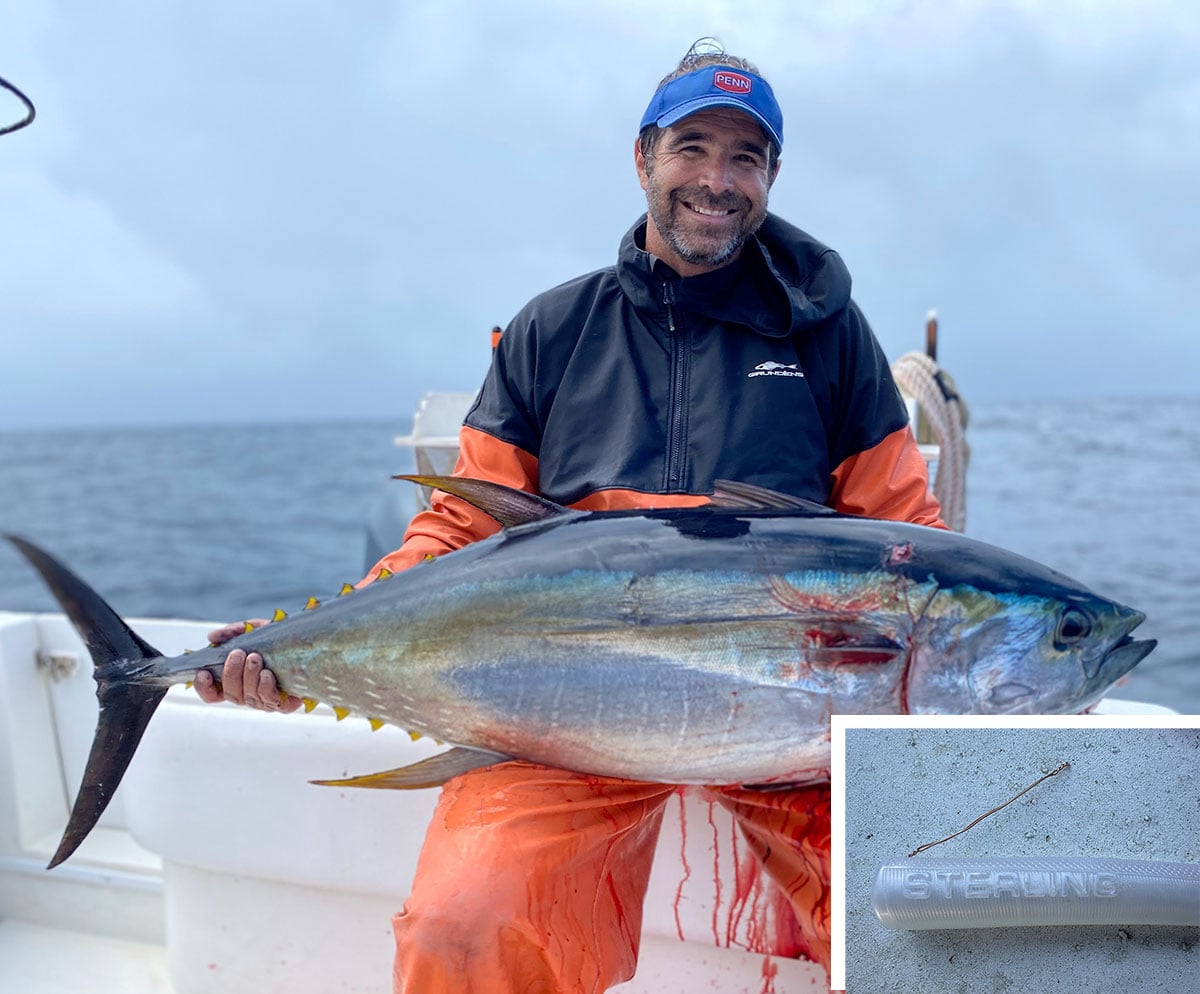
Rigged right, a tail provides desirable wobble and presents as a slender bait that easily resembles a ballyhoo, sand eel or even a skinny fish. Houndfish, pipefish and flying fish dart around the surface in the Northeast and a trolled tail resembles all of them and others. Ron Z, NLBN (No Live Bait Needed) and Sterling Tackle all make tails with tuna and other large pelagic species specifically in mind. Just this year, Sterling Tackle added their Troll Tails to the market. What’s more, Sterling added a rattle to their plastic offering based on how tuna and gamefish respond to sound.
Many captains place their tail in the way, way back position. The plastic tail is the last bait a pursuant gamefish will see so if they don’t strike the bars, chains or ballyhoo in the forward positions, they have the opportunity to take the one in the clean-up spot. This is hardly the only way to approach using tails, however. I’ve known captains to place a tail on either flank and extending from the outrigger. Those who are trolling six- to twelve-line spreads have the ability to pull two or even three tails in their spread because they are afforded latitude due to the amount of lines in the water.
Companies like Sterling Tackle also offer their tails rigged on Joe Shute lures. The plastic lures have to be threaded and properly fastened with copper wire so they do not slip. This is not that difficult to learn, but for anglers looking to save time or lack the dexterity, a pre-rigged option might suit them. Sterling Tails also have wire pre-rigged so they can be attached to the lure without the extra purchase of copper rigging wire. And finally, there’s an option without wire attached to the tail. Plastics with paddletails offer motion that fish love, but high-speed trolling for big game can cause the paddle to flip up over the hook deeming the lure of no use. Streamlined tails without a paddle are safest option for keeping a perfect appearance in the spread.
Vertical jigging requires anglers to drop the lure to the chosen depth and then commence jigging. There are numerous motions to the jigging, but most utilize a high-energy, elbow-enflaming motion to imitate fleeing forage. Jigging can also involve cranking the plastics up in the water column to mimic sand eels or fish getting chased to the surface. Dead-sticking tails has proven effective and allowed captains to use all their rod holders and outriggers. Lines are staggered about the boat and jigs are sent to different depths in order to cover the water column. Swells and chop cause the boat to bounce in the sea, hence jigging the plastic offerings. The rattles in the Sterling Tackle tails should really prove deadly when used these instances; the more rattle tails in the water, the more sound that will be emitted.
Casting tails to breaking tuna catches fish! Most people have seen images and video of giant tuna chasing freaked-out sand eels clear out of the water. A tail retrieved on a jig is the ideal offering to toss into this kind of melee when running and gunning on the open seas.
Finally, I’ve witnessed some crazy mishaps on ballyhoo boats. Ballyhoo turning to mush, shops running out of ‘hoos, etc. It’s prudent to always be prepared and carrying soft plastic tails is part of that equation.