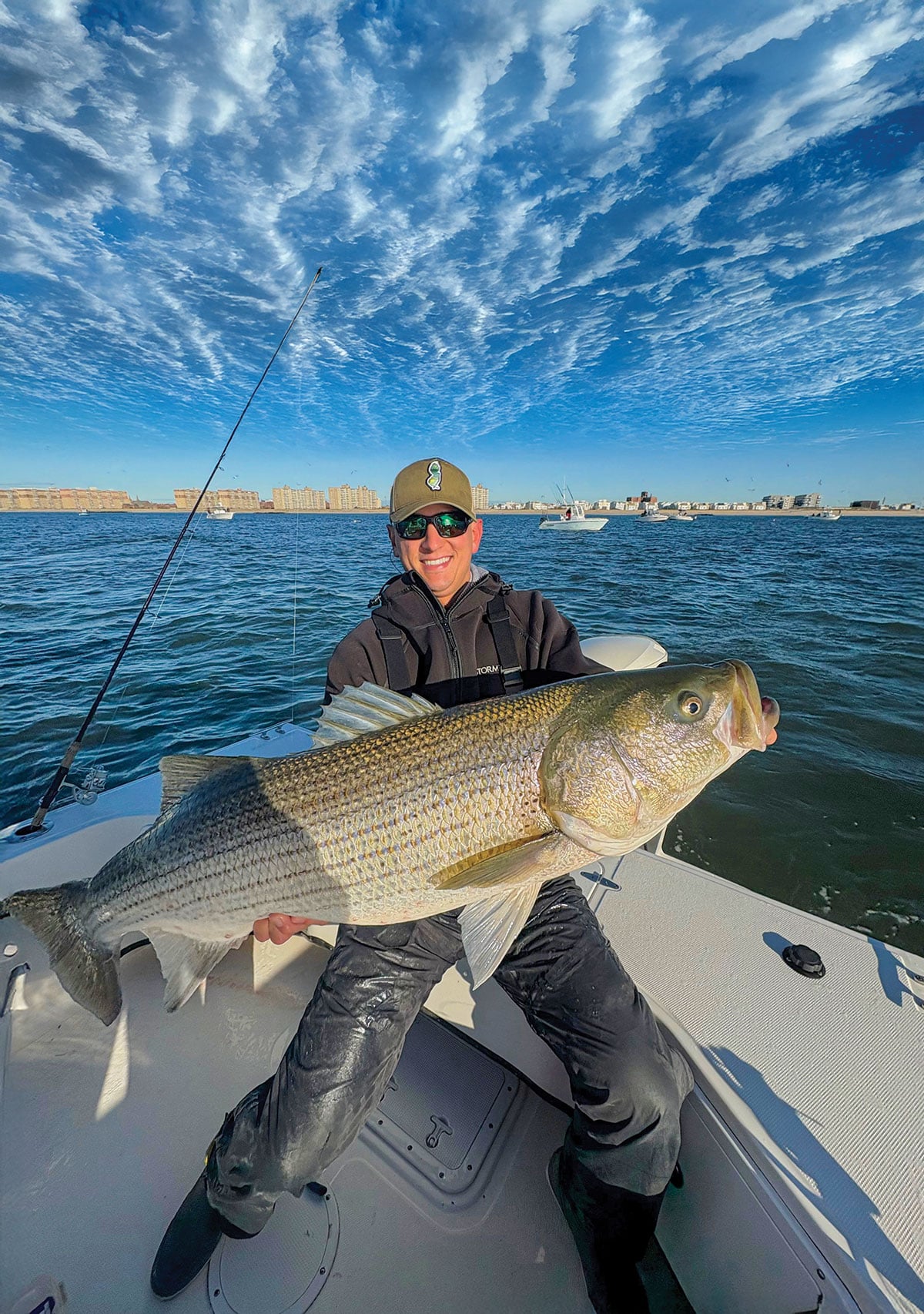
Success in trophy striper fishing hinges on adapting tactics to real-time pod activity.
Picking up where we left off in the October edition (Bunker Pods: A Conceptual Approach), leveraging environmental intelligence while cultivating a disciplined network of trustworthy contacts can help immensely when on the hunt for bunker busting striped bass.
Suffice to say, some days bunker pods are plentiful, but the bass bite remains moderate to slow. When within casting distance, take advantage of an inactive pod by using one of the activity-specific approaches discussed in my previous article. Between inactive pods, while waiting for the next opportunity, there are four different approaches to consider:
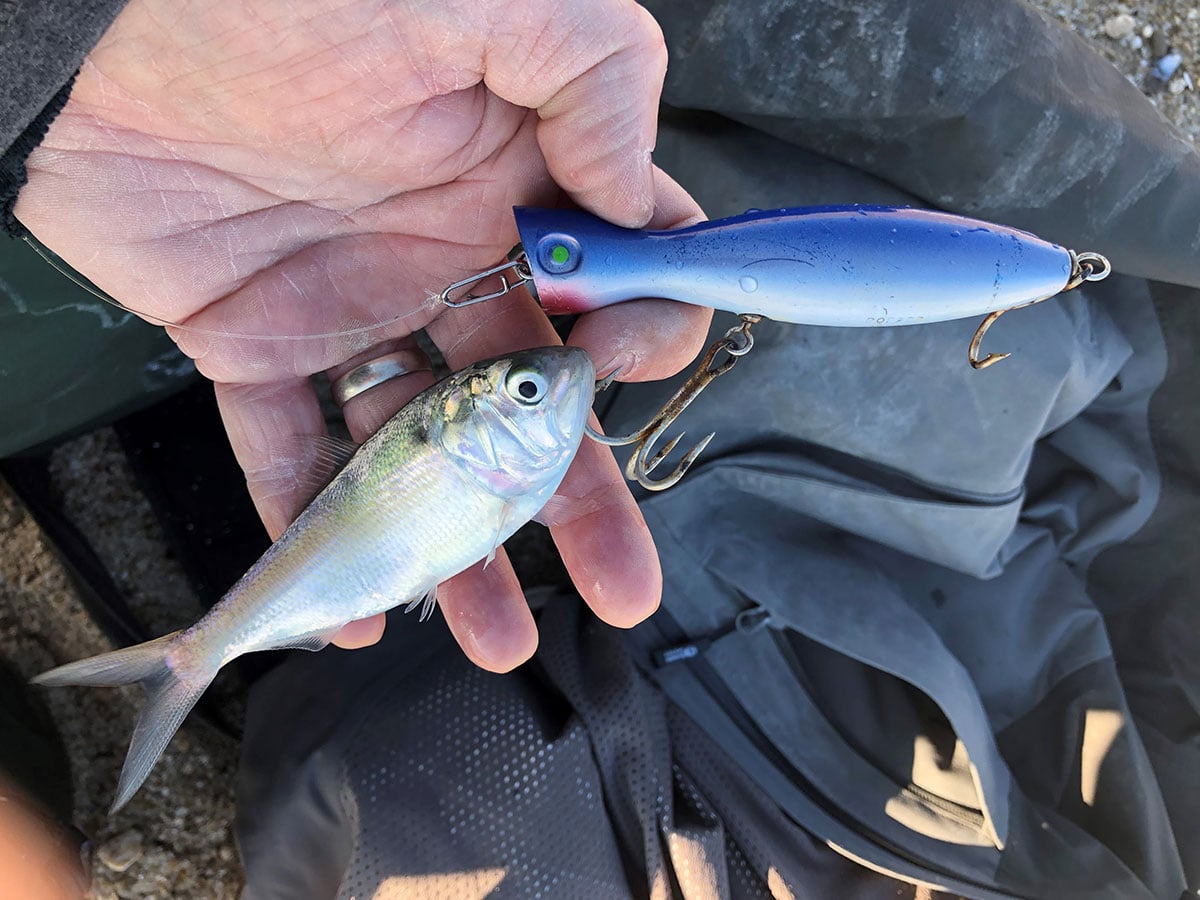
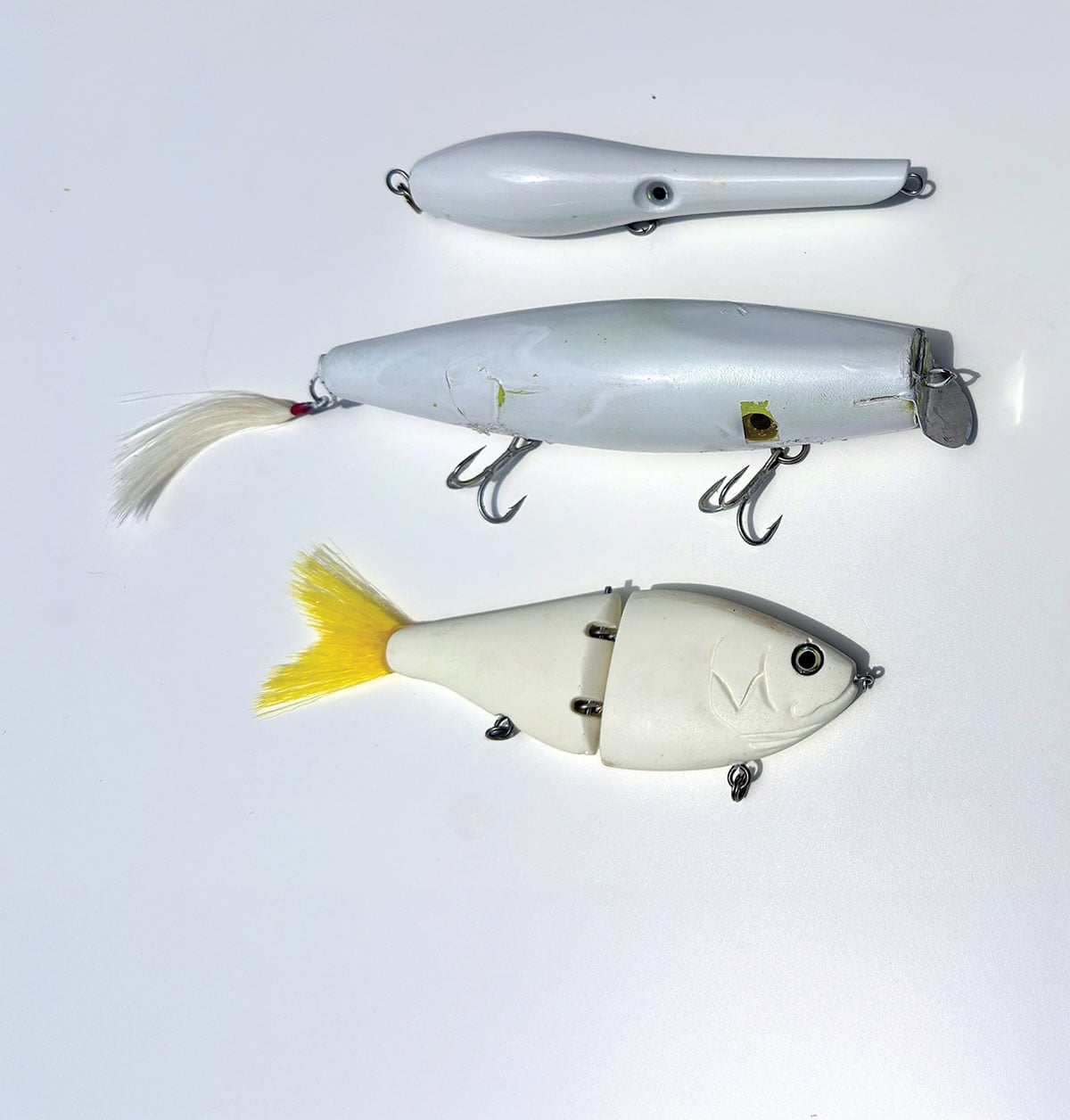
1 – Throwing large swimmers, pencil poppers, or gliders. This always has potential, and maintains mobility in case the pods “light up.” Slow bite conditions suggest either the bass-to-bunker ratio is too low and/or any bass near the pod are not active enough to pursue a surface lure. In either of those cases, a surface plug – especially a fast-moving pencil popper – may yield poor results. A low bass-to-bunker ratio gives any active stripers more prey choices, diminishing the odds of your plug being taken. Similarly, inactive bass holding low in the water column, regardless of numbers, are less likely to pursue a moving surface object.
2 – Livelining. This is a less physically demanding option for the angler. When presented in the strike zone, live bait almost always outperforms artificials. A live bunker is just as likely to swim deep as it is to stay near the surface. Livelining, however, impairs mobility and response time. If a distant pod becomes active within casting range, a live-liner will be later to respond then the pluggers. Livelining is also impractical in crowded conditions, and remember that an inline circle is needed for the controlled liveline or snag-and-drop method.
3 – Watching and waiting. This tactic offers the greatest mobility and response time, allowing for better focus and assessment of surrounding pods. It is extremely productive around active pods or when anticipating an assured bite. Unfortunately, this strategy is surprisingly difficult for many “hardcore” fishermen, as it can feel unproductive without a line in the water. While fast-moving pods increase the chance of a school migrating into casting distance, slow-moving pods are less complementary to the watching and waiting strategy.
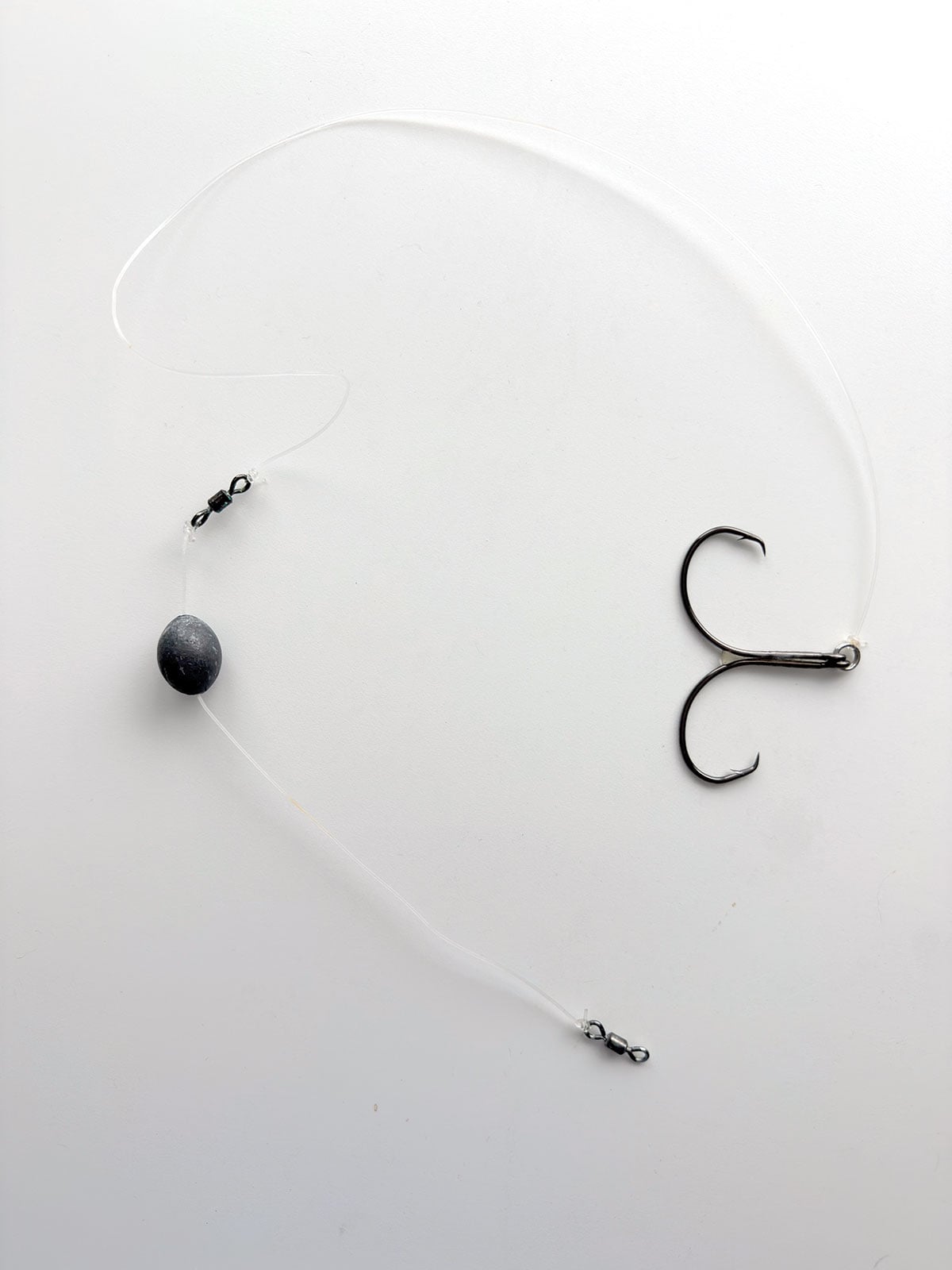
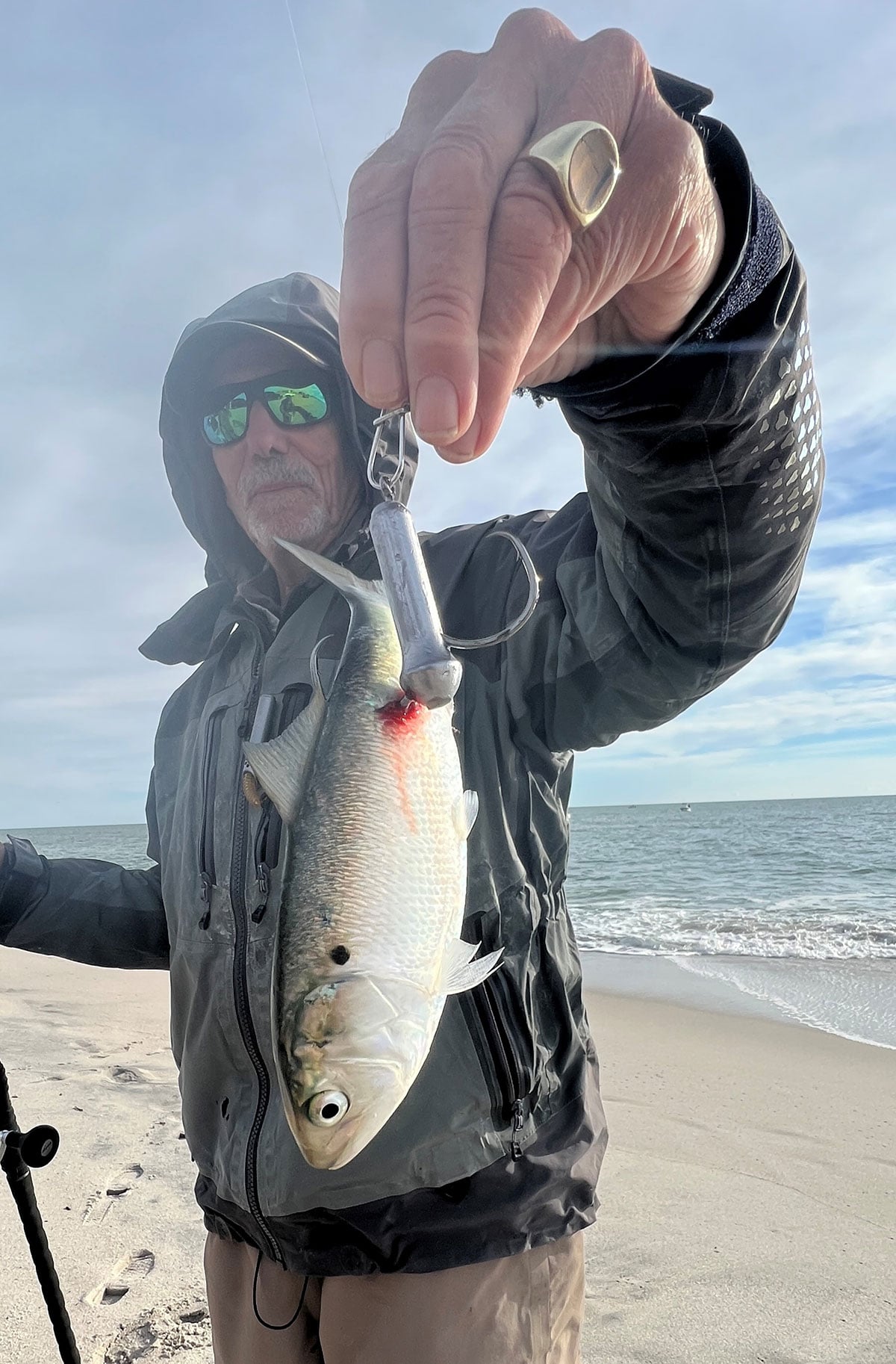
4 – Chunking. This is often the most productive choice between inactive pods. It offers a slight mobility advantage over livelining (if using the impromptu chunking rig discussed in the last article) and ensures an offering is continually present in the strike zone. Much like watching and waiting, it allows the angler to focus on the environment rather than being distracted by the action of a lure or the movement of livelined bait.
Ultimately, the choice of strategy—both between and within pods—should be tailored primarily to the activity of the bunker.
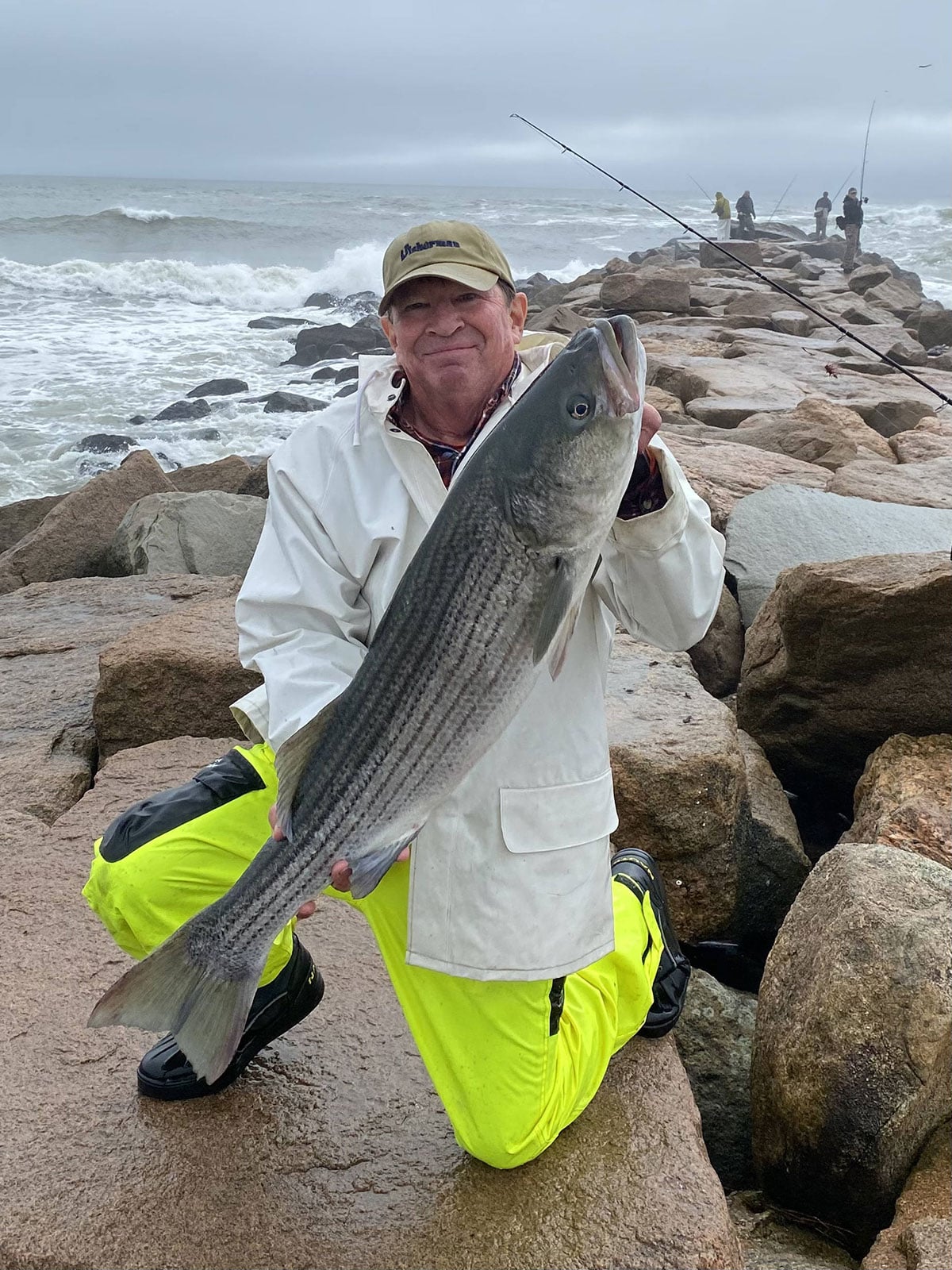
Subtle Stripers & Intel
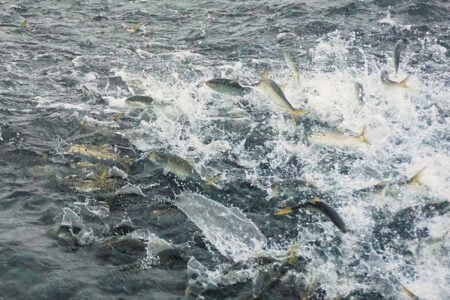
Non-pod bunker blitzes aren’t as easily seen, but they are amazing experiences. These usually occur in the wake of a hyperactive pod hitting its breaking point. The number and activity of stripers agitating the pod causes it to fragment and dissipate into widespread individual bunker that no longer have safety in numbers. The frenzied bass still remain.
Because these bass are vigorously feeding, this is where the aforementioned plugs work best. The choice of plug depends on the distance of the bass and crowdedness of the circumstances. Greater distances and crowded situations call for a pencil popper. If distance and crowds aren’t an issue, throw a swimmer or glider. Less energy is needed for these as they “work themselves.” They remain in the zone longer too because they’re reeled in slowly.
Proper intel is particularly important for predicting bunker pod movements and bunker-bass activity. As in other types of trophy fishing, the foundational knowledge here comes from experience.
Environmental Indicators – Wind and Water Clarity. Wind is a principal factor in planning to fish bunker pods. An offshore wind can often prove most productive given that bunker typically nose up into the wind. Onshore winds on the other hand frequently draw the bunker offshore. Water clarity is another principal factor. Bass hunting bunker rely greatly on their visual senses to pinpoint their moving prey in a cluster of many. Turbid water results from rough surf, excessive rain runoff, and/or 30-plus mph west winds that cloud the surf zone with blown beach sand. Such murkiness not only deters bass from chasing bunker but also inhibits the angler from locating them.
The Logbook Method – Accelerating the Learning Curve. Wind and water clarity may be of unique importance here, but they are only two of several factors to consider. The learning curve is greatly accelerated by maintaining proper logbooks. By recording locations and the corresponding conditional variables that made past scenarios more or less productive, one can better estimate the potential of future settings. Meticulous record-keeping should be applied to all types of trophy striper fishing. Nevertheless, logbooks and experiential knowledge provide only so much predictability for the erratically complex behavior of bunker pods. A savvy angler will exploit all other sources of intel.
Scouting the Shoreline. Bunker pods can move quickly along a shoreline. To better predict where they will next appear, you should gather intelligence on their most recent movements. No eyes are as trustworthy as one’s own. Like a vigilant and mobile osprey, the angler should cover miles of beach, scanning the water for indications of the bunker’s presence. Look for signs of water discoloration, surface disturbance, crowds of fishermen, and fleets of boats. Seagulls are not as useful here as they are in exposing the location of smaller species of baitfish. Helpful tools include polarized sunglasses, binoculars, and a significant amount of gas money.
The more ground covered, the greater the likelihood of running into bait. Even if pods are found a long way out of reach, take mental note of their location, wind direction, and apparent trajectory. This knowledge can be applied 12 or even 24 hours after the sighting. For example, if pods are seen a half-mile off the beach moving slowly northbound with a light northwest wind forecast, there is a heightened probability of these baitfish meeting the beach hours later, just north of where they were spotted. This intel narrows the grounds of interest by providing a starting point. As a result, both the water to be scanned and the traveling distance are minimized on the next outing.
Vetting Your Sources
The more eyes on the water, the better—but these must be trustworthy eyes! Only a wild man applies intel given by unvetted sources and/or competitors. Even intel from friends must be assessed before its application. Some hyper-enthusiastic fishing partners can unintentionally exaggerate. Other friends may be too trusting of outside reports and unintentionally pass an erroneous report on as their own.
When receiving a third- or fourth-hand report, the likelihood of two things increases:
(1) The information has likely been morphed, similar to the game “telephone.”
(2) The bite may already be over by the time such a late report is received.
Boaters are a tremendous advantage to have as trustworthy contacts. They cover more water than the surfcaster and have onboard equipment for locating fish at depth.
Technology over the last two decades has made real-time bass reports possible. The cellphone is, unfortunately, a necessary evil for bunker pod fishing. Although I see “blitz bass” as less prestigious then one from a night grind, I recognize that an angler must adapt to the times to remain as successful as possible. A cellphone network, with a reliable number of contacts who fish hard, is the golden key for bunker pod fishing.
Be warned, however: this is a two-way road where information is expected to be exchanged, not just received. Too small a network, and one will not get enough incoming reports; too large a network, and one finds himself playing operator instead of catching fish. A rule of thumb: the hardest and most honest fishermen on one’s list should be the initial (and sometimes only) recipients of one’s own blitz reports. This is not only out of kindness, but for investment purposes. I should emphasize that this information-sharing approach should be reserved only for daytime blitz fishing, so as not to risk your hard earned night bites and spots going viral.
Suffice to say, you may find some tackle shops more accurate and reliable than others with their reports, so use discernment through past experience. Having trustworthy friends working at a tackle shop can be an invaluable resource. Establishing these close relationships, especially at highly respectable tackle shops, provides advantages beyond the scope of this topic. I have been a primary responder to multiple blitzes and bait sightings over the years due to tips from my local shop buddies at the Jersey Shore – Gabriel Tackle and Grumpys come immediately to mind. And of course, I’d be remiss to not mention social media, but that is often the least accurate and mostly grandiose stage for report information. Posts can be embellished and/or completely inaccurate.
In summary, an angler can and should utilize the different sources of intel, but to different degrees based on the source’s value. Also, surf cams don’t lie, and neither do your own eyes when seeing things develop in person. As the late Tom “Grumpy” Hansen liked to say, go make the reports, don’t just read them.