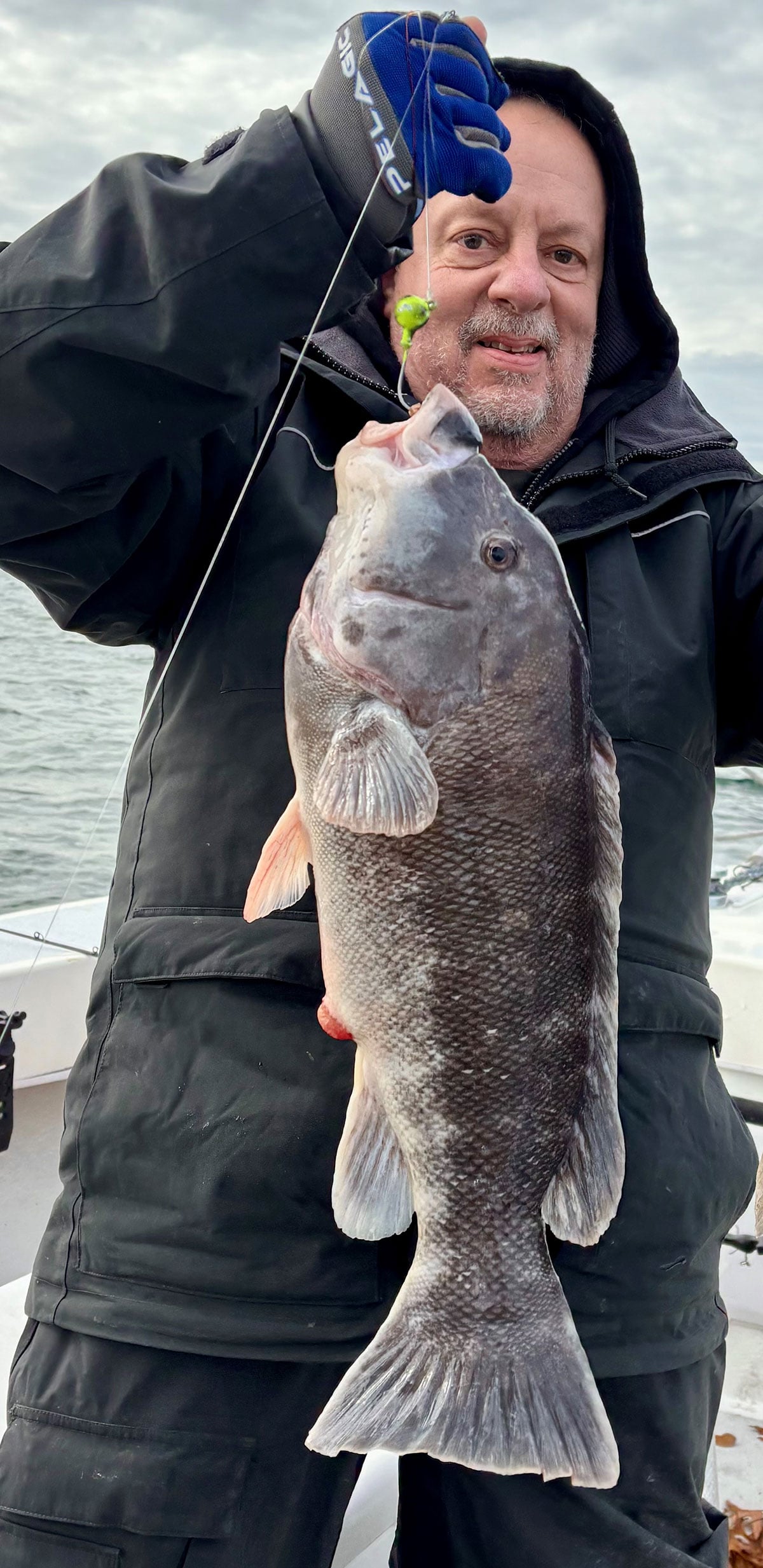
Tog jiggers, how deep can you go?
Tog fishing’s popularity continues to explode throughout the northeast, fueled in part by anglers shifting effort away from stripers, but also due to continued innovations in tog tackle and new techniques that allow the angler to utilize lighter gear. The use of lighter spinning rods makes fighting the fish infinity more fun, as well as allowing for more of a finesse approach, which just isn’t possible with old school conventional tog tackle. Best of all, these finesse techniques still allow anglers to stay on the fish and chase them into deeper water as the fall progresses.
Modern improvements in rod technology along with super braids have affected how anglers target many species of fish of course, but I’d say that none has been changed more than tautog. Jig fishing in particular simply wouldn’t be effective if anglers were required to stick with their older pool cues and mono-filled conventionals. Modern spinning reels, with improved drags and increased durability coupled with braid and rods that deliver sensitivity and strength in a lightweight package beyond the prior generation’s wildest dreams, have now opened the door to the use of jigs for tog as a viable alternative to traditional tog rigs which have served generations of anglers.
Team Jig vs. Team Rig
With their legions of a devoted disciples singing their praises, you might assume that advent of the tog jig has killed the traditional rig, which is – of course – not the case. But during certain parts of the season (springtime and early-fall) the tog jig dominates local fishing and for good reason, early season tog with the typical shallow water “light bite” characteristics the spring fishery is known for is clearly ideal for use of Jigs. Late summer and early fall fishing again, are often ideal for jig use as well while tog are typically found in shallower waters of 5 to 50 feet.
Deep water late-season togging remains one of the last domains dominated by fishing with old school rigs. Come November you are much more likely to see anglers dropping 10-ounce sinkers with a mix of hook configurations slung on heavy conventional reels than you are to see an angler dropping a jig… but is that always the best choice? Maybe that doesn’t have to be the case and you can find some opportunities to keep jigging even through the month of November. I believe if you keep a few factors in mind and can make some key adjustments, you will learn to recognize those times when deeper, colder water jig fishing has its place.
First keep in mind why deep water togging is difficult in the first place. What you don’t get in deep water but do get in shallow water (as deep as 25 feet) is precision and sensitivity. In 25 feet or less, anglers can drop their jig with precision; weights can be adjusted to allow the angler to drop straight down into structure, right where the fish live. Then with short, 1- to 2-foot rod movements, you can hop or crawl your jig up or down a rock face, over a ledge or right into the kill zone of a shipwreck. If the current lifts and carries the jig out of the zone, with a lift of the rod or a crank or two of the handle you can “hop” the jig back into place. Bites in shallow water are clearly conveyed through the rod and allow the angler to set the hook with effective timing.
When you cross over into medium depths of 25 to 50 feet, the current and distance from the rod to the jig start to erode some of these benefits, but most experienced jig anglers can overcome these hurdles and remain effective down to 50 feet of water. You will just have to accept that precise placement is not really feasible at these depths and learn to work around that fact. You will also need to learn to deal with how the current will affect your drop and how much line drag will be created as the tides ebb and flow. Your sensitivity will also be hampered, making it tougher to tell the difference between a cautious tog and a pesky bait stealer. Anglers most often attempt to maintain feel and control by opting for heavier jigs of at least 2 ounces. Despite these drawbacks, jig fishing can remain extremely effective at these depths and jigging has become increasingly popular in deeper waters.
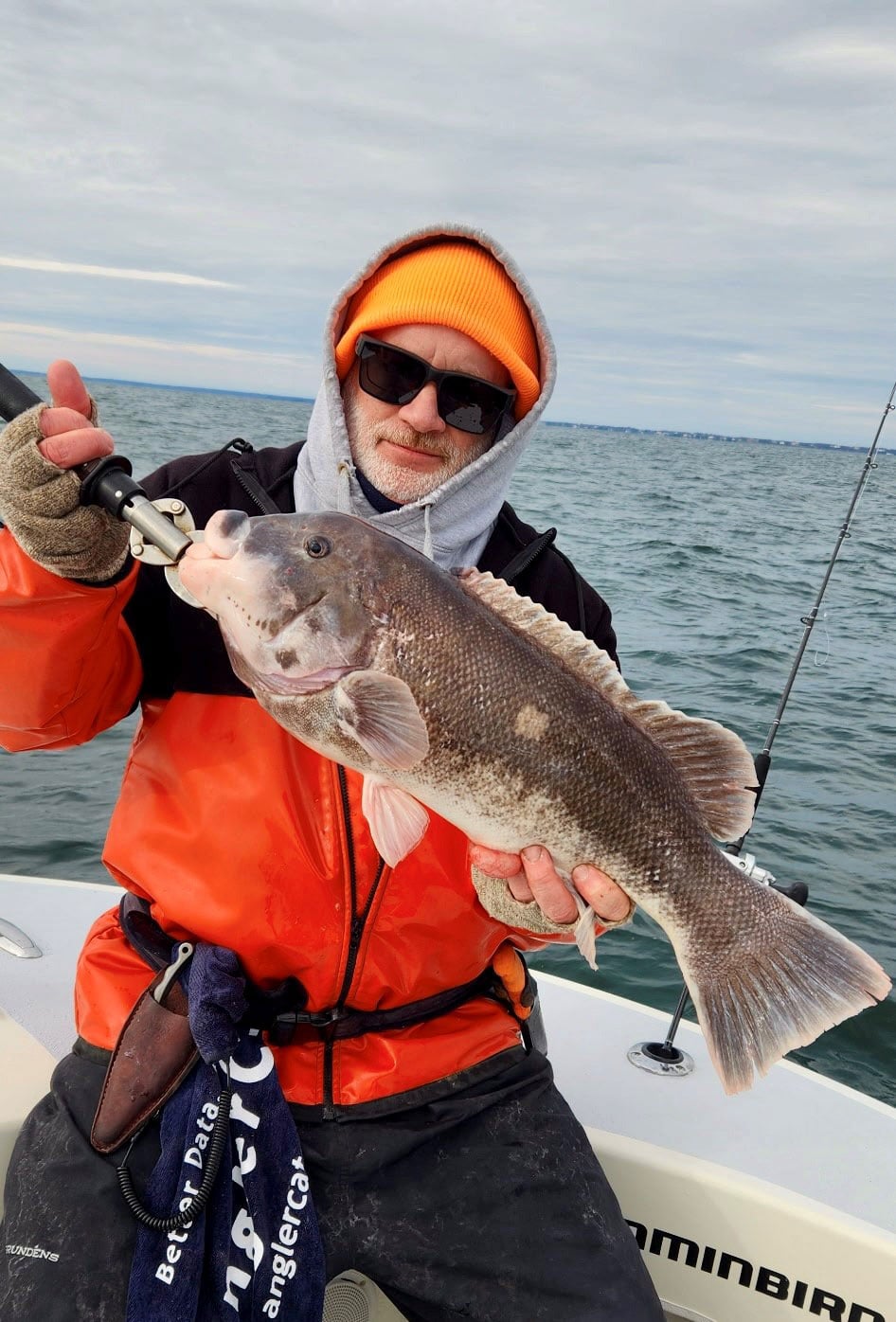
Going Deep
But what about really deep water? Can you effectively fish a jig in 60-plus feet to where it’s a better or at least a comparable option to a rig? The simple answer is “yes”. But it comes with some caveats as there are most definitely considerations with regard to conditions that need to set up properly for a successful deep water jig bite.
My most successful deep-water jigging trips all share a common denominator: an expansive, target-rich environment. I strictly look for sprawling patches of active, hard bottom—zones roughly the size of a baseball infield or larger. Attempting to drop a 2- to 2.5-ounce jig onto a single isolated boulder, small outcropping, or tight wreck in 80 feet of water is a recipe for frustration. Factor in a bulky crab, and current; and you simply lose control over where your jig actually touches down. For tiny, high-relief targets in strong current, I stick with heavy conventional rigs that drop fast and true.
Jigs truly shine when worked over extensive rubble fields, mussel beds, or sweeping patches of live bottom. In these areas, lifting the rod tip covers 3 to 5 feet of territory with every sweep. This active coverage actually gives you an advantage over stationary bottom rigs, especially when hungry tog are spread out and actively grazing across the structure.
Timing, Tides & Tactics
Timing is everything when fishing deep water with light tackle. I rarely reach for jigs during full or new moon tides late in the year. The roaring currents associated with the moons coupled with the depth required for consistent catches in November, make it nearly impossible to maintain bottom contact or feel subtle bites.
While you might be tempted to upsize to a 3-ounce or heavier jig to combat the current, I suppose that could be an option for some, but I would advise against it. Spinning rods designed to work 1- to 2.5-ounce jigs lack the power to effectively sweep and control heavier jigs. More importantly, for an angler to feel a bite on a 3-plus-ounce jig at extreme depths, a blackfish has to move the entire weight of the jig. By the time you register the strike, the crab is usually stripped, and the window for a solid hookset has closed. In heavier-current conditions, a traditional rig remains king.
Instead, look for these prime windows that allow a deep-dropped jig to really shine. I love deploying jigs as the tide slows down before changing. This opens up a prime two-hour window where fish begin to move around, cruising for crabs missed during the peak current.
Another scenario I look for is a good bite that does off suddenly. If an early-morning rig bite suddenly peters out but my Humminbird still shows fish scattered across the bottom, I switch to a jig. For whatever reason, this tactical change has often resulted in putting a few more fish on the deck. Maybe there’s something about a subtle presentation that coaxes those reluctant giants into biting that wanted nothing to do with the clumsier presentation of a rig. Last November, after an initial rig flurry completely died, we switched to jigs and unlocked two additional hours of insane fishing, landing fish from 6 to 12.4 pounds, all of these fish had completely ignored our rigs.
Of Crabs & Jigs
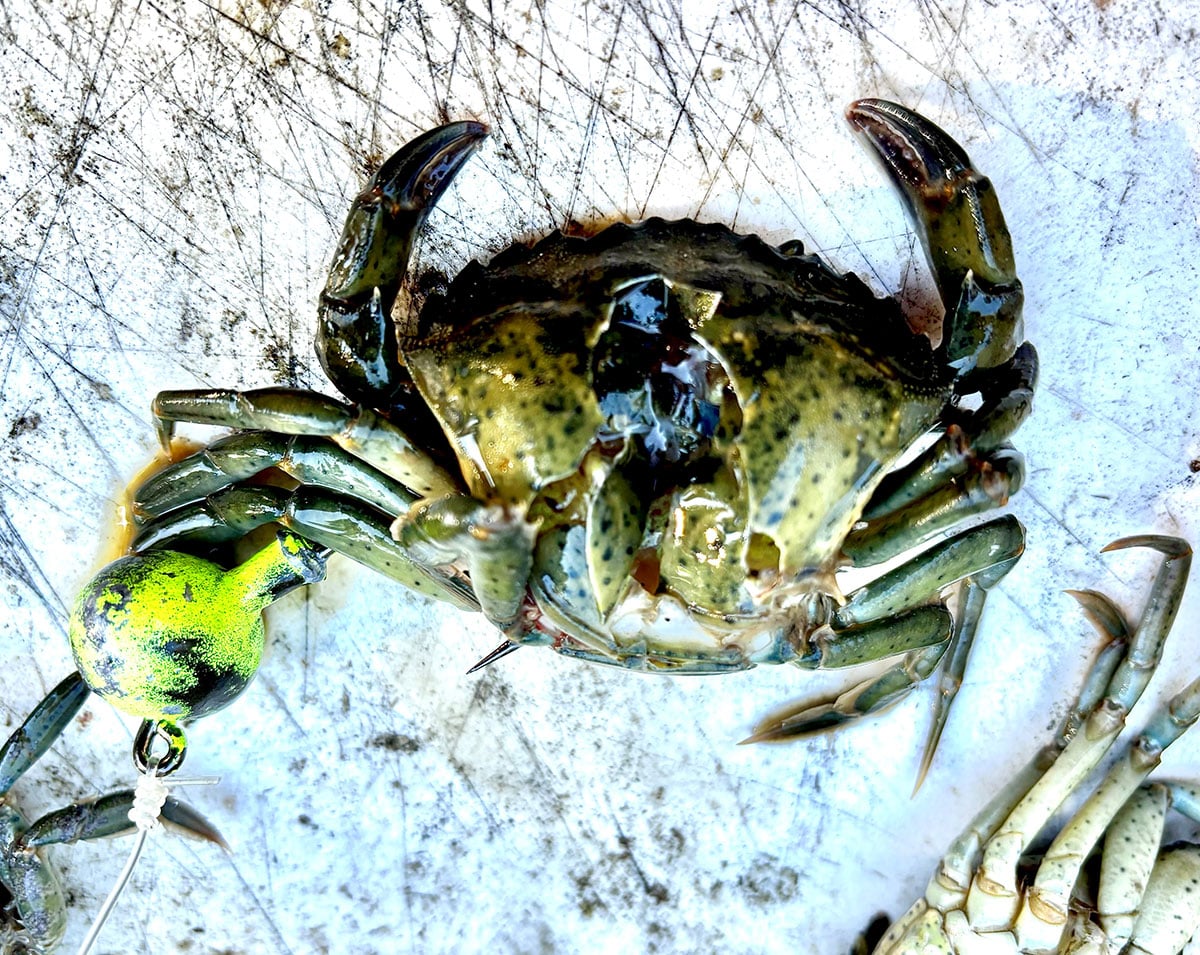
Dropping a 2-ounce jig with a crab attached down into the abyss requires patience. It falls slowly, and at times, it feels like it takes forever to reach the bottom. But that slow descent is actually part of what makes it effective. I’m convinced that in clean water, tog will visually track the crab as it floats down from above, it’s uncanny how many times my jig gets crushed the second it touches down. So, make sure you’re dialed in as your jig approaches bottom!
When fishing jigs in deep water, there are a few adjustments that will help increase your hookup ratio. For starters, use smaller, whole crabs. Cut crabs quickly get torn apart by small bait stealers before a big fish can reach them and oversized, larger crabs create too much drag and will drift a long distance during an 80-plus foot descent. A smaller, whole crab stays together, drops faster with less drag and forces the tog to take the entire offering in one bite, giving you a clear sign that fish has your bait, clearing the way for a strong hookset. For best results, crack the top shell before dropping.
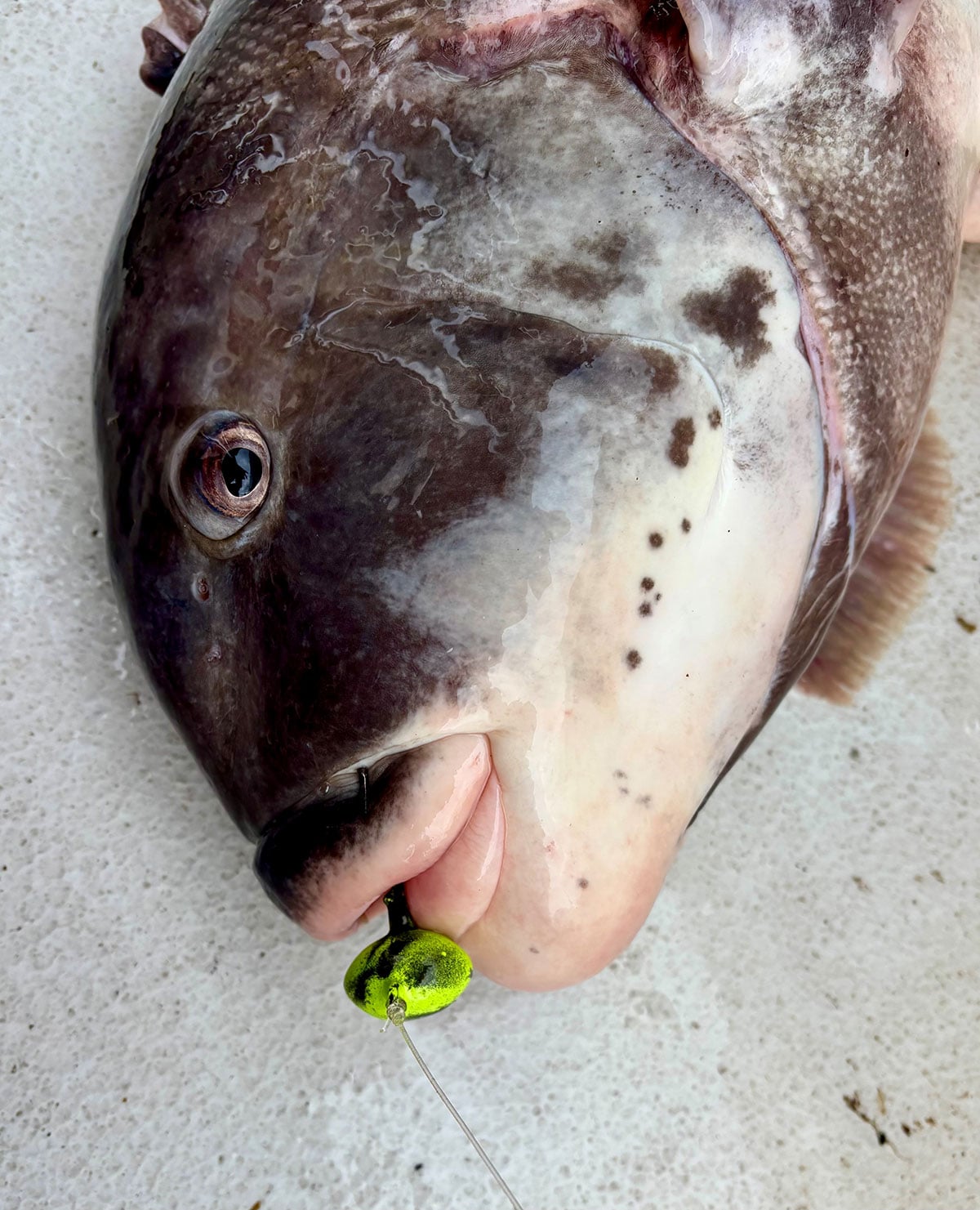
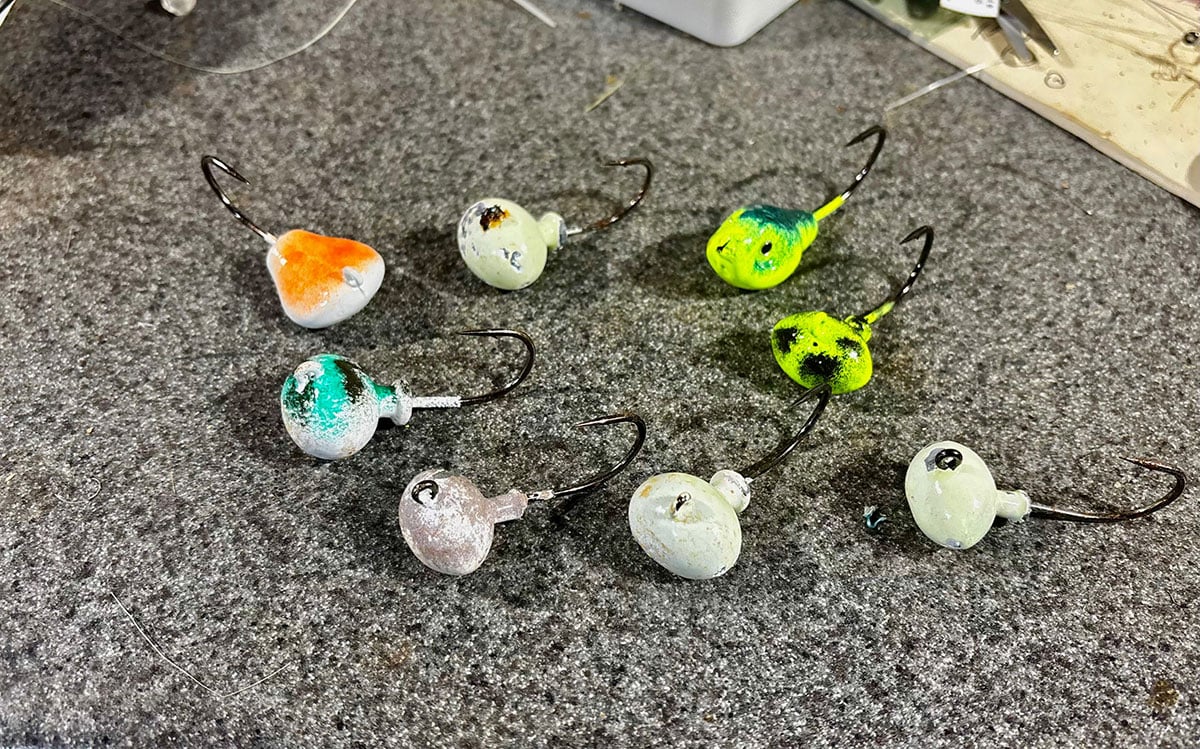
Another trick that makes a definite difference is using brightly colored or glow-finish jigs. High-vis colors excel in these deeper, darker depths. I favor colors like solid white and chartreuse, or glow finishes like chartreuse glow or blue/white glow. These colors help your bait stand out in the darkness and draw the fish to your jig.
At these depths, hook penetration is far more critical than having the strongest possible hook. While many anglers love 4X hooks, I continue to favor 2X hooks for deep-water jigging. Even with zero-stretch braid, driving a heavy 4X hook point home in 80 feet of water on a spinning rod is tough. The thinner wire of a 2X hook penetrates with far less force, resulting in a significantly higher hookup percentage.
I build my deep-water jigging system around sensitivity, line speed, and control. My preferred setup is a 7-foot, 2-inch, heavy action, Tsunami Slim Wave rod paired with a Shimano Stradic 5000. Another setup I use is a 7-foot Shimano Teramar medium-heavy rod (I prefer the Southwest bend over the Northeast version, as it offers a slightly more forgiving action when working a jig), paired with either a Daiwa Saltist MQ 4000 or a Shimano Stradic 5000, but any reliable 4K or 5K spinning reel with a good drag and quick pickup will work fine. I always spool up with 30-pound braided line, I like Sufix. For leaders I use 6 feet of 40-pound monofilament, spliced to a 3-foot section of 60-pound mono leader tied direct. If I am rapidly swapping jig weights, I will occasionally use a high-quality clip; despite the skeptics, I haven’t found that a small clip costs me fish at those depths.
Deep-water jigging isn’t perfect for every trip, but when things line up, it’s a blast! With the right kind of terrain and stable conditions, you’ll find that deep-water jigging for tog isn’t just another challenge, it’s a viable finesse tactic that can put finicky fish that won’t even look at a clunky rig, on the deck.