November in New England requires a multi-faceted attack to stay on the stripers.
For years, my fishing partner and I had a tradition, on the day after Thanksgiving we would make our first trip up to some of our favorite secret holdover locations to see how the bite was. It never failed to produce, and if I’m being honest, it was pretty much always on fire.
I remember one “post Turkey Day” trip where we ducked under docks and did our best to seem invisible to the shoreside homeowners as we cast to an all-day blitz of stripers and not a single other angler even had any idea that this bite was going on.
Looking back, it’s hard to believe that it took me so long to connect the wires on the notion that if we were finding all-out-bonanza-style fishing on these last-Friday-in-November missions, then the action in these spots must have been good for a minimum of a week prior to our sliding into the fishery. I suppose it was just as much about our stubbornness to keep the surf honest until to the bitter end as it was about blinding ourselves to the fact that we already late to the party. But another facet of these post-Thanksgiving trips was that, chasing holdovers was an admission of defeat in the surf. But I’m writing this now to tell you that it doesn’t have to be that way!
Hard Truths
These trips were centered in the height of this modern era of striper fishing and I’m telling you, the fishery was a lot different back then… even though it was only 15 to 20 years ago. Striped bass were far more abundant than they are now and it wasn’t necessary to chase a fall run bite that was lighting up in South County, Rhode Island or make a Hail Mary run to Jersey to get in on a bite. We had longer waves of stripers with many more distinct bodies of fish. If your buddies in Narragansett were catching, your other friends in Newport were also on fish, same as the other guys you knew in central-Connecticut. There were just more fish in general and that meant there were more fish to go around, making for a long and productive fall run.
This was a major contributing factor to ignoring these backwater fisheries earlier in the month of November. There were reliable runs of bigger fish that we refused to miss out on. Don’t mistake this as me saying the striper fishing was never a grind back then, it absolutely was at times, but there was always enough hope and promise to keep us focused on the “our front” fishing until we were good and ready to toss in the towel. Today’s fishery has its own perks, perhaps the biggest one is that there are so many more big fish around and – even though we desperately need small stripers – the fact that they are not as abundant in current times, means we’re not having to deal with, smaller, faster and less-selective schoolies when trying to target bigger fish.
Going Hybrid
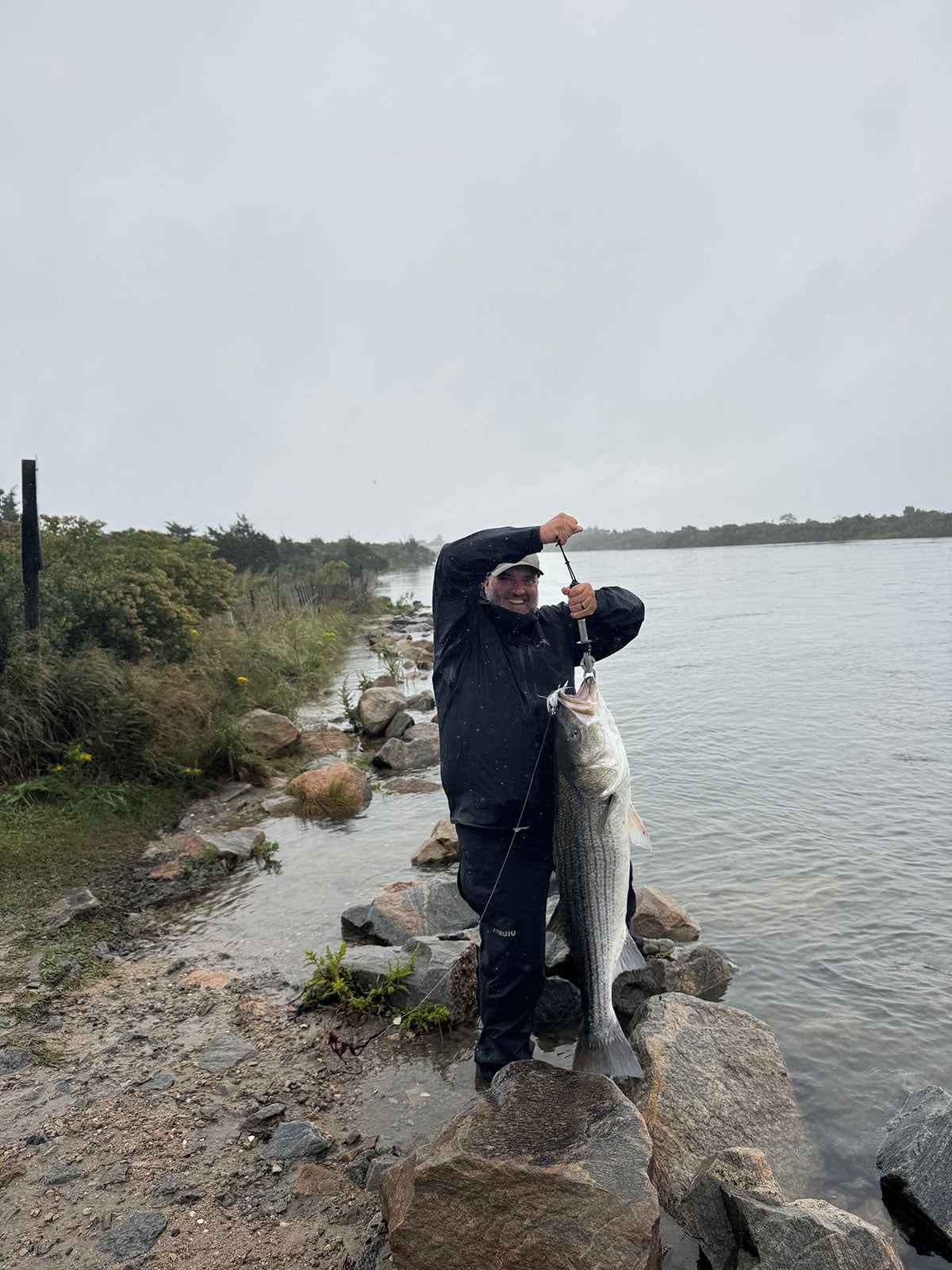
In today’s fishery, those anglers that take a hybrid approach to chasing stripers are the ones that find the most consistent success. I will admit, this is not the strongest aspect of my person approach, I’m more of a traditionalist (maybe better described as a ‘stubbornist’), in that I prefer to focus on the spots and regions that have always kept me on the fish, but this approach has always changed in November when I would expand my range further south and west in favor of staying with the strongest parts of the fall run that were still within range.
Over the past few seasons, I have added two new wrinkles to my eleventh month striper game, I have used my kayak to access backwaters that aren’t really accessible from shore and I have made my trips to holdover spots earlier than ever before. This, of course, has been sifted in with my usual trips in the surf and at the end of the month, I know I’ve caught more fish than I would have, if I only focused on one mode or area. I seem to never find myself in that late-fall rut when things sometimes begin to feel hopeless. There’s that old saying, “variety is the spice of life” and I think this hybridized approach to late-fall fishing proves the theorem.
I would hasten to add that I don’t think it’s necessary for surfcasters to use a kayak in order to enjoy this type of fishing. In the same thought, this approach can work just as well for the mobile boat angler who picks his days and trailers a small boat to whatever launch gets him closest to the best ongoing bite. Those fishing on foot will only be hamstrung by access restrictions and those frustrating times when fish are visibly (and ferociously) feeding on top, but never come within range.
Boaters may also find areas where a long commute over the water is required to access certain backwater locations where no launch is available, and if ugly November weather rears its head, you may be out of luck! Which is why I prefer the mobility and convenience of the kayak, I can load it into the truck on November 1 and not take it out until the backwater spots ice over and I only need a footpath to the water to launch.
Lose The Romance
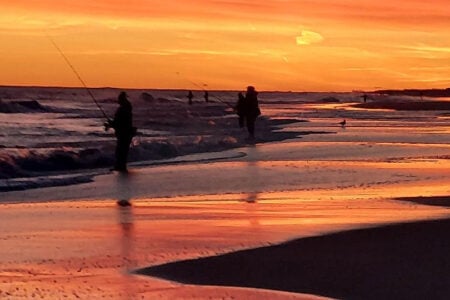
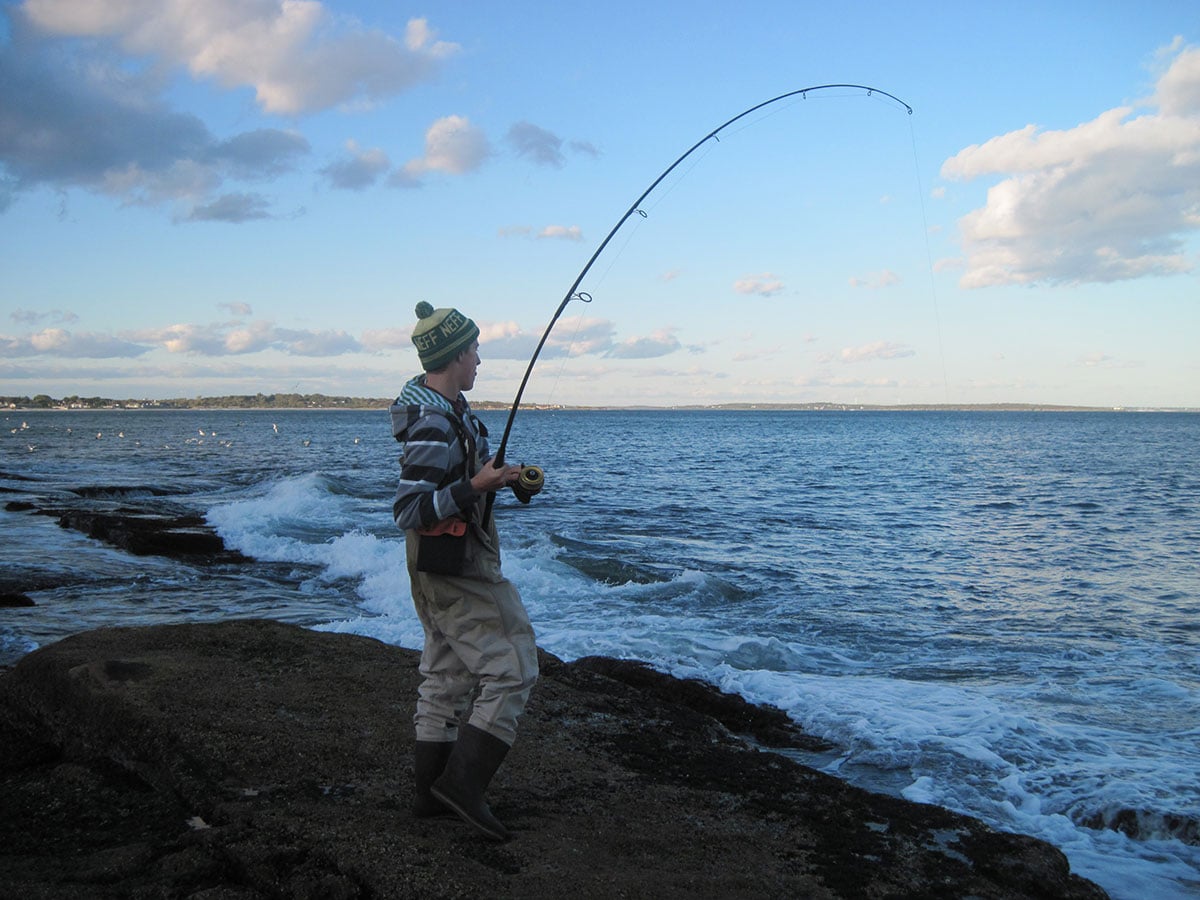
The first step in embracing the hybrid approach comes with stripping your mind of the romantic image of fishing for striped bass in November. Maybe everyone isn’t like me, but I picture casting into the surf, from a sand beach or rocky point, with big stripers pushing sea herring into the shallows and crushing Danny plugs! You’re wearing a winter hat, each breath is punctuated by a cloud of smoky condensation, your hands are cold and red, and the bite presses on into darkness. Sounds amazing right? And yes, I have lived those moments, but my 25 years of dedicated surfcasting prove that those incredible moments are the exception and not the rule. Just the same, I put in my surf efforts when my experience has shown that those moments are most likely to occur; at night and from first light into mid-morning.
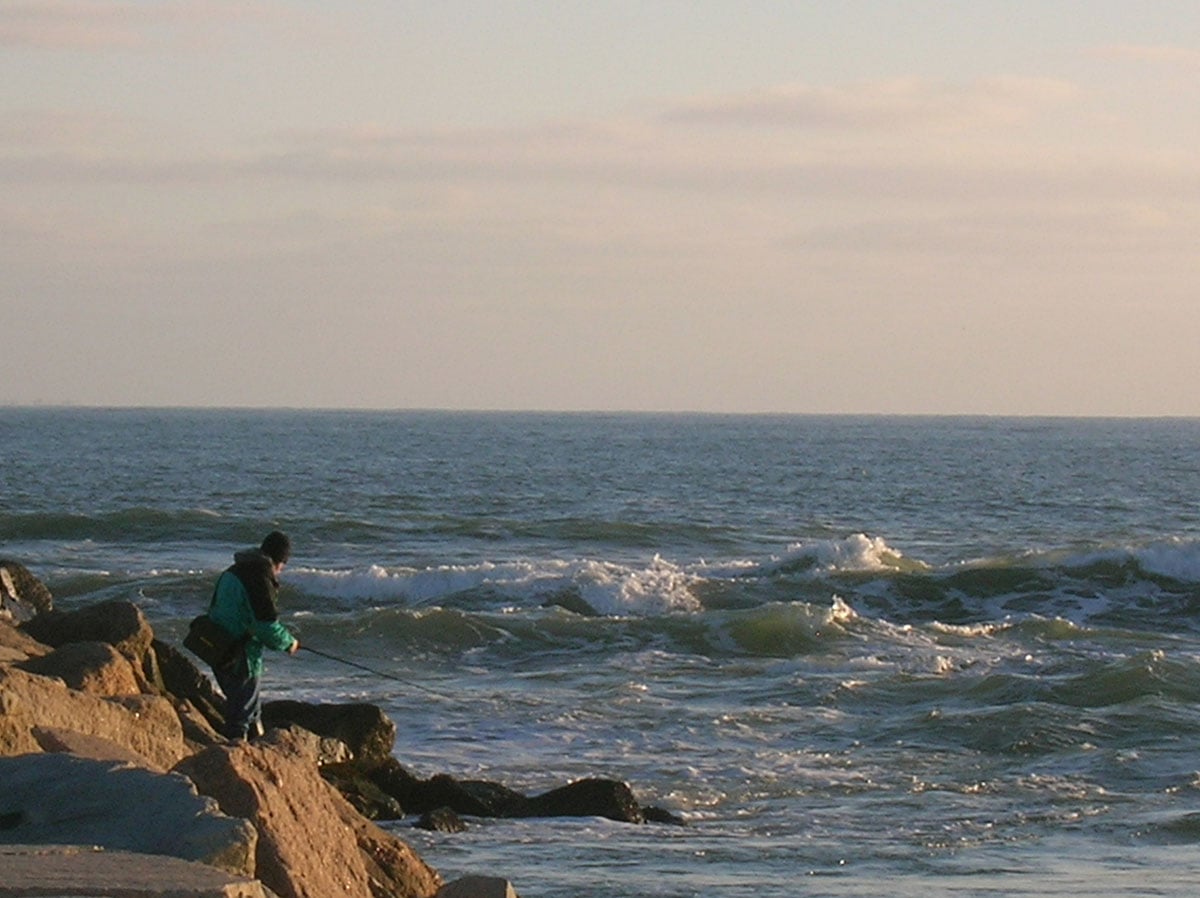
The next step is taking on a 360-degree approach to finding fish. This means looking all directions, including all of the area beyond 180. This means if you’re standing at Charlestown Breachway in Rhode Island, you’re looking out toward Block, you’re looking east and west down the beaches and you’re looking back into Ninigret Pond, too. This may seem elementary to some, but I have seen it happen multiple times, 30-plus casters lining the sand from the jetty down past the houses, all scanning the horizon with binoculars and myself and two others fishing the incoming water, dumping into the pond, with bass cruising the rip for baitfish being flushed into the pond, just as they would on the drop, out front. But no one else noticed!
For me, the last step was redefining defeat. When I first discovered the holdover fisheries that I frequent now, I thought of them as my wintertime saviors. At the time, there really weren’t many other guys fishing for winter bass unless they were fishing in the Thames River, so my friends and I had these places completely to ourselves. And as I wrote in the intro, hitting those spots was symbolic of giving up on the surf. But what I’ve learned since, is that these fish are streaming up into these rivers throughout the entire fall run and best of all, they are much more active from November through the first half of December, making them far easier to catch. And when the bite out front isn’t happening, hitting these backwater locations isn’t admitting defeat it’s refusing it.
A Typical Day
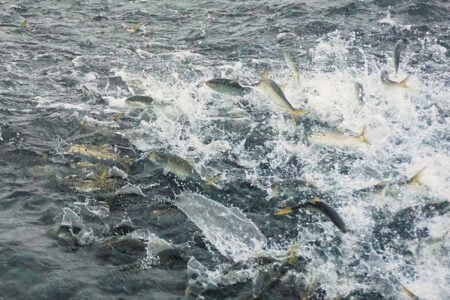
The perfect November trip for me would begin by traveling to a beach where I have good intel that fish have been around. These could range from Newport to eastern Connecticut, and might even push further west than that during a leaner year. Arriving before sunrise, I check my kayak in the bed of the truck and make sure anything someone might want to “take home” is secured inside the cab. Walking the beach I might fire needles into the darkness or swim paddletails closer to the break. As the sun begins to delineate the sky into that breathtaking gradient from dark blue to flaming orange, I reach for a surface swimmer and keep it crawling through the first light surf. Hopefully somewhere along these quiet hours I have landed a couple fish. And with any luck, as the sun peeks over the horizon, birds will descend on a blitz that puts a bunch of leadhead or topwater bass on the beach.
The big change occurs when the blitz subsides. Backing away from the wet sand, I see my surfcasting counterparts scanning for round two, having broken off into small groups the intense fishing session has now devolved into localized knitting circles as the guys discuss where they might go for breakfast. This is when I make my move. If applicable, I’ll disappear over the dune and check the estuary behind the beach, maybe launch the yak, and let the Humminbird do a little of the work for me. If the pond is devoid of life, I’ll set the GPS for a known holdover striper spot and make the drive.
Further Convincing
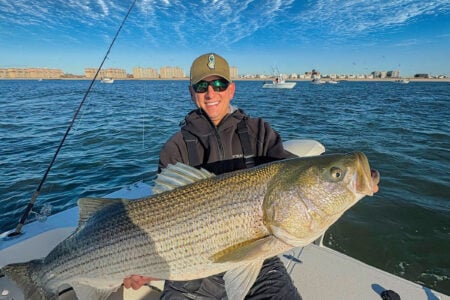
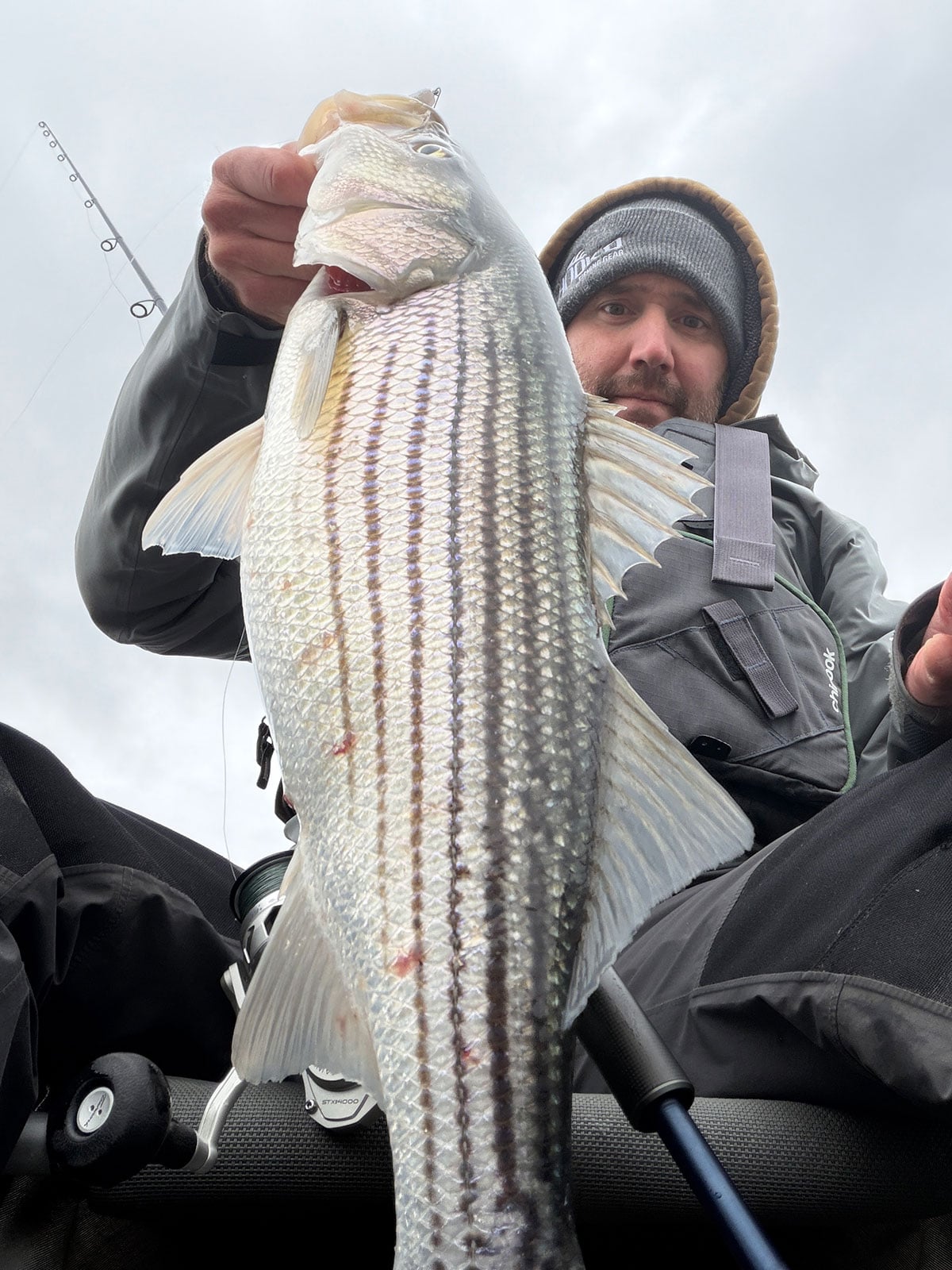
Something that might surprise you is that a lot of times, I catch my biggest fish of the entire month in these holdover locations. An old stereotype used to be that holdover stripers were almost all schoolies, but with the ratio of schoolies to slots and overs so heavily skewed in favor of larger fish thanks to recent spawns, in these last 10 years or so, bigger fish have become a lot more common in these spots. As such, I will always incorporate a few larger offerings into my November backwater arsenal; large glide baits worked well last year, soft plastics up to 14 inches seem to work best for culling out the bigger fish. But at times, even large topwater plugs like a pencil popper or large spook will draw strikes in this time of warmer water, active bait and backwater stripers bullying whatever edible fish dare to enter their overwintering domain.
With all that said, I know I will still spend several nights this month standing in the surf at those spots that have paid off so many times in the past. But I will also have a backup plan, that will save a long night somewhere along the way, and if I’m lucky, one of those spots might put up the biggest fish of the entire fall run.