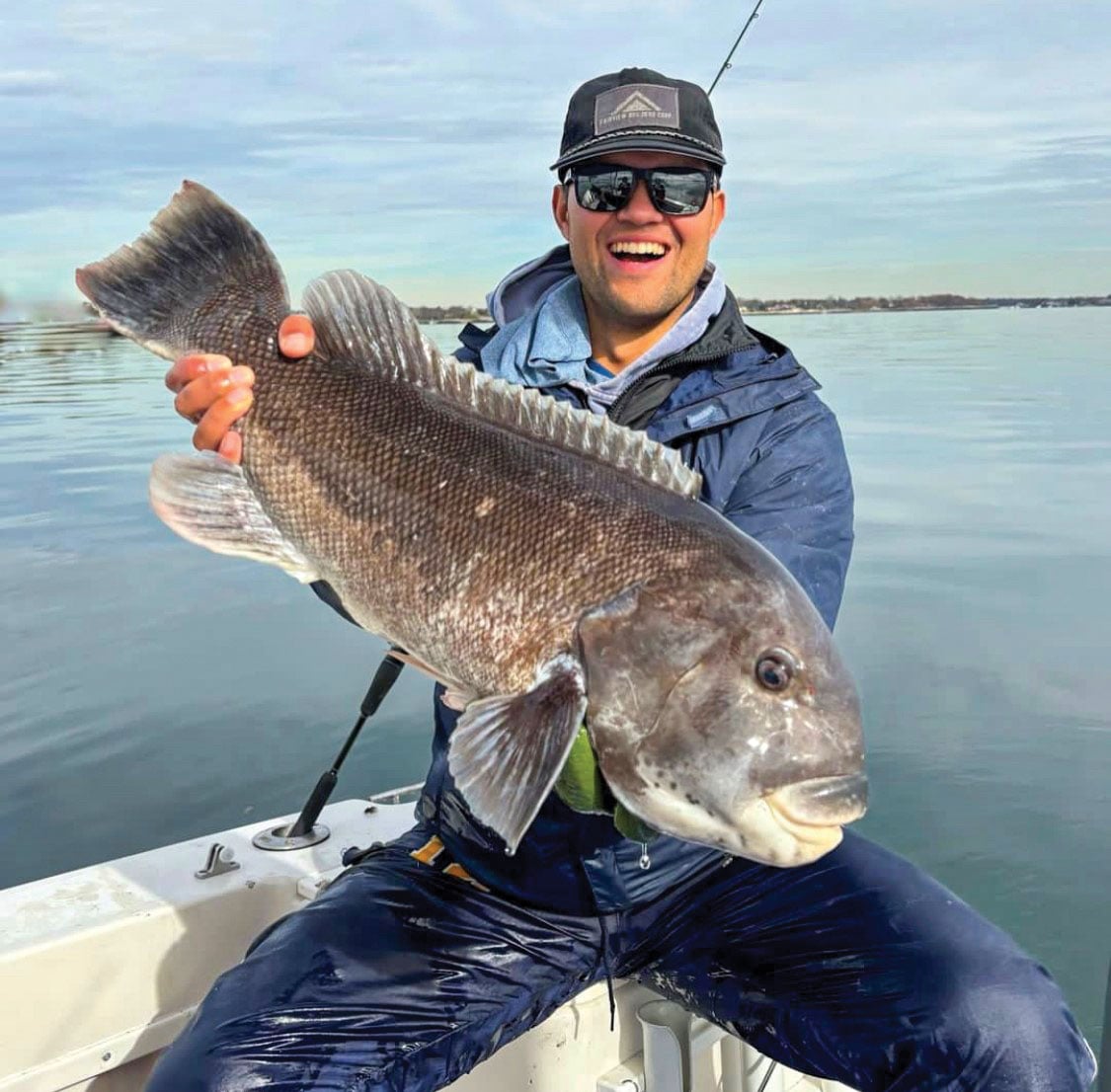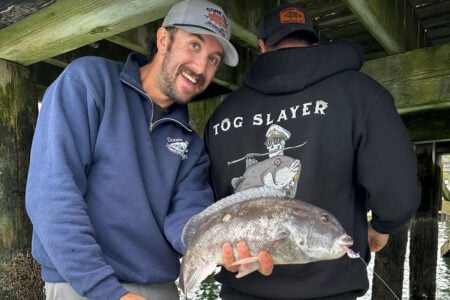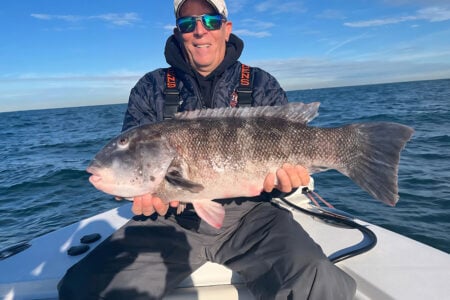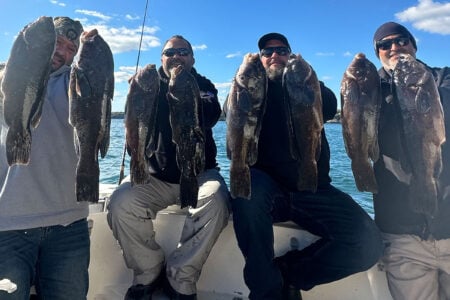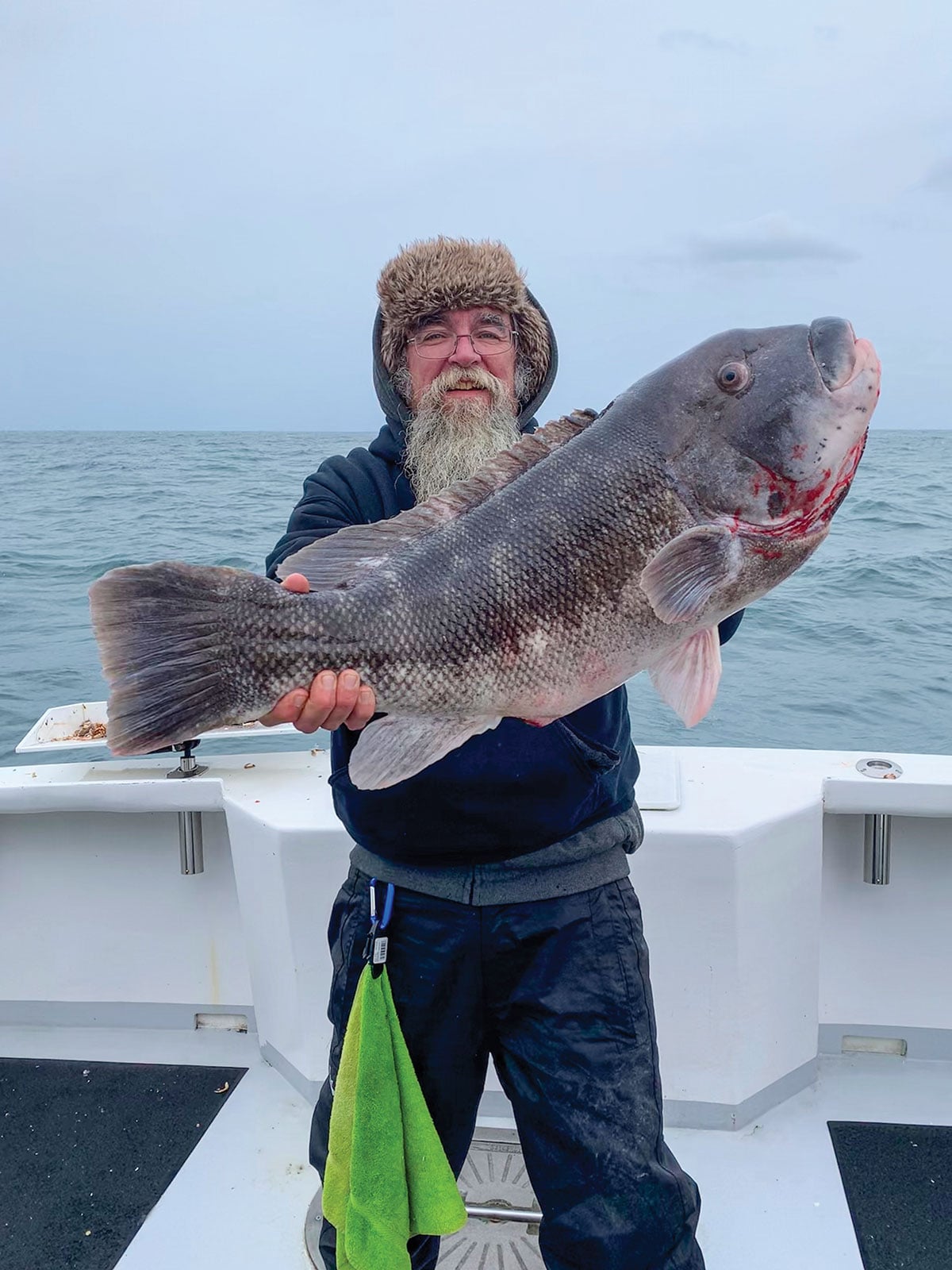
November and tautog go hand in hand, but the eleventh month requires a mix of approaches from New Jersey to Massachusetts.
It wouldn’t be a stretch to say that togging has been one of the fastest-growing segments of recreational fishing over the past decade. With spinning gear and jigs changing the game, we’re seeing more and more recreational anglers pushing their tog game deeper and deeper into the cold months. The gateway to this coldwater fishery is November and your approach will need to change as you move up and down the coast. We’ve called in a panel of pros anglers to get you dialed in no matter where you soak your crabs!
New Jersey
For many anglers – surfcasters in particular surfcasters – November is all about striped bass at the Jersey Shore. But the Garden State tautog limits improve to five fish at a 15-inch minimum size as of November 16, making this prime time for charter and head boat blackfishing at the snags, wrecks and artificial reefs all the way through January and February.
“We’ll probably start in December, after the striper run cools off,” said Greg Hueth of the Big Mohawk out of Belmar. There are several for-hire and head boats that continue operation through much of the winter running out of Shark River Inlet – including the Golden Eagle, Miss Belmar Princess, Ol’ Salty II and Skylarker – and tautog will keep rods bent along the rail into the holiday season. Same as in ports out of Manasquan and Barnegat down the coast to inlets at Absecon and Cape May, all dependent of course on weather, and availability of fish.
“It only has one way to go, better,” Hueth said of this year’s fishery, referring to last season’s cold, stormy weather. “I’m hoping conditions and water conditions will be better this season,” said Hueth, hoping a warmer trend leading into the fall will lead to better tautog action. Expect to start targeting snags only a couple of miles from shore, until water temperatures start to drop heading into the winter months. “If the water temp is 55 degrees in January, I expect they’ll be closer to shore, but if it’s down into the 40s, we’re traveling farther east,” Hueth said.
“Once we get into January we’re heading farther offshore obviously,” said Hueth, adding “There on spots you expect them to be to start the season, but as it gets colder and colder they’re moving into deeper water.”
Hardcore togger and The Fisherman contributor Frank Mihalic travels extensively along the Mid-Atlantic Coast in search of tautog from New Jersey to Maryland, and he said will be fishing for blackfish until the last of the local boats are iced in for the winter. “November we will be fishing Wildwood Reef in 50 feet on rubble piles, December we will probably be heading out to Cape May Reef, and by mid-December we will probably start fishing Delaware’s Reef Site 11,” Mihalic told me, adding “from mid-December on when we have a beautiful weather window, we will run offshore to the Deepwater or the Del-Jersey-Land.”
Mihalic may forever be connected to New Jersey’s current state record tautog, even if he wasn’t working the handle of his Daiwa Saltiga 15. While fishing aboard Capt. Tom Daffin’s Fishin’ Fever out of Cape May on December 20, 2020, Mihalic passed along his Century ProTogger rod to Chris Sullivan to try out. It wasn’t long before Sullivan boated a 25-pound, 8-ounce state record blackfish, the second state record caught aboard Capt. Daffin’s Fishin’ Fever, eclipsing Frank LaMorte’s 25-pound, 5.92-ounce monster in 2015.
Mihalic said Sullivan’s record was caught on 65-pound multi-color Daiwa JBraid 8 with 20 feet of ANDE Pink 60-pound test as a top shot. “At the business end was a slider rig tied with 60-pound Tsunami fluorocarbon snelled onto an Owner 5/0 hook, tied direct via a Belmar Rig,” Mihalic noted. Capt. Daffin added another notch to his belt last spring with an IGFA catch and release record of 71 centimeters (27.95 inches) for angler Brian Mingione
“Down off Cape May we have a lot of sand bottom so you have to really get off the beach to find the structure,” Capt. Daffin said of the South Jersey tautog action in mid-November, noting that nearshore artificial reef sites in New Jersey and Delaware are heavily targeted early on. “For the most part you’re starting in 45 to 75 feet of water at the reef sites in November, and while a lot of guys want to start out deeper in 85 to 90 feet of water to kick off, I like to save that for later,” Capt. Daffin noted, saying he starts pushing into deeper waters in December when bigger fish are more active. “Deep water is better for the bigger fish, for sure, but you’ve got to wait on that, the fish aren’t really on the chew out there until later.”
Capt. Daffin jokingly referred to tautog as “the Canada goose of fishing, some are residents and some are migratory,” and he advises folks to treat the fishery as if there are no other boats around, else you’ll be chasing the fleet. “I like to take it as it naturally progresses,” he added.
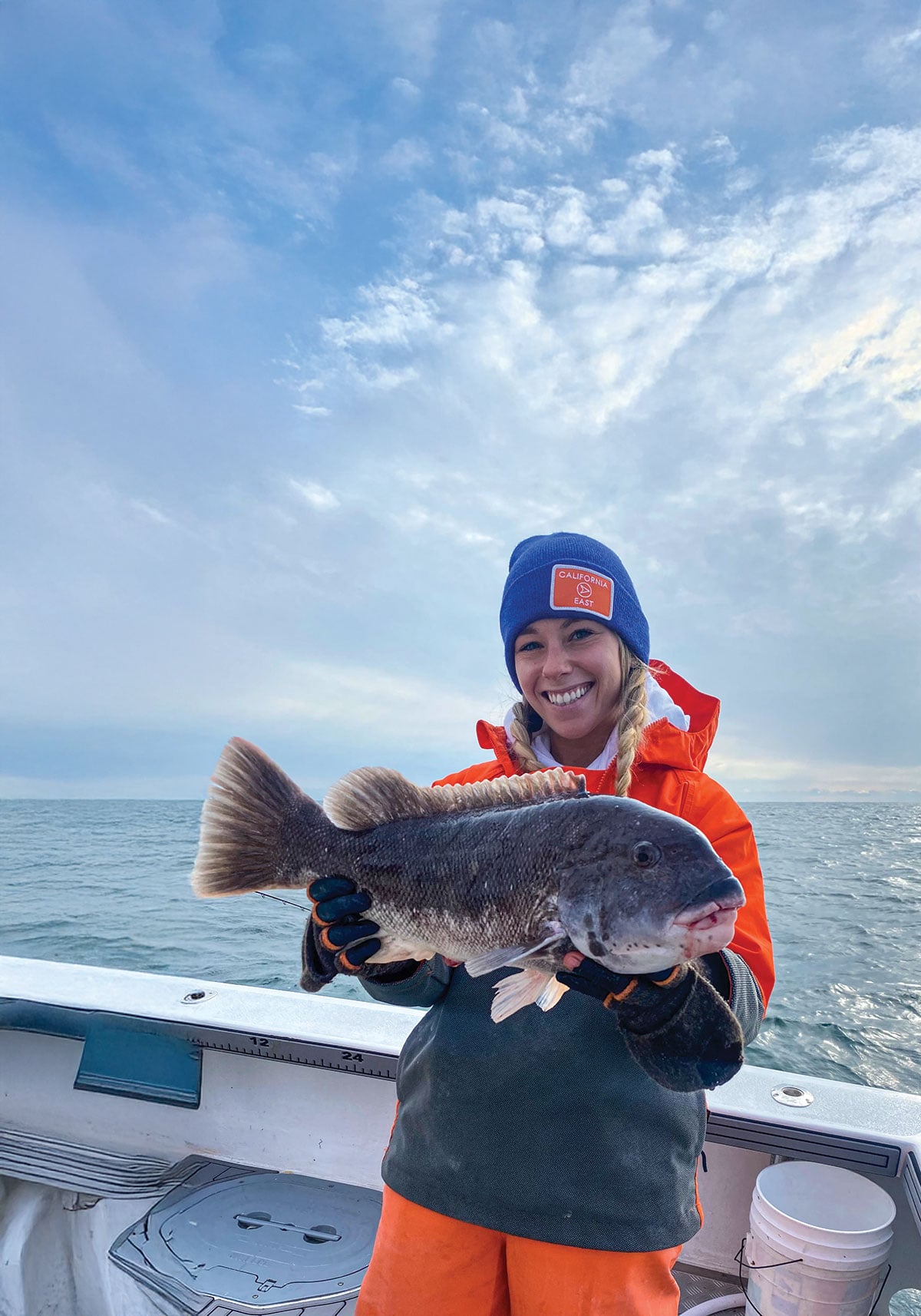
New York
November is one of the most anticipated months for blackfish anglers around Long Island. By this point, the season is well underway, water temperatures are steadily dropping and some of the better fish begin concentrating around deeper structure. While the shallow-water opportunities of October can still produce, November is when anglers should begin adjusting their approach and exploring more established blackfish grounds.
The beauty of Long Island’s blackfish fishery is the variety of opportunities available. From the western Sound to Montauk over to the South Shore wrecks, each region offers something different. Understanding how these areas change throughout November can make a difference in putting together a productive trip.
The western Sound has long been a reliable destination for November blackfish. Areas surrounding Hempstead Harbor, Oyster Bay and the rocky bottom stretching east toward Huntington provide plenty of structure for tog to inhabit. Much of this territory consists of natural rock piles, boulder fields and scattered hard bottom that can hold fish throughout the fall.
During early November, anglers can still find productive fishing in depths ranging from 20 to 40 feet. However, as temperatures decrease, deeper pieces in the 40- to 70-foot range become increasingly attractive. These are general starting points rather than absolute rules, and locating fish often requires experimenting with several depths.
The western Sound also offers opportunities to fish relatively protected waters when the ocean becomes difficult to navigate. Green crabs on traditional rigs remain a dependable approach, although jigs can continue producing when current and depth allow.
Moving east, the waters surrounding Port Jefferson, Mount Sinai, the Middle Grounds and the rocky stretches toward the North Fork provide another excellent collection of blackfish habitat. This region features substantial natural structure, with rocky points and bottom transitions capable of producing impressive fish.
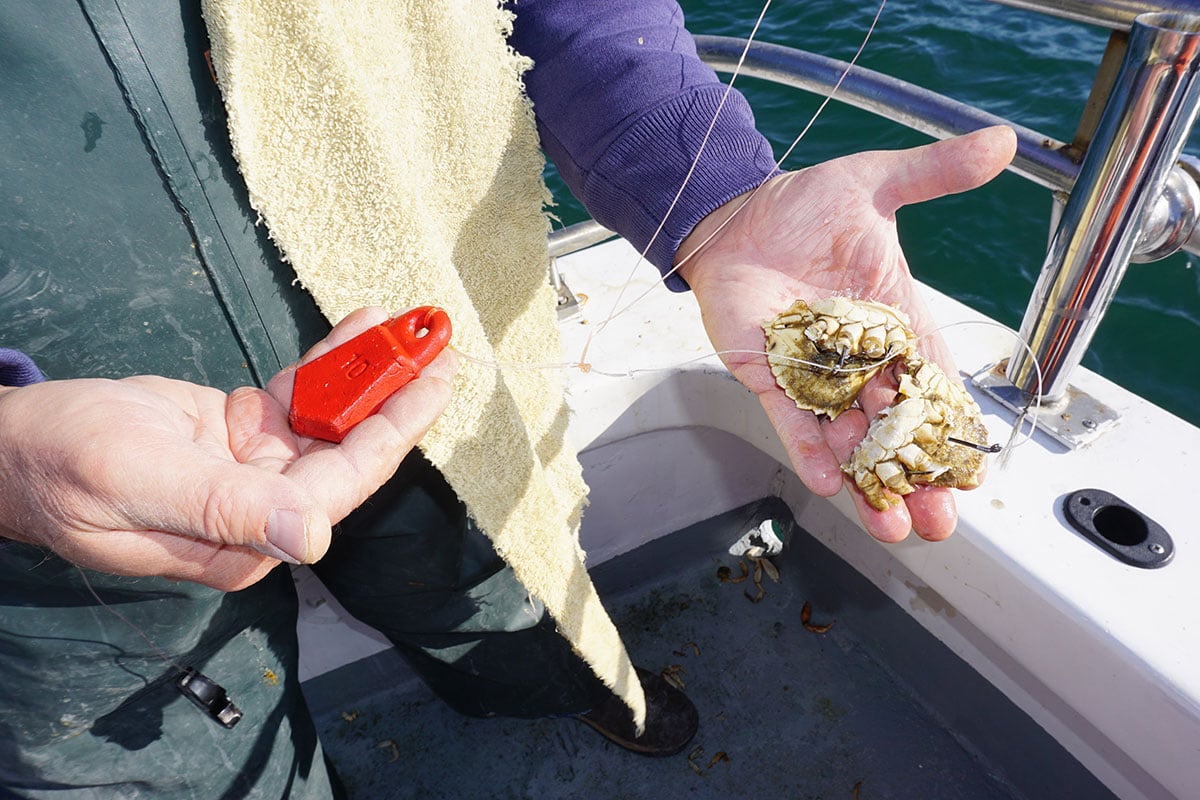
The Middle Grounds are particularly attractive because of their extensive hard bottom and varying depths. Anglers should concentrate on locating individual pieces of structure rather than assuming every section of rocky bottom will hold feeding fish.
Farther east, the waters surrounding Mattituck, Orient and Plum Island offer additional opportunities. Stronger currents can become a factor in these areas, making heavier sinkers and traditional bottom rigs necessary.
By late November, exploring structure in 50 to 90 feet can be worthwhile, although shallower spots shouldn’t be abandoned if they continue producing.
Along the South Shore, November blackfishing presents a slightly different situation. The bridges, inlet rocks and scattered structure inside the bays can continue holding fish, particularly during the beginning of the month. Areas around Jones, Fire Island, Moriches and Shinnecock inlets offer opportunities for anglers looking to fish relatively close to home. However, as temperatures drop, the ocean reefs and wrecks become increasingly important. The artificial reefs outside these inlets provide substantial habitat, with concrete rubble, rock and other materials attracting blackfish.
Captain Bob Schmitt from Sea Rogue Charters weighed in and said “while fishing shallow is best early in the season 30-50 foot depths, as November progresses, water temperature drops and the fish move deeper. Therefore I follow the fish by targeting deeper wrecks, rockpiles and reefs in 60-90 feet.” He additionally added “green crabs are my bait of choice early on when I’m fishing shallower, as the water cools and the fish move deeper, white leggers are the best bet for catching big tog.”
One important consideration is positioning. Many of these reefs contain numerous individual pieces, and setting up directly over a productive section can mean the difference between steady action and a slow pick. Making short adjustments or moving to another piece of structure can help anglers locate more active fish.
Montauk offers some of Long Island’s most interesting late-season blackfish opportunities. The rocky bottom surrounding the Point, along with deeper offshore structure, provides plenty of possibilities as November progresses. Areas around the Cartwright Grounds and other established hard-bottom locations south of Montauk become attractive options for anglers targeting larger fish. These deeper grounds can require heavier tackle, particularly when strong currents make holding bottom difficult.
The waters surrounding Fishers Island and the eastern Sound also deserve attention. Rocky bottom, substantial current and changing depths provide excellent blackfish habitat, although conditions can make positioning challenging.
November weather plays a significant role in this region. Strong winds and opposing currents can quickly turn a manageable trip into an uncomfortable one, making careful planning especially important.
Regardless of the region, November blackfishing requires flexibility. Anglers can begin by checking structure that produced earlier in the season but should be prepared to explore deeper areas when the action slows. Green crabs, white-legger crabs and traditional bottom rigs remain dependable options, while jigs can still produce under favorable conditions.
Anglers should also remain mindful of the different blackfish regulations governing Long Island Sound and the New York Bight. New York’s November recreational limits are three fish at a 16-inch minimum in the Sound management region and four fish at a 16-inch minimum in the Bight region.
Not every blackfish follows the same seasonal schedule. Some remain shallow longer than expected, while others settle onto deeper structure earlier. Paying attention to changing conditions, experimenting with different depths and adjusting presentations accordingly can help anglers stay on productive fish well into November.
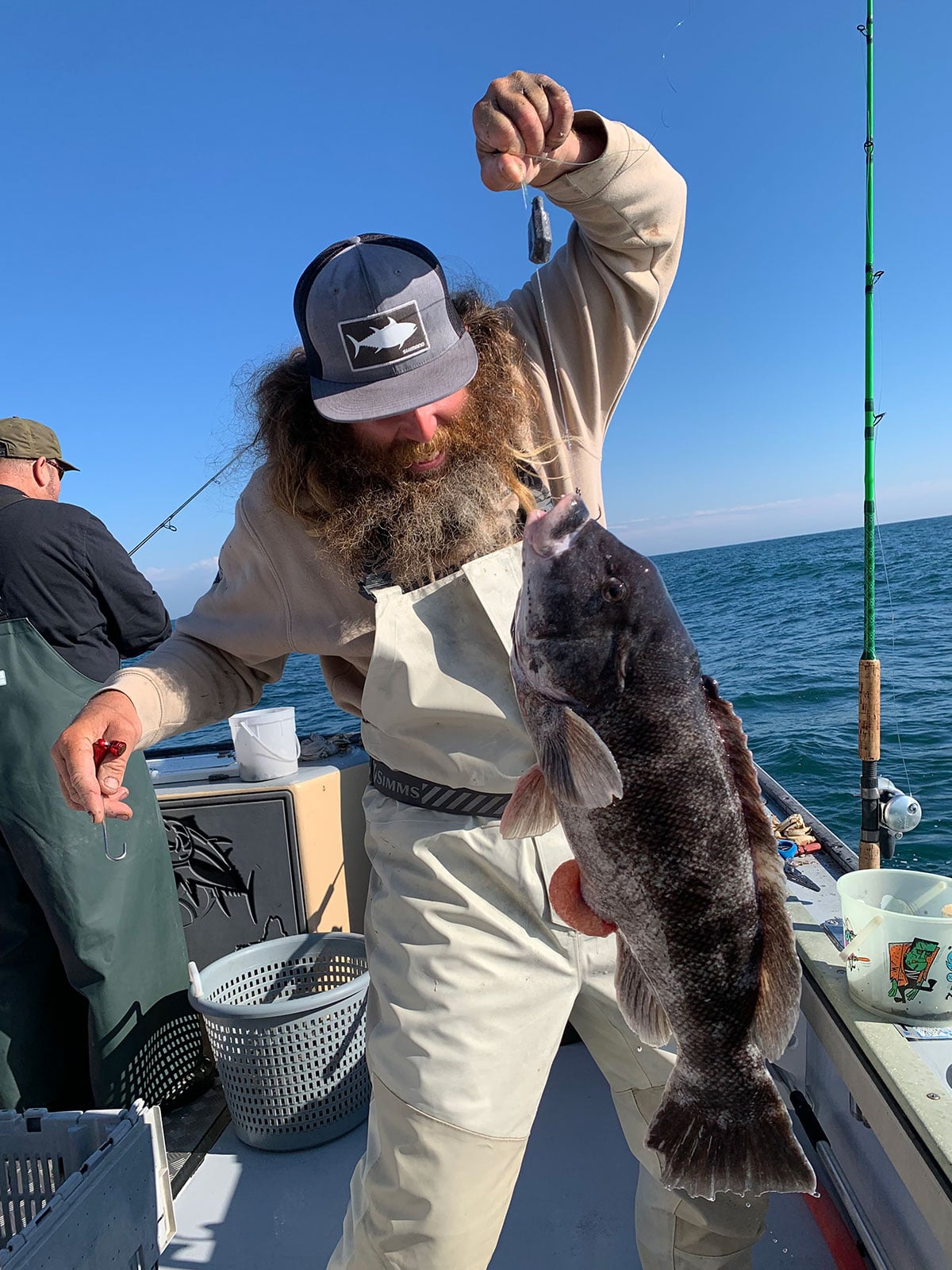
New England
Up here along the coast of southern New England, November finds the tog bite in a state of transition. While October whips New-Englanders into a tog-obsessed frenzy, especially with bag limit increases in Massachusetts and Rhode Island and the heralded October 10th opener in Connecticut, November consistently produces some of the biggest dinosaur blackfish we see every year. There’s something about heading out in November, the sunlight looks different, the water and sky reflect a lighter, colder blue and being bundled up, in that crisp air with the winter looming, it just feels like big blackfish time.
Most hardcore anglers and captains agree that once we get into waters and currents where more than 2 (some might say 3) ounces are required, the spinning rods and jigs are put away in favor of heavier conventional rods, various rigs and sinkers might be as heavy as 8 ounces, or even more. The early part of the month sees preferred depths crossing into 40-plus feet and may eclipse the 80-foot barrier by month’s end. Most anglers will use a simple two-hook “hi-lo” type rig, but in heavier current or in weedy conditions a single-hook rig is often favored because it creates less drag and is less likely to pick up debris. When targeting bigger fish with larger baits, or when the bite is cautious and baits are being regularly stripped, the Snafu Rig is a good one to have in your back pocket, this rig features two hooks rigged at either end of a looped leader and both hooks are typically put into the same crab.
I called upon some of the guys and gals that stay on the tog the longest across the region, one of them was Capt. Coral Aiello of Sara Star Charters. When asked some general questions about November togging she dropped some knowledge saying, “Here in Rhode Island, November is really about following the fish deeper as the water cools. Early in the month, I can still find a good bite in that 30- to 50-foot range, but as we get later into November, I’ll start working deeper ledges and wrecks in 50 to 100-plus feet. I love a shallow water jig bite and I’ll stick with it as long as the fish let me, but eventually I’ll transition to heavier tackle and more traditional rigs as we move deeper. Green crabs are my go-to for most of the season, but this is also the time of year when the fish show a preference for white leggers, they seem to out-perform greens when the water temps drop, especially when I’m looking for those bigger late-season fish. The biggest adjustment is being willing to move with the fish. You can’t keep fishing your October spots in late-November just because they were productive a few weeks earlier.”
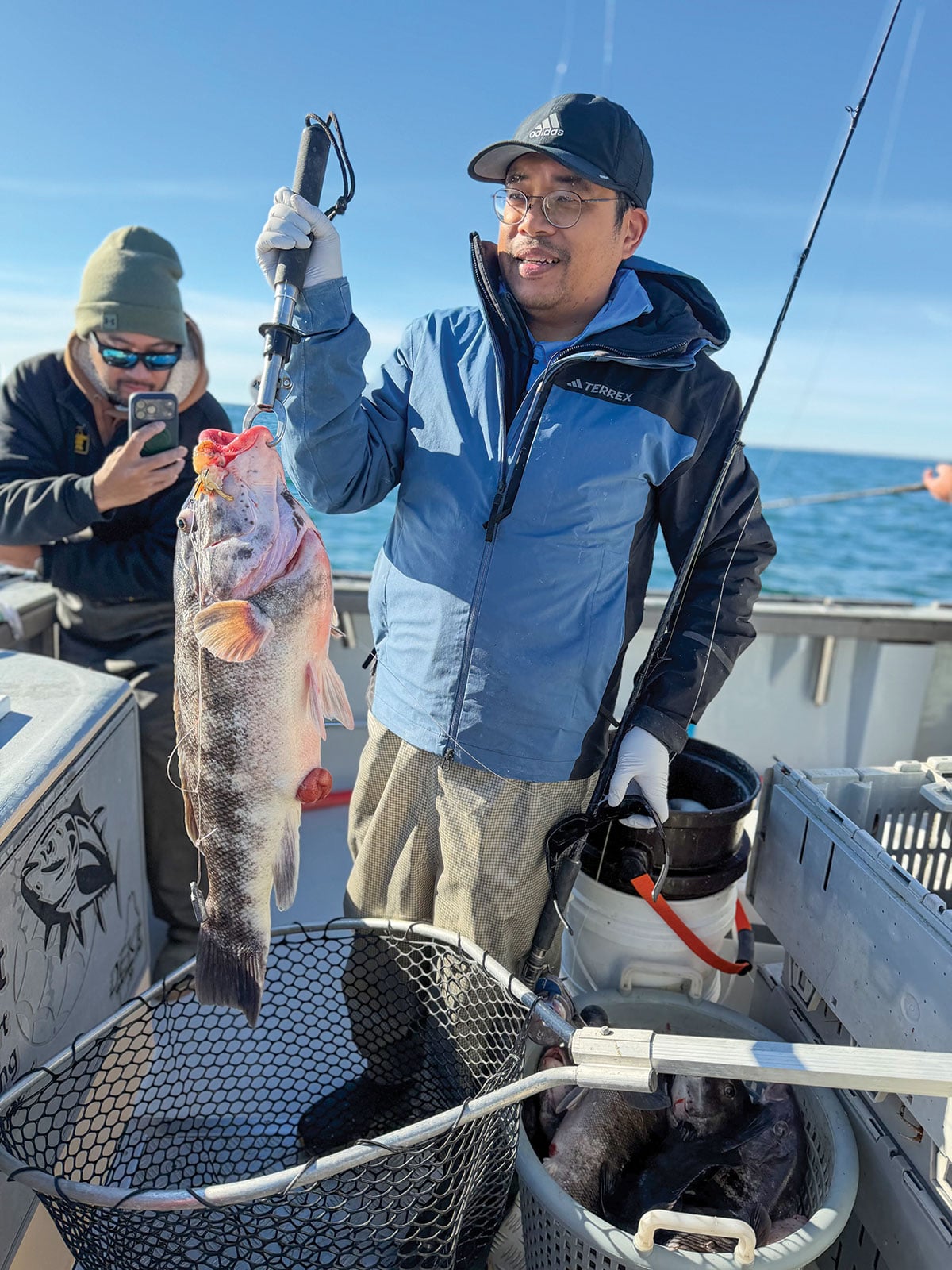
Sticking in Newport, Rhode Island, I tapped in my longtime friend and elite angler Capt. Robbie Taylor of Newport Sportfishing Charters. Robbie got technical with the late-fall bite. First he was quick to point out that the best fishing for big fish is behind us once we progress into November. “Don’t’ forget,” Robbie laughed, “the Rhode Island state record has been broken each of the last three Octobers. If you want a 20-pounder, late-October is your time.” One of those record fish was landed aboard Robbie’s boat, but don’t take that to mean that big fish aren’t possible in November.
“If you want consistency and bigger fish in November, you have to keep the sun angle in mind,” he began. “The sun rises east-southeast in November (~114 degrees) and only gets to about 30 degrees above the horizon as it travels across the southern sky before setting southwest (~246 degrees). In November the water is getting colder and any place where you have warmer water is going to fish better. Everything from phytoplankton to crustaceans to blackfish will be drawn to that temperature increase. You want to set up on the south side of your structure because that’s where that November sun will affect the water temp. This needs to be factored in with how you anchor, and where your baits are landing on the structure.”
Jumping over in to Westport, MA I called upon bottom fishing guru, Capt. Jason Colby of Little Sister Charters. He said, “Throughout November, as the blackfish march steadily into deeper and deeper water, they also concentrate into tighter and more aggressive schools so while ‘building the bite’ may be a good thing in September and October while the fish are more spread out, when it comes to November I give spots less time before moving on. In other words when the fish move off beyond 60- to 70-foot depths, you are either on them or you’re not, so if you’re not catching after 15 minutes, I say it’s time to move.”
Capt. Colby went on to stress the importance of staying on your chosen piece of structure, “I have been using a Minn Kota trolling motor for the past 8 seasons and it really helps when you need to make a lot of moves. A ‘spot lock gizmo’ allows you hit more spots and helps you feel more comfortable about moving around a lot and probing more places, in that you are not hauling 300-feet of anchor line every time you want to move. Ultimately, that equates to far more tog in the fish box each season.”