A look at some of the best lines for picking up largemouth and smallies.
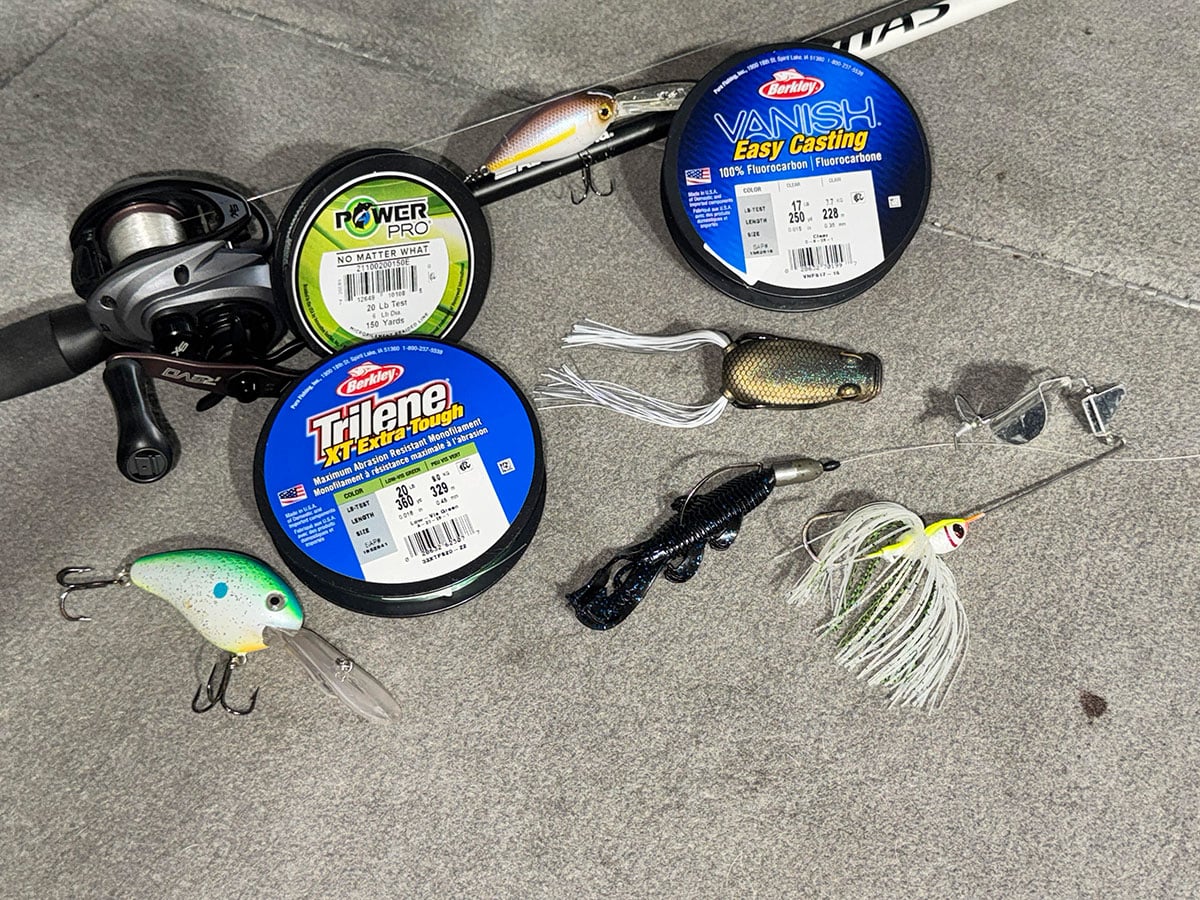
Every year I get anglers asking me what type of fishing line do I use when targeting largemouth and smallmouth bass. When do I use braid, why is mono better than fluorocarbon for topwater baits. Is fluorocarbon better for crankbaits or should I use braid? What about frog fishing, do you tie direct or add a leader? All of these questions relate to what type of line you should use with certain lures – braid, fluorocarbon or monofilament.
Without going into exact scientific data regarding the properties of each line type, what they are made of and so on, the issues you need to know are abrasion, strength, floating or sinking…and most of all, which works best with a certain style/type lure.
PROS
Braid: Floats, extremely strong for diameter, strength vs diameter
Fluoro: Sinks, abrasion resistant, minimal stretch
Mono: Floats, absorb shock by stretching which reduces thrown hooks
CONS
Braid: Extremely visible, specialized knots needed
Fluoro: Pricey, detail to knots is critical
Mono: High memory – line twists, harder hookset due to stretch.
So, which one and when? I use all three types of lines when I fish. Unfortunately, or fortunately, depending on who you talk to, I do not use forward facing sonar, so we will leave that and the newer TryPolymer out for this piece.
The lines I use daily when bass fishing are the three main ones. First up would be monofilament. Mono was always the line used before the others came about and became the “in” thing. I use monofilament on two applications – deep diving crankbaits where I am bouncing off shell beds, rocks and “break point” type structure. The strength and stretch aid when the lure catches sharp objects, while the stretch allows some give when a bass strikes aggressively. I also use mono is when throwing certain topwater baits; a buzzbait for example needs to stay on top, as does a Berkley Choppo and Bullet Pop. The Rico and Strike King poppers also work well with the floating monofilament. I also use mono as a long leader when throwing a walking style lure like a Zara Spook. For this I use a braid main line for casting distance, and mono to keep it on top.
Now, fluorocarbon became the go-to line for saltwater anglers searching out fish on the flats and species with keen eyesight due to its invisibility. On the freshwater side, fluoro became popular also due to its invisibility but while using finesse style jigs and soft plastics fished in gin clear water. Due to its sink rate, fluorocarbon is a great choice to get lures to various depths, just by changing line weights. There are times where I will have three rods rigged with the same crankbait – 1.5 KVD – and three different pound test fluoro lines to vary the depth.
The last of the three is braid, which now comes in so many different varieties and layers, anglers may have a tough choice deciding which one is best. In my opinion, I like the high higher strand braids as they cast better and will go through guides quieter. As for strength – come on guys – we are using 50-pound braid for bass that weigh 5 to 10 pounds! It is not the strength so much as the application. Braid cuts through weeds like butter and detects bites like the fish is a foot away from your tip.
On the negative side of things in freshwater, braid is highly visible so a leader may be needed, but not always. If I am using a topwater lure that is chugging along at a pretty good clip, I tie directly to the braid. If I am dropping it through cover I will always tie in a trace of fluorocarbon between 5 and 10 feet. Also bear in mind that when using braid, you do not need to spool up your entire reel with braid. Use a monofilament backing, then tie in enough braid to make your longest cast, plus a 25% cushion.
The bottom line is all three of the main lines available should be used when bass fishing. Think logically when choosing one, and use the pros and cons above to help decide which lure to use with which line. The older guys like me used nothing but mono and caught fish, but with today’s fishing pressure, any added advantage is a plus.