Hovering over an area sometimes produces better than covering a lot of areas.
Floating a river is useless without a mushroom anchor. At least it is for a couple of guys in a canoe.
Put that anchor down and linger. Allow spots the time they need for bass to get active that won’t hit at first. If you fish solo from a kayak instead, you might not need my advice, and some canoers will strictly go with the flow, though I doubt they’ll catch as many or as big. They might pull one or two bass from a spot that can yield a dozen, given patience and no more time spent than needed.
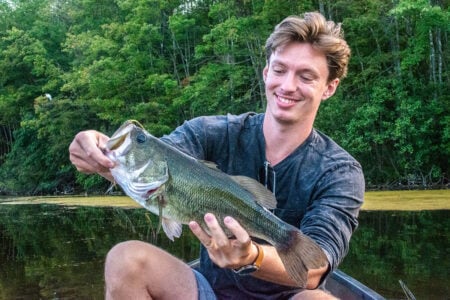
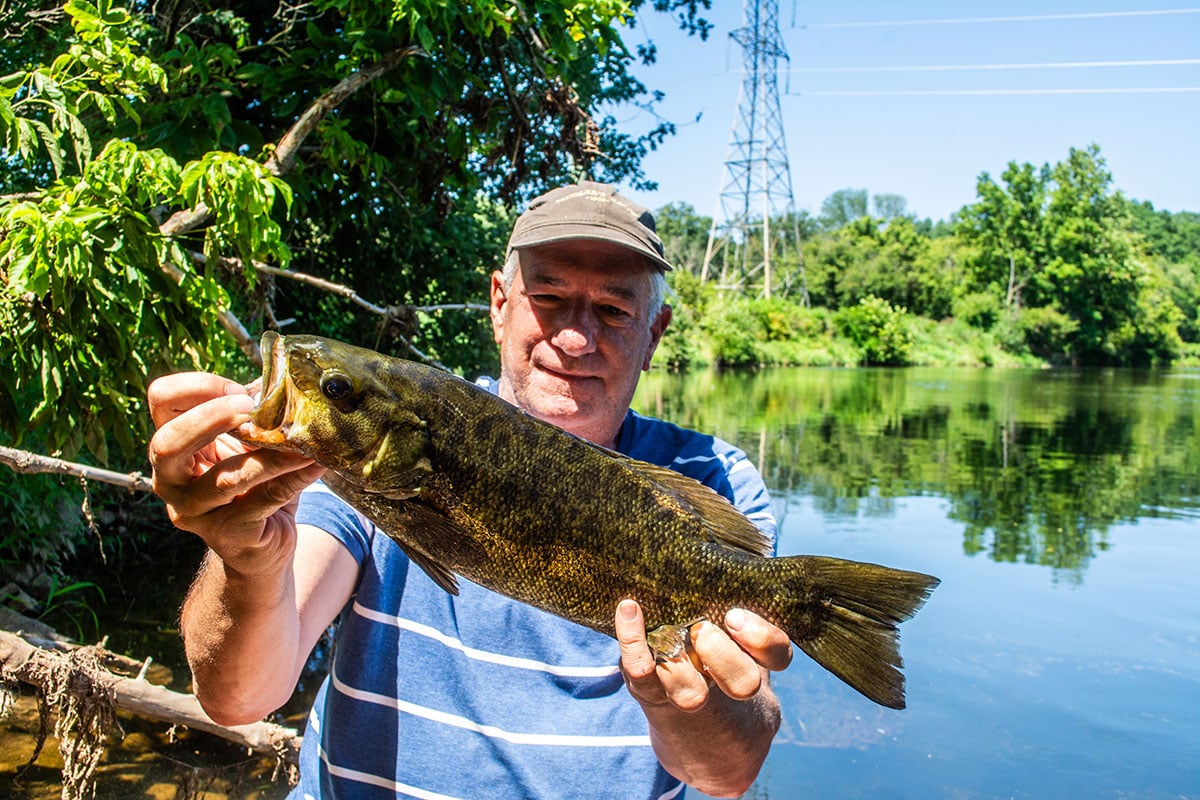
Catching a trout or two during the summer isn’t out of the question, either. Brenden Kuprel, who I floated with last summer, caught a rainbow the summer before. But he targeted smallmouths. On last summer’s float, he caught dozens of bass. They’re at their prime in August, whereas any trout that do get hooked might not survive the lactic acid buildup during the struggle on the hook. Although the rivers are often on the cool side, they’re not that cool.
To the contrary of my mentioning a dozen bass from a single spot, any of our rivers can seem barren when you get underway. I think of it as the need to settle into the river environment. It’s too easy for the current to make you feel like a kite in the breeze, and the bass you feel you’re blowing by – you are blowing by. But once you become a part of the river, you start finding bass that belong there even more than you do. You become aware of the river as being full of them.
That mushroom anchor is essential. I use 10 pounds, tied off at the bow. You don’t want any water over the stern. The need for an anchor will make itself clearly evident, when you realize you’re outpacing the number of bass you could catch. You paddle as best you can to get back into position, and down goes that anchor. Two or three bass from a spot seemed like a good number for the two of you, but my God! You’ve just caught a dozen and have more moving on to do than time can fill.
Isn’t it something that the rivers will always be known first for trout? Fishermen can park at a bridge and wade right into position. One guy fishing salmon eggs might catch 40 or 50 springtime rainbows right there at the bridge, while other guys are scoring big, too. One of them, let’s say, gets the urge to try for bass. August comes and he parks at the bridge and wades all around it for three hours. He even works his way upstream, covering the water meticulously for a couple hundred yards, but the only deep hole is right at the bridge. Anyone might offer him the hint that it’s pressured. To his credit, he catches one nine-inch smallmouth, but you can guess what he really believes after that experience. No, there’re hardly any bass in the river at all.
Just make sure to handle the fish with care and release them quickly. They’re hardy, and by the way they fight, you can tell they’re tough. Each deserves respect. Don’t wait too long before setting the hook when using soft plastics. As a rule, by the time you know a bass is on, it has the hook in its mouth.
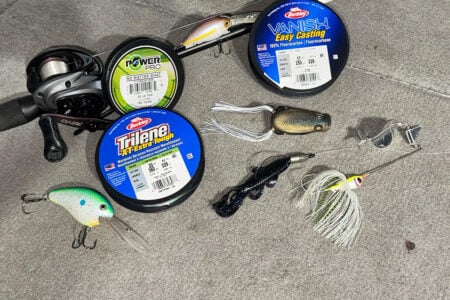
Plenty is published on what river bass take in the summer. Yum Dingers, Ned Rigs, jig and plastics of varying descriptions, topwater plugs early and late. Besides sometimes resorting to a jerkbait, I keep to that handful of options. And I prefer big, 5-inch Yum Dingers, especially in crayfish color.
Safety when canoeing is more for the camera, if you dare to bring along an expensive one. But seriously, you don’t want to get rolled and pressed by the weight of the river on your canoe, getting your head pinned against a rough-edged boulder. Even weirder stuff has happened, I’m sure. The best advice is to get out and enjoy the river—carefully.
So, to care for that camera, and a phone, keys, and wallet, keep them zip-locked. I zip with air left in the bag, arranging things in a small camera tote that also floats.