Get them now on the move before the summer heat really sets in!
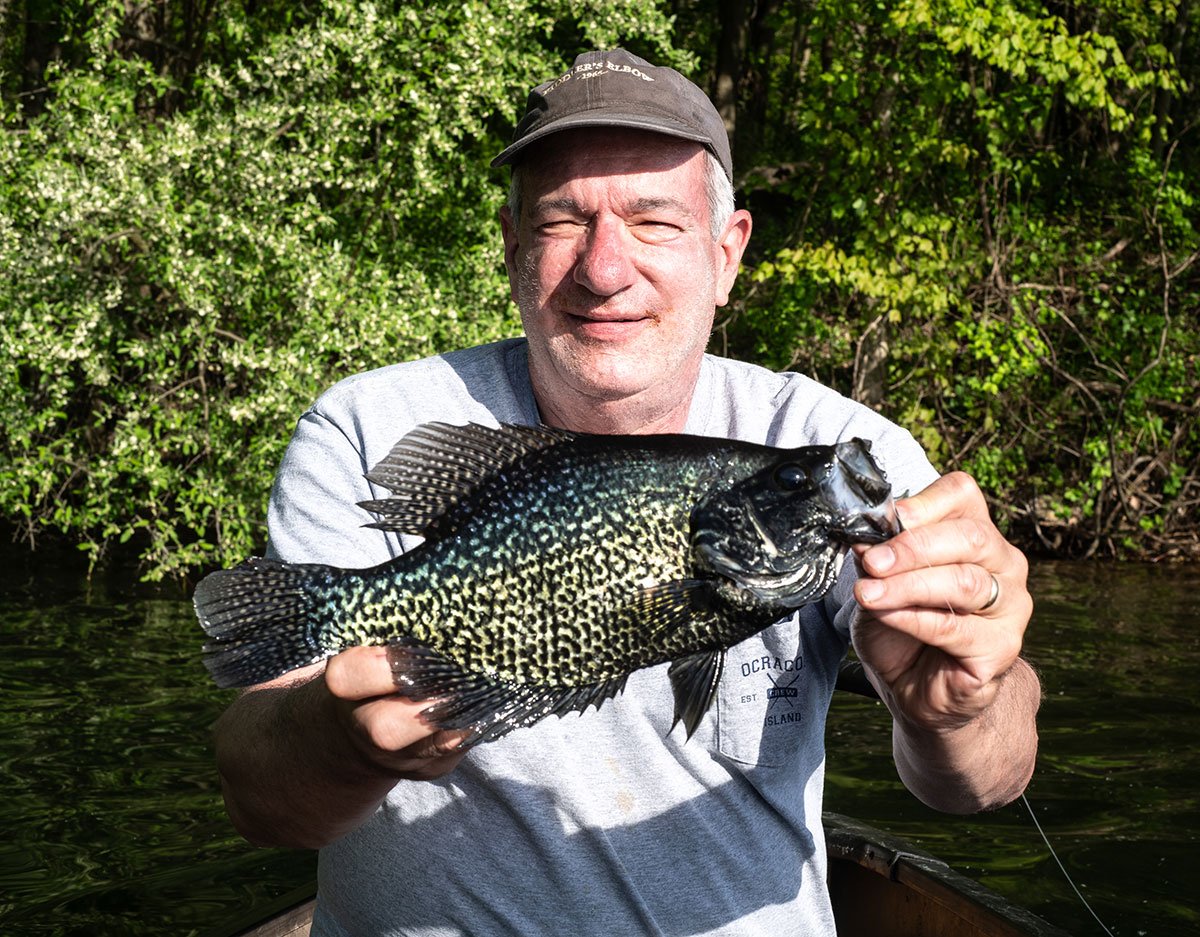
While trolling for bass and pickerel, our plugs got hit by plate-sized crappies. I fished during early June with Steve Slota and his son, Tommy, the three of us finding they inhabited a flat of 3- to 7-foot shallows, the weeds not fully grown. I fished the same flat 5 or 6 years later with Kevin Murphy, when I improved the game by scaling down the plugs. While I’ve caught 12- to 15-inch crappies on 4-inch jerkbaits and large shiners, little plugs an inch-and-a-half long seemed to make the difference in catching more plate-sized fish.
A couple of other kinds of spots hold crappies now. Some flats have weeds too thick to troll, but if you move along edges, you find big crappies. Another location, besides shallow flats that haven’t weeded-in thickly yet, are the weed-free shallows around the mouths of feeder creeks. Reservoirs and lakes have these spots, trolling them not difficult.
It can be done with a gas outboard or an electric, by a flatline approach with rod in hand, line following behind by about 25 yards. I advise using medium power spinning, fast action and the reel loaded with 10-pound-test braid. Tie a fluorocarbon leader of the same test onto the braid by uni-to-uni splice, and tie a small snap onto the terminal end, a little 18-pound-test snap is also about right. If you prefer to go lighter than I recommend, there’s always the chance of hooking a good bass or pickerel that you will need to maneuver past the weeds. When a fish does hit, throw the outboard out of gear or stop the electric to play that fish.
Whether gas or electric, keep the motor speed within the parameters of a moderate retrieve. Don’t hurry. Crappies just glom onto a plug, they won’t chase one down like a trout will. Sometimes you’ll feel a nip. A second later the fish is on. And if you hold the rod at a right angle to the gunwale, when you feel that nip, you can give line by moving the rod tip towards the rear and possibly tempt a take that wouldn’t have happened otherwise. It’s hard to say in advance what will work but pay attention. Then play with the presentation and experiment as attention suggests might help. Don’t overdo things like jerking the plug too hard.
Trolling can take all day, or be one technique among others, whether the outing is only for crappies or targets other species, too. Sometimes friends and I focused on trolling crappies across a weedy flat, and then we pursued trout, largemouths, and pickerel in deeper water. It can seem you take only what the lake’s willing to give you on a particular outing, but on reflection over decades of outings and more than 10 years of flatline trolling, I can confidently say it’s always the situation of the lake or reservoir giving what it will. And yet they only give because, despite mistakes, you give them your best.
You might suspect a nefarious thing or two when a lake is without give, but usually, the cause is normal. That includes fishing pressure. On the same lake where friends and I have done well for crappies, we tried unsuccessfully but trolled numerous pickerel, including a nice one, from another weedbed of the same depth. Although we’ve since caught perch where we caught the pickerel—no crappies yet.
Weeds anywhere this time of year attract forage. The reality of rapid weed growth is an ecological proliferation that amounts to crappies often being there from about 3 to 7 feet deep. Little jerkbaits can do the job, but the bite won’t last into summer. Now you can get by with having to pull weeds off the hook only every now and then, feeling grateful for the green stuff because you know it attracts fish. By July, it’s thick. I flatline for pickerel and bass during the summer with big diving plugs 10 and 15 feet down, collecting some of the green stuff from those depths, too, but I’ve never caught a crappie trolling during the summer swelter, though I’m sure someone could figure it out.
Get them shallow while you can! Fresh aquatic growth is an opportunity. It’s not enough to rule out success.