Why fishing deeper during the early spawn makes sense after a long, hard winter.
Most warm-water species will begin to hone in on certain areas after the long winter’s sleep and stay there; but the fact remains that these are still transitional fish that are constantly on the move to find food. With differing factors such as structure, water temperature, water flow, and especially their spawning urge coming into play, an angler has to be part detective to make sense of it all.
First clue is clarity; as the water begins to clear in your favorite fishing hole, the sunlight will penetrate further and deeper into the water column. This has the effect of promoting weed growth and creating the first cover of the season for fish that have been wandering the deep flats throughout the winter.
One of the first things that will happen at this time of year is that fish—particularly bigger fish—will tend to gather near deeper breaklines and drop offs, especially largemouth bass. This has the effect of grouping pre-spawn fish, making any strike or caught fish a big reason to stay where you are, slow things down, and work the area slowly.
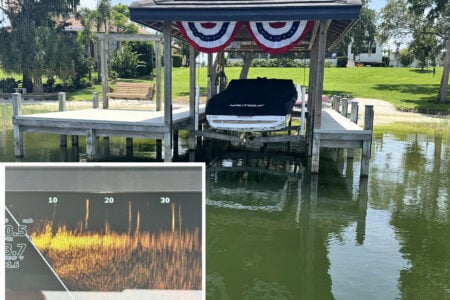
Rocks, boulders, and even sunken trees can be found in deeper water, even around dock areas since many lakes have drop-offs in depth right near the shore. All these types of structure have the ability to absorb the sun’s early-spring rays and give off the energy to the surrounding water. Fish will tend to use these areas to move up and down into shallower water so that they can begin their spring movements and still have warmer, deeper water to return to.
Largemouth bass can begin to spawn in waters as low as 55 degrees, whereas walleye and pike are ready in the 40s to the low 50s. Even at that, it’s not always about the feet of water where the fish might be staging, but it is as much about finding what the fish are relating to at this early time of the year. If you happen to be fishing unfamiliar waters, or are in the habit of re-establishing your home area for signs of fish, good electronics (especially with a temperature gauge) can make or break your ability to find fish that are still residing in deeper water.
As stated, sun penetration can cause weed growth which in turn attract insects and invertebrates. These are prime food sources for early season baitfish which are what your target fish will be honing in on.
Sure, fish at this stage of the season won’t be in a feeding frenzy yet, but all signs point to the fact that they need to build up their energy reserves for the task at hand: spawning. Since the forage that they will begin to feed on the earliest will be in the deeper water, it stands to reason that the fish will be there as well. These are generally simple to find and occur in places such as dock pilings, rocky outcroppings, stumps, and emerging weed beds.
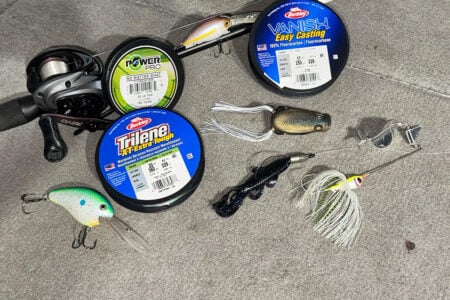
Early spring fish are still moving slowly and with care to save their energy, but they still need to feed to survive. Baits patterned after newly emerging crawfish or baitfish will always get the attention of fish that are foraging in the colder waters of early spring. As always, you will need to slow your presentation and remain patient as fish may see your bait multiple times before taking full advantage of it.
Look for bass in hiding in deep holes and side channels that will keep them hidden form people and movement. Walleye will begin to stage near flats or by the streams and rivers where they will begin their journey upstream to spawn. Both warmer and more oxygenated water can come from feeder creeks, so one great place to start your search will be on the downstream side of these flows.
Slower backwaters and eddies also give fish a resting area that will double as an ambush point away from the main current and other distractions such as boats or anglers wading.