August is primetime in our region for a little of that mahi magic!
As per the National Marine Fisheries Service (NMFS), the dolphinfish – aka dolphin, dorado or mahi-mahi – is fast-growing, prolific and has a short life span averaging just 5 years. Males grow faster and usually live longer than females.
The spawning season varies by latitude. Dolphin collected in the Florida Current spawned from November through July, and those collected from the Gulf Stream near North Carolina were reproductively active during June and July. Small females may spawn 240,000 pelagic eggs and fish larger than 43 inches may spawn several million. They are capable of reproducing at 4 to 5 months old, and are believed to spawn every two to three days during the spawning season.
Dolphin are attracted to Sargassum, a floating brown algae, which serves as a hiding place and source of food. Other sources of food associated with the Sargassum include small fish, crabs, and shrimp. Mahi-mahi (Hawaiian meaning “strong strong”) are top predators that feed in surface water during the day. They eat a wide variety of species, including small pelagic fish, juvenile tuna, flying fish, mackerel, invertebrates, jacks and pelagic larvae of nearshore, bottom-living species.
Mahi are also prey to large tuna, marine mammals, marlin, sailfish and swordfish, not to mention you and me!
Time Of The Season
August is one of the most interesting months on the annual fishing calendar for Mid-Atlantic and Northeast coastal anglers. As tropical Gulf Stream warm core eddies and filaments get blown inshore, the hitchhikers who ride this warm water current from down south usually follow the path of least resistance and venture into offshore, near-offshore and coastal waters off the Jersey Coast, the south shore of Long Island and southern New England waters. While here, these exotic gamefish pursue forage and establish temporary residency in some of the local areas near reefs, wrecks, rock piles, inlets and fathom curves.
Both inshore and offshore anglers benefit from these out-of-towners who are transients that are just passing through. The action can last throughout the month of August and well into September, before the tropical storm season takes hold and makes life miserable for all coastal residents, both anglers and fish. One of the most prolific and popular of these southern summertime transients is the mahi-mahi, also known by other names such as dorado (Spanish for “golden”), mahi and dolphinfish.
The existence of and the ability to locate warm core eddies and their spin-offs in local, near offshore and canyon waters is something that separates those crews that are bending rods from those other crews who are reading about it in the weekly report section. Finding these clean Gulf Stream warm core eddies near the edge of the continental shelf and breakaway filaments that filter inshore during the mid-summer months can really change your fishing Karma. These desirable waters can frequently harbor migrating pelagics, making for memorable fishing trips. The key to tracking and identifying the location and movement of these inshore and near offshore warm core filaments is an annual subscription to one of the satellite sea temp services. Look for the edges of conspicuous temp breaks that might vary from a half-degree to 3 or 4 degrees or more, depending on the types of water that are colliding and the time of the season.
Finding an attractive temp break over structure like a fathom curve, shipwreck, rock pile or a reef opens up a variety of angling possibilities. I have been using the Terrafin satellite sea surface temp subscription service for the past two decades and rely on it exclusively prior to every trip to identify and locate the water that I feel holds the most potential before planning my trip’s waypoints. Other competitive services offer similar capabilities, so check them out and get the one that you feel works best for your needs.
Dolphinfish Hangouts
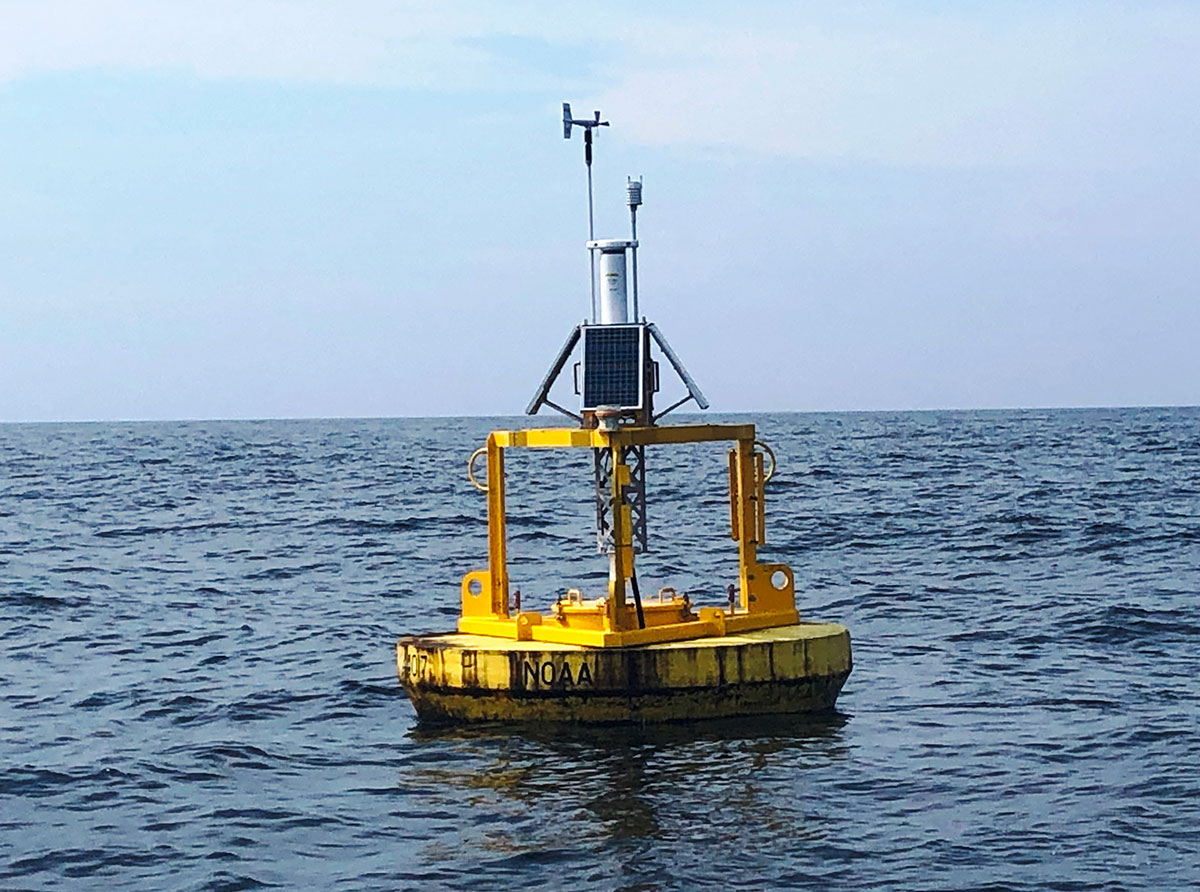
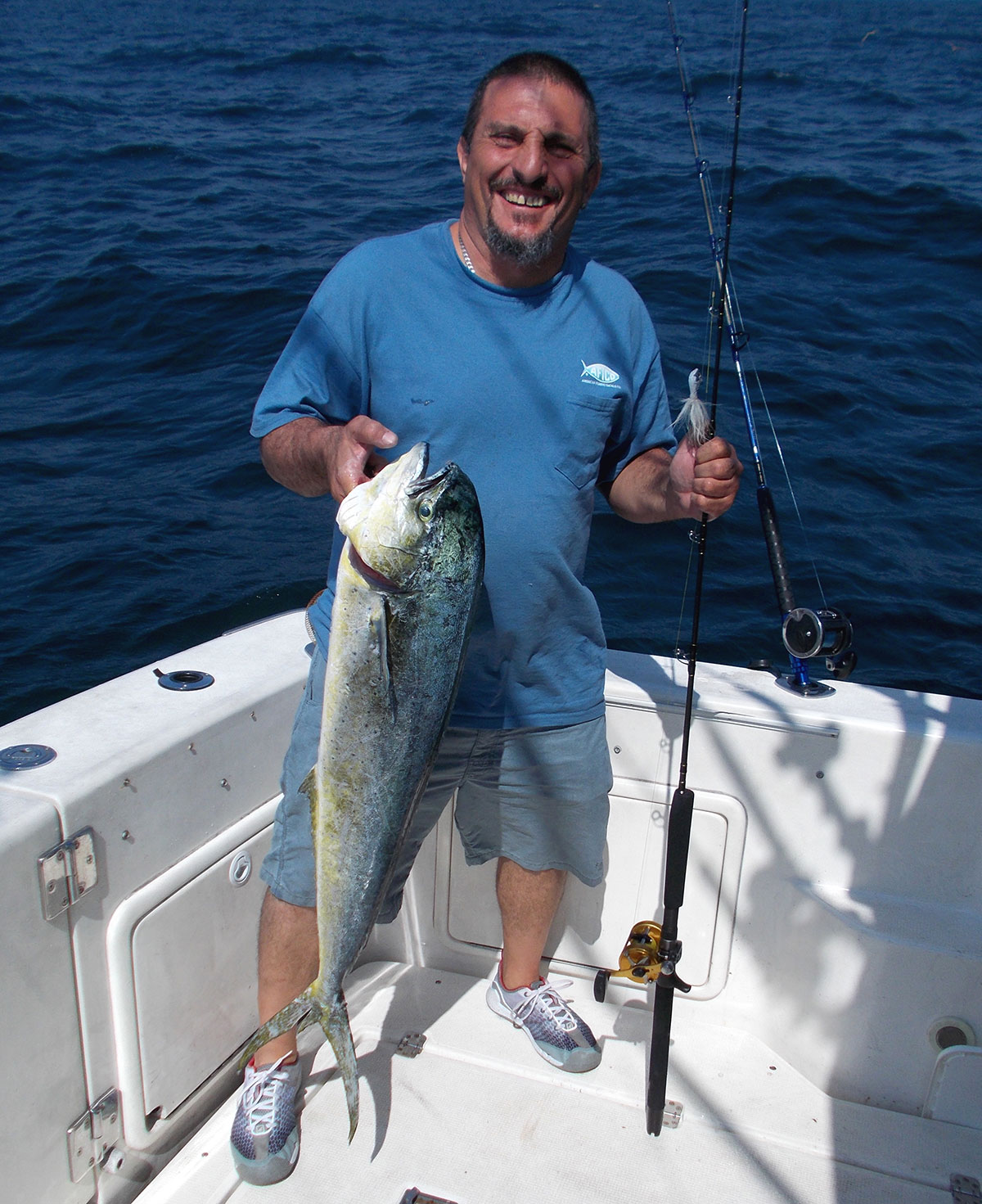
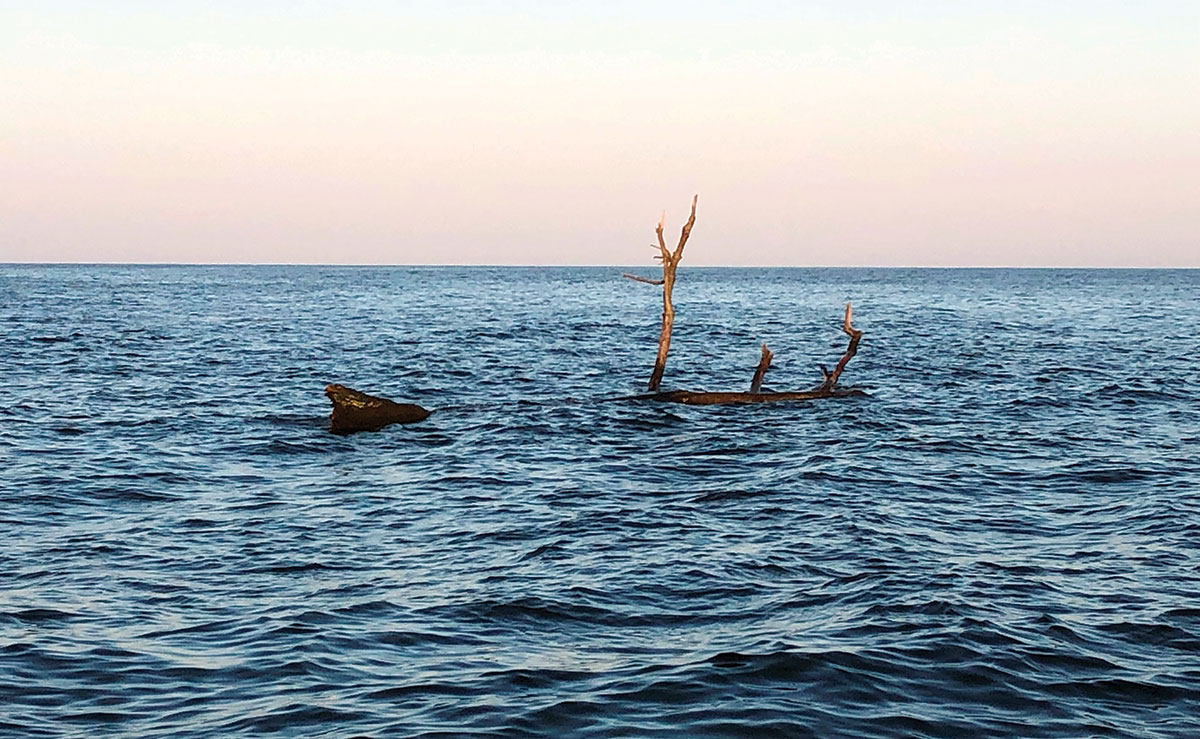
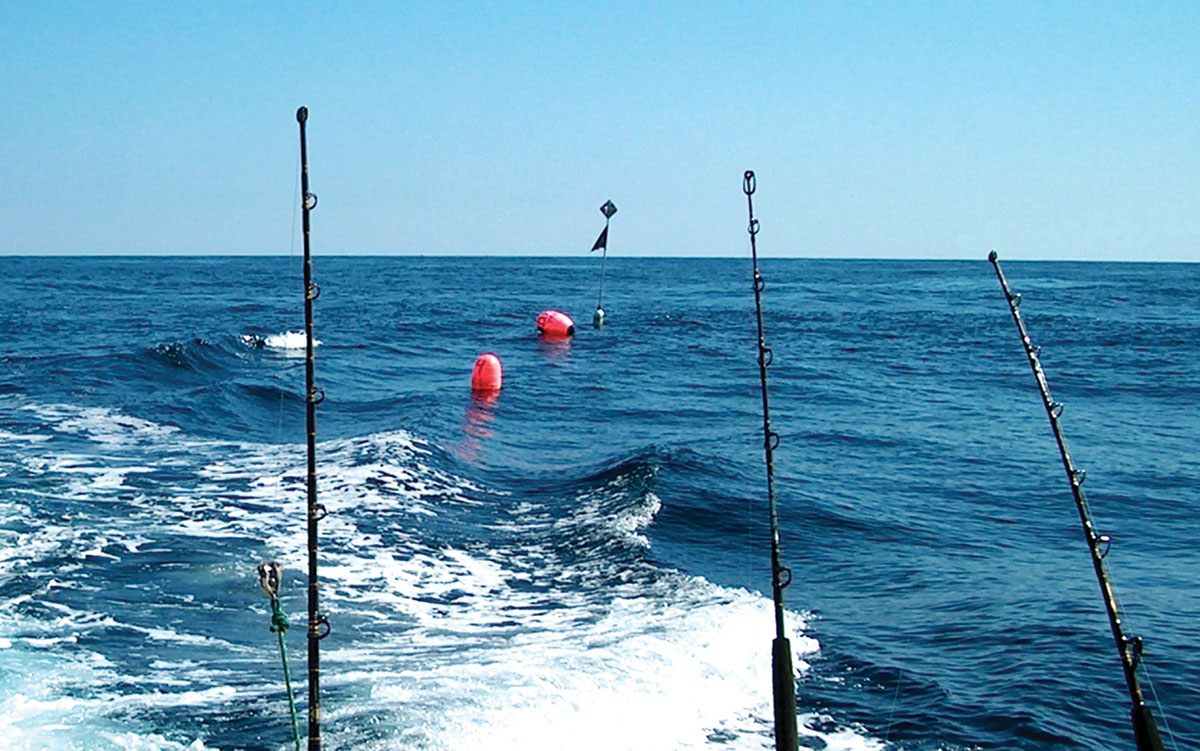
Most of us are familiar with the acronym “FAD” which is “fish aggregating device.” For the benefit of this discussion, I’m morphing that term into a word that I’ll describe as a “MAD” or mahi aggregating device. These MADs are floating objects on the ocean’s surface that can include a variety of items including wooden pallets, large clumps or long lines of Sargasso weed that are usually indicators of current edges or temperature breaks, floating trees or logs after a big storm, sea buoys or weather buoys; lobster pot balls and high-flyers, floating plastic buckets and just about any flotsam and jetsam encountered on the open ocean.
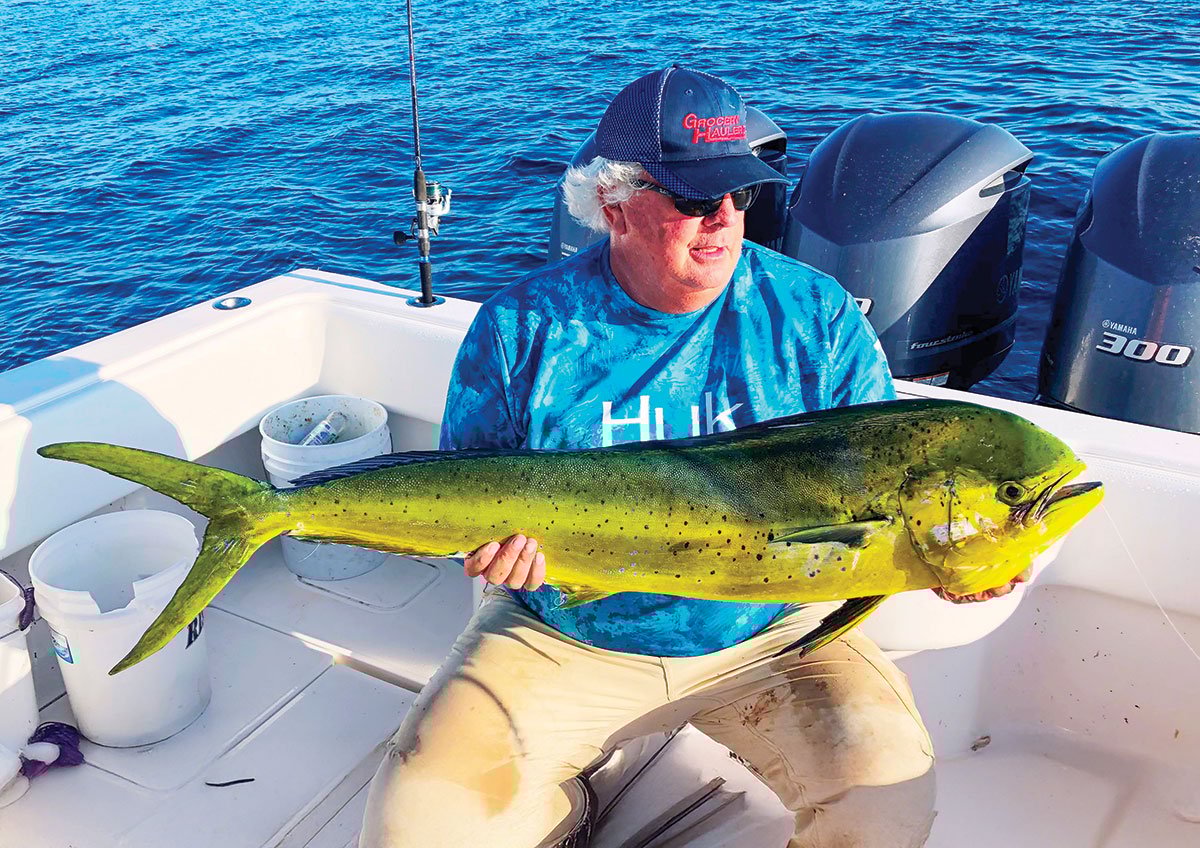
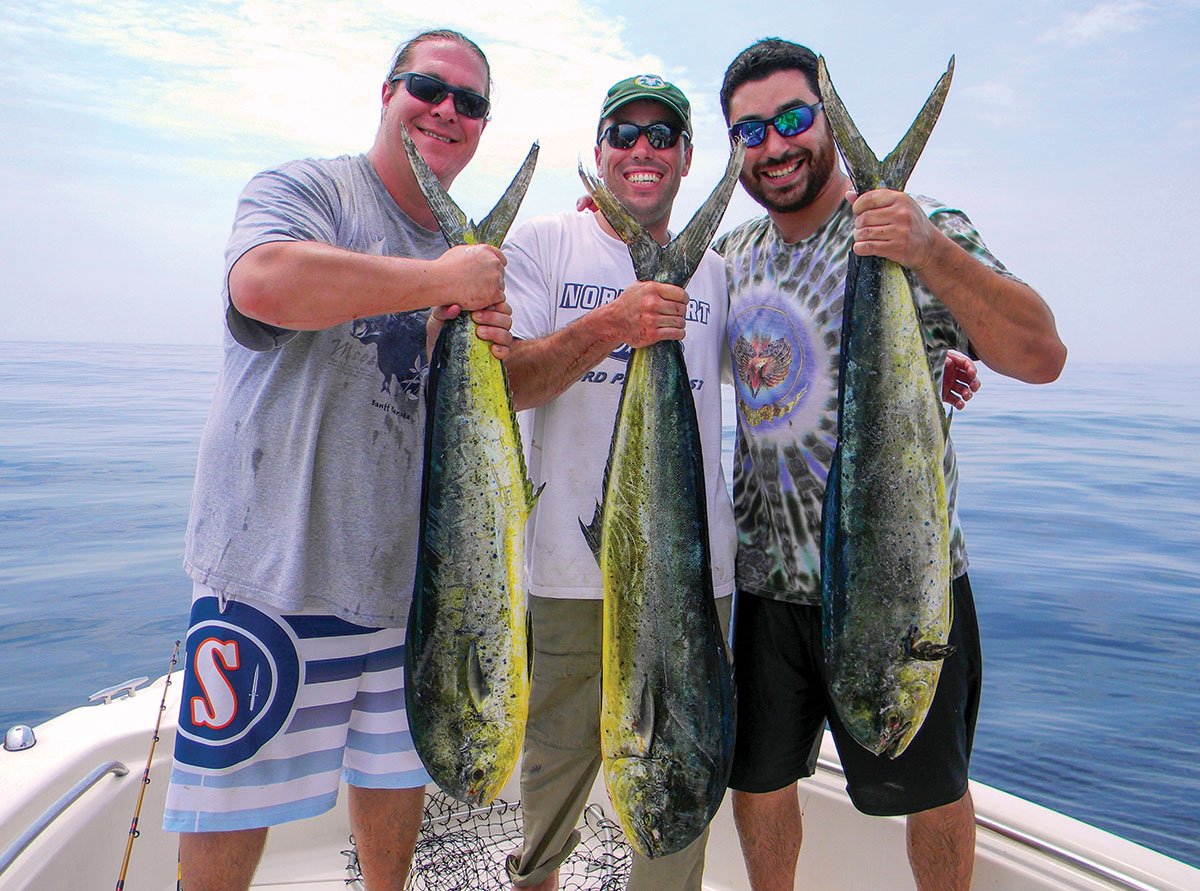
Dorado are a schooling, opportunistic pelagic fish that have the personality and aggressive attack attitude of a large wolf pack. The smaller ones from 2 to 10 pounds tend to swarm in dense groups of 30 to 50 individuals, while the larger specimens usually form into smaller clusters with eight fish to a dozen in a pod, typically dominated by females (easily distinguished by their rounded heads) with one or two dominant squared-headed alpha bulls in the mix. Any of the aforementioned MADs that are situated in roughly 80 feet of water (71 degrees and up) and out to the edge should all be given a look to see if anyone is home. It’s worth the effort and you might strike out a half-dozen times only to be rewarded on the next drop.
If some type of Mahi Aggregating Device is spotted by me or the crew, my #1 proven method for mahi magic is to operate in “stealth mode.” I execute this attack plan by approaching the object from about 50 yards upwind/upcurrent and then shut down the engine. When we’re within 40 yards of the target, I’ll set up in the bow of my 228 EdgeWater center console, grab my baitcaster or spinner armed with a pink, white or zucchini flavored 1-1/2-ounce SPRO bucktail and try to cast it within 2 feet of the stated objective. If I or one of my crew can put a cast on the money, if the fish are home, we’ll usually hook up right away.
As that fish starts coming towards the boat, that angler will rotate out from the bow to the side and another takes his place and we repeat this dance as long as it lasts. Throwing a handful of chunks (peanut bunker, butterfish, sardines, baby squid, etc.) or livies (killies, peanut bunker, snappers, spot) into the mix will usually incite a melee and that’s where the outfits armed with those 3/0 and 4/0 hooks will take care of business.
Other approaches to catching a cooler full of mahi include blind trolling in the right areas that feature 71-degree and over water with bird and/or bait life on the surface; repetitive target trolling near any of the aforementioned MAD hotspots like sea buoys, weed lines edges, floating trees and other flotsam; chunking near any of these hotspot areas, even if dorado are not spotted initially; keeping outfits ready to go when underway to/from the fishing grounds and dorado are spotted on the surface; keeping a sharp eye and a rigged bait ready when shark drifting in potential dorado waters, especially if a swarm does a quick reveal and drive-by.
Mahi Taming Gear
Your choice of tackle for pursuing mahi will vary, depending on whether you are inshore, near offshore, or at the edge of the shelf near the 100-fathom line. It’s always a good idea to have a pair of medium weight baitcasting rods ready to go, along with a few 4000 to 5000 series spinners, rigged with a darter, surface popper or bucktail jig. Summertime exotics like mahi are frequently targets of fleeting opportunity, so if something suddenly pops up within casting or chase distance from your boat, you don’t want to be fumbling through the depths of your tackle box or carry bags looking for a lure, swivel, jig, or whatever. You need to have your outfits of choice rigged, stowed in a rod rack and ready for immediate deployment.
For inshore/near offshore duties, heavy-duty baitcasters like the legacy Penn 955/965/975 Internationals and present day 200/300/400 Fathom reels, Shimano Calcutta 300-400, Abu-Garcia Ambassador or Revo, and the Daiwa Millionaire or Lexa models are all great choices. These relatively lightweight and smooth-as-silk reels allow an angler to work jigs through the upper and mid-water columns, plus retrieve a swimming plug or surface popper with ease. The good news is that you don’t have to worry about laying the line on your reel with your thumb like a metronome. The auto level-winds on these baitcasters will do the job for you, so you can concentrate on making your lure or jig as sexy as possible and keeping the line tight after it hits your offering.
If you’re a spinning reel fan, your choices of reels are almost endless, but for inshore work, 4000, 4500, 5000 and 5500-series spinners should have plenty of muscle to tangle with the toughest of dorado, even a stray cobia that might invade the party. The usual suspects like Penn, Shimano, Daiwa, Van Staal, Okuma, Tsunami and others offer dozens of options for inshore anglers looking to tangle with exotic summertime visitors. Match your favorite reel to a 6-1/2- to 7-1/2-foot fast action stick with some backbone and you’re in business.
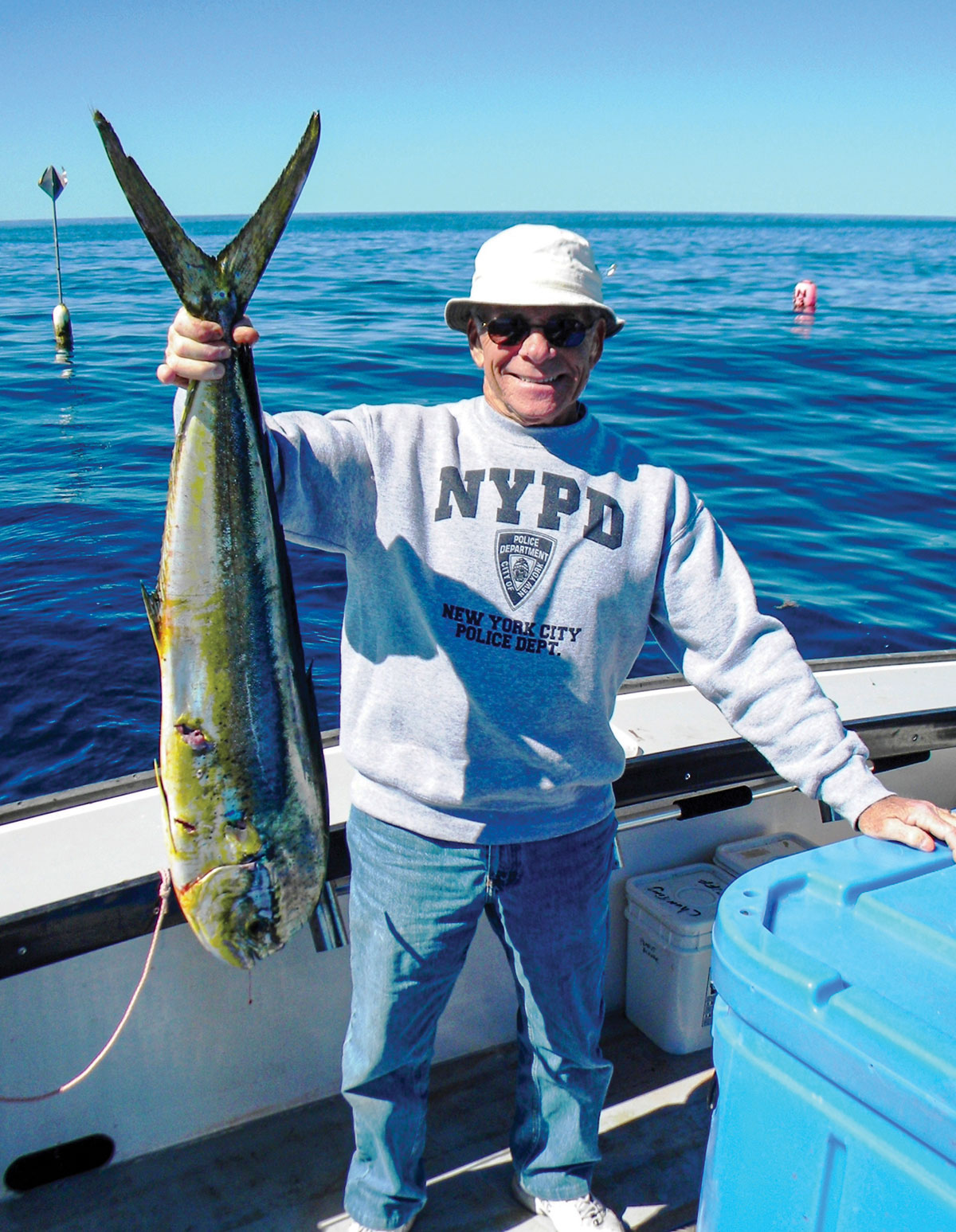
For offshore work, the same thinking for tackle applies, except that it simply grows one size larger. The dorado and other summertime exotics can be larger with considerably more muscle than the inshore chickens, so you might need a bit more line capacity and drag stopping power on your reel. One exception to this is pot hopping, working weed lines or the occasional flotsam for dorado. I have taken mahis up to 35 pounds with my trusty Penn 975 baitcaster and have converted many a “doubting Thomas” into a true believer over the decades aboard my MarCeeJay.
My three go-to outfits for just about all of my dorado escapades, inshore, near offshore and pot hopping on the edge, are:
- A Penn Rampage 6-1/2-foot jigging rod, 30-80 class, matched up to a Penn 975 baitcaster spooled with 30-pound braid with an 8-foot length of 40-pound Quattro, Berkley ProSpec fluoro or SPRO pink fluoro leader attached to a SPRO 1-1/2-ounce Prime bucktail in either pink or white. One well-placed cast to any type of potential surface structure holding dorado will typically elicit a strike and they’ll try to rip the rod out of your hands.
- A 6-1/4-foot Tsunami Sapphire XT Pro 15- to 30-pound spinning rod mated to a Penn Battle IV 4000 DX reel spooled with 275 yards of 20-pound braid, attached to a 15-foot topshot of 40-pound Quattro Plus four-color camo, Pink ProSpec or SPRO fluorocarbon leader. This outfit is ideal for both inshore and near offshore duties, adorned with a proven SPRO 1-1/2-ounce bucktail. I’ll also equip a second similar outfit with a 3/0 short shank 2X J-hook like those from Mustad, Gamakatsu, Owner, etc. to toss a chunk bait or livie.
- When heading towards the edge to work the high-flyers and other possible floating structure, I’ll gravitate to a stepped up spinning outfit like either a Penn Battle IV 5000 DX (25 pounds max drag/30-pound braid) or a Slammer IV 5500 DX (40 pounds max drag/40-pound braid) reel with a 15- to 20-foot stretch of 40-pound fluoro topshot. I will attached either one of these spinners to a Shakespeare 6-1/2-foot Tiger Elite 50- to 100-pound spin jigger, which can easily handle outsized 20- to 40-pound mahi as long as you stay buttoned up during what will certainly be a drawn out argument, replete with myriad mad dashes and acrobatic jumps. Like with the smaller spinners, I often bring a pair of these along for the ride offshore, with one attached to a bucktail and the other tied to a simple 3/0 to 4/0 short shank J-hook for flipping either a butterfish chunk or live bait to a pod of hungry dolphinfish.
Followers, Or Fear?
Once you have the first dolphin of the school on the line and you are working it towards the boat, what’s the next step? The historical axiom that many folks have repeated ad nauseam has always been to “keep one in the water to attract the others to come closer to the boat.” It’s been my experience that this is a false prophecy or fake news, so let me explain.
Dorado are one of the ocean’s most colorful creatures and they display their various moods with their chameleon-like hue changes. Like the white and blue marlin that patrol the offshore lobster pots and prey upon unsuspecting mahi, dolphinfish light up in neon blues, greens and yellow/gold colors when they are excited and in agitated attack mode. The one color that totally shuts down the party is when a terrified member of the school flashes the dreaded silver distress signal or danger warning color and the entire party comes to a screeching halt.
| DOLPHINFISH REGS |
| According to the South Atlantic Fisheries Management Council, effective May 2, 2022, the recreational vessel limit for dolphin was set at 54 fish (excluding head boats). A 10-dolphin per-person per-day recreational bag limit is in effect for all recreational vessels (private, charter vessels and headboats). Dolphinfish must be landed with head and fins intact. A minimum size limit (usually 22 inches) only applies in waters off Florida, Georgia and South Carolina. |
When that “emergency button” is triggered, the tribal members immediately shut down the feed, hunker down into a tight defensive school and become virtual ghosts, disappearing into the depths. When that happens, your best shot at future mahi action is to pull up, head off to another pot or hunting ground to try your luck.
The fatal fallacy of keeping one “swimming around the boat” is that as soon as that fish senses that something is not right and flashes that silver warning sign, the feed will shut off. Best advice is to keep on bailing them by throwing bait and/or chum into the water when they are excited and hitting bucktails and hooked baits with a reckless abandon for as long as it lasts.