Boat control is everything—dial in your drift and the fluke will follow.
Fluke fishing has a way of humbling even experienced anglers. You can have the right bait, the right rig, and be sitting over productive bottom—yet still struggle to put together a steady catch. More often than not, the missing piece isn’t what’s tied to the end of your line. It’s how your boat is moving over the fish.
Drift control is the backbone of successful fluke fishing, especially across bays, inlets, and nearshore ocean structure. Whether you’re working the sandy edges, sliding along a channel, or picking apart deeper water outside, your ability to manage speed, direction, and positioning will make or break your day.
At its core, fluke fishing is about presenting your bait or jig naturally along the bottom while covering productive ground. That means maintaining consistent contact without dragging too fast or hanging up every few feet. In most situations, the ideal drift speed falls somewhere between 1/2 and 1-1/2 knots.
Too slow, and your presentation loses life. Bucktails won’t flutter, bait rigs sit lifeless, and you’re not covering enough water to find active fish. Too fast, and your gear skips across the bottom, blowing past strike zones and reducing your ability to detect bites.
Your drift is dictated by three main factors: wind, tide, and boat setup. When wind and tide are moving in the same direction, you’ll often get a clean, manageable drift. When they oppose each other, things get tricky—and that’s where adjustments come into play.
One of the biggest mistakes fluke anglers make is setting up a drift without thinking about where it will take them. Before dropping lines, take a minute to study your chart and drift path. Identify structure—edges, humps, depressions—and plan a drift that carries you across those zones, not away from them.
For example, if you’re targeting a channel edge, you want your drift to slide along that drop-off, not perpendicular to it for two seconds before you’re off into dead water. The same goes for wrecks, rock piles, or mussel beds. A well-planned drift keeps your baits in the strike zone longer, dramatically increasing your chances.
Once you’re on a productive line, controlling your speed becomes the next priority. This is where tools like drift socks (sea anchors) and your engine come into play.
A drift sock or trolling motor is one of the simplest and most effective ways to slow your drift, especially when the wind is pushing harder than the current. Deploying one off the bow or side of the boat creates drag and stabilizes your movement, allowing your rigs to stay in the strike zone longer.
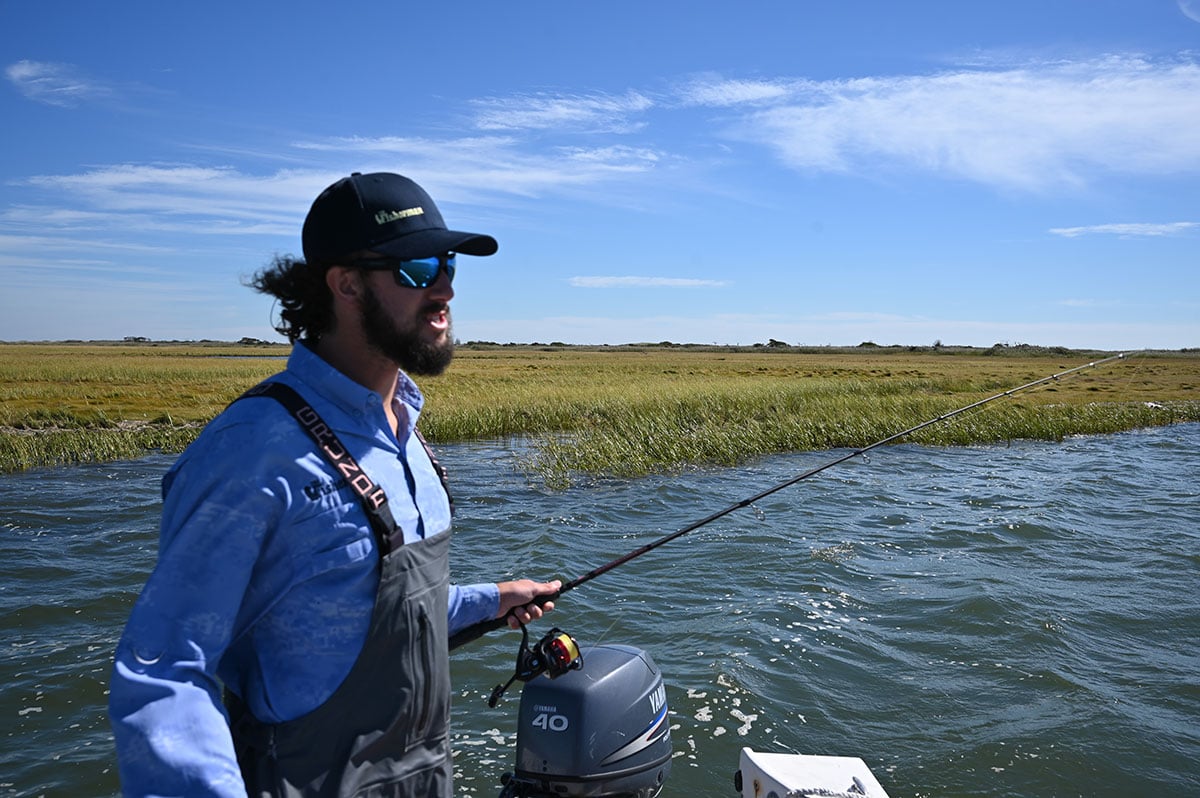
In lighter conditions, or when you need fine adjustments, your engine is your best tool. Bumping in and out of gear—what many call “feathering the throttle”—can help you stay on a piece or maintain that ideal speed. Modern trolling motors have taken this to another level, allowing anglers to hold precise speeds and even repeat exact drift lines with GPS anchoring and track features.
The key is to stay engaged. Don’t just set a drift and hope for the best. Watch your speed, monitor your line angle, and make constant adjustments.
Your fishing line tells you everything you need to know about your drift. A near-vertical presentation usually means you’re in the right range—your jig or sinker is staying close to the bottom with good control. If your line starts scoping way back behind the boat, you’re moving too fast or not using enough weight. If it’s straight up and down with no movement, you may be drifting too slow or not imparting enough action. Pay attention to how your rig feels. You should be tapping bottom consistently—lift, drop, contact. That rhythm is critical. Lose it, and you’re no longer fishing effectively.
When you find fish, don’t leave them. It sounds simple, but many anglers fail to capitalize on a good drift. If you pick up a few keepers or get multiple bites in a short stretch, mark that spot and reset your drift to run the same line again. This is where GPS and chartplotters shine. Drop a waypoint or track your drift path so you can duplicate it. Often, fluke will stack in small areas, especially around structure. A 50-yard stretch can be the difference between a slow day and a limit.
No two days are the same on the water. Wind shifts, tide changes, and boat traffic can all impact your drift. The best fluke anglers are constantly adapting—changing drift direction, adjusting weight, repositioning on structure, and experimenting with speed until they find what works. Some days call for covering ground quickly to locate fish. Others require slowing everything down and picking apart a small zone. Staying flexible is key.
Fluke fishing isn’t just about what you’re using—it’s about how you’re fishing it. Mastering your drift can push your average results into consistent success. It keeps your bait where it needs to be, improves bite detection, and allows you to fully take advantage of the structure and conditions in front of you. Dial in your boat control, and you’ll quickly realize something: the fish were there all along. You just needed to drift over them the right way.