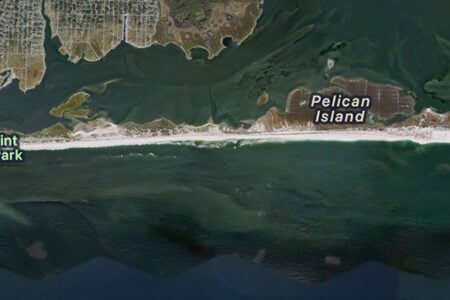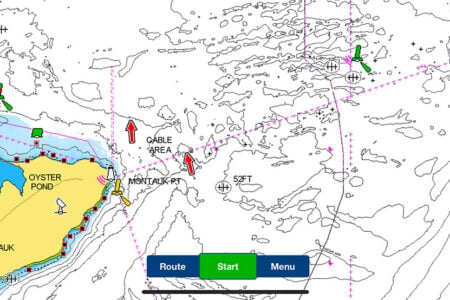
Located two miles west of Moriches Inlet along the south side of Moriches Bay is Great Gun Beach. For as long as I can remember, boaters have tied up along the transient dock for the day or overnight, with families and couples sleeping on their boats while enjoying the pristine waters of the Atlantic during the day.
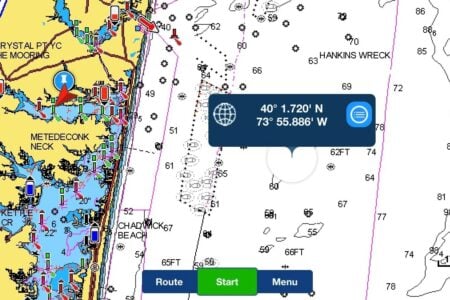
Unless you’re familiar with the tides and surrounding flats, there is really only one safe way in and out by boat. That route is to head directly south of buoy 14 until you see the green and red spear buoys, which are placed by the Coast Guard Auxiliary for the Riverhead Township. These markers line the dredged channel that leads boaters safely into and out of Great Gun Beach. The channel holds at least six feet of depth and offers exceptional fluke fishing from June through early October.
In addition, kingfish and blowfish are a huge bonus during September and October, with the duo usually hanging around until the first week of November. Just like flounder fishing, it’s best to use long-shank Chestertown hooks, size 8. The extended shank helps prevent blowfish from biting through the leader—something that happens frequently with short-shank hooks. Chestertowns also work perfectly fine for kingfish.
As for bait, sandworms or bloodworms are top choices. However, if worm prices are a bit steep, squid and clam strips will also produce. Blowfish, after all, will eat just about anything—including raw chicken. Anchoring and chumming along the channel edges during either tide can put plenty of tasty meat in the box.
When it comes to fluke, bucktails tipped with Gulp or Fishbites will get the job done. But when blowfish are thick, they’ll bite through everything—including the hair on your bucktails. The only solution is to move in front of the transient dock and just east to the area known as “the Drain.”

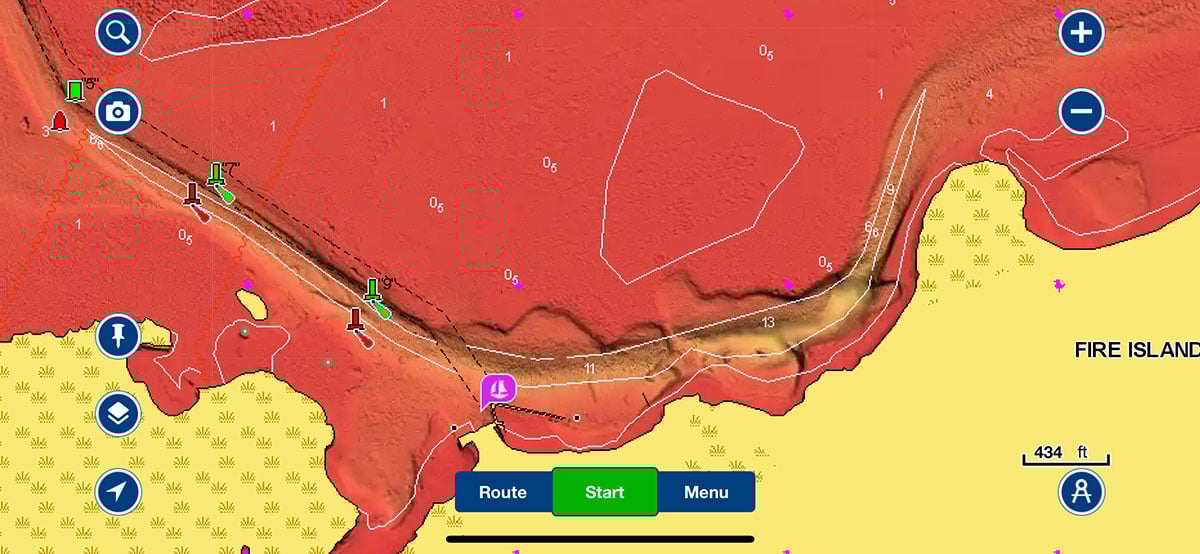
The Drain consists of a muddy bottom in 10 to 25 feet of water. Some big fluke in the 6- to 8-pound class settle here throughout the summer and early fall. The Drain runs west to east, beginning in front of the transient dock in 8 feet of water, dropping to 25 feet as you travel east, then rising sharply to 6 feet. There’s a large sandbar just north of the drop and a shallow bank to the south, so approach this area with caution to avoid running aground.
The best tide to fish the Drain is during the outgoing tide. Start your drifts in front of the dock and end them as you reach the 6-foot shallows. Fluke will often lay along the edges of the drop-off or right in the deeper water. Spro one-ounce bucktails in white or glow, tipped with a squid-and-spearing combo or a white Gulp, will often outfish all other offerings.
Occasionally, you may find small striped bass in the Drain, particularly during spring and fall. Swim shads or paddle tails will do the trick in these conditions.
Next time the fluke bite gets picky inside Moriches Bay, head to my “when all else fails” spot in Great Gun Channel. You just might be surprised with an 8-pound fluke on the line.