You don’t have to break the bank on a professional grade smoker for professional grade smoked fish.
Seafood markets are like bait and tackle shops to me. When I buy an SP Minnow, I still look around the entire tackle shop, since there’s a good chance I just may need something else; and after buying some lobster bisque in my favorite seafood outlet, I just had to see what else the counter offered.
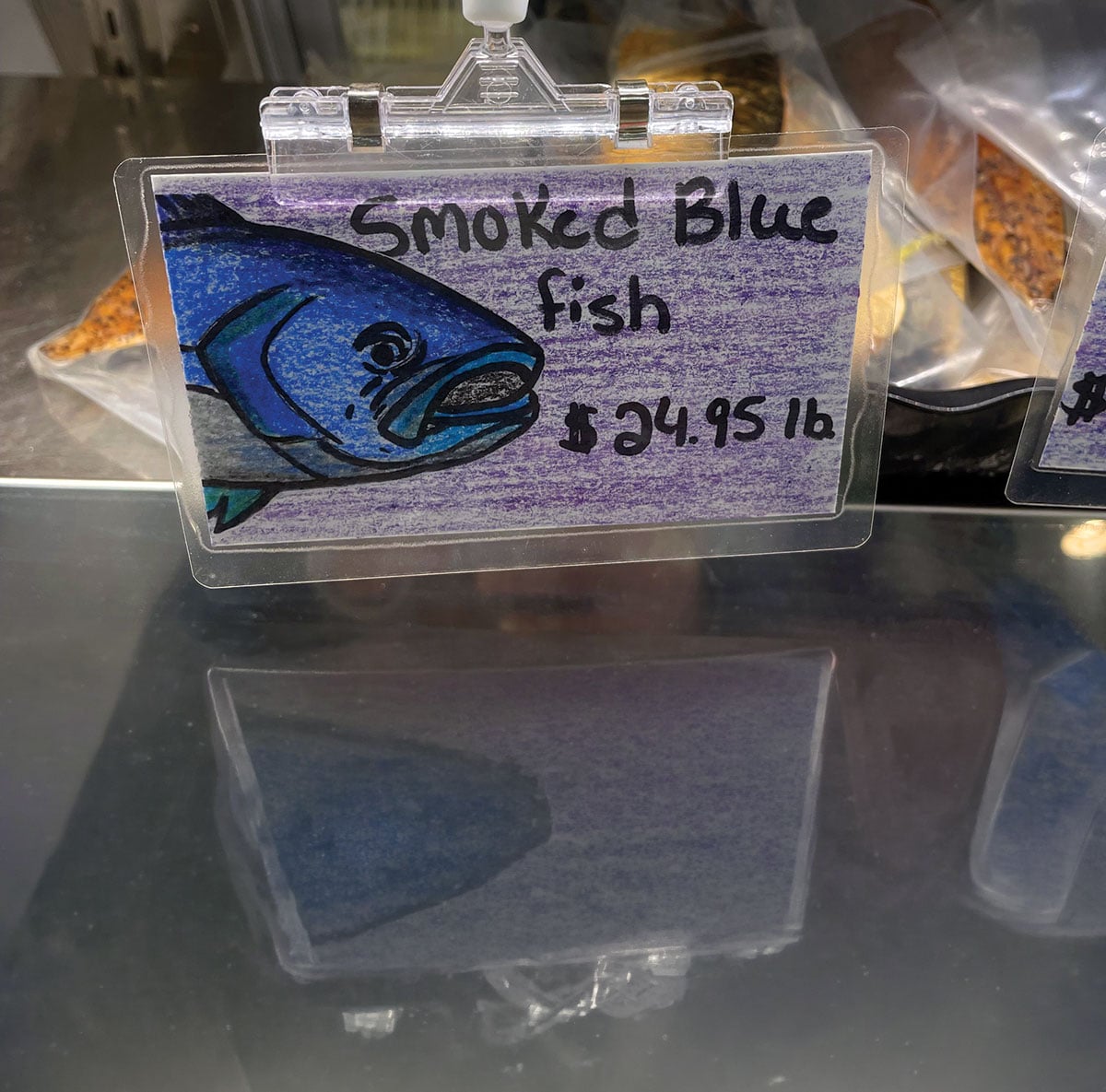
On my last trip to the fish monger, there it was, right there on the top shelf; the deal of the day, smoked bluefish, only $24.95 a pound.
What? Seriously, that’s a prime, sushi-category price for a fish most anglers bash as seafood fare! Yes, it’s passable when fresh-grilled, and most anglers say “blues are great when smoked.” So the difference between dockside-fresh and seafood-counter smoked bluefish has got to be in the processing, right? Few have tried tasting smoked bluefish, let alone smoking it themselves; after all, you need an expensive, dedicated smoker, it takes 12 or 14 hours of constant temperatures and monitoring, and so on. But let me just say, that’s not true!
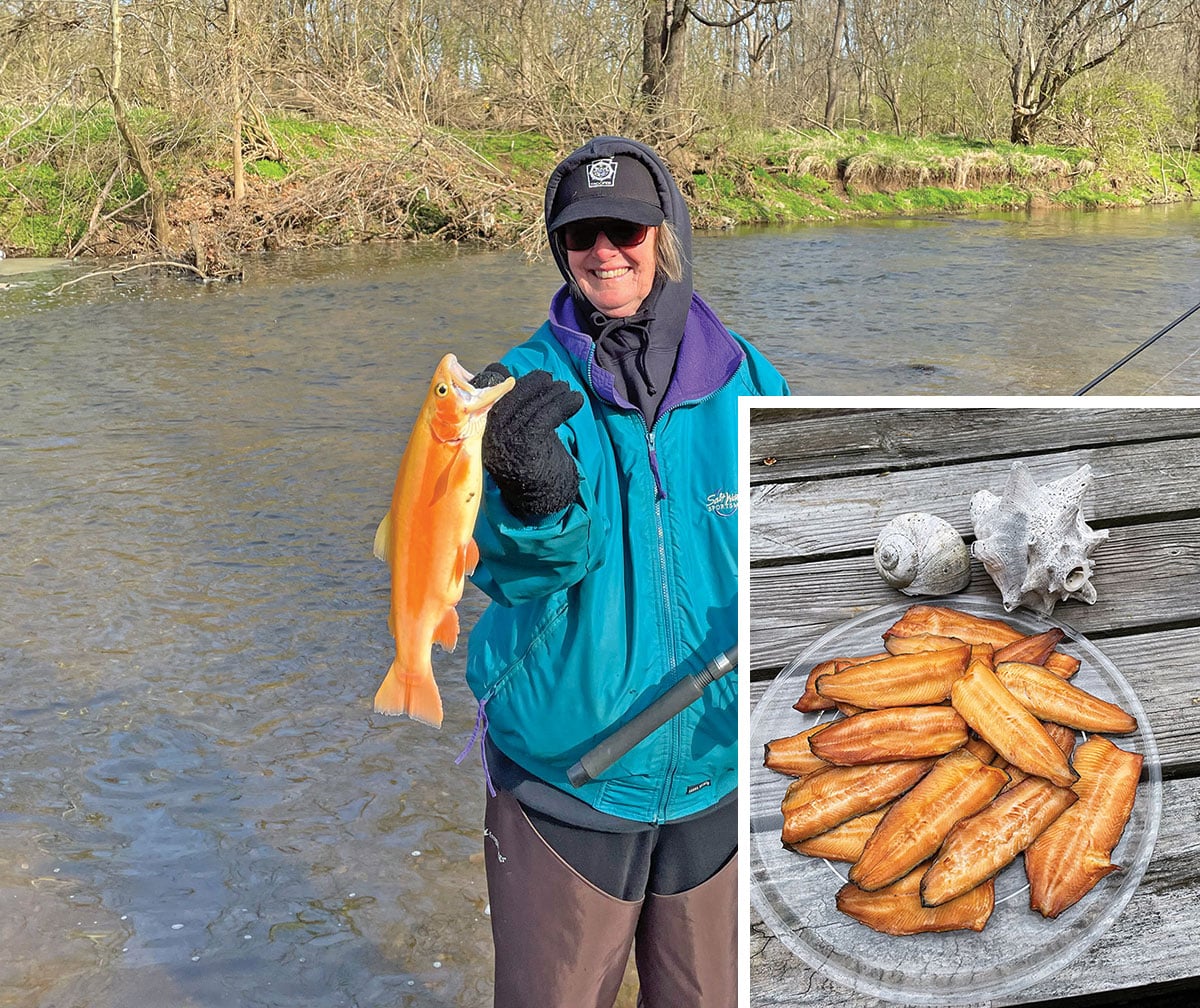
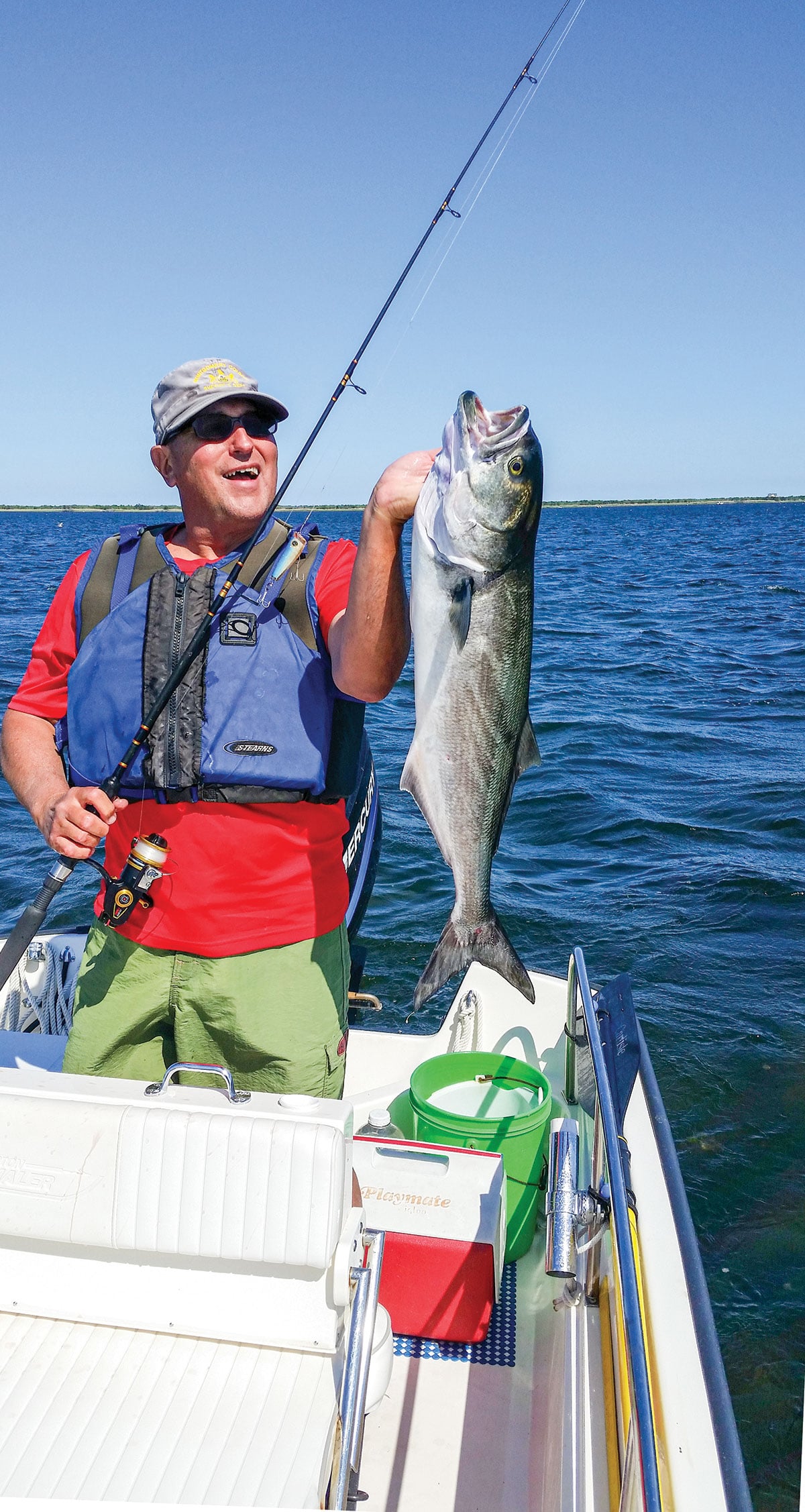
The following is a technique I’ve been tweaking for the better part of 40 years, and I’ve never produced a bad batch of smoked fish. While I’ve smoked everything from amberjack to red drum, most times I’ve worn my smoking jacket while watching bluefish. Their rich, oily, omega-3 filets are well-suited for smoking techniques. Freshwater trout and other salmonids are a close second to me for smoking. Smoking rainbow and brown trout is now a springtime rite of passage for my family, and by the way, canned smoked rainbow trout sports a caviar-like price in your local supermarket.
The best part about this smoking technique is that it’s too easy. There are just three parts, brining, baking and smoking, BBS. The second-best part is that it requires minimal equipment and expense, just your household oven, a backyard charcoal smoker or Weber style charcoal grill, a few ingredients you probably already have around the kitchen, and finally, only an hour or two of smoking time.
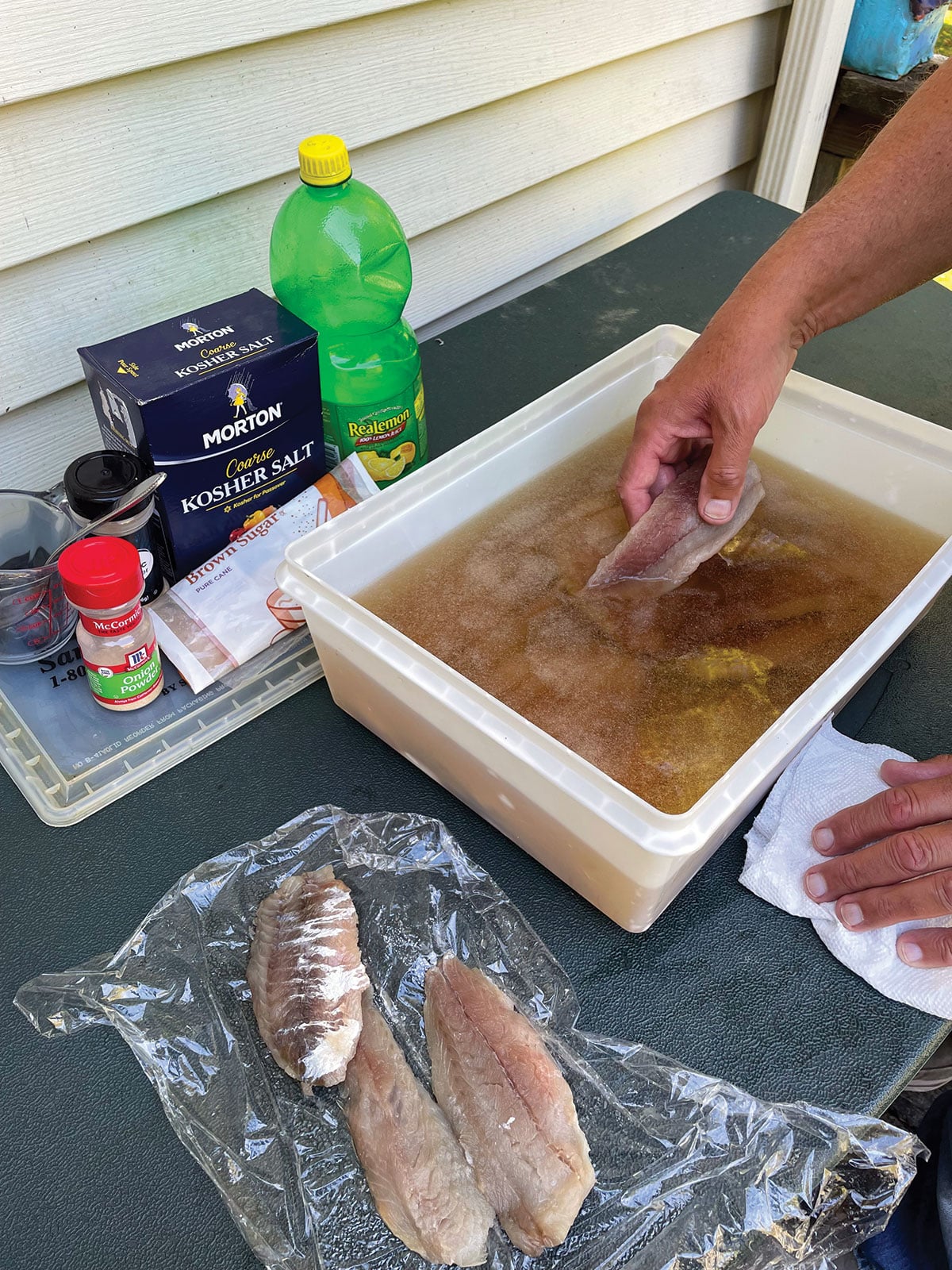
Step One: Brining
Put about a half-gallon of filtered water in a large plastic container. I use a square one, with a Tupperware-like lid. Don’t use a metal container, as metal and brine are enemies.
Ingredients
Half-cup Kosher salt
Half-cup dark brown sugar
1 teaspoon lemon Juice
1 teaspoon onion powder
1 teaspoon garlic powder
Mix ingredients well, especially the Kosher salt and sugar. Place filets in container, making sure brine covers all filets. For bluefish, I use skinless filets; for trout, I use skin-on filets. These are personal preferences that work for me. How much fish per batch depends on your smoker/grill size. My smoker has two large grills, enough for about a dozen bluefish filets or 18 trout filets, more or less. If you’re smoking larger, thicker filets, which is fine, cut into 4 or 5-inch squares.
Soak filets for at least 8 hours, or better yet, overnight in refrigerator.
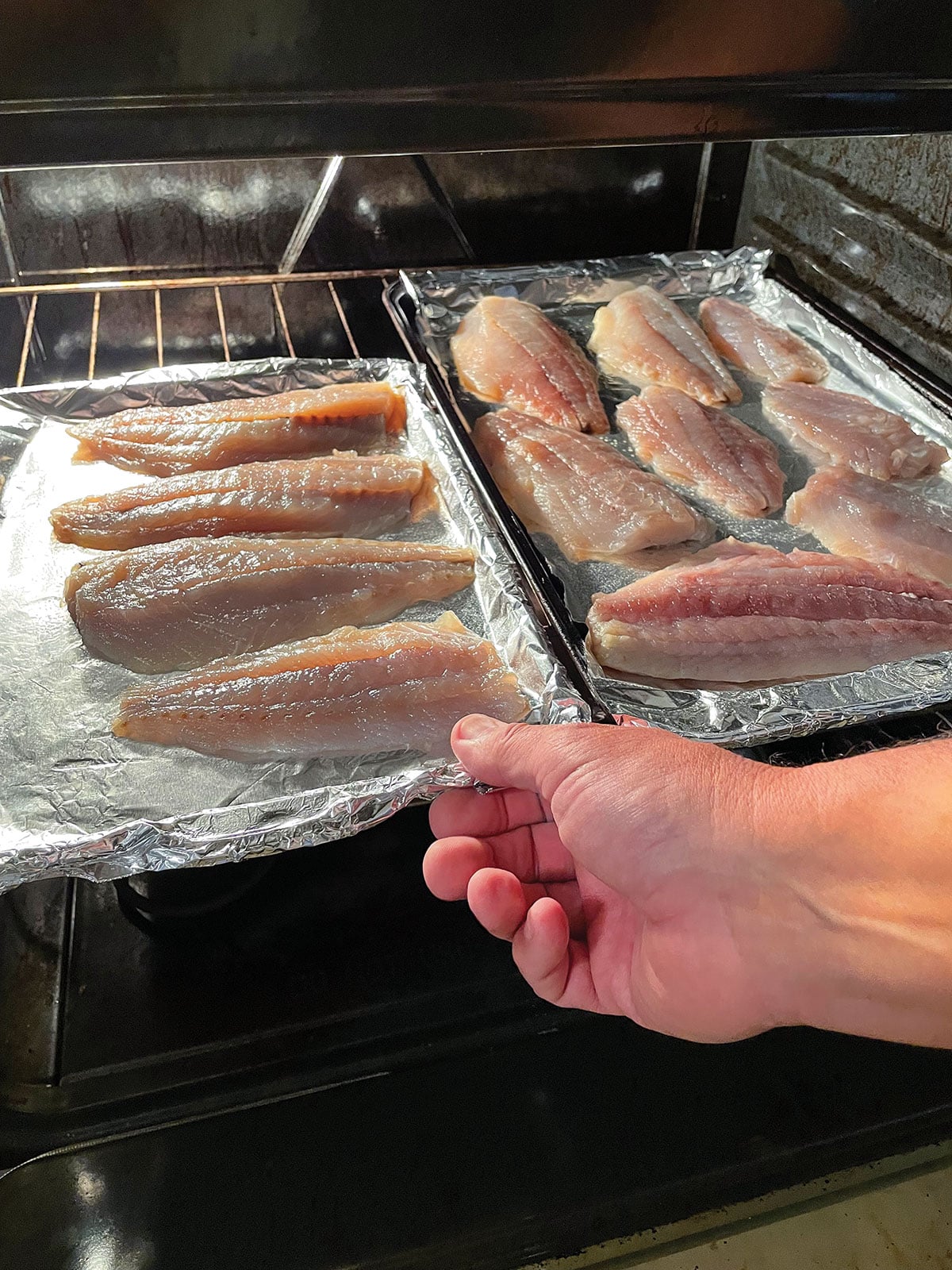
Step Two: Baking
Remove filets from brine and pat dry with paper towels. Line a couple of cookie sheets with aluminum foil (for quick clean-up) and spray foil with cooking oil (like Pam) to prevent filets from sticking. Place filets evenly on sheets. Keep them from touching each other. Bake in home oven at 325 degrees for 20 minutes. What you are doing here is half-baking, like parboiling, the filets. Your smoking process will finish cooking the filets.
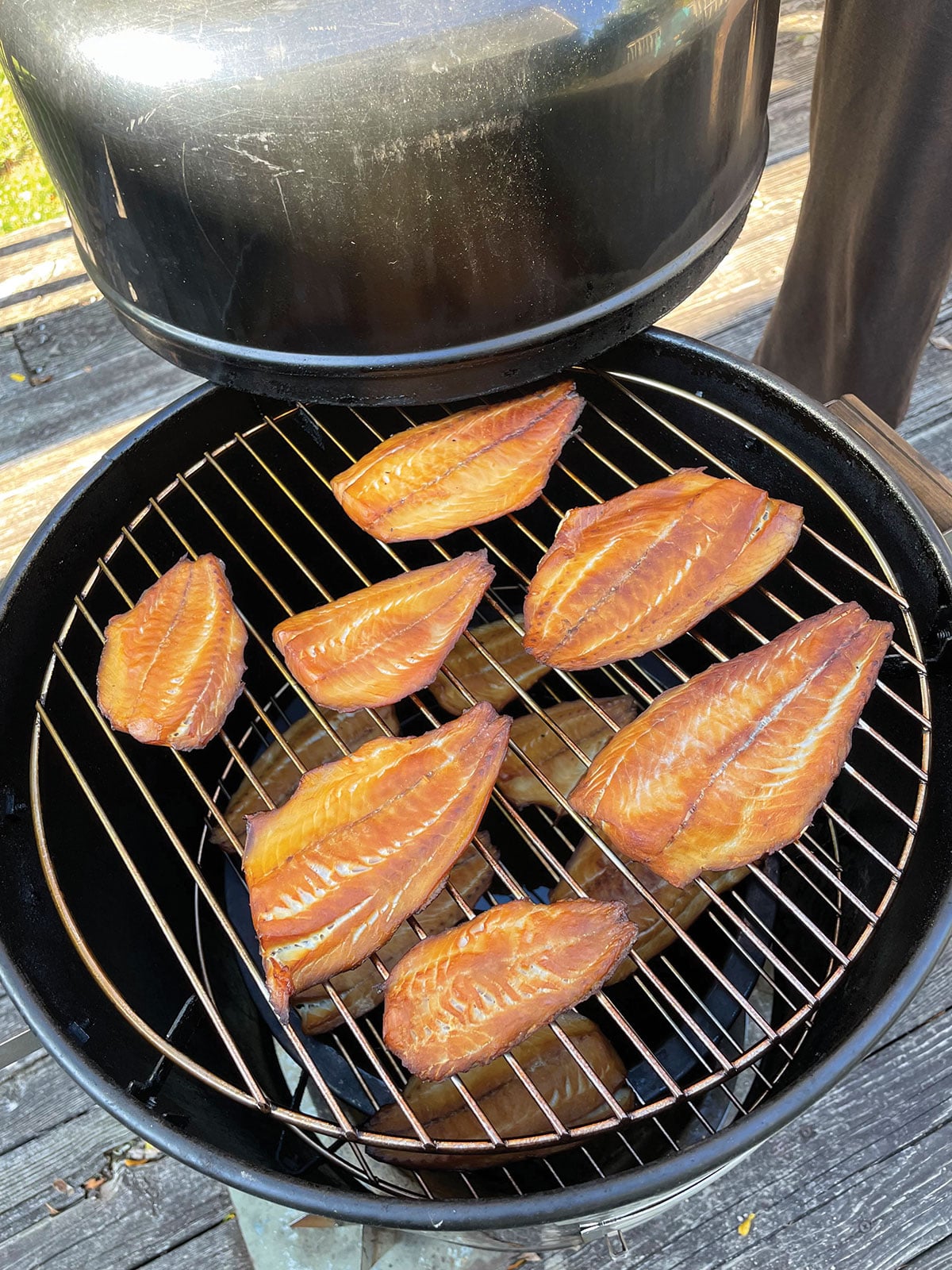
Spray your grills with cooking oil to prevent sticking. Use a spatula to remove the half-baked filets from the cookie sheets on to paper towels. Pat dry, then let cool for about an hour. This will help develop a pellicle, or a thin film on the filet surfaces. The pellicle enhances that mouth-watering smoky flavor on the filets. Place filets on the greased grill. Fill the grill, but make sure no filets are touching. You want that smoke to surround and swirl around the filets to get that rich, smoked taste.
Step Three: Smoking
There’s something about charcoal cooking that satisfies the caveman in all of us; it’s primitive, yet so effective. Throwing wood chips on a good bed of coals to smoke your fish adds even more to the atavistic ritual. I soak a couple handfuls of wood chips in filtered water beforehand, using a large ceramic bowl. This keeps the wood from burning too quickly and really enhances the smoke factor.
Drop a large handful of soaked chips on the coals, secure the grill/fish in place, and close the cover. Allow minimum ventilation to maximize the smoking process. And you do need to cover the grill as open grilling doesn’t work in the smoking process.
Here’s another too easy part: you don’t have to mother over the smoker all day or all night, or too many hours to smoke your fish. Most times, an hour and maybe another handful of chips will turn my filets into a golden hue that cries out “taste me!” That said, you still need to watch and check the process every 20 minutes or so. Make sure the smoke is heavy and continuous. If it starts to lighten up, throw another handful of chips on the coals.
Remember, the filets are half-cooked before smoking, so you’ve got to watch out for the boogeyman in all fish preparation, overcooking! Use your instinct and eyes to aim for that $24.95 per pound burnished gold appearance!
I don’t know of anybody who can resist the taste-test when smoking fish. There’s something special about that telling first bite. An umami explosion in the offing! Smoked bluefish, and smoked trout too, are very rich in flavor. A little bit goes a long way, like a fine whiskey or Russian caviar. There are so many ways to enjoy smoked fish, whether hot, straight out of your charcoal grill-smoker, like you’re eating jerky. Smoked bluefish bites on a cracker with your favorite condiments is also very tasty. A bluefish or smoked trout filet is a great protein complement to a pasta dinner, or try lathering a Kaiser roll with mayo, add a bed of lettuce, and place a well-smoked trout filet on top. You’re in for an epicurean treat both Ernest Hemingway and Andrew Zimmern would savor.
More Prep Options
Mixing it up even more, a smoked bluefish salad will never have you looking at a tuna salad sandwich the same way again. Here’s how I make it using two of the smoked filets (about 2 pounds). Mix 1 cup of mayo, a tablespoon of relish, and add a dash onion powder, garlic powder and Old Bay seasoning. Store in a plastic container, and it’s a great antidote to the lunchmeat blahs.
Whether it’s a hot summer afternoon or a late winter gathering, nothing says special appetizer-treat like a smoked fish dip. The recipe is similar to the smoked bluefish salad recipe, except you’re basically adding sour cream to the mix. This works really well with smoked trout. Take one or two of the smoked filets (about 2 pounds), mix 2 tablespoons of mayo, two tablespoons of sour cream, and a dash of Old Bay with four drops of Worcestershire sauce. Mix all ingredients like a madman to get that refined dip texture. Add more sour cream if needed to create a smooth consistency. Additionally season to taste with other spices, like garlic, pepper, hot sauce to get the taste you want.
Let me offer a few additional thoughts gleaned of 40 years of honing this too easy smoking technique. While fresh fish is always preferable, I often use frozen fish, especially if I’m clearing out the freezer for the upcoming fishing season (my deep, dark secret). Nobody notices the difference. The brining process firms up the filets and gets most of the fishy smell out of frozen filets (yes, we’re talking bluefish here). The smoke flavor chases any remaining stink out the door.
For bluefish, I’m a skin-off kind of filet guy, but I keep the skins on my trout. Those filets are a little more delicate than bluefish. The skin helps to keep them solid during brining/smoking process. Still, even trout filets firm up nicely.
I’ve never been a fan of smoking, unless I’m smoking fish. Smoked fish is delicious, nutritious and honestly, doing it this way is way too easy!