Steering systems have come a long way since the old cable and pulley.
Do you remember the early steering on your first boat? I do; it was a cable system with pulleys, and although they worked pretty well, it was sloppy and not exactly responsive. As time wore on, cable and pulley systems were replaced by single cable steering. This was a huge upgrade, but if you let go of the wheel, even for a second, the boat made a wicked right turn.
I remember changing over to a Teleflex No Feedback system on my bass boat. The system was smooth, responsive, and best of all if you let go, the boat remained on track. The only drawback was it was still tough to steer, especially while going less than 10 mph, like at a ramp, marina, docking or through tight canals.
History on hydraulic steering is vague to say the least. From what I could gather while searching the internet and my local library, (yes, they still have those) I found hydraulic has been around since the early 50s, but it wasn’t until 1966 that HyDrive Engineering started manufacturing it for pleasure craft and commercial boats.
In 1976, under the brand name SyTen, SeaStar Marine Steering systems introduced the first outboard hydraulic steering system. The products were later rebranded as SeaStar, and the SeaStar Pro line was introduced in 1993.The company behind the SeaStar brand is now known as Dometic, which acquired SeaStar Solutions (formerly Teleflex Marine) in 2017. SeaStar systems are widely used in a variety of marine applications, from single-outboard recreational boats to large commercial vessels.

Hydraulic – Yes Or No
| ELECTRIC OPTION TOO! |
| Electric Power-Assist Steering or EPAS is a system adds an electric motor to an existing manual cable or hydraulic steering system. It has added benefits to both smaller 90 to 200 horsepower set-ups, and larger boats with multiple outboards. An electric motor provides assistance to the driver, similar to power steering in a car. It reduces the physical effort needed to turn the wheel, especially at lower speeds and when docking.
On the smaller and mid-size outboards (e.g., 90 to 200 horsepower) it gives the owner the ease of power steering without the full hydraulic install. On the larger dual and up boats, it enables joystick docking and other advanced features, with a few key benefits.
|
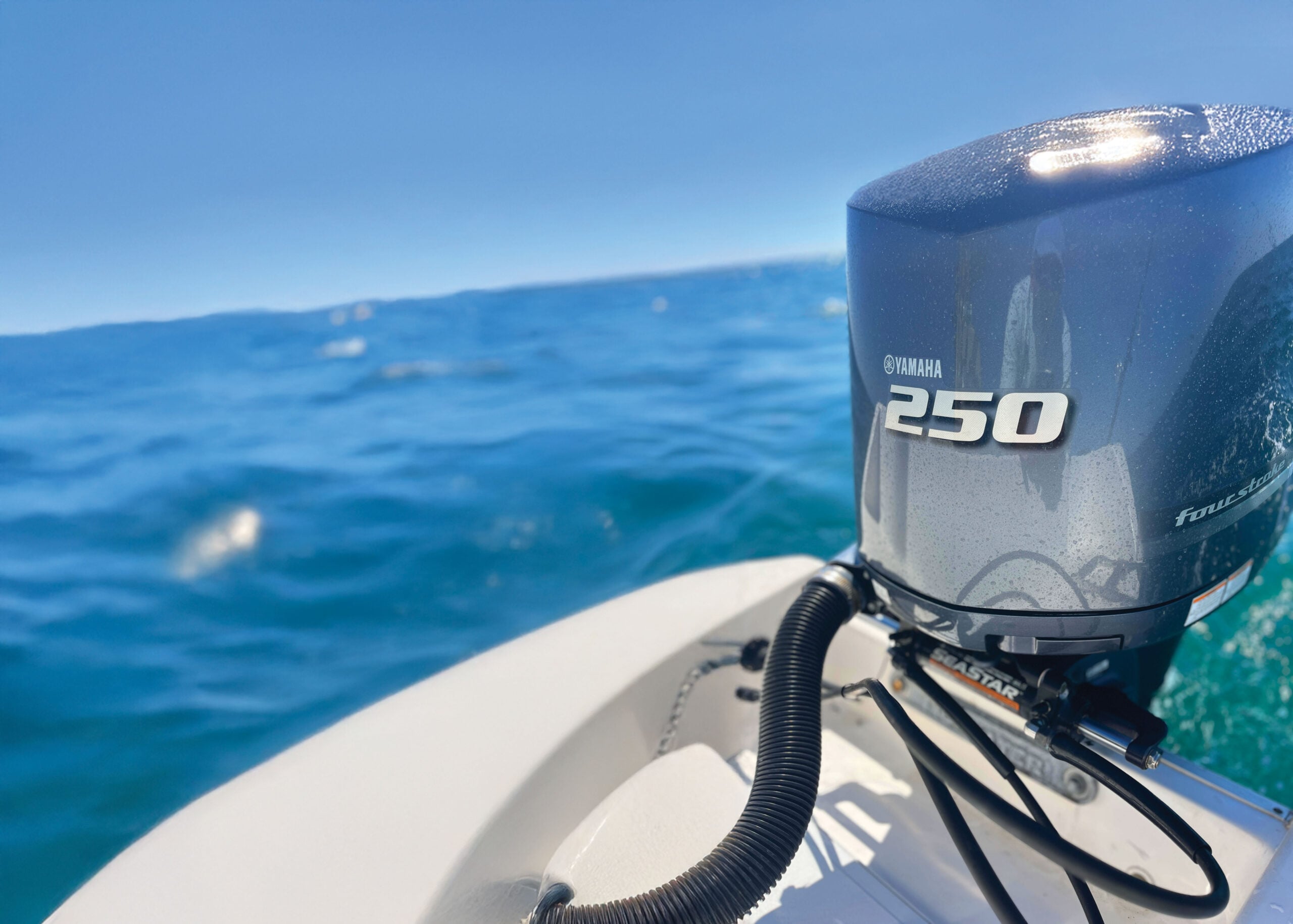
Outboard motors typically generate a lot of torque, which can make steering a task. With the advent of four stroke motors, this torque increased, making cable steering a thing of the past. These motors are difficult to control with mechanical feedback which in turn makes steering a battle. Even 2-stroke models create enough torque to make it tough. My 1985 150hp Mercury was a royal pain in my butt trying to steer, even up on plane.
The last two items of concern for non-hydraulic steering were operator fatigue – fighting with steering for those long hauls to the canyon, or various inshore and freshwater jaunts that were quite far. Last but not least, especially for you, our readers, who most of the time are in saltwater – corrosion and binding become huge issues.
There are some downsides to hydraulic, the biggest being cost. The Dometic unit I installed was upwards of $1,500. If you are keeping the boat for more than 3 years, I suggest you blow the lock off the wallet and do it. Professional installation on smaller boats in my opinion are not absolutely needed, and you could save a $1,000 or more, depending on the installer, by doing it yourself – more on this below.
Increased weight is yet another factor, but in my opinion, the added weight is insignificant. Hydraulic systems will need a bit more maintenance like periodic bleeding and there is always the risk of leaks. Paying attention to details when installing, plus checking the components will go a long way to ensure this is a minimal, if not non-issue problem.

Dive Right In!
| FLY-BY-WIRE OPTION |
| Many of today’s larger outboards now offer factory-integrated electric, or fly-by-wire, steering systems as a modern alternative to traditional hydraulics. These systems provide a clean, space-saving installation by eliminating hydraulic hoses, pumps, and fluid, while delivering smooth, quiet, and highly precise steering with variable effort that adjusts automatically to boat speed. With no fluid to leak or bleed, maintenance is minimal, and the fully sealed, corrosion-resistant components are built for long-term reliability.
Fly-by-wire steering also integrates seamlessly with digital throttle and shift systems, autopilots, and joystick controls, creating a unified helm experience, and because it is factory engineered, it is typically covered under the engine manufacturer’s warranty. |
Now that we have an understanding of hydraulic steering, and why I believe this is “a must” for any boat out there powered by an outboard, let’s dive right in and install one on my older Javelin 396DC Bass Boat with 150hp Merc 2.5. Before heading in, you need to determine what size unit you need and Dometic will help you through the process. Length of the hoses is critical and must be carefully measured.
Your first step will be the hoses. The measurement is simple, helm to side of boat, side of boat to back, then across to the transom to where they will connect to the unit. When I first measured mine, I came up with 12 feet. Simple math however should be used. You need to account for play in the hose to turn corners as the hose is pretty rigid and does not make right turns. After adding in the curves and loops needed to lie right at the motor, I actually needed 18 feet. I suggest for the hoses you buy the ones that can be cut, then the fitting added. I did this to be sure, and after 5 months, the system has no leaks. Dometic supplies fittings, and they are rock solid.
Step one after receiving your system will be to disassemble the old. This is straightforward, and only requires a few basic wrenches and sockets, depending on what you have. Remove the old system, including the helm, cables and all attachment from the motor.
 |
 |
To prep for the new Dometic system, first take out the new helm and see how it fits. On mine, I had to make the hole slightly larger, and I also added in an aluminum backing plate to secure the helm. Once the helm is in place, snake the new hoses to the back of the boat making all the loops needed to get the tubes, kink free to the motor.
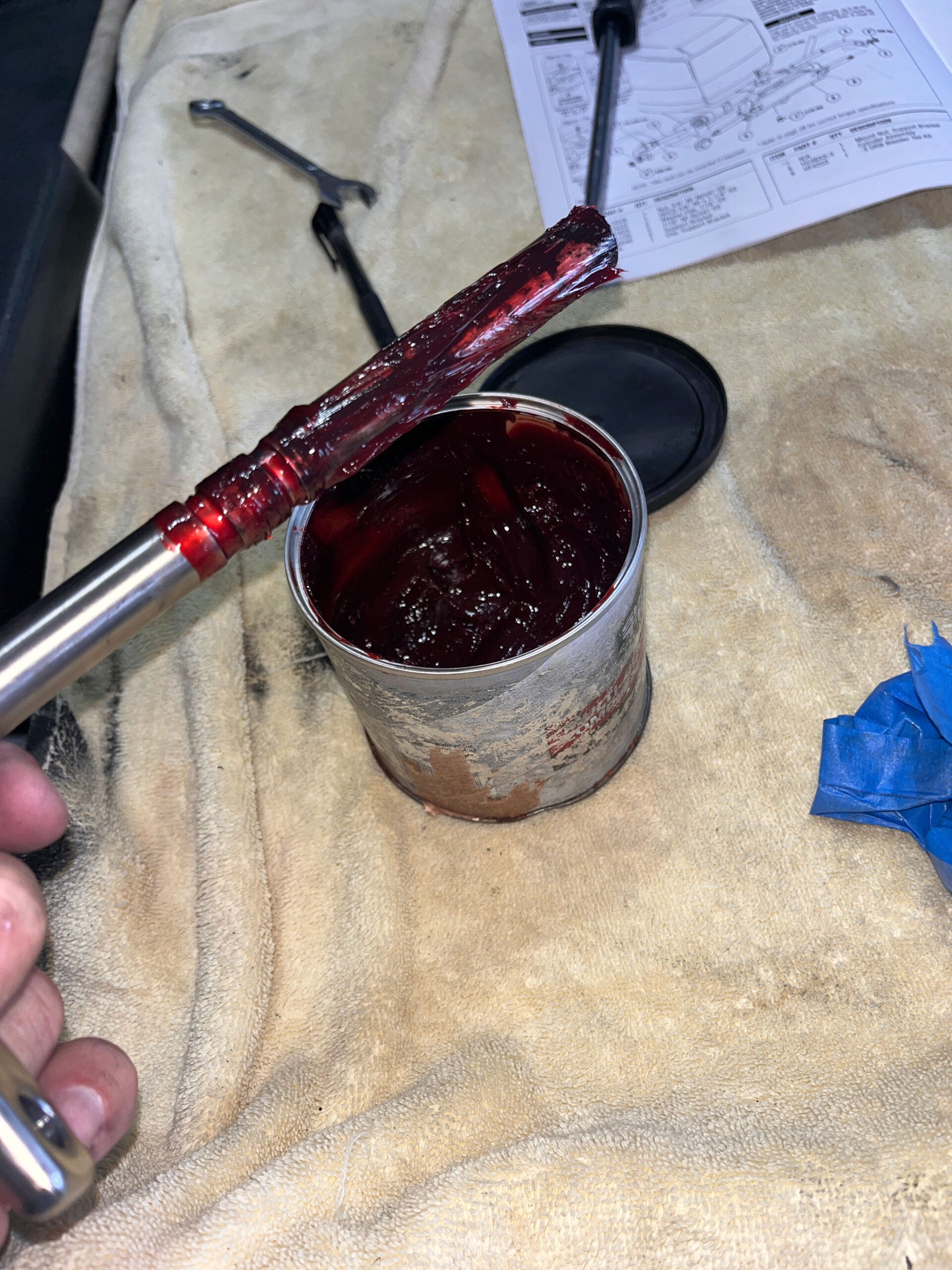
To attach the new Dometic (in my scenario the BayStar) hydraulic ram, first lube the guide shaft that will replace where your old cable system slid through. Next attach the piston assembly to the steering pivot arm with hardware provided. Once this is complete, move back to the front and attach the hoses to the helm.
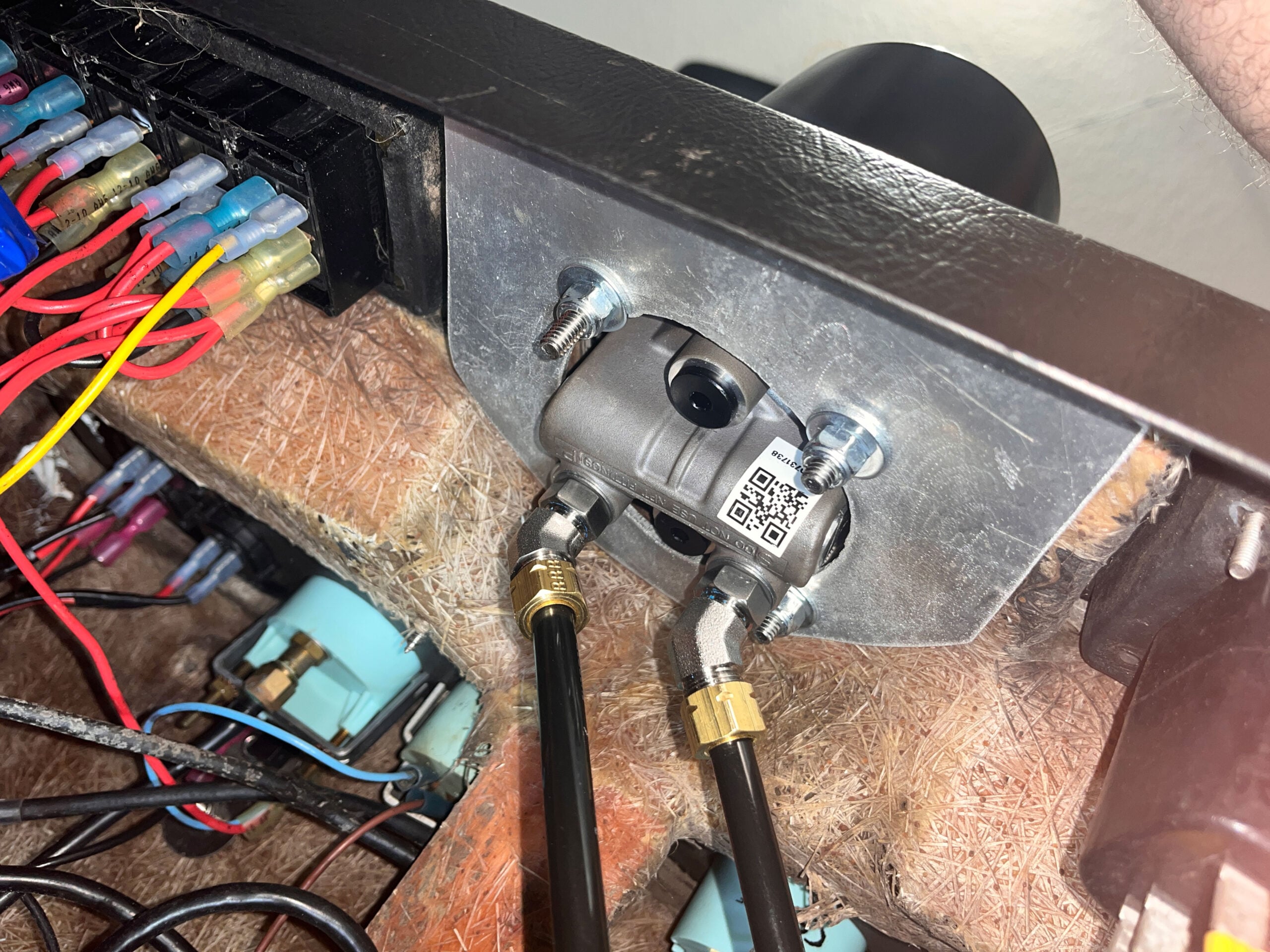
Next you’ll have to figure out – including some play for movement – the exact length of the hose needed to attach to the piston. Slide on the compression sleeves and attach. At this point, I cable tied everything together, making for a clean look. You can also get tubing to encase all your wires, hoses etc. to make an even cleaner look.

The last, and most critical piece is the bleeding of the system. It is quite similar to bleeding brakes on a car. Plain and simple, you need to get all the air out! You will need a helper for this, so don’t even try to do it alone. The directions included from Dometic are quite simple, with the most important factor, making sure the feed hose always has fluid in it. If you follow the directions from Dometic, you will be on the water in no time.
Hydraulic steering on an older boat like mine was a worthy investment, and in the long run will last many years. I also feel it adds a little value, but most of all, I do not feel like I just fought a tuna for 3 hours when I arrive at the fishing grounds.