Peanut bunker can keep stripers feeding into December. Here’s how to find the bait and connect with late-season bass.
It’s late-November, perhaps even December, and they’re still around. I’m talking about peanut bunker, sometimes in surprisingly large schools. These small baitfish are a favorite meal of migrating striped bass, and finding them can keep your season going long after many anglers have packed away their gear.
Most peanuts measure 3 to 4 inches, although larger juveniles of 5 to 7 inches are common. Schools can linger throughout southern New England, Long Island Sound, the South Shore, the New York Bight and along New Jersey’s coastline. The trick is locating the bait and figuring out how the bass are feeding on it.
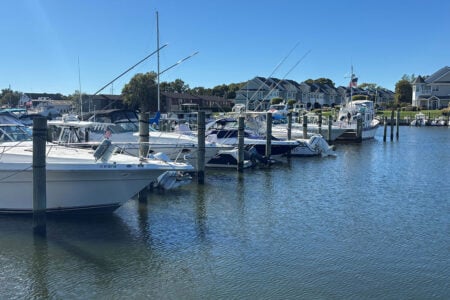
Peanut bunker can turn up almost anywhere: harbor mouths, inlets, tidal creeks, salt ponds, back bays, jetties, beaches and rips. Some schools hold in shallow water, while others gather in 10 to 30 feet, sometimes even deeper.
Watch for dimples, flashes or baitfish flipping at the surface. If bass are chasing them, peanuts may leap clear of the water. Diving gulls and terns are another giveaway, and boat anglers can mark schools with their electronics. Remember that bait doesn’t always mean visible blitzes. Bass may be feeding underneath, so don’t abandon a promising spot simply because the surface looks quiet.
Pay particular attention to areas where tidal currents concentrate bait against structure or along shoreline edges. Peanut bunker frequently gather in these locations, creating opportunities for bass to ambush them. Sometimes moving just a short distance along the beach or changing your casting angle can put you directly into the feeding activity.
Sunrise and the following couple of hours are often productive, as is late afternoon into dusk. Overcast weather can extend the bite, and the night shift is always worth considering. Still, bass feeding on peanuts can erupt at any hour, including under bright midday sunshine.
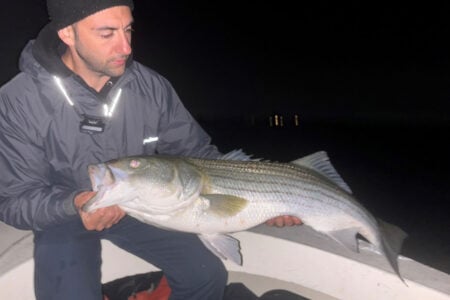
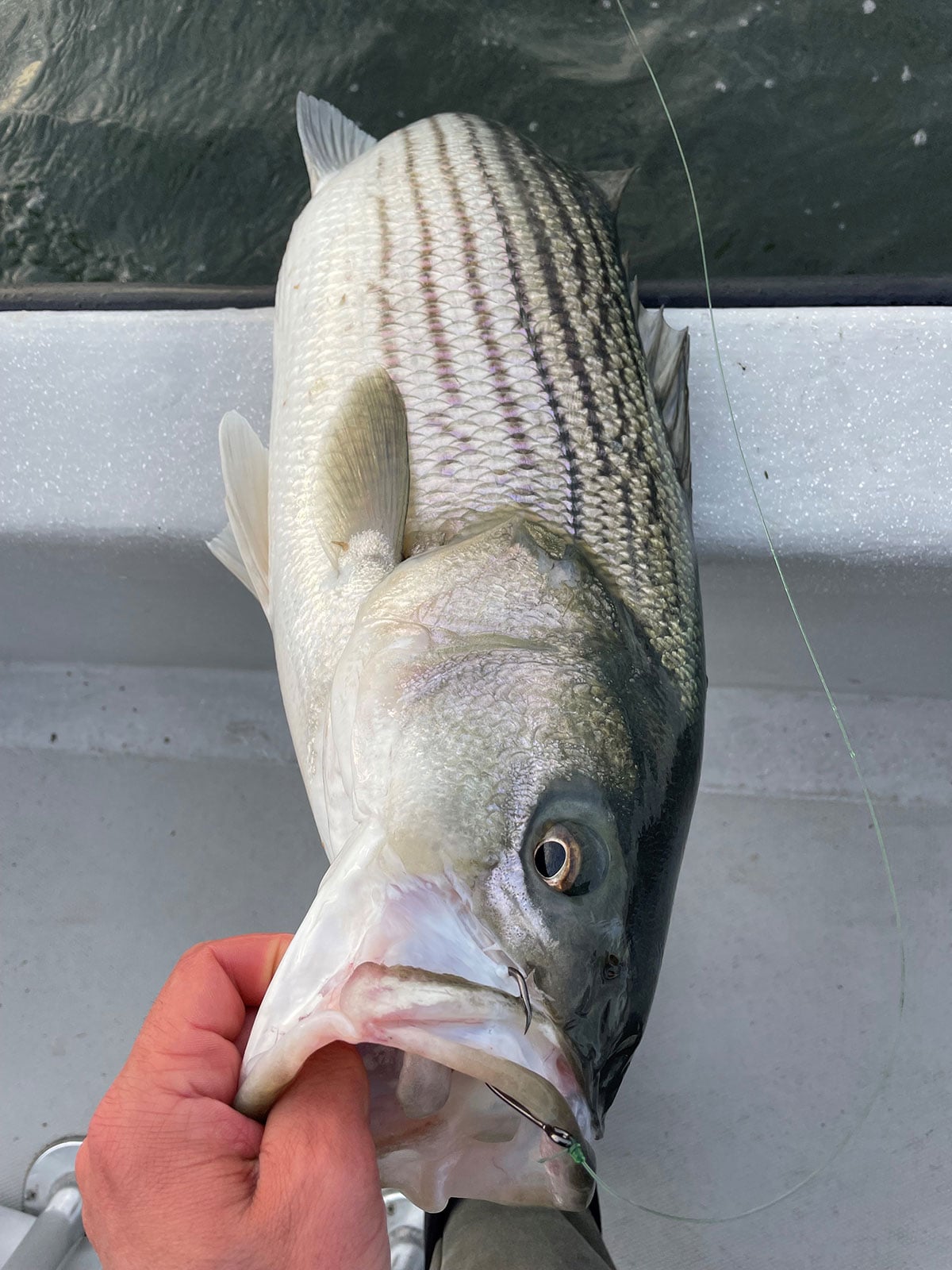
Stripers of every size eat peanut bunker, from small schoolies to fish topping 40 pounds. Larger bass often target the bigger, 5- to 7-inch juveniles, which deliver a worthwhile meal without being difficult to swallow. Don’t assume a large bass requires a giant lure.
Bucktails, soft plastic shads, Albie Snax, Rat-L-Traps, swimming plugs, spoons and diamond jigs can all produce. When fish are feeding on top, try poppers, Zara Spooks or other walk-the-dog plugs. SP Minnows and even a 7-inch Doc also deserve room in the bag.
Presentation matters more than simply changing plugs. Give a bucktail an occasional snap to make it dart. Retrieve a soft plastic shad steadily or jig it through the school. Twitch an Albie Snax to imitate a panicked baitfish, and work a walking plug from side to side.
One of my favorite techniques involves a diamond jig. I let it reach bottom, snap it upward, then allow it to fall again before repeating. The lure darts and flutters erratically, often drawing strikes from bass holding beneath the peanuts.
Where you cast is equally important. Bass may attack through the middle of the school, patrol its edges or wait underneath for injured baitfish. Try casting beyond the peanuts and bringing your lure through the action. If fish keep breaking just out of range, anticipate their direction rather than casting where they were a moment ago.
For spinning outfits, a 6 1/2- to 8-foot medium-light to medium-heavy rod with a 2500- to 5000-size reel covers most situations. Fifteen- to 30-pound braid with a suitable leader offers versatility. A 6 1/2- to 7 1/2-foot medium to medium-heavy baitcasting outfit works well, too. Match the setup to the lure and conditions rather than simply using the heaviest gear available.
Fly anglers can turn to a 9-foot 9- or 10-weight rod, although lighter 6- to 8-weight outfits are suitable for smaller fish in manageable conditions. Deceivers, Clousers and peanut bunker patterns from roughly 3 1/2 to 7 inches should cover the bases. I especially like the 6 1/2- to 7-inch Sedotti Feather Slammer for imitating larger juveniles.
A floating or intermediate fly line works when bass are near the surface; sinking lines help reach deeper fish. Start with a 7- to 9-foot leader and 15- or 20-pound tippet. From shore, a stripping basket makes line management much easier.
As the season winds down, keep checking the beaches, inlets and harbors rather than assuming the action is over. Local tackle shops, The Fisherman’s Weekly Fishing Forecast and The Next Cast podcast can help point you toward recent bait and bass activity.
A school of peanuts might be all it takes to turn a quiet December outing into memorable fishing. Keep a few matching lures handy, watch the water, and make another cast before calling it a season.