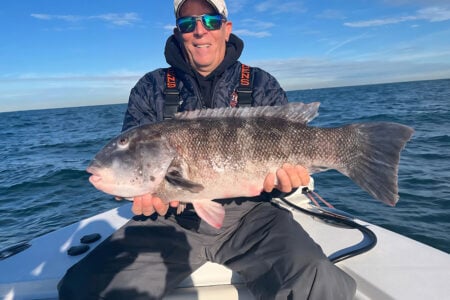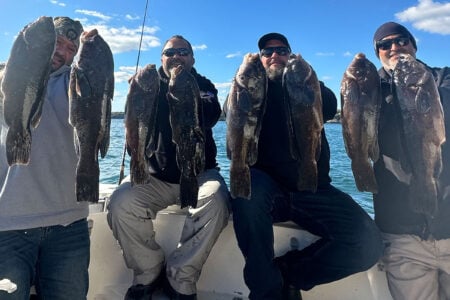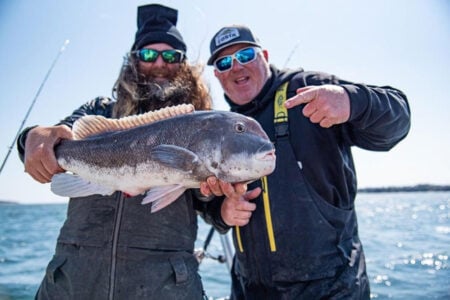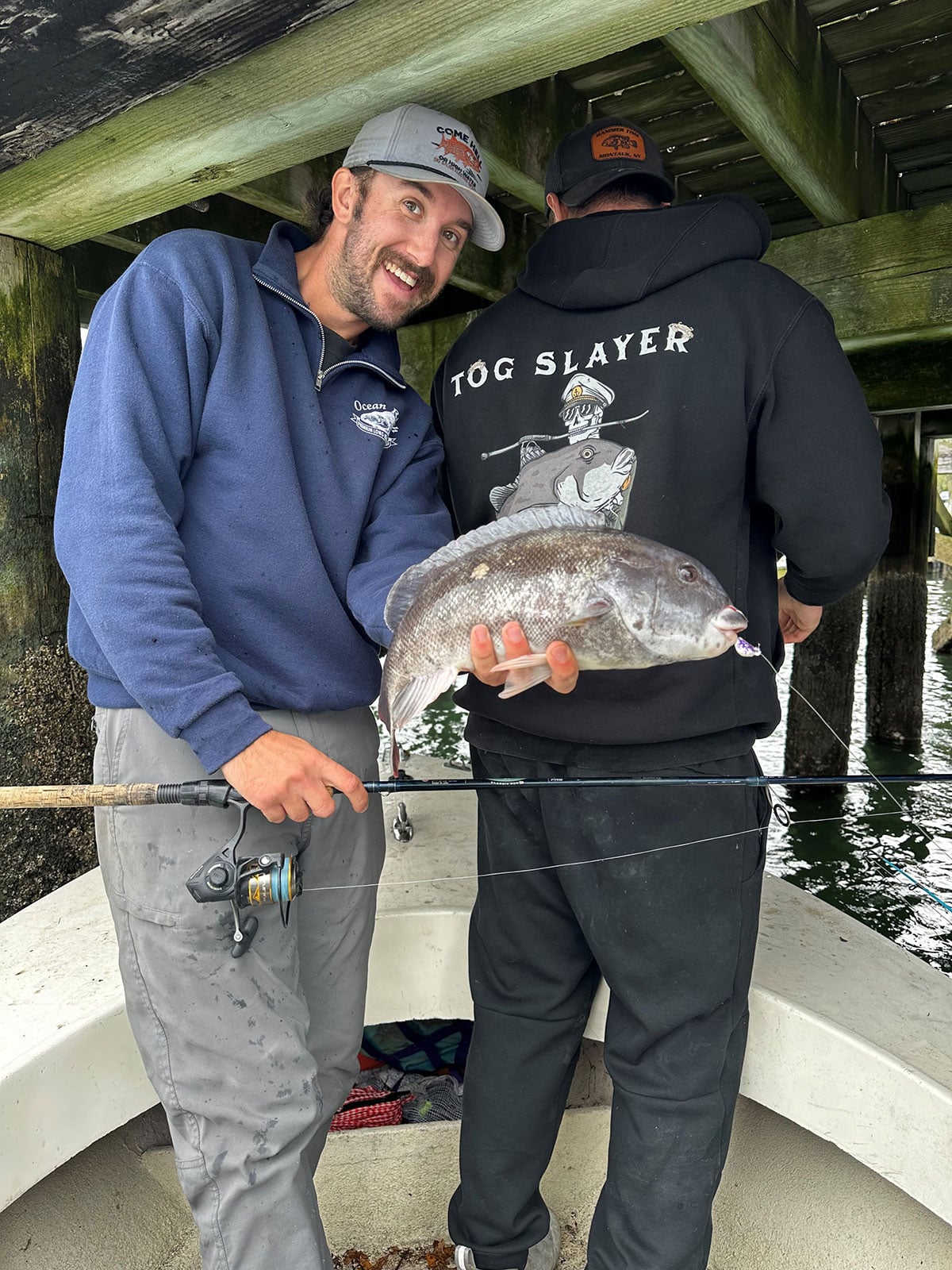
Mobility and constant repositioning is key to finding the most productive tog water.
One of the biggest mistakes anglers make when blackfishing is assuming that if a spot looks good, the fish must be there. That line of thinking can lead to sitting on the same piece of structure far too long, especially early in the season when tog are still scattered through relatively shallow water. In October, mobility can be every bit as important as bait choice, jig size or tackle.
Shallow-water tog fishing is often a game of small zones. A bridge abutment might stretch for hundreds of feet, but the fish could be packed along one corner. A rock pile might look productive from every angle, yet only one side is holding fish. Even a wreck can have one section loaded with life while another section 30 feet away feels completely barren.
That is why I like to keep moving until I find them.
When fishing shallow structure, I rarely give a spot too much time if nothing is happening. If I drop down and do not get a bite, tap or indication of life within a reasonable period, I am already thinking about the next move. Sometimes that means shifting the boat 20 feet. Other times it means picking up completely and running to another nearby piece.
The beauty of shallow-water tog fishing is that you can make these adjustments quickly. You are not dropping 8 ounces of lead into 70 feet of water and waiting several minutes between resets. In 15 or 20 feet, you can drop, test the area and know fairly quickly whether fish are home.
Electronics make this style of fishing much easier. Before dropping, I like to get a good look at the structure and identify the highest points, edges, rubble and any irregular sections. Tog love places where hard bottom changes, and sometimes the smallest difference can be the most productive part of the spot.
Once I find something interesting, I try to position the boat so my bait lands directly alongside it. If that first drop does not produce, I might slide slightly uptide, downtide or to the opposite side. Those minor adjustments can completely change the fishing.
Current is a big part of the equation, too. Tog may hold on the protected side of a rock pile or bridge piling depending on how the tide is moving. If you are fishing the wrong side, it may seem like there are no fish there at all. Shift the boat just a little, and suddenly you could be getting hit on every drop.
This is where a trolling motor can be a huge advantage, but traditional anchoring works as well. The key is being willing to reposition. Some anglers get locked into the mindset that once the anchor is set, that is where they are staying. In shallow water, that can cost you a lot of fish.
The same goes for spot-locking. Just because technology makes it easy to hold the boat perfectly in one place does not mean you should stay there forever. Use that precision to explore the structure instead. Hold on one corner, make a few drops, then shift 15 or 20 feet and try again.
When you finally find fish, the difference is usually obvious. Bites come quickly, crabs get picked apart and everyone on the boat starts getting action. Once that happens, there is no reason to keep searching. Stay on them until the bite slows or the fish begin to shut down.
Jigs work especially well for this type of fishing because they allow you to cover water efficiently. In shallow depths, you can use relatively light jigs, maintain good bottom contact and quickly probe different sections of structure. The direct connection also makes it easier to feel those first taps when you land in the right zone.
Mobility also helps you learn your spots. Every time you move around a bridge, rock pile or shallow wreck, you begin to understand where the fish actually hold. After a few trips, you might realize that one corner produces on an incoming tide while another section fishes better on the outgoing. That information is valuable. Over time, you stop looking at a structure as one big spot and start seeing it as several smaller spots within the spot.
Early-season blackfishing does not always require long runs, deep water or heavy gear. Sometimes success comes down to being willing to keep searching. Make a few drops, read the signs and move when the spot feels dead. When you finally land on the right piece of structure, you will know it quickly. In shallow water, the difference between no bites and a loaded-up rod can be nothing more than 20 feet.