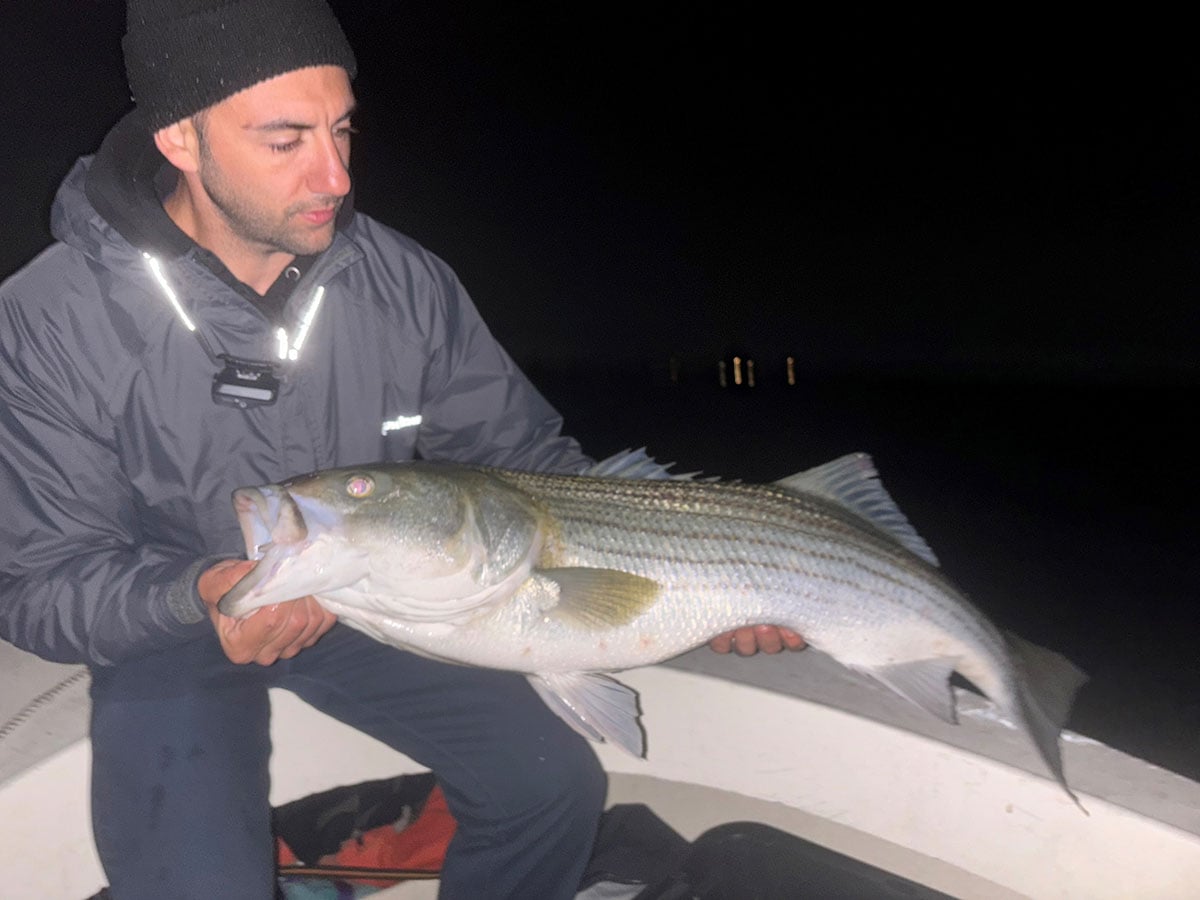
How currents and concentrated bait can make the final stages of a moving tide especially productive during the fall run.
One thing I’ve learned from spending time on the water is that you don’t necessarily need an entire tide to put together a productive fishing trip. Some of the most interesting fishing I’ve experienced has occurred during the final hour of moving water, just before the tide begins to turn. During October, when striped bass and bluefish are actively feeding on migrating baitfish, those final stages can create opportunities that are easy to overlook.
There’s a tendency among anglers to focus on the beginning of a tide or periods when the current is strongest. While those windows certainly have their place, I’ve found that the last hour deserves attention. Depending on the location, changing water levels, easing currents and concentrated bait can provide an opportunity for a good bite to develop.
Throughout the fall, baitfish such as peanut bunker, spearing and mullet move through bays, creeks and inlets. As the tide progresses, these smaller fish can become concentrated around particular pieces of structure. Points, channel edges and bridge foundations influence where bait collects and how predators position themselves.
During stronger current, bait might be swept through these areas at a considerable pace. Stripers and blues take advantage of this movement, but the speed of the water can make certain locations difficult to fish effectively. As the current eases, bait may become easier to intercept, and areas that were previously difficult to work can become more manageable.
Bridges are excellent examples. During a hard-running tide, fish may hold tight to pilings or behind current breaks. As the water slows, they often begin spreading out and feeding along adjacent edges. What might have been a difficult presentation an hour earlier can suddenly become productive.
One of my favorite places to concentrate during the final stages of an outgoing , is along a channel where shallow water drops into deeper areas. As water drains from surrounding flats, baitfish can be pushed away from the shallows and toward the remaining deeper water. Stripers frequently take advantage, positioning themselves where bait has fewer places to escape.
Rather than running directly through these areas, I prefer to approach slowly and look for activity. Nervous bait, scattered birds and occasional surface disturbances can reveal what’s happening beneath the surface. Sometimes the bass make their presence obvious, while other times electronics are needed to identify fish holding along a drop-off.
When fishing the last hour, I adjust my presentation to match the changing current. During stronger flow, heavier bucktails or soft plastics might be necessary to maintain control. As the water slows, lighter offerings can become effective, allowing a more natural presentation around the structure.
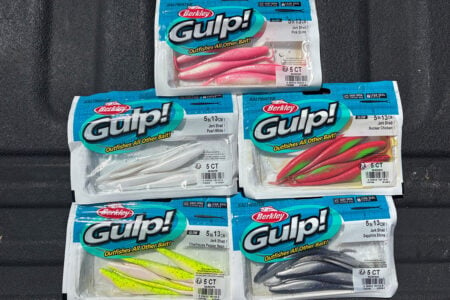
Soft plastics are particularly useful. A paddletail or jerk shad worked along a channel edge can imitate baitfish moving with the remaining current. Casting slightly up-current and allowing the lure to sweep naturally through the strike zone can be more productive than retrieving directly against the flow.
Around bridges, I like working the edges of current breaks, particularly where faster water meets the slower water behind a piling. As the tide diminishes, these seams may shift, requiring different casting angles.
The final hour of an incoming tide also presents opportunities. Rising water allows bait to move onto shallow flats and flooded shoreline structure, with predators following behind. As the current slows near high water, stripers may continue working these areas before repositioning for the outgoing tide.
One mistake anglers make is packing up simply because the current begins to slow. After several hours without success, it’s understandable to assume less moving water means fewer opportunities. However, depending on the location, that final stretch might be when everything comes together.
That doesn’t mean the last hour guarantees success. Some areas fish better during stronger current, while others shut down approaching slack. The timing of slack water can also differ from published high and low tide times, particularly around inlets and narrow channels.
The trick is learning how your locations respond to these changes. A bridge might produce best late in the outgoing tide, while a nearby point comes alive as incoming current builds.
With October’s fall run underway, pay attention to these shorter feeding windows. Sometimes the best bite develops around familiar structure during a brief period of changing current. Before calling it a day, watch the bait, work the edges and make a few more casts. That final hour might be the most productive part of your outing.