Exploring the traditional angling techniques of using a sidewinder for bottom fishing tautog.
I don’t remember the first time I saw a sidewinder. It may have been on the internet forums like Noreast and Fishing United with posts penned by EC Newell Man, or perhaps at the now closed Stella Maris Bait & Tackle on Emmons Avenue in Sheepshead Bay, Brooklyn. Once in a blue moon, I find those reels which have escaped the destruction of time at the winter fishing flea markets across Long Island.
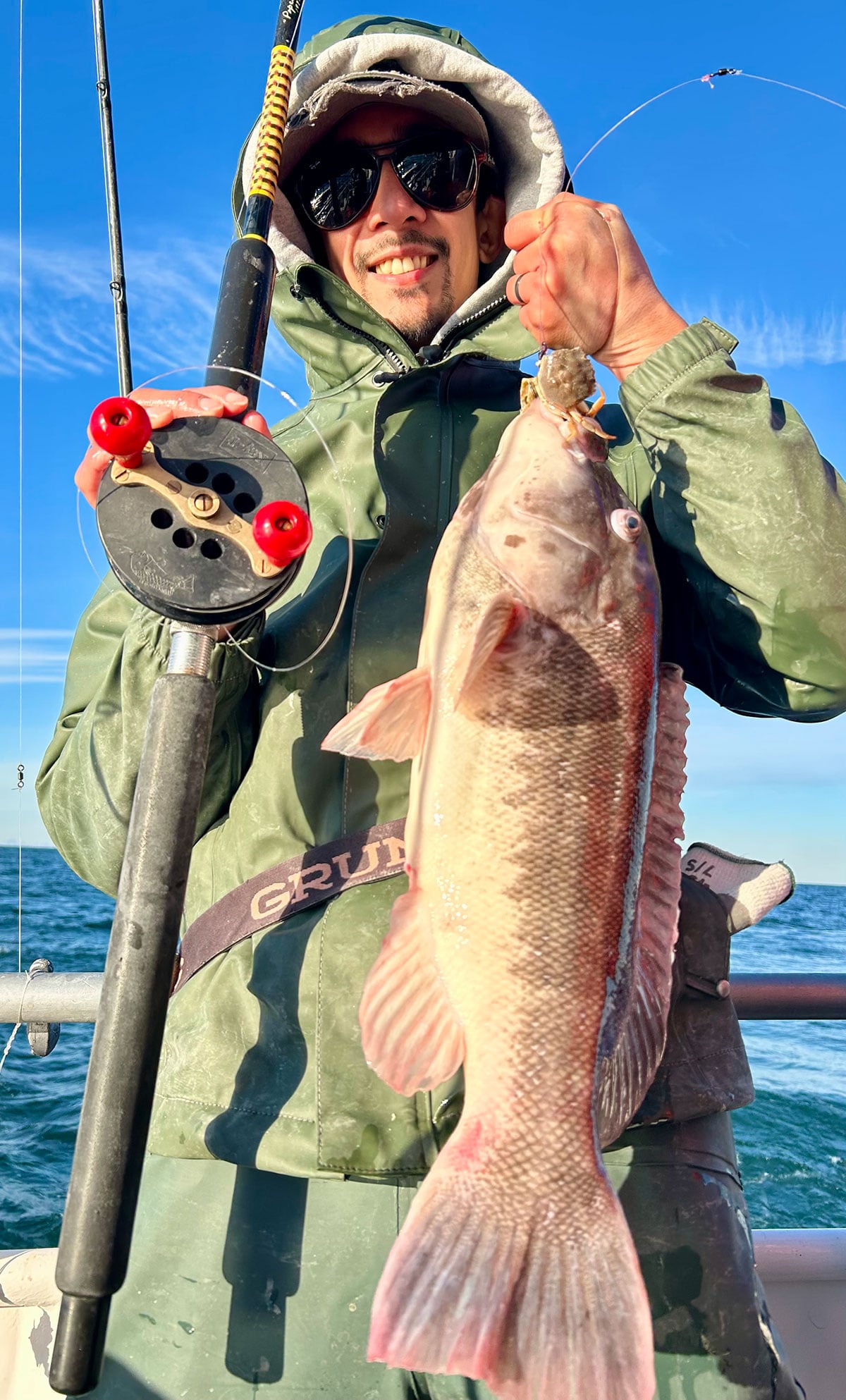
The sidewinder isn’t quite a fly reel, centerpin, or Alvey (an Australian reel manufacturer), although it may often be mistaken for any one of those for unfamiliar anglers. The reel is spartan in concept: there is an arbor or spool to hold line, a post and reel seat, and a plate attached to the arbor with two knobs. It is utilized on a conventional rod, and the angler turns the handle to bring line up, and the reel spins the opposite way to let line out. The mechanism is a direct drive where the force and torque of the reeling action is transmitted directly to arbor of the reel. There is no drag to adjust, except for the palm or fingers of the angler. In essence, it is one of the simplest, no-frills reels available today excluding the traditional handline.
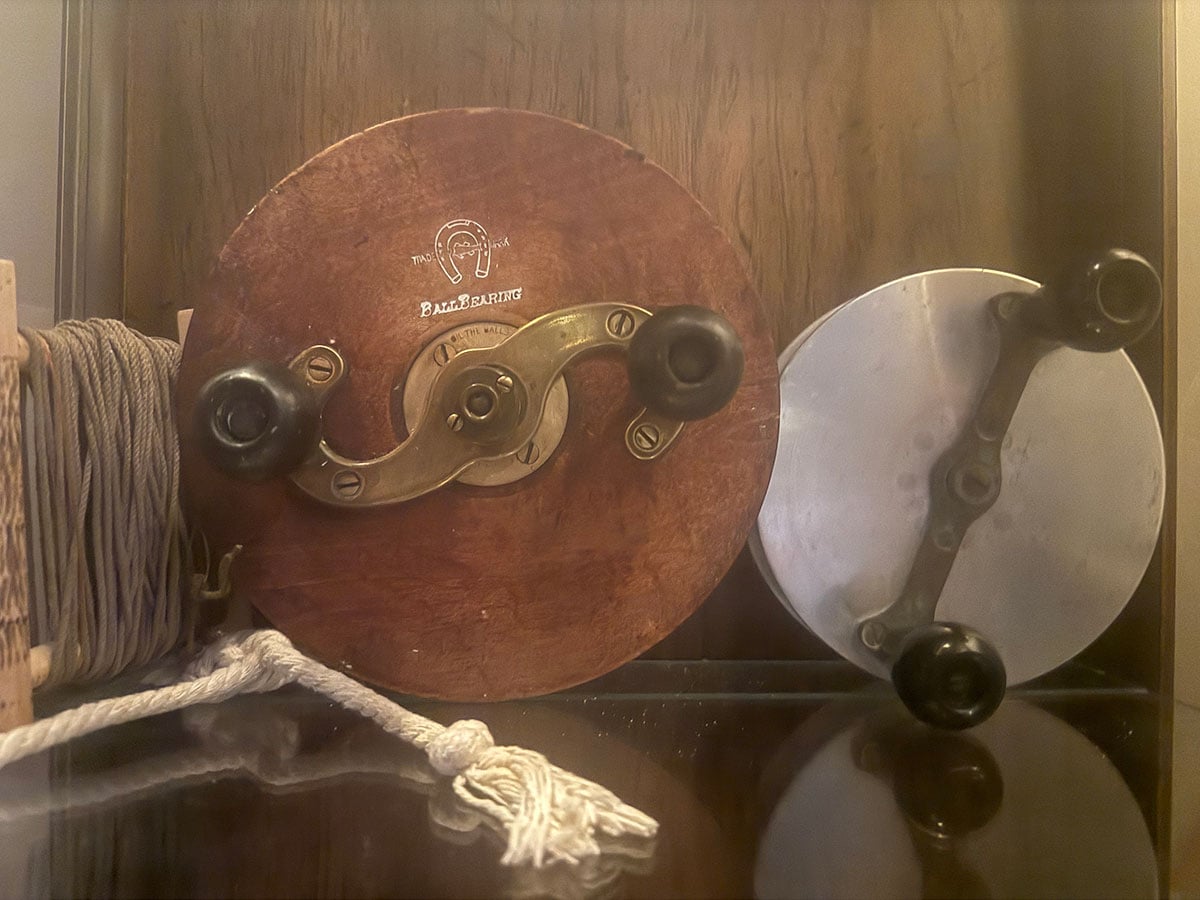
Originally, these reels were made of wood in the 19th century. Manufacturers then molded them out of bakelite, a plastic polymer, developed in the early 20th century. As technology changed, some tried making them with other materials like aluminum or the available plastics at the time. Each had their own flaws: the wood could swell with saltwater and would sometimes bind down on the post or ‘explode’ due to the pressure of monofilament line, bakelite would crack or shatter if mishandled, and aluminum would stick if fished in freezing weather or warp. Arguably the best material was delrin, another plastic developed in the 1960’s, since this was stable in saltwater environments, and maintained high strength and UV resistance.
The Old Knucklebuster
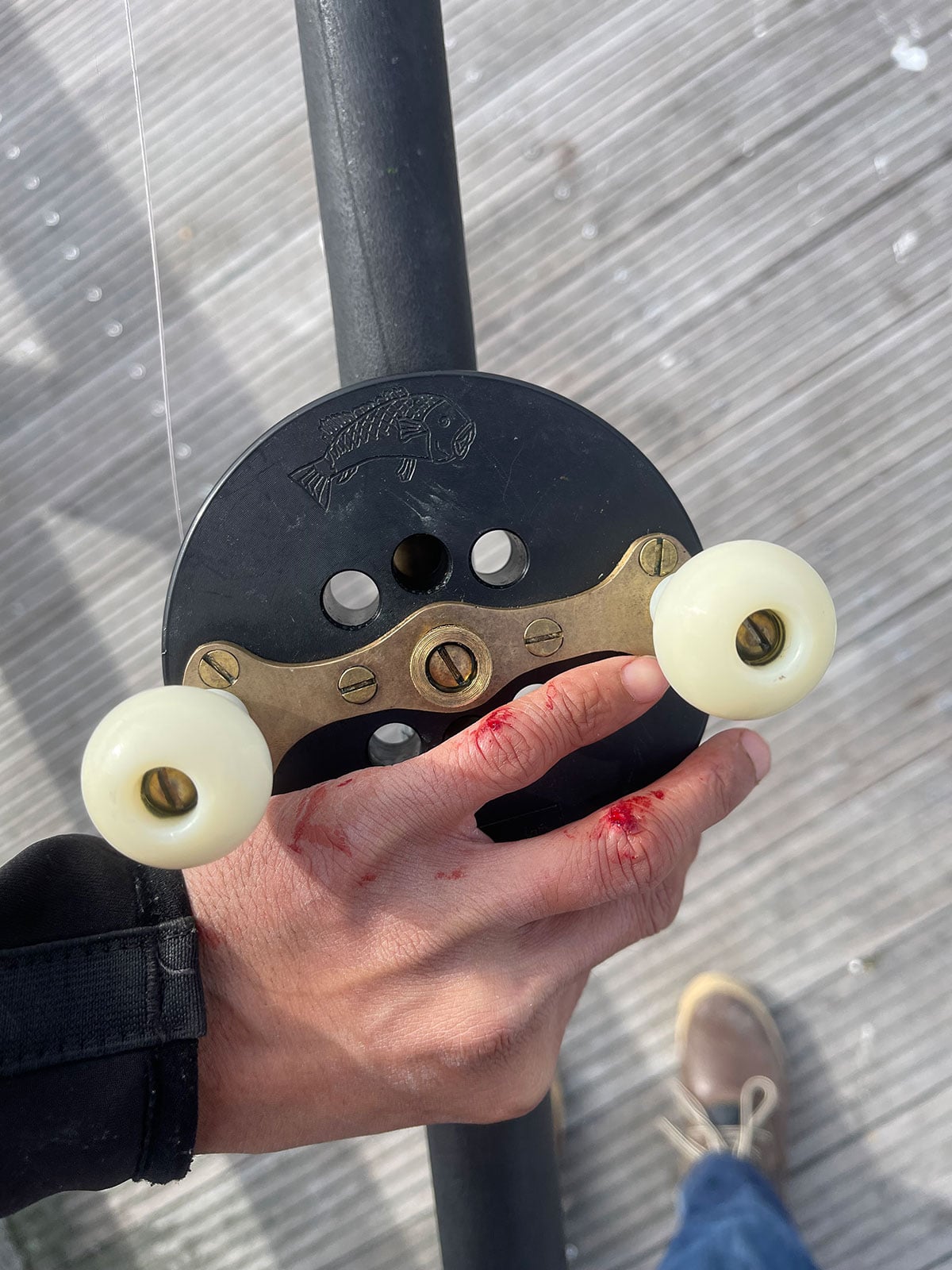
The first serious sidewinder I purchased was at Stella Maris. It was a black 4-1/2-inch Raymond Tancredi sidewinder with white knobs. I had saved up enough and decided to pull the proverbial trigger for a purchase I wasn’t sure I would really enjoy. I did give it a chance, an opportunity for me to fish differently. Spooling the reel with braided or monofilament line was an internal debate which didn’t settle with me, and I asked the man behind the glass counter: “What would be the best line to spool this thing with?”
In a distinctively Brooklyn accent he said “Monofilament line. That’s the old-school way of doin’ it.”
The man at Stella gave me a spool of pink Ande monofilament to go with it. I graciously accepted it, grinned back, and asked tongue-in-cheek for him to spool it for me on the electric line winding machine knowing that this would be a troublesome task because of how the reel was designed.
He raised an eyebrow, tilted his head, eventually picked up on my grin and let out a laugh.
“Good luck, kid. Watch out for that knucklebuster.” I was puzzled, not truly realizing what he meant, and went about my way.
After spooling it, I went to a local pier and slung out my offering, snagging bottom. I tried to break off my rig. Cranking down on the reel, I caused so much tension that the reel slipped, and the knobs whirled backwards, busting my knuckles and breaking skin.
I thought to myself “Ah, that’s what he meant.” Experience was the teacher here, and it gave the test first and the lesson afterwards. While the discomfort was temporary, the chase down the rabbit hole on proficiently fishing this reel began. There was, and still is, a lot to learn.
The Ray-T Sidewinder
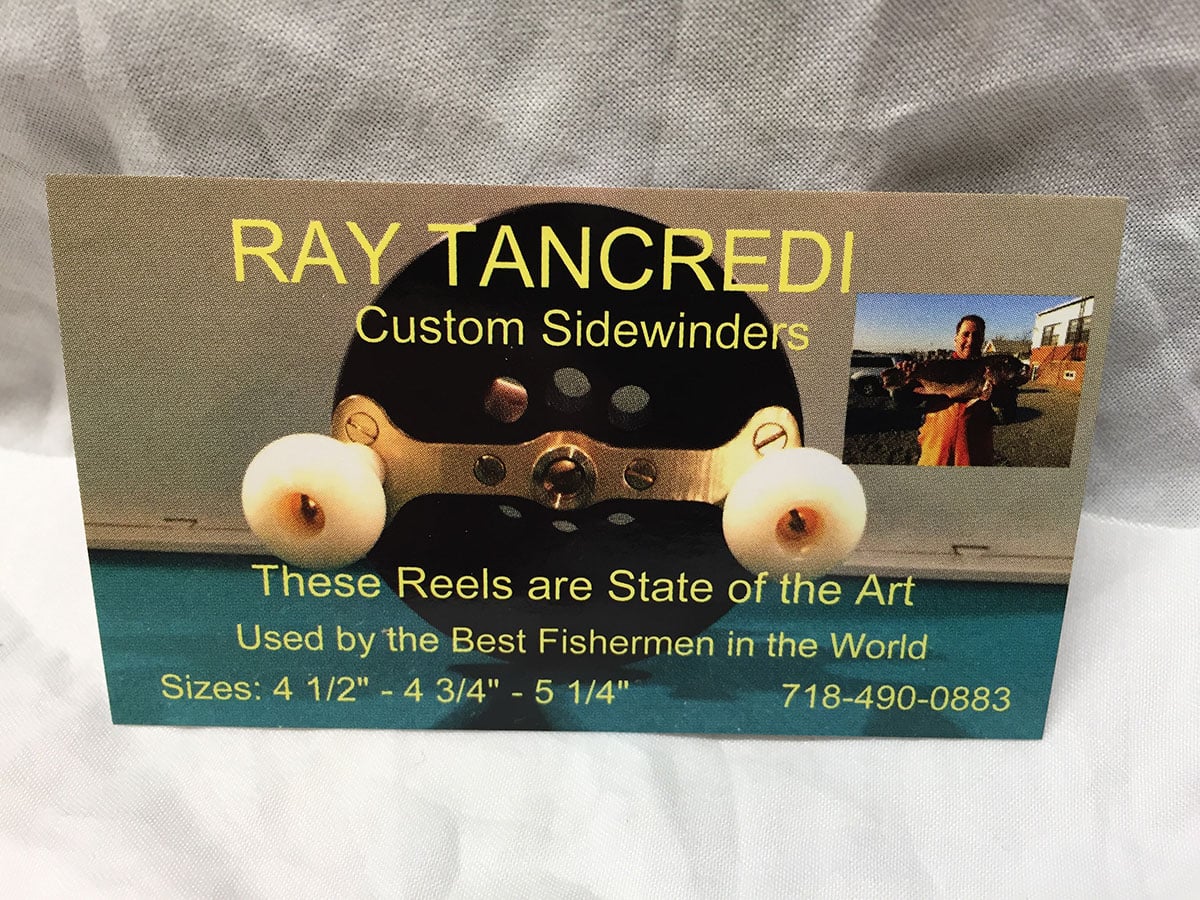
I connected with Raymond Tancredi, a manufacturer still producing these reels as of the date of this article out of Mrytle Beach, South Carolina. He grew up in old Sheepshead Bay, fishing both recreationally and commercially as a pinhooker. Ray produces sidewinders in only a few sizes nowadays. His business card proudly displays his reel and the available sizes of 4-1/2, 4-3/4, and 5-inch sidewinders. I have been using the 4-1/2-inch model and find this size to be the most versatile along the East Coast – one could fish for fluke, sea bass, cod, and other bottom fish although this reel is primarily used for blackfish.
Ray is a machinist by trade, and he credits several local anglers and those in the scene for working out the issues and spreading the word such as Joe Arvizzigno, the late Stewart ‘Red’ Marks, and Steve ‘EC Newell Man’. He can be reached by phone at 718-490-0883 to place an order.
Uses, Pros, And Cons
I asked Ray what he prefers to spool it with, and he recommended 50-pound Jinkai monofilament line if you can still find it. I personally prefer a monofilament of 40-pound test as this is generally easier for me to break when hung up on bottom, though I will add the caveat that I am not targeting trophy blackfish. I do put a 50-pound leader to help with the chafing and abrasion resistance from the wrecks or reefs.
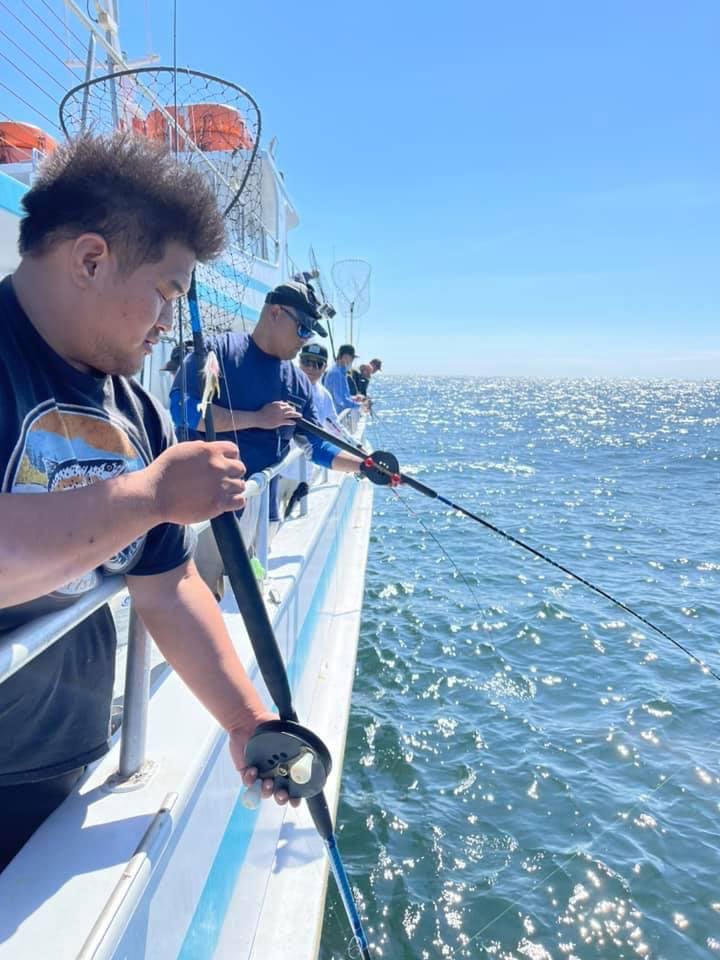
Another sidewinder user I interviewed, Joe Cho, said he has a couple spooled with braid. He elaborated on his viewpoint, preferring monofilament for the faster currents while braid is used in the lighter currents. The best use of a sidewinder is considerate of the conditions: If one is on a party boat which is swinging a lot when anchored, this reel has an advantage by enabling the angler to let out line with the lift of a finger and allow the angler to stay on bottom structure for longer without spooking blackfish. Many anglers believe blackfish to avoid a bouncing, moving sinker and prefer a still presentation.
A unique feature of the reel is the direct drive and 1:1 gear ratio. It is the angler and the fish: no fancy drag or gears. With a 1:1 gear ratio, it can be painfully slow compared to the retrieve of the reels we have today such as the 5:1 or even 7:1 gear ratio. That said, it is a winch – one really can bear down on the handle and pull a ‘tog or cod out of gnarly structure.
The intentionally unhurried speed may also help an angler release their catch. When fish are rapidly brought up from the depths to the surface, they can sometimes embolize: the eyes bulge, the insides extrude, and air-filled bubbles appear under their skin. In essence, this fish experienced the bends. Steady retrieval and a moderate ascent to the surface can allow for a better recovery and release of that fish. Ray told me that the Sheepshead Bay pinhookers, commercial rod and reel fishermen of that region, favored these reels for keeping blackfish healthy and swimming for the live market.
Lastly, a con of this reel is the castability. It is a difficult reel to cast, with an unusual birds nest of the line getting wrapped around the post between the reel seat and arbor if one is not careful. Joe Cho and Ray recommended casting the reel ‘face down’ to eliminate the birds nest. Most times, dropping the bait straight down to structure will be enough.
Maintenance And Final Thoughts
Ray shared a story of an angler who loosened the knurl of the spool, spat on it for lubrication, and tightened it. “Good as new” the angler said while he chuckled. Ray stated grease should be avoided because debris such as sand can get stuck in it. He recommended lubricating it with a 3 in 1 oil. Once in a while, it should be taken apart and the bushing can be cleaned with WD-40 and re-oiled.
The sidewinder is not a concept of the 21st century, though contemporary materials and improvements in design modernize it. The knucklebuster can be a slow, literal pain to use at times. To me, the reel is more than just a tool – it is an analog activity connecting to a simpler, nostalgic past when brandishing such a piece could tie an angler to a particular region and place. It is an opportunity for an angler to deliberately take a gradual approach and go back to the basics. At its finest, it is a statement about New York ingenuity, mom and pop manufacturing, and an angler’s pursuit of a never-ending challenge.