For more than 30 years, Massachusetts has kept up a stocking program for northern pike and it’s has yielded mixed results as far as successful spawning populations are concerned, but from an angling standpoint, it’s a definite win. If you would like to try your hand at hooking one of these dinosaurs of Massachusetts’ lakes and ponds, a good place to start would be the mass.gov page dedicated to pike and pickerel. Here you will find a list of pike-stocked waters and a corresponding listing showing when they were last stocked.
You’ll see that 11 ponds receive semi-regular stockings and those are East Brimfield Reservoir in Sturbridge, Rohunta Lake in Salem, Buel Lake in Monterey, Holland Pond in Holland, Cochituate Lake in Framingham, Cheshire Reservoir in Cheshire, Quaboag Pond in Brookfield, Spy Pond in Arlington and three ponds that straddle the border between Worcester and Shrewsbury, Lake Quinsigamond, Newton Pond and Flint Pond.
There have been many others over the last 30-plus years that continue to put out fish in spite of not being stocked in more than 20 years. In addition to the ones noted above those include, Wequaket Lake in Barnstable, Quacumquasit Pond in Brookfield, Hamilton Reservoir in Holland, Woods Pond in Lenoxdale, Onota Lake in Pittsfield and Pontoosuc Lake in Pittsfield. Additionally, the Connecticut River, Housatonic River and Concord River all contain pike as well. And in many of these waterways, northern pike are known to successfully reproduce setting up sustainable populations.
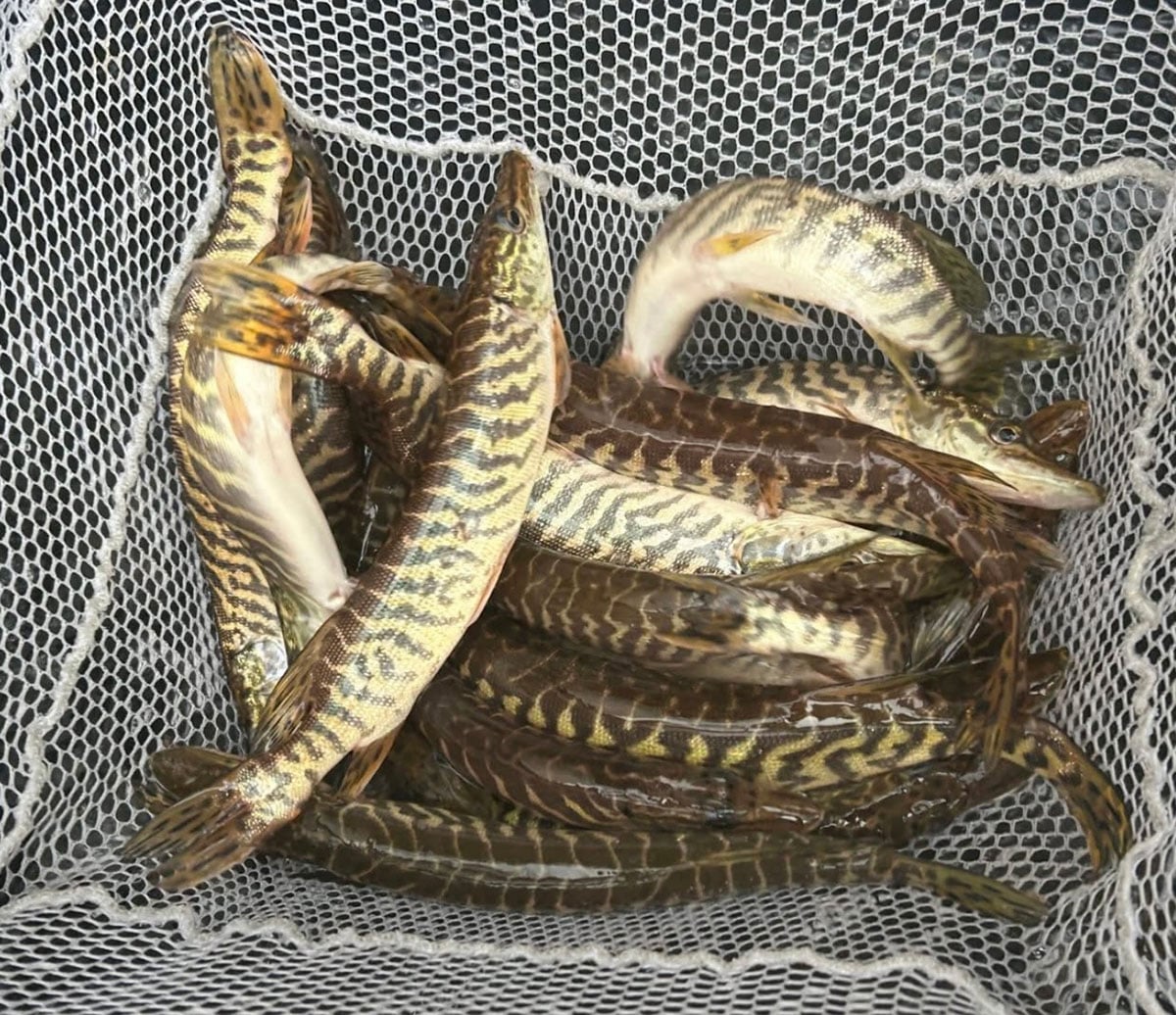
Last month, the Massachusetts DFW stocked more than 2,000 northern pike into Quaboag Pond in Brookfield. These pint-sized pike measure about 11 inches long and will take 2 to 3 years to reach the state’s minimum harvest size of 28 inches. The pike were obtained through a cooperative exchange program courtesy of New Jersey Fish & Wildlife. These toothy gamefish are a prized target of ice fishermen, but will readily strike lures and can be caught year round.