Focusing in on deeper wrecks for summer sea bass.
The tuna craze along the East Coast in recent years has had many New York and New Jersey anglers running to their favorite tackle distributors for outriggers, jigs, chains, Side Trackers and all the essentials needed for a solid season of bluefin and yellowfin tuna fishing. These days a large offshore overnighter is not necessary since some of the best tuna fishing has been as close as six miles from any one of the six south shore inlets. Indeed many small boat owners have jumped on the bandwagon and for the most part, enjoyed some exceptional tuna fishing close to home. Then again there are many times when the tuna bite is as far as 25 to 30 miles off the beach by such wrecks as the Bacardi, Essex and Coimbra which on calm days, you can find crafts as small as 18 feet trolling, jigging or chunking off these offshore wrecks. Very rarely however will you find any anglers bottom fishing on the wrecks.
I have been tuna fishing with my buddy Tony Lima many times on his boat and we went over the Coimbra and the recorder lit up with life. Man oh man how I wanted to send down a jig or a baited clam, but when you are trolling and concentrating on nailing tuna you just don’t have the time. Besides my friend Tony wasn’t about to bring in his spreader bars to do some wreck fishing. Truth be told, as a veteran hardcore bottom fisherman, I take wreck fishing over tuna fishing any day. And that is what I have done many times since aboard my 21-foot Parker and let me tell you that you aren’t black sea bass fishing until you fish the offshore wrecks where most of the biscuits ranged from 3 to 5 pounds. In addition, cod, white hake and all the red hake you care to catch as a by-catch. Therefore if you want to beat the summer doldrums, consider a trip to the offshore wrecks for giant sea bass and a host of other tasty treats. It will take a bit of planning which you can leave after breakfast and be home in time for supper.
The Black Sea Bass
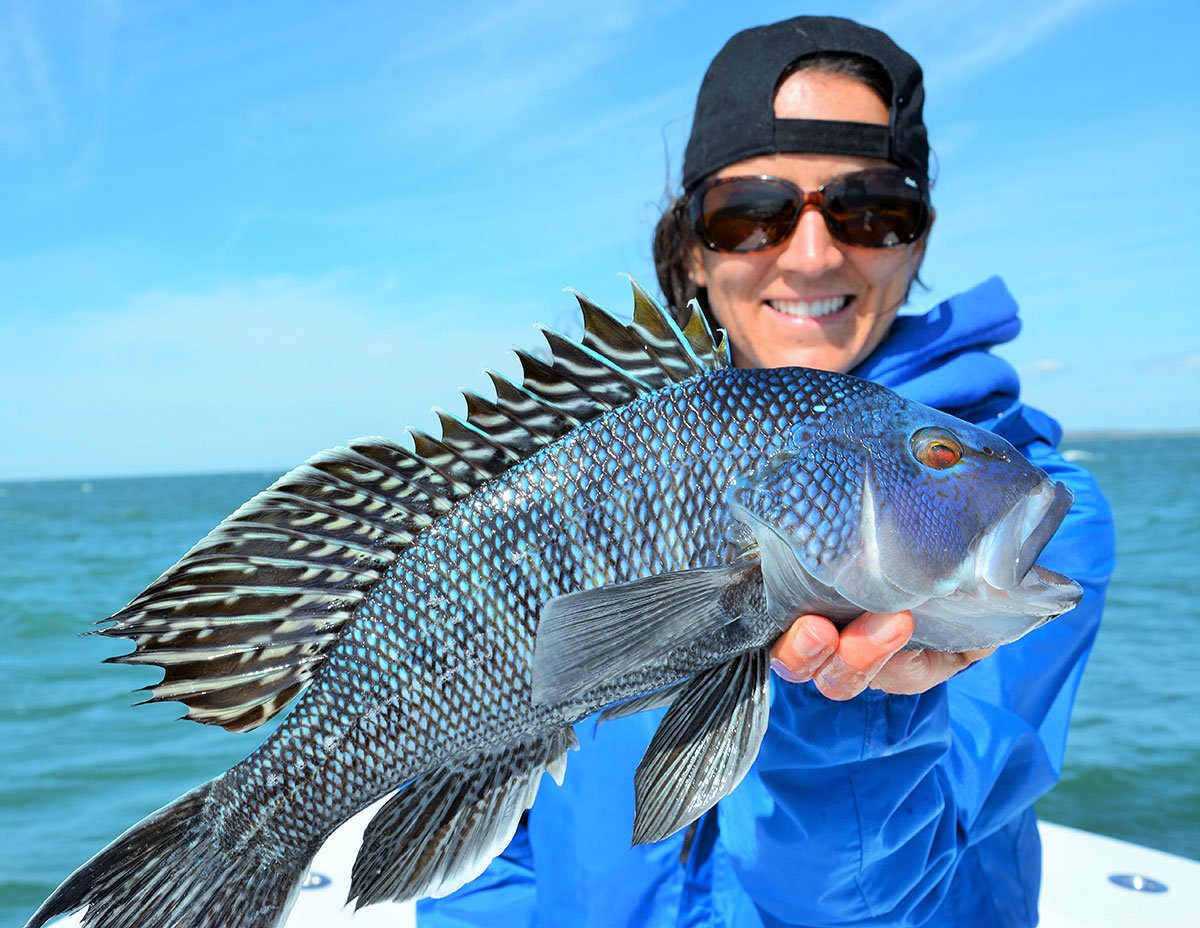
Although commonly found in the vicinity of rocky substrates in shallow water, black sea bass have been recorded in depths down to 430 feet. They spend most of their time on or near the bottom where they frequently aggregate around structure such as piles of rocks, wrecks and man-made structures. The black sea bass are often encountered resting in either a head-down or head-up position. Normally the dorsal fin is folded down but will be raised and spread out as an aggressive signal to other members of its own species. The juveniles remain in the protected estuarine waters where they are found around man-made structures, wrecks and over shell beds.
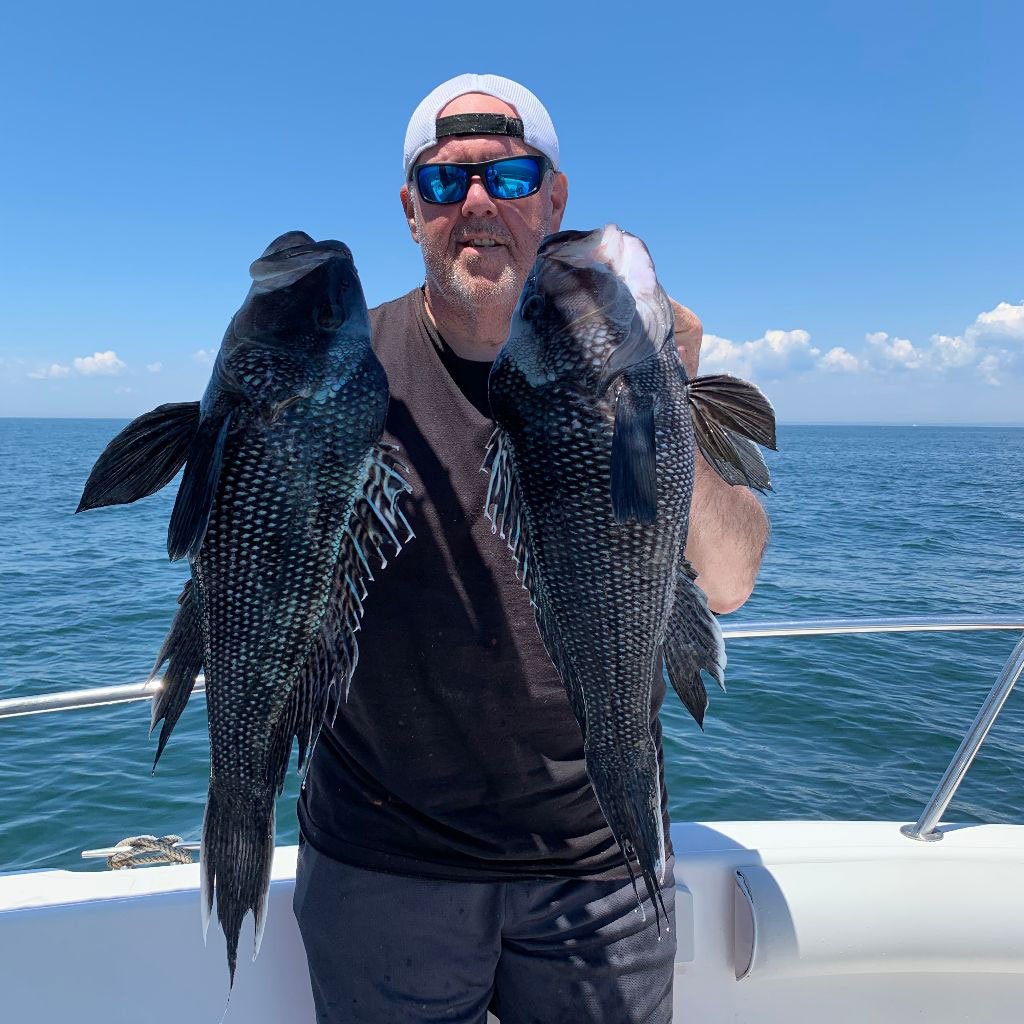
This species is a slow growing fish and they reach sexual maturity at between one and three years old. They are protogynous hermaphrodites, meaning the majority of them begin life as females and then change to males by the age of 5 years old. This predatory species has a broad diet which includes crabs, shrimps, barnacles, worms, bivalves and small fish. In return, the juveniles are preyed upon by fluke, striped bass, bluefish, monkfish and a variety of sharks. Most of the natural and artificial reefs that surround Long Island will hold black sea bass from a half to three pounds with an occasional monster to 5 pounds, while the deep water wrecks of 185 to 200 feet in depth will often produce true knuckleheads between 4 and 8 pounds. Most of these Jurassic Park spots are on the countless wrecks settled 26 miles offshore of the Atlantic and in the deep rocky bottoms southeast of Fishers Island. The ocean wrecks hold giant black sea bass year-round.
Sea Bass Dig Heavy Metal
The old-fashioned method of hi/lo rigs with natural baits such as clams or cut fish baits remains the sure way of keeping the rods bent with black sea bass. While natural baits fished on standard sea bass rigs do a fine job of catching the indigo beauties, it’s the angler employing heavy metal jigs that catch their bag limits with jumbo to monster fish. Actually, slow pitching artificial lures aimed to attract black sea bass is not that difficult, especially due to the voraciousness and aggressiveness of this particular bottom dweller. Black sea bass are not choosy and will gladly go for the man-made jawbreakers.
As for the artificial lures, there are a number of gadgets that do a splendid job of duping black sea bass. Smooth and hammer finished diamond jigs with or without colored tubes, bucktail and leadhead jigs with soft body plastics, flutter and butterfly jigs as well as skirted ball jigs just to name a few. While the list of sea bass arsenal is broad, water depth, the strength of current and the time of year are all key factors to what tactic is best suited according to location and conditions.
Since black sea bass spend most of their adult lives feeding and sprawling along bottoms of tough terrain which include rocks, reefs, wrecks and shellfish beds in the deep cool waters of the Atlantic Ocean or any of the Sounds up and down the coast, it is paramount to keep those costly jigs from hanging up and becoming a donation to Davy Jones’ Locker. Therefore, to fish a jig properly when targeting black sea bass, start by dropping the jig until you hit bottom. Then crank the reel one half-turn to keep it 12 to 18 inches off the bottom, which is where sea bass tend to feed. In addition, keeping the jig off the bottom will cut down the losses of lures. It is fundamental when jigging to keep your fishing line vertical. If your line is swinging away from the boat and off the strike zone, try a heavier jig. Lift the rod tip making the jig dart up from the bottom, then lower it back down and continue to repeat the process. This motion will get the attention of jumbo black sea bass.
Jig Tackle
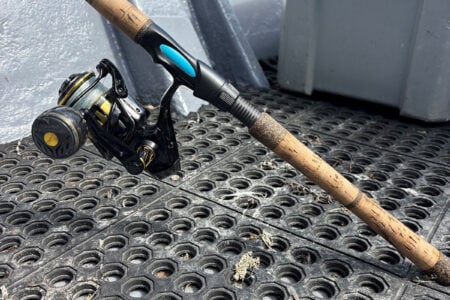
Speaking of rods, conventional outfits in the 3/0 to 4/0 class is paramount for jigging black sea bass in the deep. The list of manufacturers that build conventional sticks specializing in deep water jigging are countless. Shimano, G-Loomis, St. Croix and Tsunami are just a few brands that produce jigging conventional rods. As for reels, nothing beats the workhorse of a Daiwa Saltist or Saltiga. Indeed these combos can be costly but you get what you pay for—and they’ll last many years if you treat your tackle with a bit of TLC.
Most conventional reels today are designed to handle braid which is a must for deep water jigging. When using braid as your main line, be sure to tie an 8-foot length of 40- to 50-pound test fluorocarbon leader to the main line via an Albright Knot. This will lessen the visibility of the leader which in turn lessens the skepticism of any jumbo biscuit daring to commit to the artificial offering. Should you find, for some reason, the black sea bass are playing hard to get, adding a 3 or 4-inch white, chartreuse or new penny Gulp Swimming Mullet to the hook will get their juices flowing and turn the bite on.
Be Sure Before You Go
Before you make the trip to the offshore shipwrecks, you want to be sure the wreck is there. Most anglers will look at many websites online with LORAN and GPS numbers way off from where the pieces should be. Sometimes they’re close to the numbers, at times spot on and some numbers are nowhere near where they’re supposed to be. At the end of this article I am giving a few wrecks that are dead on and you most certainly can trust they are spot on.
The ocean is full of shipwrecks and I strongly suggest purchasing a NOAA ENC Wrecks for fishing and diving chart. One of the better Long Island wreck charts that is pretty accurate is from StrikeLines Fishing Charts. During the summer months you’ll want to hit the wrecks laying in 125 to 150 feet of water. If you look to venture out during the winter, then the wrecks close to 200 feet will hold a slew of big black sea bass. For the month of August and September, the 150-foot depths are ideal for true knot heads.
Make sure to have a plan of what wrecks you are going to hit. Most times you will only need to visit one for a box full of jumbos. However, if for some reason you strike out on a particular piece, be sure that the next wreck is no more than 10 miles from one another. Before heading out be sure to leave the GPS numbers with a friend or family member in case you don’t return at a reasonable time. They can contact the Coast Guard which will make finding you simple in case of a breakdown.
Learn The Ropes
Fishing gear is not the only gear you’re going to need. For starters, you are going to need an anchor with scope long enough to sit on a piece of the wreck. Most of these wrecks are large and you may need to do a bit of searching to find a productive chunk. Unfortunately, most wrecks will have small pieces that are full of life while other portions of the wreck may be barren. My arsenal includes two anchors both with 600 feet of scope and two wreck anchors with 300 feet of line. The reason for two anchors is in case I lose one in the wreck I have a backup, and the wreck anchor is for when I can latch on to a high piece and adjust accordingly over the productive pieces.
| PRODUCTIVE OFFSHORE WRECKS |
| The Oregon 40.31.915 / 72.51.548
The Miller 40.39.301 / 72.32.837 The Wolcott 40.35.016 / 72.58.767 The Shangri La 40.37.777 / 72.50.171 |
Before going right to the anchor you may want to drift and get a feel of the wreck, especially if you’ve never fished it before. Once you find the bite, take another drift through the productive zone and mark the spot with the MOB button on the GPS, give it a name or number and save it for future reference. My GPS is loaded with productive numbers, which takes the painstaking job of locating the bite out of the equation anytime I return. Season to season, the same pieces have always held fish in the same locations—whether it be the bow, mid-ship or stern. In my experience, I have always found the bow of most wrecks to produce the biggest black sea bass along with mid-size codfish.
If you take your bottom fishing seriously, you may want to invest in some extra gear and give the wrecks of the abyss a go. I can almost guarantee you’ll be hooked and looking forward to your next trip. Be sure to watch the weather, making sure seas will be relatively calm for a few days straight. Be certain to have a life vest for all on board, two fire extinguishers that are up to date, a quality VHF Radio, plenty of fresh water, and a first aid kit suited for offshore fishing. Once you check off the list, you’re good to go—and to bring home a tasty dinner of fresh black sea bass.