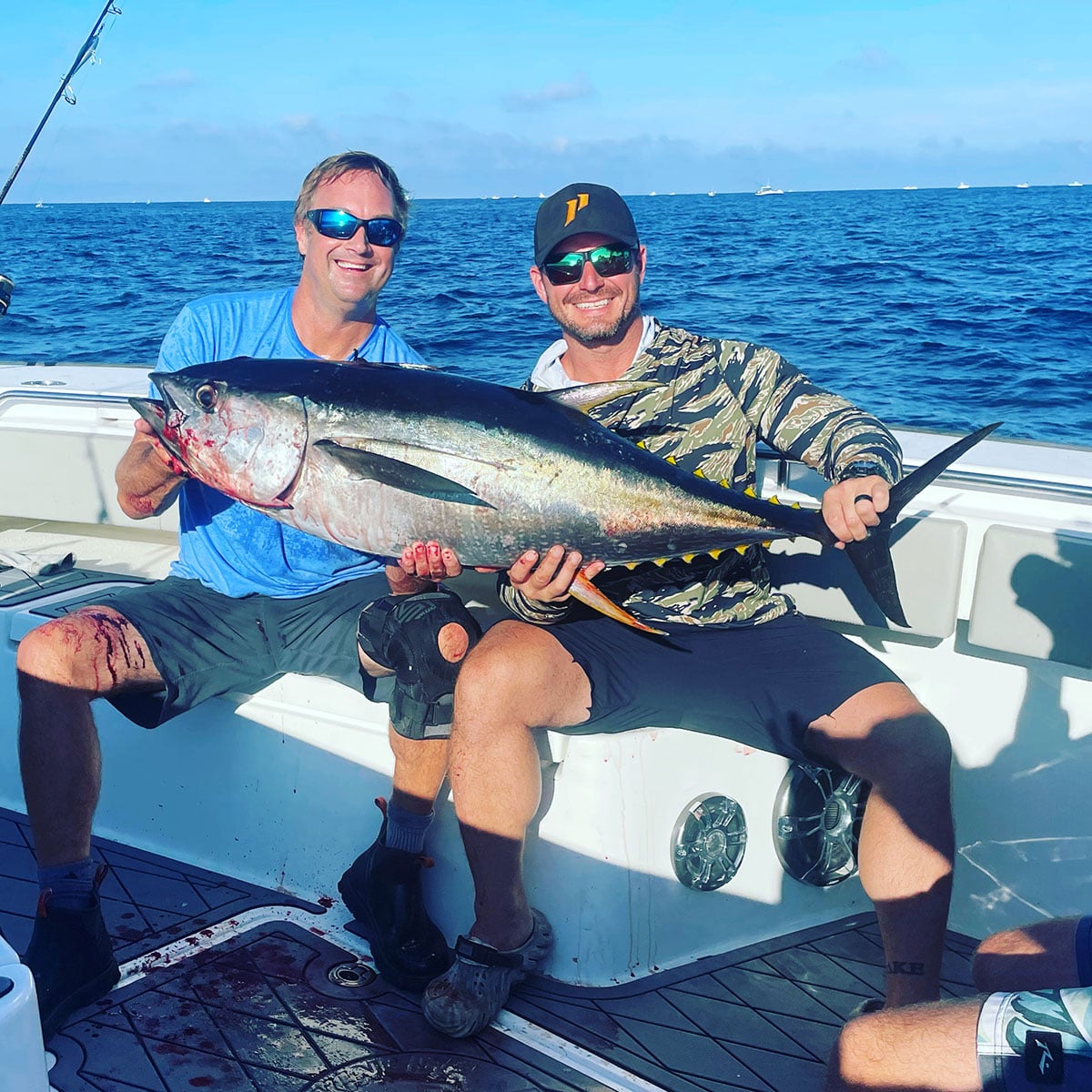
Check these 10 items off your list before heading to the offshore grounds!
Planning a canyon trip isn’t like heading out for a day on the flats. It’s a long term commitment, with many variables in play as the runs are 70 to 100 miles on average depending where the fish are and your home port. You need to cover every aspect for the long haul which could run anywhere from 14 hours on up to a 24- to 30-hour overnight junket. My friend Capt. Sean Reilly offers up his Top 10 tips to insure you are best prepared to make the run.
1 Get Your Intel Straight. “Check your favorite forecast water temperatures, edges, eddies, moon phase, and overall projected marine forecast for seas. When you have a 4- to 6-hour run each way you need to know your 24-hour weather window well.” Knowing where to predict the water and where it’s moving to so as to chart out the perfect plan to start your troll or chunk drift and where you intend to end up.
2 Call in Bait Order. “Always get your bait ordered two to three days ahead of time, so any ballyhoo, butterfish, and sardines are all ready for you to pick up the day before. Don’t leave your bait order to chance, as during the peak of the canyon season bait can run out fast from tackle shops.” Baits should also be prepped and ready to go with ballyhoo properly salted and rigged set in a cooler, butterfish and sardines thawed enough so you’re not deploying chunks of ice blocks.
3 Ice Up. “Keep your catches cool and fresh. We always bring at least 200 to 300 pounds of ice on any canyon trip to ice down the tuna and mahi. Nothing worse than going through all that trouble and bringing home mushy, warm meat or having fish sitting in water getting stale.”
4 Proper Tackle. “There’s no sense in being out there if your gear is not in top form. Retie all knots, look over all the terminal tackle, bring plenty of proper sized hooks, leader material, swivels, and have all your rigs and leaders tied up the night before so you are not messing around on boat tying rigs when the bite is on. Set your drags ahead of time and have all rods prepared to drag a ballyhoo or clip on a spreader bar or daisy chain.”
5 Safety Gear. “Always be prepared with safety in mind first. Make a checklist of life vests, EPIRB, Spot, Sat Phone, First Aid kit, allergy meds, aspirin, antibiotics, anything to keep any situation under control as best as you can.” With any electronics, always replace batteries and ensure your subscriptions are up to date. Prior to departure, let your crew know exactly where the safety gear is and how to use it.
6 Cut Bait. “We always take one flat of butterfish and cut it up the night before so we are ready to set right up on the chunk bite when the anchor settles.” Put the pre-cut chunks in a 5-gallon bucket and keep it in the cooler so it can be easily deployed once at the location.
7 Clothing. “You cannot underestimate the importance of staying dry. Bring a separate bag full of spare clothing, socks are super important, as are any foul weather gear, back up shirts, pants, long sleeves, sunglasses, hat, boots.” It may be 90 degrees on land, but it’s always cooler at sea, especially in the morning and night hours. You can always remove layers, but you can’t put on warm clothes if you don’t have them.
8 File a Float Plan. “Before you take off, let people on land know what your intentions are, where you are running, where you plan on possibly moving to, and what time you plan on returning.” God forbid something occurs offshore, but it’s always good to know people on land are looking out for you and know where you are should the unfortunate occur.
9 Fuel Up. “Don’t wait until sunrise to fill up the boat. Many times gas docks aren’t even open until 7 or 8 a.m., plus there will usually be a line waiting to fuel up. Top the boat off the day before so when you fire up the engines, you can head straight to the horizon.” Never cut it close; leave plenty of gas as emergency reserve in your tank.
10 Food Up. “While it’s obvious to bring plenty of food and snacks, don’t forget to stock up with plenty of fresh bottled water. When battling big game, you will always need to refresh and rehydrate often.” Recharging to stay in the game, alert and awake is key. You need all the strength you can get, so bring the food and fuel you require to stay in top form.