You have the boat and the tuna tackle, now it’s time to set the spread.
When people break into trolling for tuna, they have to account for the tackle required (rods, reels, lures, safety gear, etc.) just to get on the playing field. But once lines are finally set, then it comes to time to present the presentations properly, and at what speeds. The more a skipper understands the reasoning for each decision, the more apt they’ll be to make the right choices.
The first, and seemingly most obvious, part of the trolling speed puzzle is vessel type and what kind of power is propelling it while on troll. Some boats run off large inboard/outboard engines where the propellers are under the vessel. Numerous others cruise off outboard engines that can range from a single screw to as many as four or five. Each boat fishes differently of the unique based on the boat and its power particulars.
A huge component of trolling for tuna, especially on or near the surface, is understanding how to place lures and bait in “clean” lanes of water. Captains want to avoid pulling their tackle in the bubble trail and on the crests of each wake. Rather they want to maneuver the gear so it’s in the most natural habitat behind and between the wakes. Various vessel designs and power options dictate nuances in the RPMs which translate into miles per hour moving across the water. There are good baseline speeds at which to pull, but there is certainly experimentation that is absolutely necessary. Captains who log RPMs and corresponding speed under specific conditions that catch or skunk will improve their fishing outcomes over time.
Have you ever heard a captain say they wish they hadn’t sold a prior boat because it caught so well? It sounds silly, but there’s definitely some credence to that belief, given that a variety of harmonics and hum are created at each trolling speed by any particular vessel. Tuna, and fish in general, recognize the sound of prey from a great distance away, and a tuna’s survival ability is enhanced by those detection skills of hearing a bait ball or other food sources from afar. When you consider the sound of an engine combined with spinning props and the distinct sound they send out, tuna may be enticed or curious by the sound, or perhaps they’re just not attracted or even spooked by the sound emitted by the engines and the splash of the vessel. In addition, tuna may rise from the deep to inspect what food source is available based on what’s taking place on the surface. Tuna already on the top, conversely, may be spooked by an approaching boat.
Most fishermen troll for tuna somewhere between 4.5 and 8 miles per hour, with the majority choosing to troll at 5 to 6 mph. Some captains even catch at 10 to 12 mph. Tuna are a fast, agile fish so increased speed isn’t always an issue. Spreader bars and Sterling Wide Tackers create a lot of drag in the water so they tend to be trolled at a baseline speed of 4.5 to 5.5 mph. Anglers should note the speed on the GPS is the speed of the boat. If the boat is going with a strong, following current, the lures may be traveling faster than what reads on sounder. The opposite is true when going against the sea, wind or current. The lure appears slower to the fish despite the digits shown on the electronics.
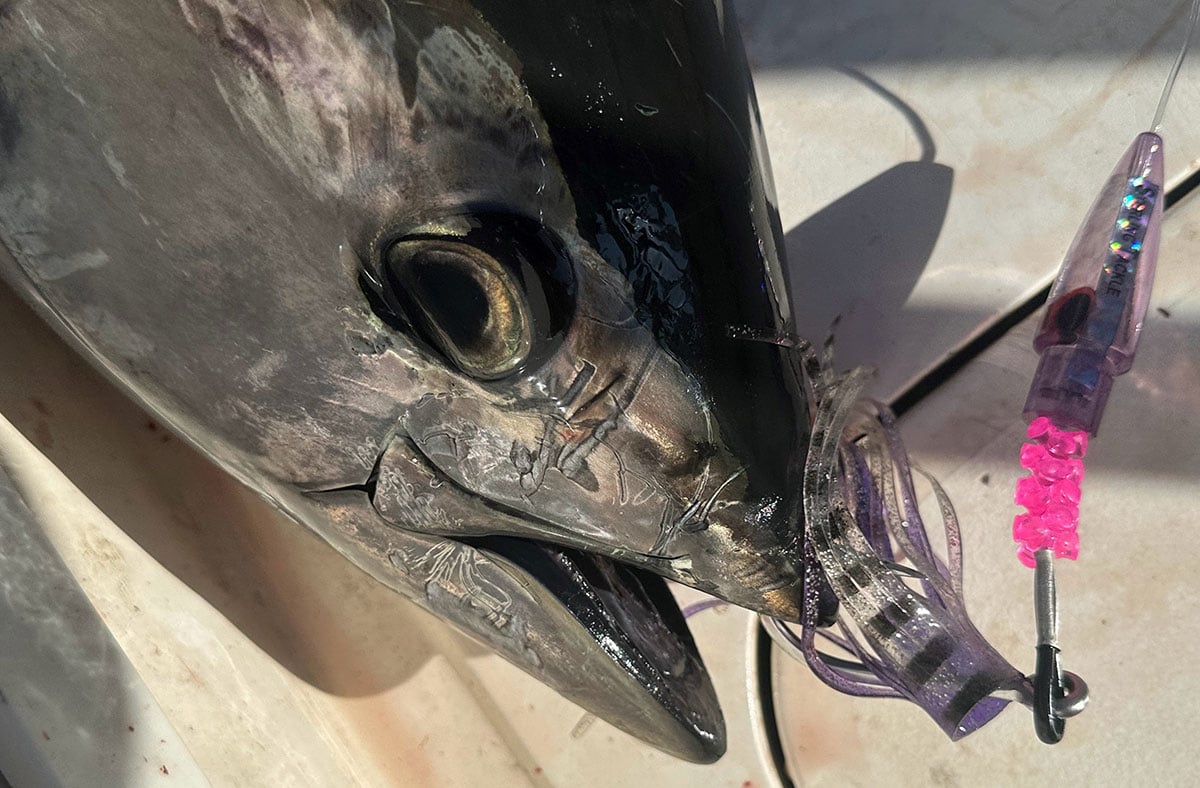
Also, bars, birds, chains and cedar plugs are going to behave slightly different in a variety of sea conditions and how fast they are fished in those seas. Good captains prioritize getting the perfect performance and appearance out of their lures so they’ll adjust troll speed until they observe the action they desire in their lures.
The same principals apply when pulling ballyhoo, although those lure/bait combos slice the water more than a bar. The idea is to get the ballyhoo swimming correctly in clean water or desired depth. Trolled too fast, a ballyhoo may go from performing perfectly to poorly. They will also get washed out quicker when pulled at higher speed so periodic inspection is important especially if the water is warm. If fishermen are using lures such as weighted Joe Shutes, trolling around 4.5 to 6 mph is usually ideal. The lower end of the range will show them lower in the column and the higher end will keep them closer to the surface.