Bluefin, yellowfin, billfish, and all that matters in the ICCAT world.
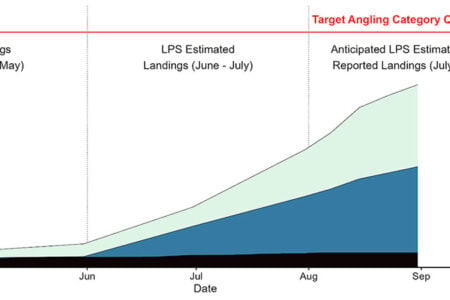
In our weekly offshore column in the October 16, 2026 digital edition of The Fisherman, I reported on a Highly Migratory Species (HMS) advisory panel meeting in late August where NOAA Fisheries revealed that recreational bluefin landings could lead to action this fall to close the Angling category fishery.
The day after that article appeared, I added an Editor’s Note to the bottom of the piece, reporting on an October 13, 2026 announcement from NOAA Fisheries about how the agency was adjusting the Atlantic bluefin tuna Angling category quota by transferring 15 metric tons of quota – roughly 33,000 pounds – from the Reserve category. “Specific to this action, NOAA Fisheries is increasing the large school/small medium (measuring 47 to <73”) subquota,” the NOAA bulletin stated.
The fact that NOAA Fisheries tapped into their official Reserve quota to offset an Angling category overage problem is precedent-setting; in speaking with friends involved in the HMS process for many years, not one remembers our federal government ever doing that on behalf of the recreational fishing community and more equitable use of the reserve quota. “For years, the reserve has been used almost entirely and exclusively for the general category to outset overages,” said John DePersenaire, Director of Government Affairs & Sustainability and Viking Marine Group, adding “I think we all welcome fair use of the reserve to keep the angling category season open and very this as a very positive regulatory action.”
Of course, our bluefin quotas are so ridiculously low that it is nearly impossible to constrain landings to those limits, especially considering the efficacy of the data. “Everyone I know involved in this industry can tell you that effort and harvest was significantly down, so where and how they came to their conclusions is a mystery,” noted Nick Cicero of the Folsom Corporation, a major wholesale fishing tackle distributor nationwide. “All my indicators show that the recreational fleet left the dock far less frequently and caught far less than they typically do and consequently bought far less tackle and far less fuel,” Cicero added.
The general consensus among many of the folks with whom I consult on many of these management scenarios is that there’s a pretty significant disconnect between what anglers are seeing and catching, versus what NOAA Fisheries is reporting. That of course is a major component of President Donald Trump’s executive order, Restoring American Saltwater Angling and Recreation which was profiled in the November monthly edition of The Fisherman.
If you’re an Angling category permit holder, it’s critically important that you accurately report on all of your catches, with every trip. You can read for yourself about the Large Pelagics Survey that NOAA Fisheries ultimately relies upon to gather catch and effort information from vessels targeting large pelagic or highly migratory species; at the end of the day, the more robust the information that permit holders collect, perhaps the better this LPS results will be somewhere down the road.
The other thing that better HMS data provides is, theoretically, better access through increased quota allowances. The more pounds of fish we catch in year one, the more quota we can argue for in year two. Much of that annual debate comes by way of international negotiations through the International Commission for the Conservation of Atlantic Tunas, or ICCAT. Essentially the United Nations of Atlantic Ocean pelagics, it’s in these high-level meetings where U.S. representatives hope to get the best deal for fishermen back at home.
From November 16-23, the 25th Special Meeting of the Commission for ICCAT will be held in Vilamoura, Portugal. According to Ray Bogan, the U.S. Recreational Commissioner to ICCAT heading overseas this month, topics of interest likely to draw the greatest interest for The Fisherman readers heading into 2027 are yellowfin tuna and billfish (blue and white marlin, as well as roundscale spearfish) management. Bogan noted how swordfish and sharks in general, and both mako and blue sharks in particular, will be addressed.
Back in 2022, ICCAT implemented two-year retention ban on North Atlantic shortfin mako shark which the commission had deemed called “overfished.” That “two-year” ban ultimately continues through today, but any management discussion around the ICCAT table related to a future mako shark fishery along the Atlantic Coast would be welcome.
“The agenda is full, and each species is very important, but yellowfin, for which a two-day intercessional is planned immediately before the regular meeting, will likely be the topic that prompts the most work and involvement at the regular meeting,” said Bogan, explaining how Total Allowable Catch, allocation, and measures to protect juvenile yellowfin and bigeye in the Eastern Atlantic are major topics that will be addressed.
For more information on highly migratory species and to acquire your HMS Permit for targeting these pelagics, visit the Atlantic Highly Migratory Species Permit Shop at hmspermits.noaa.gov.