The path to becoming an effective tuna hunter runs the length of an angling life.
With his dog at his side, Gary Cannell spent two years fishing and working his way west to Montana, south to California, then north to Alaska, before he returned home to Brielle, NJ. Back in New Jersey, he got a job on the 85-foot aluminum party boat Super Spray making trips for bluefish. Bluefishing charters ran twice a day and once at night. They’d chum heavily with bunker, then as the bluefish schools moved up through the chum and took the anglers’ chunk baits under the boat, Gary and the other mate would try to manage the mayhem of crossed lines, excited anglers, 8-foot gaffs reaching down and hauling back up with 10-pounds of angry, thrashing bluefish and the ever-present danger of their razor sharp teeth.
It was the early 1980s and bluefin tuna fishing was heating up offshore in the Mud Hole and on some of the inshore humps as well. Bluefin like to eat bluefish, so it’s not surprising that Gary and the crew of the Super Spray would sometimes see bluefin busting nearby while they were gaffing bluefish.
Some of the other New Jersey party boats were offering bluefin trips, so the owners of Gary’s boat invested in 9/0 Daiwa reels with 80-pound mono and they left the dock on their first trip with totes of yesterday’s bunker. “The more chum the better,” they thought as they dumped buckets of bunker over, some of which was so rotten, it wouldn’t sink. It was quiet for quite a while, then suddenly a kind of mayhem broke out that made bluefishing seem like catching sunfish in a farm pond. Medium and giant bluefin were in the chum slick, turning on their sides, inhaling the floating bunker. Within seconds rods were bending and then it sounded like someone was firing a .22 rifle as frustrated anglers with drags set too tight, or too loose, broke off in rapid succession.
It was just too much excitement for the two mates, (who were also the best fishermen onboard), so the captain agreed they could drop a couple baits in themselves. In short order both mates were hooked up. Gary’s rod was bent over the rail in a curve that did not seem safe and line was pouring off the reel. The fish stayed off the port stern quarter for most of the fight, but then it swept under the boat and out the starboard side. Some people are blessed with insight when there is no time to think. Gary backed off the drag and instructed the dazed angler standing next to him to, “just hold this for a moment”.
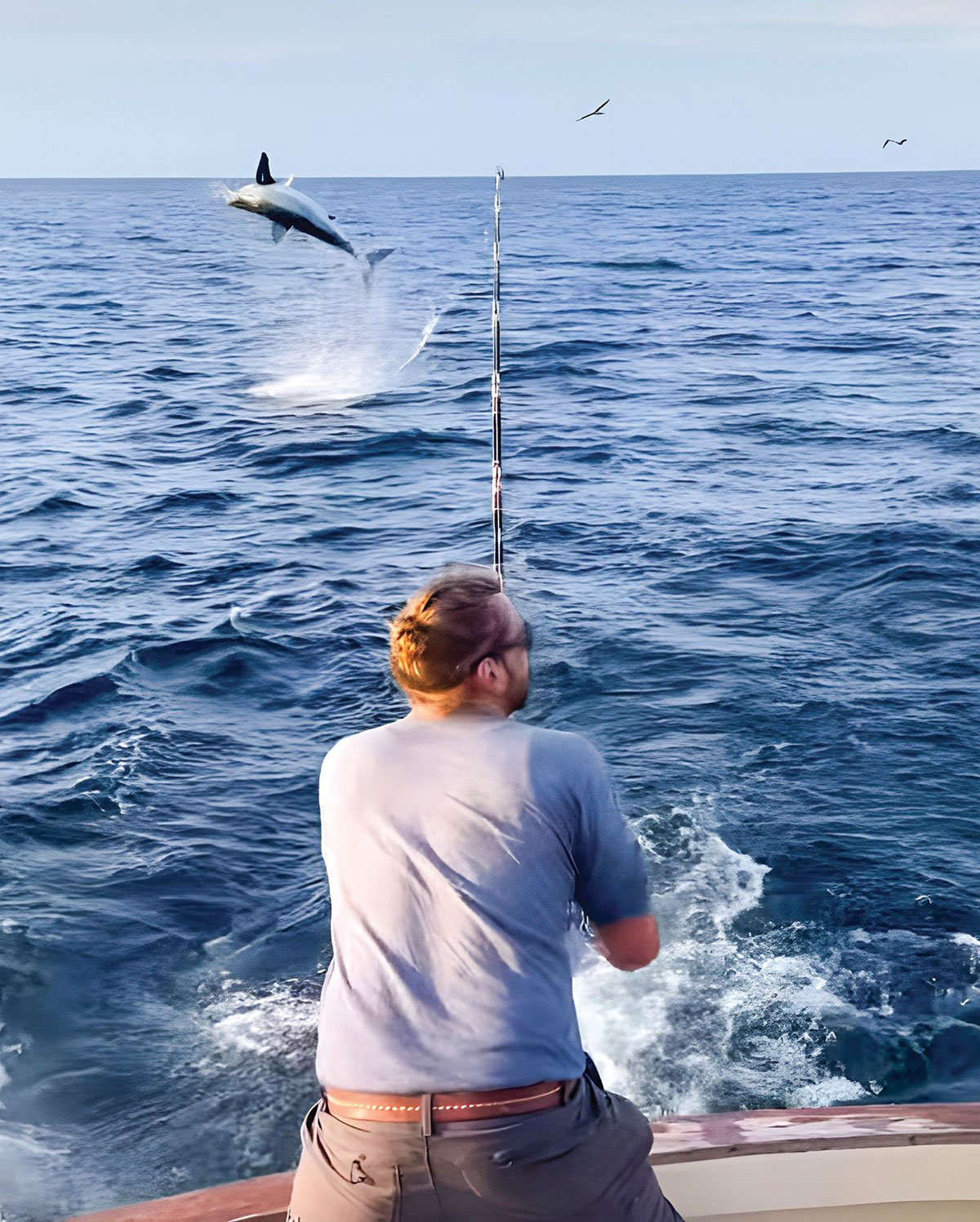
A Clutch Move!
He dashed to the starboard side and grabbed a rod rigged with a heavy diamond jig. He dropped the jig, got lucky and snagged his line, pulled it up, then asked the other angler to come his way quickly, Gary cut the line, retied it and landed the 400-pound fish! That was pretty amazing, but maybe not so much as how they landed the second fish which had died on the bottom and couldn’t be raised. Gary opened the swivel on a heavy diamond jig, then closed it around the other mate’s line and lowered it down his line on a second rod, he jigged it until it stuck and they carefully raised the 800-pounder together on two rods.
A lucky customer also fought and landed a third fish, but it was “only” 300 pounds, which the customer later loaded into the trunk of his car, and took home! The most amazing part of this bluefin blitz was that the party boat was anchored all this time, as if they were bluefishing.
Unsurprisingly, this experience made Gary want to upgrade his mating job to one of the local tuna charter boats, specifically the Ol’ Salty owned and operated by the late Capt. Bob Pisano. Bob was to later become Gary’s mentor and eventual partner in a new 36-foot Runaway named Tuna Hunter. Captain Pisano’s prowess included landing over a dozen 1,000-pounders, one of which set the world record at 1,275 pounds, that lasted a week, before Ken Frazier landed his 1,496-pounder off Nova Scotia.
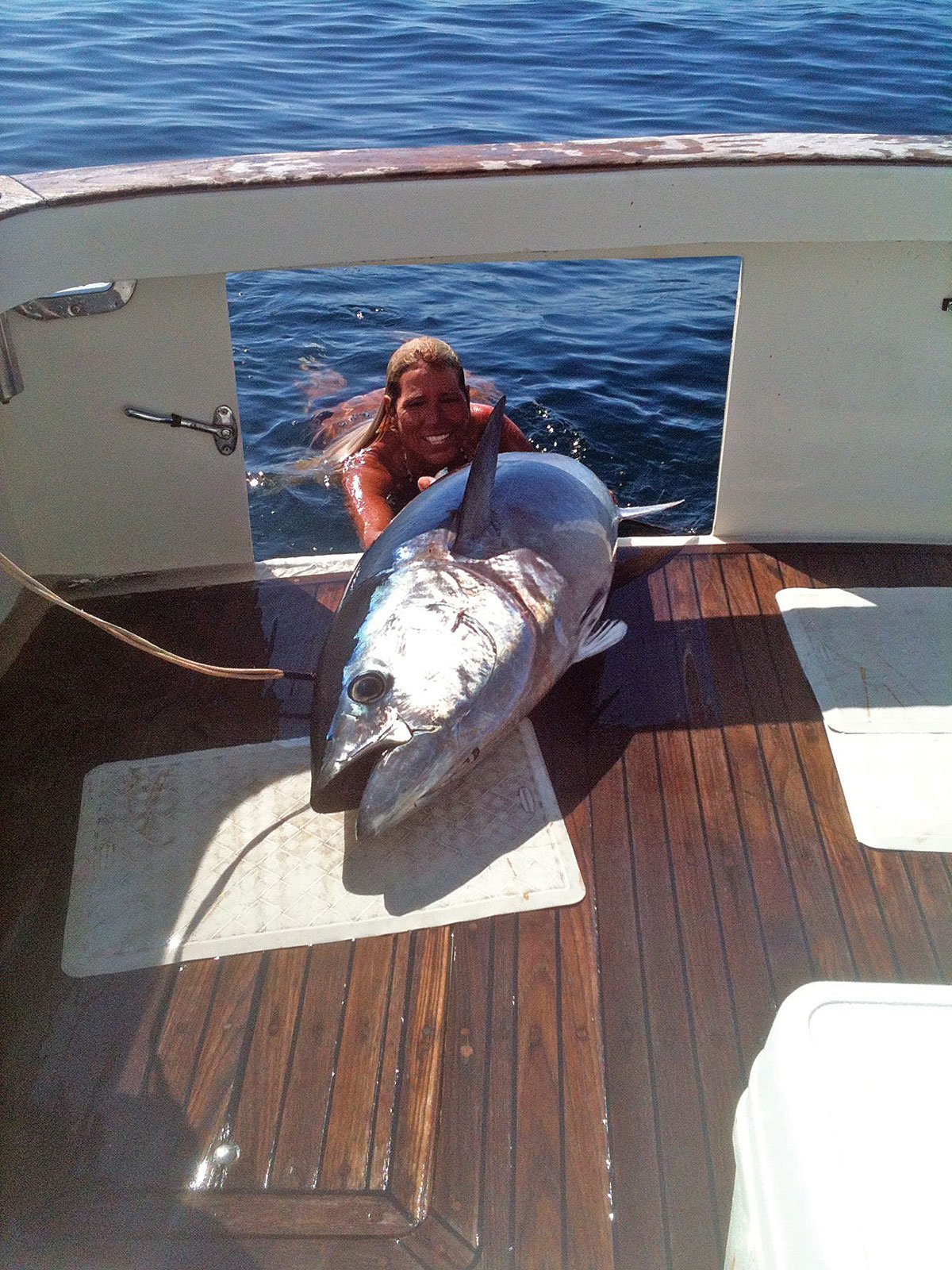
The Tuna Life
How many people do we know that have been able spend their life on the water or in the woods, doing what they love? Not very many, I believe. Life is expensive and the relationships we have with those we love take time, commitment and humility. To realize that lifestyle and those family connections requires a great amount of discipline and intentional effort. Gary has earned the ability to fish and hunt as he does, through his very intentional efforts.
Gary mated for Capt. Pisano the next summer, then helped Bob and his crew build three 36-foot Runaway sportfishermen. One of the three boats built and sold, was bought back six months later. Bob and Gary agreed to go in as partners on this essentially, brand new boat, with the stipulation that either of them could buy the other out. Bob was a very capable and demanding captain. He could see events unfolding during a bluefin fight that most people couldn’t anticipate and he wasn’t shy about letting everyone know what he wanted them to do.
Bob was running the Ol’ Salty sportfisherman and Gary was part of the crew in 1981, when their angler, Roy Parsons landed the 1,030-pound bluefin that remains to this day, the state record for New Jersey.
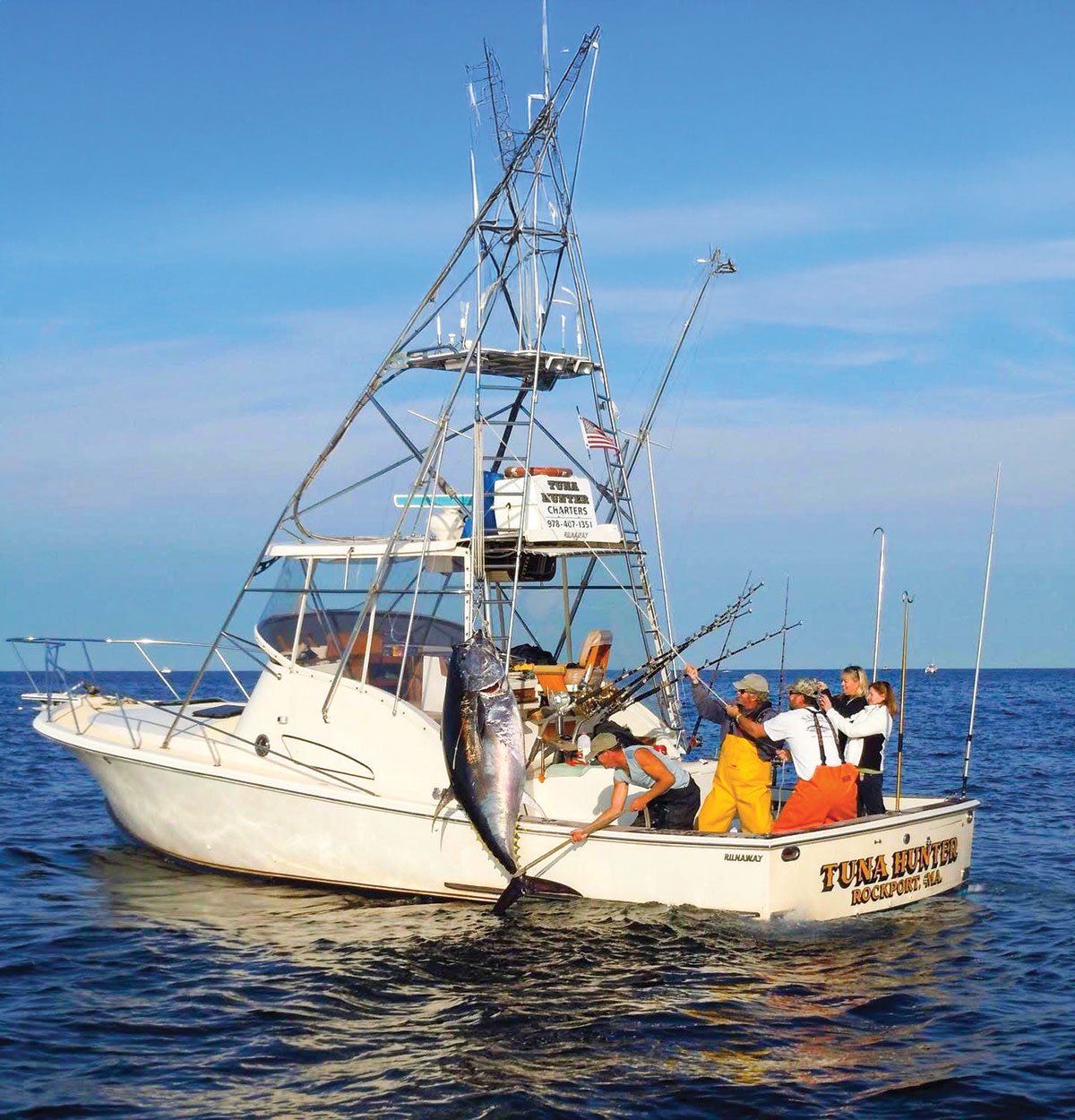
The 36-foot F/V Tuna Hunter is a Harris lobster boat hull that was custom finished by Bob, Gary and the rest of Bob’s crew. It has a very functional cockpit and the same twin Volvo diesels (rebuilt once after 15,000 hours), that were original to the boat. The engine room allows easy access to both engines which made it possible to rebuild both engines, without removing them from the boat.
The Runaway was perfect for charter fishing the Mud Hole a large underwater bowl, where the bottom is thick with silt from the Hudson River effluent. Bluefin of all sizes were attracted to the bait that schooled on the rim and at the bottom, particularly the mud hake. Mud hake are a soft-fleshed groundfish that were often discarded by the coastal draggers working the same area. Imagine the chum line created when a box or more of mud hake were dumped overboard from the dragger’s catch; it was like a bluefin cafeteria line.
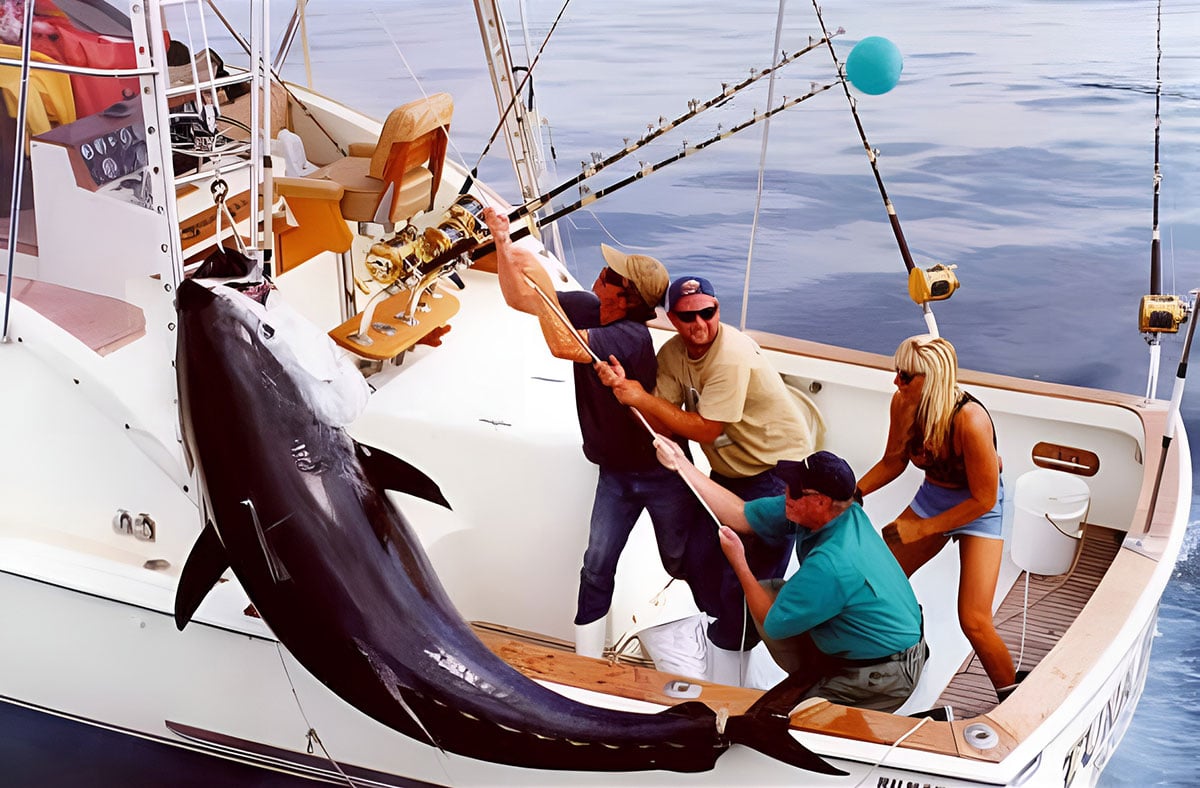
Making Moves
During the 1990s fewer bluefin weren’t frequenting the waters off New Jersey and the Tuna Hunter began chartering out of Montauk, then Cape Cod and then Green Harbor to stay on the fish. Gary bought Bob out and moved the boat to Gloucester, MA to fish Stellwagen Bank where the abundant sand eel population kept tuna and whales concentrated there during the summer.
There was a pretty blonde woman named Karen living onboard a boat in the same Gloucester marina where Gary tied up. Being pretty and living on a boat, made her “a person of interest”, but Gary had to know, did she get seasick, would she be willing to cut chum and other related important questions? She must have really thought he was handsome because she tolerated her interview and even after she found out that the first dinner he made for her was a whiting that had spent the day serving as a live hook bait, she didn’t run away. Twenty four years of marriage later, Karen and Gary are partners in the charter business and Karen often goes as mate, when one of the other mates needs a day off.
Gary appreciates having Karen onboard even more so when they have a bass charter and are fishing tight to the rocks. She’s the only mate he’s ever had that will dive over and unwrap an angler’s line when a big bass takes a turn around a lobster pot rope!
Recent Times
Bait patterns change, as does that of the bluefin. While there is still a large body of sand eels south of Chatham, the sand eels that once covered the bottom on Stellwagen Bank are largely gone, seemingly from the chlorinated effluent of the Deer Island water treatment plant that discharges Boston’s waste water not far to the west of Stellwagen.
Bluefin are opportunistic feeders, feeding at times on codfish, dogfish and even flounders, but their preference is for oil-rich feed such as sand eels, bluefish, mackerel, butterfish and perhaps their favorite, Atlantic herring. “Thank goodness for the presence of mackerel and pogies these last few years”, said Gary, adding “as the inshore herring stocks have yet to recover from the heavy mid-water trawling efforts that have been allowed.”
Asked what his favorite type of fishing is, Gary replied, “a live bait fished from the kite is the most exhilarating type of fishing I know. Watching that bulge of water from a 600-pound bluefin as it tries to stun a big mackerel, then seeing that same tuna leap out of the water and come down on the hapless baitfish has no comparison in any other type of fishing. It is a lot of work to manage the kite, but the potential results are worth it!”
When you have fished bluefin for 40 years, you have seen a lot of change and it’s hard to see some of the changes that come along. Gary notes that, “the National Geographic TV show Wicked Tuna has certainly exposed many more Americans to the thrill of bluefin fishing, but unfortunately it also has led to some unrealistic expectations about the money that can be made and how easy it might be to catch a 500-pounder. Hopefully most viewers understand that the show is scripted to provide drama and they don’t decide to invest in a $250,000 boat expecting to learn how to tuna fish and make it pay!”
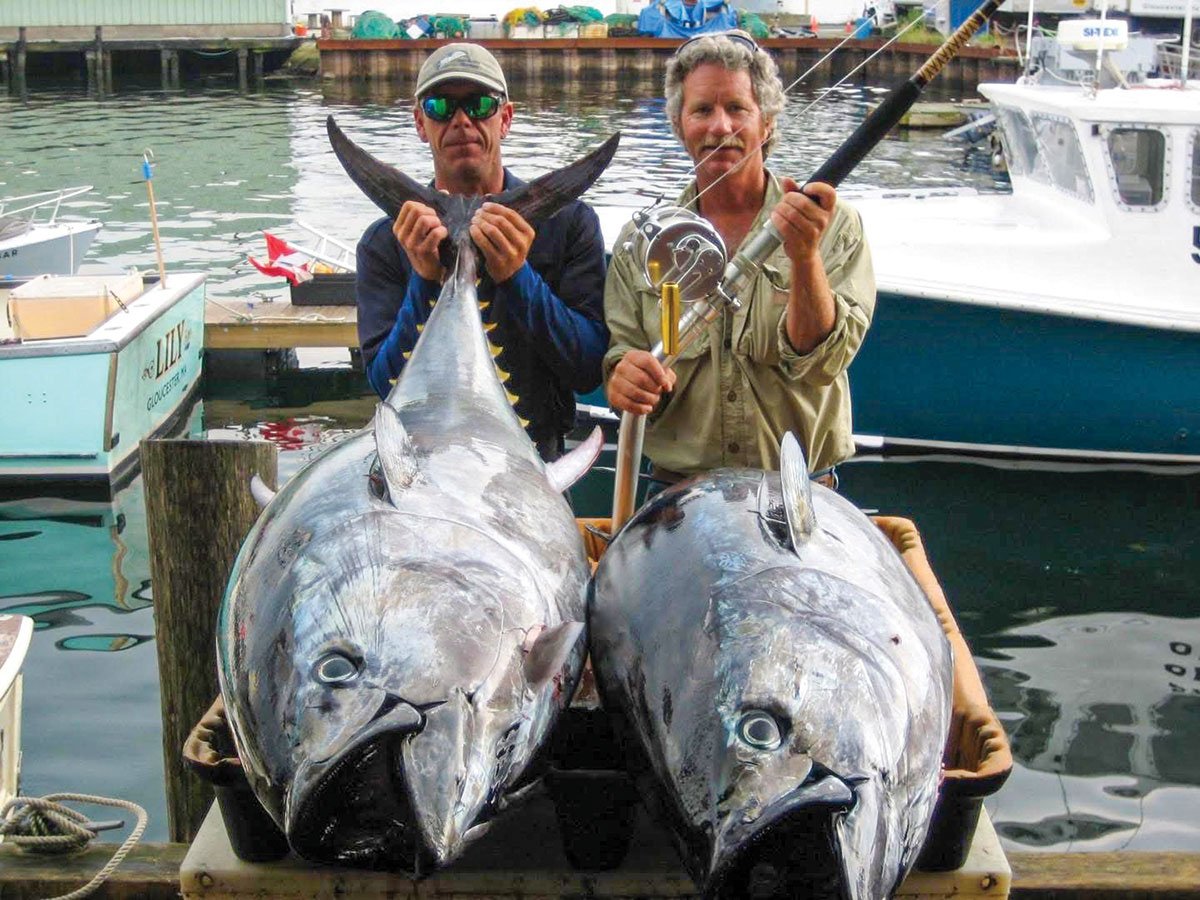
Sharing The Experience
Gary loves how his customer’s faces light up when the line is pouring off a Penn 130. Fishing the three 130’s from swivel rod holders has made such a difference for his anglers, as compared to the past use of a fighting chair. Using swivel rod holders allows an angler tired of reeling to keep the tip bent, to step aside easily, letting another angler step in and enjoy the thrill of all that drag straining force.
Tagging bluefin has been an important part of Gary’s charter business for many years. Often his anglers will elect to fight the fish with a high drag and short duration, then tag, swim the fish and release it. Fighting and reviving a bluefin so that it can swim off with a tag in its back is more complicated than it may seem, but Gary gets a big kick out of working with scientists such as Gloucester’s Molly Lutcavage and the tag returns she’s had from distant locations such as Iceland, Spain and the Canary Islands.
To be a good charter captain you need to have the drive to fish every possible day, late April through early November, so you can stay on top of where the fish are and what they are feeding on. Gary doesn’t stop just because the boat is out of the water. In November, soon after putting the Tuna Hunter up for the winter, Gary and his dog are off in the woods hunting birds, while hoping for good pond ice in January to apply the ice fishing skills his mentor Ralph taught him decades ago. Between, deer, birds, ice fishing and maybe a trip to the warm waters of Bonaire, it isn’t long before it’s time to get the Tuna Hunter back in the water. And that’s circadian rhythm of a true tuna hunter.
To learn more about the Tuna Hunter you can contact Captain Gary at captain@tunahunter.com.