Fishing like Huck Finn and Tom Sawyer, Jersey style.
Fishing for catfish in South Jersey’s rivers may not as exhilarating or sophisticated as chasing saltwater behemoths offshore, but it certainly has its own allure.
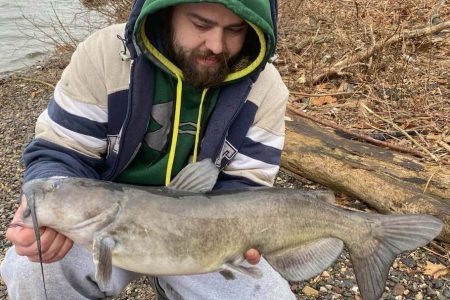
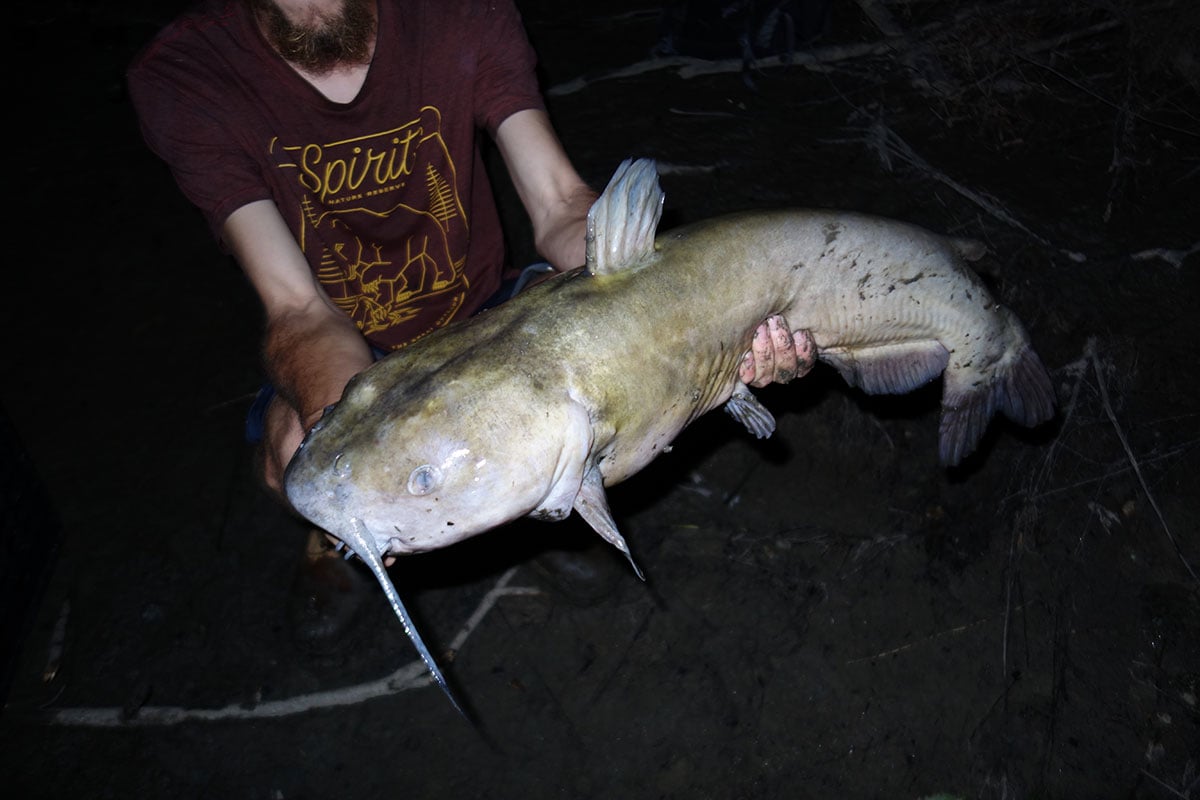
Catfishing in New Jersey provides anglers with the opportunity to catch fish ranging in size from 5 to 40 pounds, and once hooked, these freshwater bottom dwellers are known to put up powerful, Tyson-esque fights. They also make a welcome addition to dinner tables thanks to their soft, flaky meat.
But let’s face it, catfish have an image problem, especially in New Jersey. Not only does the term “catfishing” have negative connotations (just ask any teen-ager who spends most of his/her time on social media what it means), but the catfish just doesn’t conjure up the same excitement or sweaty anticipation as tuna, sharks, stripers, or even bluefish. And Lord knows, they aren’t a good-looking fish.
It’s a different story down south, where catfish are as much of the fabric of the region as sweet tea, red dirt roads, and NASCAR. That said, catfish do have their devotees, especially in South Jersey.

“It may be not as popular as it is in like, North Carolina, South Carolina or Alabama, but there are a lot of people in South Jersey going for catfish,” said Trenton-based guide Dominic Troisi, of Full Draw Bowfishing (fulldrawbowfishing.com). “It’s definitely different,” Troisi added.
Simplicity’s Sake
Unlike fishing for many of the species populating New Jersey’s waters, catfishing is a simple pleasure that harkens back to a time before fish-finding technology, custom boats and kayaks, and leading edge tackle all became the norm. While channel cats, white catfish, and the occasional flathead and blue catfish can be found in many freshwater lakes and reservoirs throughout the state, according to several guides I spoke with the top location is the New Jersey side of the Delaware River near the Pennsylvania border. Such locales as Amico Island Park, a wooded 55-acre peninsula jutting into the Delaware, and Fort Nassau, a former Dutch fortress sitting where Big Timber Creek meets the Delaware are great starting points. Just upriver from Fort Nassau is Woodbury Creek, which is also a prime fishing spot for Channel catfish.
A short drive south from Fort Nassau is the town of Billingsport and the area known as Billingsport Range (named after nautical range lights which guided sailors on the river beginning in the late 1800s). The town is located where Mantua Creek meets the Delaware and is a traditional hotspot for catfish and shad.
Keep in mind that either New Jersey or Pennsylvania fishing licenses are accepted when shore fishing or boating, but anglers must have a valid state fishing license and abide by the laws regarding fish limits, etc. of the state where the boat landing is located. (Currently, there’s a daily limit of five channel cats in New Jersey.)
Guides who fish these waters for catfish said the biggest challenge most anglers face is patience, or a lack thereof. Catfish are voracious feeders known to consume everything from whole waterfowl, shellfish, insects, and even other catfish. That said, letting your offering fall and drift into in a deep pool or by riffles in the river and patiently waiting for strikes is the preferred methodology.

Shorebound Success
Fishing from shore is perhaps the most popular way to target catfish along the Delaware. The strategy is to cast bait into the water and let the river’s current drift it past locales where you believe the catfish are lurking. If after a few casts you come up empty, try another locale or simply swap out your bait. Catfish prefer bait with strong scents; be sure to change bait frequently as it loses its aroma once it’s waterlogged. Retail stink and cheese baits are also handy to have in your tackle box.
Along with the onshore fishing, you’ll also see kayaks and small boats anchored on the Delaware targeting catfish. Either is a great way to explore the bases of bridges along the river where catfish congregate. The Delaware’s currents can make this option tricky for some anglers, especially on a kayak, so be sure you have the proper experience to navigate the river.
Add the fact that that many local anglers prefer to fish for catfish at night most of the year (summer through late October), and river navigation becomes even more important.
There’s also a band of hardy anglers who fish for catfish in South Jersey using bows and arrows. These bowfishers typically look for catfish along the shoreline in 2 to 4 feet of water (any deeper and the arrow’s speed will be too diminished) and aim behind the front half of the fish. Most bowfishers swear by the “10/4 rule” which states that if a catfish is 10 feet away in 1-foot of water, aim 4 inches lower than your targeted area. If the depth or distance doubles, anglers need to also double how low they aim.
Troisi has been catfishing on the Delaware for years and swears by cut bait for catfish, including bluegills, suckers and gizzard shad, while others prefer chicken livers, bloodworms and even hot dogs soaked in Kool-Aid and marshmallows. Personally, we have experience punching holes in a can of tuna packed in oil tied to a string and using it as chum to bring catfish toward our bait.
Catfish On!
As for hooking up, if you feel the catfish tapping your bait, give them some time to fully engage with it. Once hooked, also give the catfish a couple of seconds to position the bait in their mouths. Several guides say first-timers often try to set the hook too aggressively when they have a fish in the line and wind up losing the fish.
In terms of equipment Troisi and others suggest keeping things simple; all you need is a 7-1/2-foot, medium-heavy action rod with 3000 series reels and 40-pound test braided or monofilament line. Circle hooks are preferred by most, along with half- to one-ounce bank sinkers to keep bait submerged.
| CATFISH IN CONGRESS |
| On July 7, federal legislation called the Mitigation Action and Watermen Support (MAWS) Act was introduced in Congress that, if passed, would establish a pilot program within the NOAA Chesapeake Bay Office to facilitate a new market for Chesapeake Bay blue catfish in the pet and animal food industry. The bill would call on NOAA Fisheries to administer grants to pet and animal food manufacturers “to ensure watermen are properly incentivized to catch blue catfish in the Chesapeake Bay and establish transportation, processing, and manufacturing structures for a long-term market.”
“Invasive blue catfish impact important recreational fisheries in the Chesapeake Bay, outcompeting and directly preying on species like striped bass,” said Mike Leonard, Vice President of Government Affairs at the American Sportfishing Association, while adding “The MAWS Act helps to address this challenge, establishing an innovative program to encourage the harvest of these invasive species, while gathering data that will support fisheries management in the Bay.” |
There are numerous benefits of using circle hooks when targeting catfish; the most compelling being the hooks essentially set them themselves when a catfish tries to turn and swim away, making a strong hook set unnecessary. Additionally, they minimize the possibility of losing the fish once hooked and getting snagged on weedy or debris-laden bottoms, which is a definite plus when catfishing.
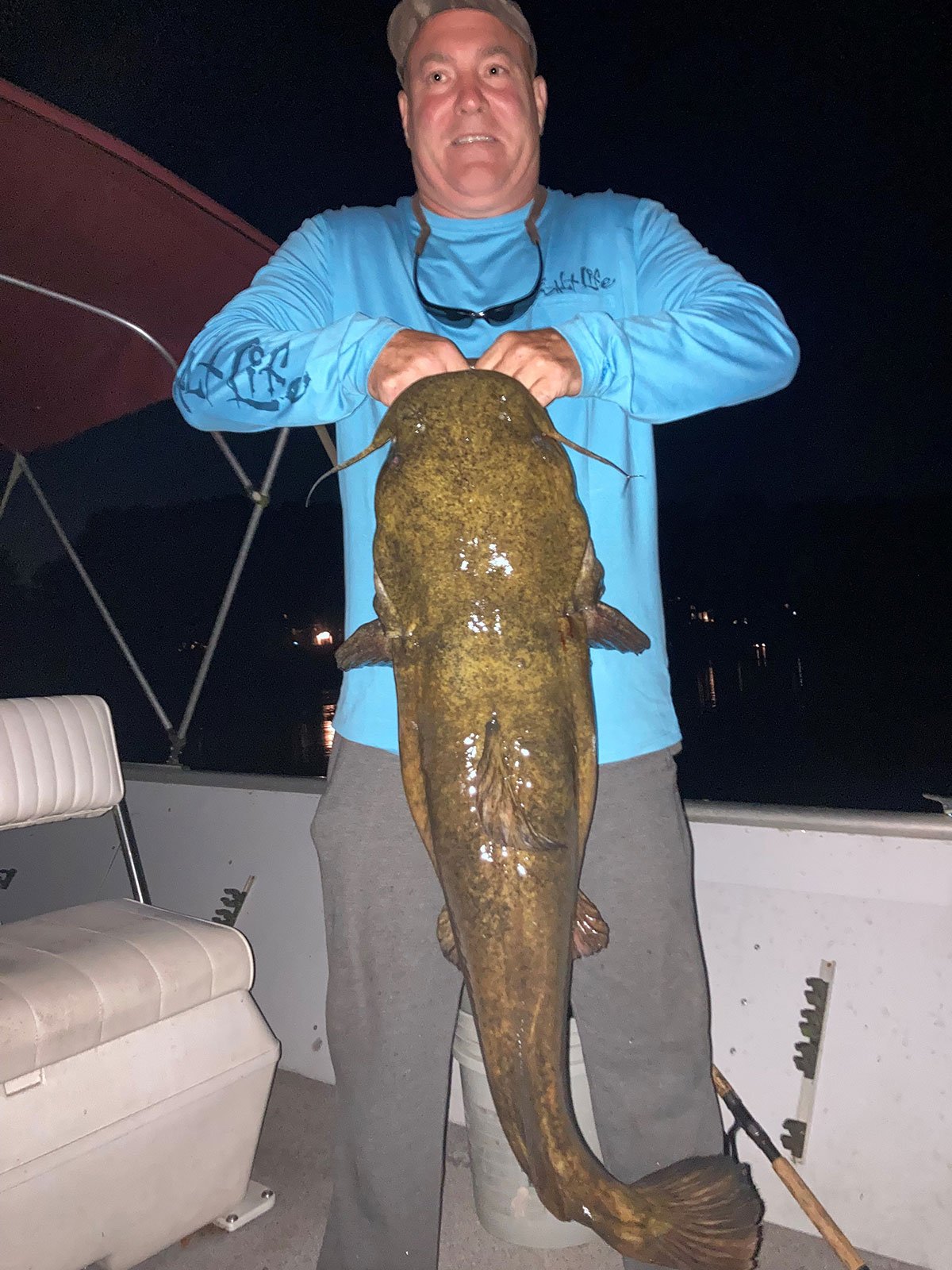
While catching catfish is best described as fun and invigorating, the New Jersey Division of Fish & Wildlife sees it a little differently. The agency has issued guidance for blue and flathead catfish which have been determined to be invasive to the local fisheries. Since entering New Jersey waters, both flatheads and blues – which one fishery biologist referred to as “big, angry, slimy, eating machines” – have threatened the populations of shad, striped bass, menhaden, blue crab, river herring, and even juvenile Atlantic sturgeon.
To exacerbate the issue, blue catfish have been compared to the aquatic version of rabbits; they reproduce rapidly, with females producing 8,000 eggs for every 2.2 pounds of body weight. And unlike other species, blue catfish protect their young from predators, giving them the opportunity to grow and ultimately spawn.
The agency’s recommendation is to catch-and kill blue cats and flatheads; either bring them home to eat or use as fertilizer; anything but return these fish to the water under any circumstances.