There is reason for optimism for New Jersey fluke fishing in 2026!
Last season’s rebound on the South Jersey fluke scene was remarkable. When the dust settled, it shaped up to be one of the best summer flounder campaigns in recent memory. Right out of the gate, fantastic back bay fishing commenced and persisted through July and August in most areas, and remained stellar until the season closed in some others!
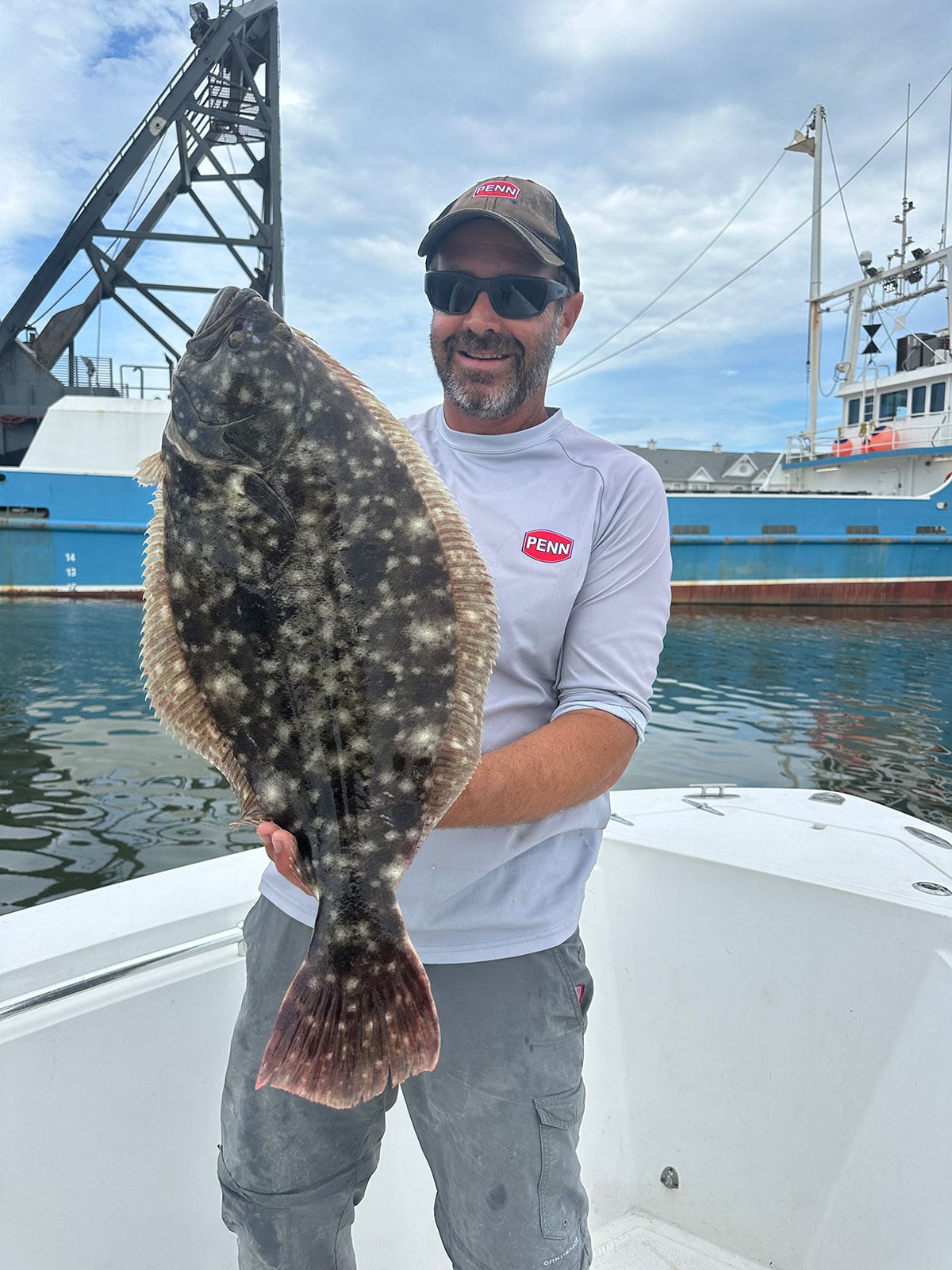
The amount of keepers in the estuary systems was outstanding. Furthermore, the size of the keepers was markedly improved over prior years. Additionally, anglers saw the return of larger “kicker” fish amongst their catches. Fluke in the 4- to 6-pound range became reasonable expectations once again. Summer flounder in the 7- to 8-pound class were caught with much more frequency also.
Fish north of the 9-pound threshold and into the double digits were taken, albeit still not like the early 2000s and 2010s when double-digits came up in greater frequency.
“Reason For Optimism”
For those that tournament fishermen, it was a return to what-once-was. Many contests require a three-fish bag as one of their categories. There have been times in recent South Jersey seasons that the winning aggregate could be put together with 3.5 to 4.5-pounders. Not last year, as tournament bags needed to consist of multiple fish that were at least 5 pounds to get on a leaderboard, if not all of the fish averaging 6 pounds or better. The good old days had returned indeed.
A key component to last year’s banner season was that fluke replaced themselves after being caught in a particular area. In slower times, once the fleet descended on a creek, channel, wreck or reef, the fish got caught up and the area didn’t produce quite the same until a new group of fish moved in on a full moon or after a weather disturbance. But last year it seems that new fish readily replaced the fish being harvested, which perhaps was an indicator of just how good the inshore biomass was. It seemed the abundance of fluke that entered the catch-zone was exponentially higher than that of other years.
Once late June rolled around, the ocean also caught fire depending on what part of the state a captain sailed from. Waters off North Jersey and Cape May see the earliest ocean action typically; per their usual pattern, they quickly ignited before being joined by waters adjacent to other ports in between. Popular reef sites got pounded, but repopulated better than in lackluster times.
Aside from great fishing on well-known bottom topography, I personally stopped at some pieces that haven’t fished well for a few years and found quality fluke there too. It was nice to catch summer flounder on tiny structures that only held baby sea bass or bergals prior.

Winds Of Change
One of most of the most noteworthy differences in ‘25 and ‘24 was the prevailing weather and wind patterns. The previous season was plagued by cold water upwelling from persistent south winds that were forecast seemingly every day from the middle of June until August. Fish swam away from many of the mainstay bodies of water or structure areas. And those that remained, were hesitant to take offerings. Anglers had to seek out pockets of fish that were upwelling-proof, and while that worked well for a minority of anglers, it certainly didn’t satisfy the masses.
In 2025, there were far more days with breezes out of the east or northeast therefore keeping the water warm. In fact, there were more days when the wind was simply light and variable, which is definitely welcome to all fluke fishermen. Occasionally the daytime temp climbed into the 90’s which usually means hard southerlies and the kiss of death for water temps; however, breezes stayed mild last summer. It was beautifully inexplicable at times.
As late June of 2025 progressed to July, I began to notice that more of the fluke brought aboard were choking up squid. In text exchanges and chatter with my fishing buds, I quickly found out that I wasn’t the only one seeing more squid being spit up than normal. It’s normal for fluke to feed on squid since they do migrate to inshore ocean waters, the inlets and back bay systems during late spring and summer. However, it seemed the amount of fluke regurgitating the mollusk was far higher than most years. What’s more, the stomachs of skinny water fluke were extra-loaded up.
As the squid became more prevalent in the fluke’s diet as opposed to say grass shrimp or baby crabs, a huge surge of quality keepers overtook the bays. By all accounts, it appeared that a fresh population of fluke moved into the system following the influx of squid in the warm, clean water that lacked suspended sediment, algae and weed. Frequent high pressure systems, mild winds, warm water and an abundance of truly favored forage led to outstanding fluke fishing!

Home & Away Games
Coming off last season, I’m encouraged and hopeful for a repeat. One great season is an anomaly, but a second consecutive year of superb fishing could be the start of a pattern. I live a mile from the back bays and only a short boat ride to the ocean thus the prospect of a sizzling summer sequel in South Jersey is simply delightful. Just for background purposes, when the fishing isn’t robust in my area, I trailer to ports north in order to enjoy the potential for better fishing. North Jersey’s deeper waters and structure that lay close to the beach often give it the upper hand in terms of year-to-year consistency.
It’s worth mentioning that North Jersey waters were also plagued by the upwellings of 2024, with a return to normalcy in 2025. The difference is, Central and North Jersey fluke fishing hasn’t had as many subpar seasons as South Jersey in recent times so the rebound isn’t as exhilarating. I like a change of fishing scenery time to time, but not trailering trailing miles up the Garden State Parkway as often is a welcome proposition to me. It’s not to say the Raritan Bay fluke bite was off the charts in ’25; many folks who fish the deeper waters of Ambrose and Chapel Hill channels found tougher fluking last season; hopefully we see more rebounds in ’26.
Clearly, no one has a crystal ball as to how well the fluke will amass this year. Some old school captains pay mind to the Farmer’s Almanac while others consult NOAA’s trends, and still many others use any number of tools in between to predict and prognosticate. Hopefully, there aren’t weeklong rainfalls at any time, but particularly the spring. Pre-emergent crabgrass and dandelion killer is great for the lawns and golf courses, but horrendous for the estuaries. Much of what hits the pavement in coastal towns finds its way to the outflow pipes and into the seawater. Heavy rain events that last a few days can be correlated to algae and seaweed blooms can hinder natural feeding patterns thus hurting fishing. Last year’s precipitation was reasonable and it was followed by drought.
Anglers should remember east and northeast waters rush in warmer, cleaner water while the south and southwest breezes usher in the cold. This year there is a forecasted transition from a La Nina to an El Nino weather pattern. The 2025 fluke season was fished under mostly neutral conditions followed by a La Nina event. It’s unclear if there’s a correlation, but hopefully similar clean, warm waters prevail if an El Nino takes place.

Belly Of The Beast
If squid make up a big part of the summer flounder diet again this season, anglers would do well to carry rigs and jigs with the mainstay squid colors. Berkley Gulp in pink shine, pink, white and glow make sense. Whole, dead squid fished on a three-way rig can be crush city if the trash fish aren’t around to tear it up. When rigging dead squid, a stinger hook strategically placed in between the eyes of the squid with the hook point exposed can help minimize the short-strike while keeping the bait from spinning on a fast drift.
In addition to whole squid, anglers can use squid strips in order to match the squid hatch, if you will. Most tackle shops carry squid tubes that lack the head and tentacles. They are simply a white tube ready to make squid ribbons both short and long. These work well on a three-way rig or can be fastened to any jig or bucktail. Furthermore, anglers can tip their Gulp grubs with a small length of squid for added attraction.
| SEASON, SIZE & BAG |
| Summer flounder (fluke) limits are not expected to change at all from the 2025 regulations, which in New Jersey saw a May 4 to September 25 season, an 18-inch minimum size and three fish bag. Special New Jersey management zone regulations also include 17-inch minimum and three fish bag west of COLREGS on Delaware Bay, and a 16-inch minimum and two per angler limit at Island Beach State Park.
In Delaware, there’s a 16-inch minimum size and four-fish per person limit from January 1 through May 31, with the size limit increasing to 17.5 inches from June 1 through December 31. Across the border in New York, it’s three fish per angler at a 19-inch minimum size from May 4 through August 1, then 19.5 inches and three-fish bag from August 2 to October 15. |
Fishermen that pay attention to the nuances of the summer flounder migration habits and tendencies are more apt to find swaths of bottom covered in fluke. For example, fluke migrate most on the full and new moon. Combine either with a low pressure system of bad weather, and there’s a good chance, a captain will find fish in a different area than before the weather. On the inshore grounds during July, this might mean fluke move from the back bays to back toward and into the inlet. In the ocean during September, a scenario such as this could result in fluke moving from wrecks in 50 to 70 feet of water out to 70 to 90 feet.
If similar, exceptional fishing picks up where it left off, fishermen will be able to fish their preferred waters without major adjustments. Since many anglers are creatures of habit and routine, this is the best outcome. But if fishing stumbles or stalls, anglers should keep their eyes and ears open to different places to drag a bait.