A hardcore Wachusett angler maps out how to make the most of opening month!
April at Wachusett Reservoir is truly something special. For anglers willing to brave the unpredictable weather and put in the miles, it can be one of the most rewarding times of year to fish this iconic Massachusetts impoundment.
“The Chu,” as it’s often called by locals, comes alive after winter, with baitfish beginning to move, and some of the biggest fish of the season becoming accessible from shore. At the same time, Wachusett can feel overwhelming – its size, regulations, and sheer amount of fishable water can intimidate even experienced anglers. This month, anglers will have the opportunity to connect with lake trout and smallmouth bass during one of the most dynamic windows of the year.
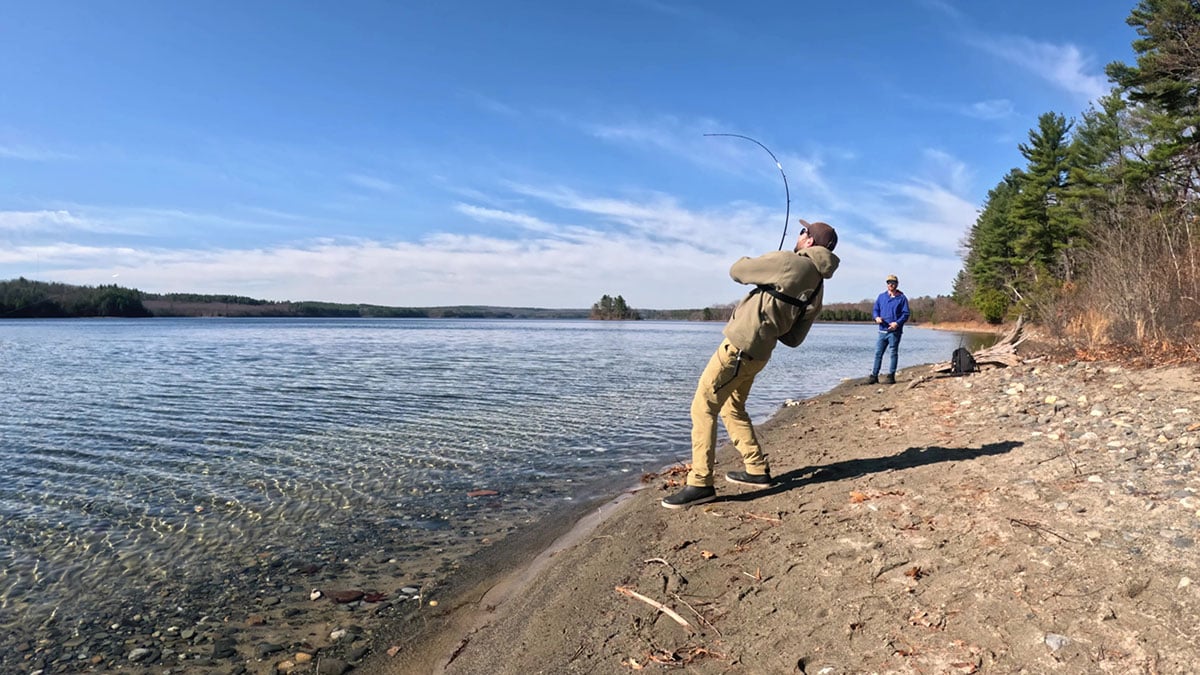
One of the most unique aspects of Wachusett is that it’s “shore fishing only”. There are no boats, kayaks, float tubes… even wading is prohibited. Big water plus no boat pressure leads to its unique ‘true trophy potential’ from shore. Some of the largest lake trout and smallmouth bass in the state are caught during this time of year by anglers standing its banks. With that said, Wachusett can be daunting. The reservoir is massive, the shoreline is long, and not every spot is created equal. Early-spring fish are mobile, conditions change quickly, and success often comes to those who adapt rather than lock into one plan.
April is a transition month, and Wachusett thrives on transitions. Ice-out has passed, water temperatures are slowly climbing, and baitfish begin to move more freely around the reservoir. Both lake trout and smallmouth bass are active, feeding heavily after winter and the smallmouth will be well into their typical pre-spawn patterns.
Primary Targets & Forage
The two main targets at this time are lake trout and smallmouth bass. What makes this time of year especially exciting is that both species are often keyed in on the same forage. If you are fishing for one, you are effectively fishing for both.
As far as forage is concerned, smelt are the big driver, especially for lake trout, but smallies will happily chase and ambush them as well. Another prime target is yellow perch which provide a bulky, high-protein meal. Crawfish are another abundant food source that is always a factor, especially as water temperatures rise and bass begin to transition toward more bottom-oriented feeding.
Because these fish are feeding on similar prey and moving through the same general areas, lure selection and presentation often overlap. This simplifies things for shore anglers and allows you to cover water efficiently without constantly switching approaches.

Where To Begin
One of the most common questions anglers ask is, “Where should I start?” The honest answer in April is, “almost anywhere”. Both species are spread throughout the reservoir chasing bait, and there are very few areas that are completely “dead.” However, there are certain features that consistently hold fish and are worth prioritizing. Lake trout, in particular, will often use deeper water as a comfort zone. Areas with access to deep holes or steep drop-offs in the 30-foot-plus range are excellent starting points. These spots allow fish to slide up shallow to feed and drop back down quickly if conditions change.
Shallow flats – around 5 to 10 feet – that are adjacent to deeper water are prime feeding areas. Baitfish move onto these flats to warm up and feed, and predators are never far behind. The key is proximity; flats that are close to depth changes tend to reload with fish throughout the day. Even lake trout are known to come surprisingly shallow in April while chasing bait.
But, pretty much everything is viable: rocky banks, gradual slopes, points, coves, and even featureless stretches can all produce fish. The one thing to be mindful of is extremely shallow water, especially early in the month. Certain coves and shorelines at the Chu are only a couple feet deep, even at max casting distance, and these areas should be avoided. They are too shallow to consistently hold fish, particularly during colder mornings, and often present a high risk for snags, as well.
Another aid in knowing where to fish is to use technology to your advantage. The Navionics depth chart app is extremely helpful for shore bound anglers at Wachusett. Being able to check depth contours and identify drop-offs, humps, and channels near where you are standing can save a lot of guesswork. A quick look at the map can tell you whether you’re fishing over 10 feet of water or 50, and that context matters when choosing lures and presentations. Another valuable tool is the Windy App, which shows wind direction and strength. Wind gusts directly at you or severe crosswinds can make casting extremely difficult, using Windy you can plan your trip around spots where the wind will be more manageable.

Time Of Day Considerations
Time of day plays a role in April, but it’s not as rigid as it can be during the summer. Early mornings can be slower, especially if overnight temperatures are near freezing. Fish may hold deeper until the sun has had time to warm the shallows. Late-morning through mid-afternoon is often the most consistent window, as bait becomes more active and predatory fish follow.
Overcast days can extend shallow activity for longer periods, while bright, sunny days may push fish slightly deeper or tighter to structure. The key is to stay flexible and adjust depth and retrieve speed based on what the conditions are telling you.
High-Percentage Lures
| CHU ON THIS! |
A few general tips for anyone plying the shorelines of Wachusett Reservoir.
|
Because lake trout and smallmouth bass are feeding on the same forage, several lure categories shine for both species in April.
Jigs, Neds & Tubes. These are staples for a reason. Jigs and Neds paired with soft plastic ‘creature bait’ trailers can mimic crawfish. Tubes, in particular, have a long history of producing both smallmouth and lake trout at Wachusett. Fish them slowly along the bottom, especially in colder water. Short hops, subtle drags, and long pauses are often more effective than aggressive movements. Pay attention to bottom composition. Rocky bottom areas do hold fish but snags are common in those areas and this is often a point of frustration for Wachusett beginners, so be sure to bring plenty of backups. (Be advised that all Massachusetts freshwaters are lead-free, so plan accordingly!)
Jerkbaits. Jerkbaits are extremely effective in April. They perfectly imitate smelt, perch and other baitfish and allow you to cover water efficiently. Slow-float or suspending jerkbaits are ideal for Wachusett to avoid snagging on the bottom. Both smallmouth and lake trout will crush a properly-worked jerkbait. The key is cadence. Start with a slow, deliberate retrieve: jerk, pause… jerk, pause… and adjust based on fish response. In colder water, longer pauses often trigger strikes. If fish are more active, a quicker cadence can draw reaction bites.
Kastmasters & Epoxy Jigs. For anglers specifically targeting lake trout, metal lures like Kastmasters and epoxy jigs are excellent choices. These lures cast far, sink quickly, and closely resemble smelt. They can be fished with a steady retrieve, a lift-and-drop motion, or even vertically along steep banks. Because lake trout often roam, these lures are great for covering water and locating active fish.
Live Bait. Live bait at Wachusett can also be highly-effective and is a common approach used by many of the regulars. Live shiners or inflated nightcrawlers set on the bottom of deep holes can tempt fish that are unwilling to commit to artificials. While not everyone prefers this approach, it can be a valuable option during tough conditions or for anglers focused purely on getting bites.

Make It Count
Early-spring at Wachusett Reservoir offers a rare combination of opportunity and challenge. Big fish are accessible from shore, multiple species are active, and the entire reservoir feels alive with possibility. At the same time, success requires patience, preparation, and a willingness to adapt.
By understanding seasonal fish behavior, focusing on high-percentage areas, using proven lures, and maintaining the right mindset, you can greatly increase your chances of making the most of your time there. Whether you land a trophy lake trout, a chunky smallmouth, or simply gain confidence and experience, every April trip to Wachusett is time well spent.