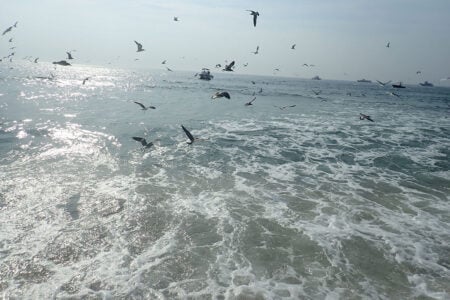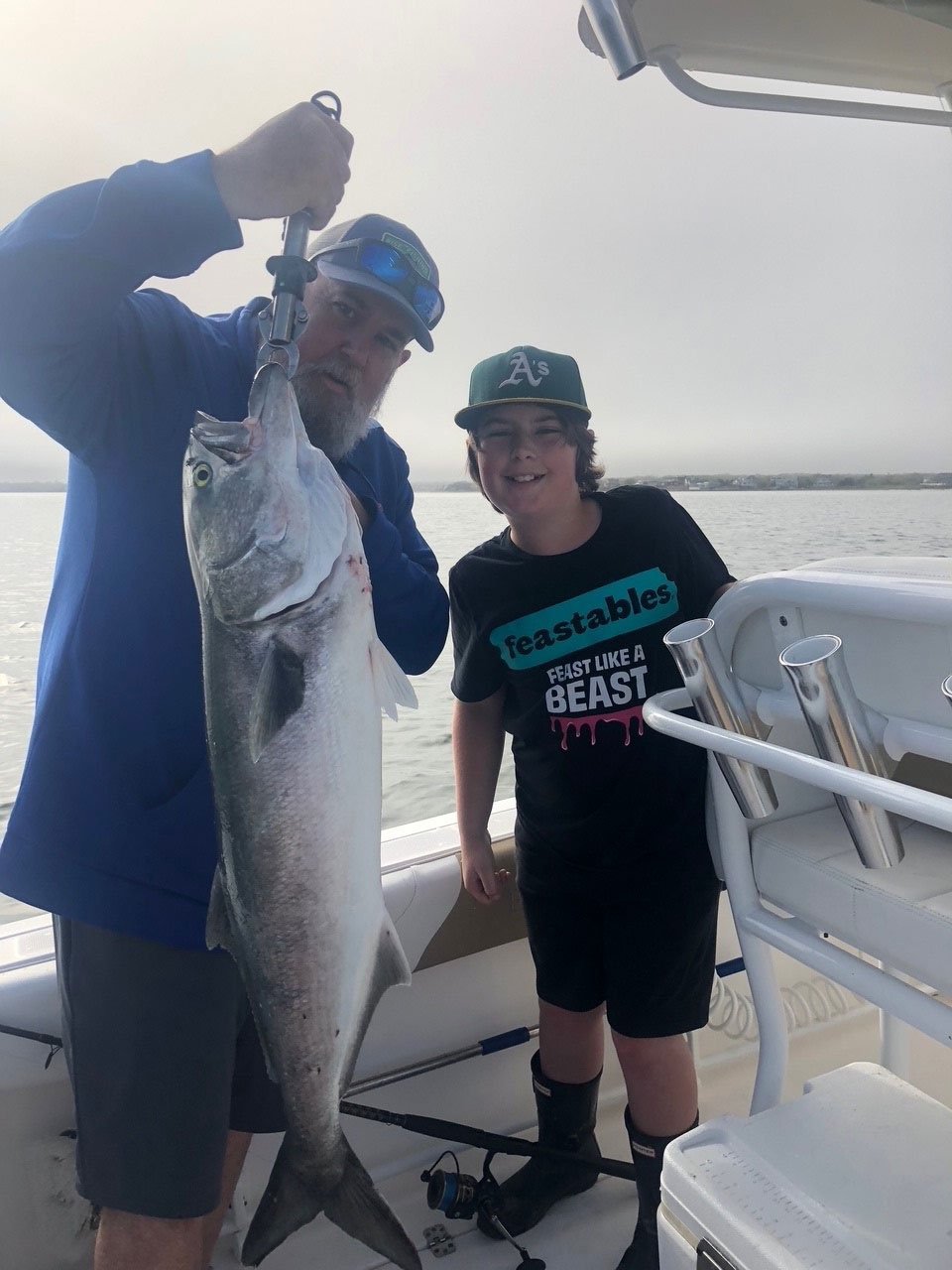
Every spring season South Shore back bays will fill up with hungry and ferocious blues just waiting for that next plug to pop.
In the spring when the blues make their move from the ocean through the inlets and into the bays, their appetite is voracious from the journey. Most of the fish appear almost emaciated with their huge head and skinny bodies that will soon fill in as they feast on anything and everything they can. This aggressive feeding along with a typical behavior of blues traveling in large schools sets a perfect scenario to target them.
No Fuss
They bite on incoming, outgoing, and slack. They’ll bite around structure and wide open stretches of featureless bottom. When they see or sense food, they want it and just about any plug profile will trigger a bite. Scouting for blues is a much simpler process than the work that goes into identifying a striper pattern. Their affinity for shallow waters in the spring gives them away with their fins peaking above the water’s surface, along with their splashes. When the obvious signs aren’t visible, there’s a pretty good chance a few prospect casts will connect in any areas holding bait. It may seem like I’m painting a picture of really easy laid-back fishing. It’s not. Tangling with 12 to 20-pound bluefish forces you to be on your game from your tackle to landing skills and preparedness.

Lighter Options
From shore, you don’t need your jetty setup, but don’t go too light. This past season I fished a Tsunami Forged 8-foot 7-inch-rod with medium action and a half to 2-1/2 ounce rating. I paired it with my Van Staal 150 spooled with 30-Power Pro Super 8 Slick. I probably could have gone with a shorter length rod, something closer to an 8 foot yet the casting ability it afforded me turned out to be a nice fit.
By boat a 7-foot spinning rod with similar action and rating even a little lighter is perfect. I was fishing a TFO 7-foot fast action rod with a half to 1-1//2 lure rating paired with 20-pound Power Pro spooled on a Van Staal VR50 spinning reel. I’ve always been impressed with the power of the temple fork rods and not having to lose sensitivity with them. A series of other comparable rod and reel models from Shimano, Daiwa or Penn will do the trick as well.
Mono Over The Rest
The rods, reels, and braid (for the most part) will live to fight another season. The rest of your setup probably won’t. It’s the cost of doing business with the yellow eyed toothy demons. Just as there’s a graveyard of soft plastics in the transition from stripers to blues each spring, there’s going to be plenty of chaffed leaders along with lost plugs. Wire leaders will save a few plugs – I’m just not a fan and opt for 50 to 80-pound mono leaders for this type of fishing. I respect the blues but not enough to bang through a spool of fluorocarbon as fast as a roll of paper towels while eating BBQ. Plus, a long mono leader (4 to five feet) also acts as a “handle” in a way to wrestle a bluefish in when it gets close to me. A few weeks into the usual bluefish bite in my neck of the woods on the eastern South Shore of Long Island, a few larger bass show up and the competition feeding instinct will produce some surprise stripers. Stripers that won’t commit to a taking a plug with a wire leader which is additional reasoning to my method.

Plug Modifications
When it comes to plugs, it’s all poppers and pencils with a single tail hook. If I do have a plug that still has the front treble on for one reason or another, I crush the barbs. Unlike bass, bluefish bite from the tail so that front treble is just asking for trouble in giving the fish leverage to snap the plug off or make landing it harder than it needs to be. Not just that, blues exhibit a swarming food aggression. When they know another fish is on a bait, they don’t hesitate to let another’s hard work benefit themselves. A two for one catch is certainly fun but much of the time that bully blue late to the party will bite the top of the plug and with that front treble securing the second fish it will almost always bite through the line to plug connection. Lastly and I’m sure this will jinx my luck, I haven’t’ had to make a trip to the ER for a treble buried in my hand or had a fishing buddy have to break out the mini bolt cutters. Both by shore or boat I carry a plastic fish gripper and by the time the blues have gone admire the battle scars on it.
Pick Up The Speed
The speed and aggressiveness of blues have always amazed me. Less discerning than stripers, a fast-moving frantic plug across the surface of shallow waters will incite a vicious bite. Only a few weeks removed from the slow and methodical retrieves in targeting the first bass of the season, once the blues show up it’s time to change all of that. They’ll chase a quick plug. Not only does increasing the speed make for more adrenaline flowing but it increases the odds of landing the fish. Using a slow retrieve of a popper with pauses allows just enough slack line to sit at the front of the plug. An explosive hit from below runs a good chance of that line being cut clean by the razor-sharp teeth of any spring blue.

Chaos Erupts
About a decade ago with my then toddler son, I had found what was a perfect spot for some outdoor time during outgoing tide. It was one of probably a dozen back bay spots that my beginner scouting skills seemed to add up to possibly holding fish. The slim stretch of wet sand exposed as the tide dropped entertained my future sharpie with horseshoe crabs at the water’s edge, scores of black periwinkle snails or sprinkles as he called them. As he would spook schools of tiny minnows, I tried myself a bigger ecosystem existed in what at first glance seemed like a typical canal like stretch of water emptying into a deeper and broader bay. A small reef about 20 yards out at low tide was a small reef that stole a few bucktails from me the previous fall, and a cast of mine could reach past a narrow 6-8 foot channel.
“Are you going to fish daddy?”
Since he insisted, of course I had to take a few casts. I had no expectations as not one cast in dozens of trips to this spot came up empty in the past. I clipped on a popper and let the first one fly. As the tide was slowing to a trickle and causing a visible V-wake with just a glimpse of the reef exposed, I started my retrieve. On the second pop my son and I would meet our first legit gator blue. The horseshoe crabs, periwinkle sprinkles, and minnows lost their appeal immediately for the next hour as cast after cast got a bite at all different stages of the retrieve. Some as the popper moved over the channel, and some just a few yards away in 2 feet of water in the flats. In following weeks there were a few times when we returned and saw some fins, but for the most part there was nothing to the naked eye to indicate we had found such a productive spot. One of many spots this scenario unfolds, it turns out in the stretch of back bays during the month of May in the South Shore bays of Long Island.